Mobile menu toggle

Search results for: Apple One

OS X 10.5.5 Update Focused on Fixing Bugs

By

cult_logo_featured_image_missing_default1920x1080

Apple released the OS X 10.5.5 update in the US on Monday afternoon to immediate acclaim as an all-out assault on bugs. Despite initial skepticism, even TUAW, which was first to the tape, acknowledged the release notes are “quite detailed.”

Gizmodo provided a laundry list of items addresed in the update, with MacWorld shortly touting 30 bugs fixed in the new software. Not six hours later, ComputerWorld upped the ante to 70 bugs fixed.

Security experts are finally satisfied the “Dan Kaminski exploit,” referring to the researcher who disclosed a critical flaw in DNS that made it much easier than originally thought to “poison” the cache of DNS servers, or insert bogus information into the Internet’s routing infrastructure, has been fixed.

Apple also updated Mac OS X’s implementation of BIND (Berkeley Internet Name Domain), the open-source DNS software maintained by the Internet Software Consortium (ISC), to keep it current with an early-August version that ISC released to solve performance issues that had shipped in the original fix for Kaminsky’s vulnerability.

The update also fixes a number of non-security flaws, according to the release notes. iCal and Mail both received more than half a dozen fixes, Time Machine got slapped around a bit, and MobileMe even came in for some love.

See the complete list of adjustments after the jump.

Analysis: Who is the BlackBerry Storm For?

By

cult_logo_featured_image_missing_default1920x1080


Over the last year and a half, a few dozen…dozen would-be “iPhone-killers” have emerged to take on Apple’s little widescreen iPod/phone/Internet browsing device that could. And illustrious these phones have been, ranging from the underwhelming Samsung Instinct to the equally underwhelming LG Dare and even the moderately adequate HTC Touch Pro.

And now, as dynamic Verizon pitchman Mike Lanman proves in this eternal launch video, RIM is throwing its Canadian hat (it’s flannel, with ear-laps) into the ring with the puzzling BlackBerry Storm. You will be shocked to learn that this amazing phone will “Take the market by <cue thunderbolt> STORM!”

Except that it probably won’t make any impact on the iPhone market. And that’s because Apple created a platform and RIM is building a product. Click through to read why.

Best Buy Acquires Napster For $121M

By

post-2801-image-e65d7e97c1fceca939acd154a6d47278-jpg

Electronics retail giant Best Buy Monday announced it would acquire Napster for $121 million. The Minneapolis-based company told Cult of Mac the move wouldn’t harm its growing relationship with iTunes owner Apple.

“Our relationship with Apple is strong and will continue to be so,” said Susan Busch, Best Buy Corporate PR Director.

The acquisition of the digital music service would become “a platform for accelerating our growth in the emerging industry of digital entertainment, beyond music subscriptions,” Best Buy Executive Vice President Dave Morrish, said in a statement.

As part of the acquisition, Best Buy gains Napster’s 700,000 subscribers, its online platform and mobile technology. Napster CEO Chris Gorog and senior management would stay on. The retailer will keep Napster’s headquarters in Los Angeles, where it employs 140 workers.

Best Buy could use Napster to attract consumers still unsure of digital music.

“They might be able to find a business in bringing in late-adopters or stragglers into the online music market by virtue of their breadth of products and service,” Mike McGuire’s Gartner’s media analyst, told Cult of Mac.

McGuire said that while iTunes and Napster may have been rivals when they first arrived on the digital music scene, Napster has never been a threat to Apple. This may be why Best Buy emphasized it will still sell the Apple iPhone.

In May, Napster took a swipe at iTunes, announcing it would sell 6 million DRM-free songs, calling it “the largest major label MP3 catalog in the industry, but also the largest library of independent music available anywhere.” McGuire, however, saw the MP3 effort as “something a bit more than an afterthought, but not much more.”

Photo courtesy: Tronick

Mac Spending Up Despite Consumer Downturn

By

post-2794-image-67270ac920606496a6c91436bbf42fcf-jpg


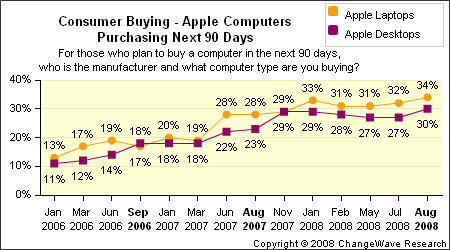
Another survey seems to confirm Apple products are immune from the general economic malaise hurting consumer spending. Consumers planned to buy more Mac laptops and desktops for the back-to-school period as well as over the next 90 days, according to a a survey by ChangeWave released Monday.  This compares to the No. 1 PC maker, which consumers said they would buy fewer.

Also, the August survey found the release of Apple’s iPhone 3G is having a “halo” affect on other products. ChangeWave found 17 percent of consumers said the new iPhone made them more apt to buy a Mac.

Eight percent of the 4,416 mostly-U.S. consumers said during the critical back-to-school season they would buy an Apple product online compared to four percent who said they would buy less from Apple’s Web site, for a four percent overall gain for the Cupertino, Calif. company. 

Consumers said, in general,  they planned to spend less on electronics over the next three months. ChangeWave found 34 percent of consumers said they would spend less on electronics, compared to 15 percent  that indicated they would spend more on electronics. The findings are 13 percent lower than a year ago.

Confidence in Apple products differs from overall PC buying plans.  Desire to buy an Apple laptop rose two points (34 percent) with plans for an Apple desktop rising by three points to 30 percent. This contrasts with a decline in plans to buy a PC.

When it came to the top two PC sellers – HP and Dell – the retail reticence was pronounced. Plans to buy a Dell laptop within the next 90 days fell 4 points while future desktops rose by 3 points. U.S. consumers said they would buy fewer HP laptops and desktops, compared to July.

It should be noted that much of HP sales are coming from outside the United States. On Friday, Gartner analyst Alfonso Velso told Cult of Mac that Apple was particularly susceptible to any economic downturn that affected consumer spending. However, only recently had the research firm detected rumblings of any blowback from the economy. Gartner placed Apple as the sixth-largest PC maker. MetaFacts had earlier said Apple ranked fourth in laptop sales.   

Google Chrome sets sights on Safar… Windows?!?

By

post-2780-image-c6a5127e784725191acd6842618aaf1e-jpg

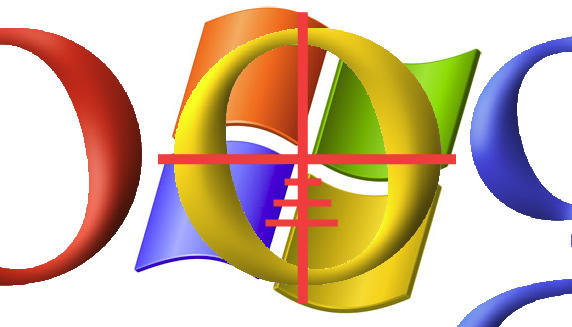
While there has been much speculation about webkit powered Chrome and the possible implications for Apple’s Safari browser, we think the shot Google fired last week was across a different bow altogether.

Follow us after the jump where we discuss how Chrome has it’s sights set on Windows and why Apple couldn’t care less if there’s ever a Safari  v4.0.

Bad behavior

By

post-2763-image-34f1712e10659598a4ce0bc2febc76cb-jpg

I don’t often read Windows sites, let alone link to them, and even then not when I think they’re rightly criticising Apple or Mac OS X. But in this case, I think it’s justified.

Ed Bott got a surprise when he upgraded to iTunes 8 on his PC running Windows Vista. Not only did he get iTunes 8, he also a QuickTime update – and that’s fine, because the installer told him that was going to happen, and he continued with the upgrade knowing what to expect.

Or so he thought.

But on further investigation (see the annotated gallery), it turned out that the upgrade process also installed a bunch of other things: Apple Mobile Device Support, Bonjour, and Mobile Me. And on top of those, a couple of drivers, one of which is a known cause of serious crashes.

Ed’s post isn’t a complaint about the software itself (although the crash-causing driver is a pretty annoying problem). What he’s most annoyed about is the manner in which it was installed. If Apple wanted to install all this extra stuff, it should at least have the courtesy to tell him so first.

This is precisely the sort of behavior that Microsoft, Real, and many other Windows software companies got into trouble over back in the 1990s and early 2000s. I can remember people getting hugely angry with Windows software that tried to sneak its way into your computer.

Perhaps Apple is doing it this way because it thinks Windows users are accustomed to it. But think how you’d feel if, next time you ran Software Update on your OS X Mac, it told you there was one upgrade available and then started to install six different things? Wouldn’t you be suspicious? Wouldn’t you be just a tad annoyed?

Why iPod touch will never be a major gaming platform

By

post-2767-image-a420f1edb41e4fc1fd40294d6a31f095-jpg

UPDATE: One year on, and my view of the platform for gaming has changed somewhat—read Why Apple is Right to Pitch iPod touch as a Games Console to Beat the DSi and PSP Go.


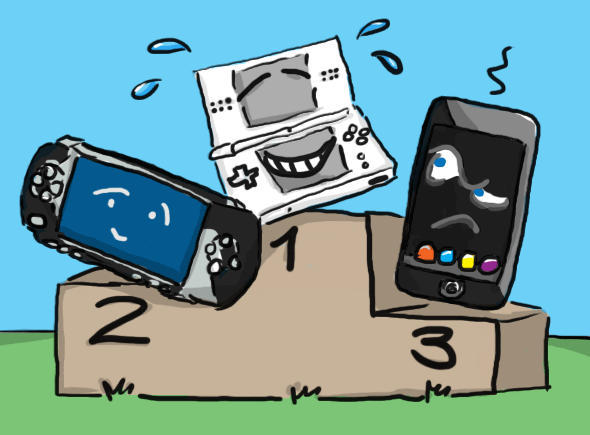
The iPod touch segment of Let’s Rock was particularly notable for Apple’s attempts to position the device as a major gaming platform. “It’s the best portable device for playing games,” claimed Jobs. Apple’s website now calls iPod touch the ‘funnest iPod ever’, and talks about its ‘hundreds of games’. This emphasis on gaming, along with the demonstrations we’ve seen from various developers, appears to be positioning iPod touch alongside Sony’s PSP and Nintendo’s DS, rather than talking about mobile gaming as though iPod touch has any relationship whatsoever to a certain smartphone and cell-phone gaming in general.

There are arguments in favor of this belief. Games have proved phenomenally popular on the App Store. They’re also cheap, relatively plentiful, and simple to get on to your iPhone or iPod touch. Also, crucially, Apple’s solution betters Sony’s and Nintendo’s by allowing updates to games—something owners of the abhorrent DS port of The Settlers no doubt wish were true of their platform.

The problem is, iPod touch is only ever going to be a niche concern in the gaming space. Find out why after the break…

Gates-Seinfeld Team Solidifies Strategy

By

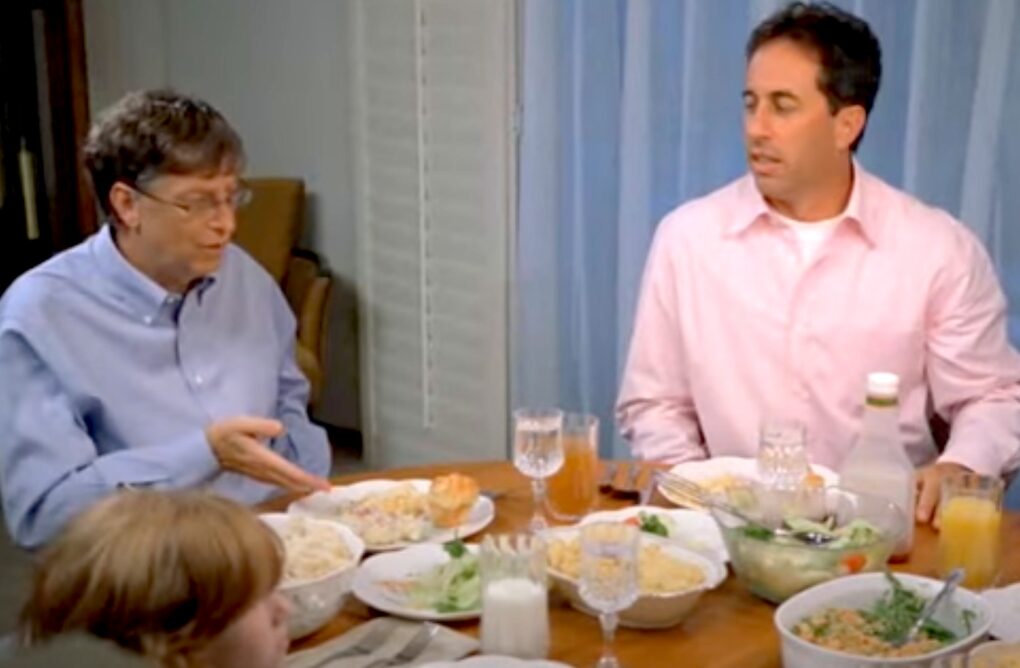
A still from a Microsoft ad shows Bill Gates and Jerry Seinfeld eating dinner with a family.
Microsoft co-founder Bill Gates shares an awkward meal with Jerry Seinfeld in a second poorly received ad.
Photo: Microsoft

Ex-Microsoft CEO Bill Gates and Jerry Seinfeld break bread with a stereotypical American family in a second ad that attempts to rejuvenate the Windows maker’s image.

When Microsoft’s in a bind, this is the kind of advertising it comes up with. Something really risky and new.

First impressions: iTunes 8

By

post-2753-image-005f96591a52e48372c4fb5b59f19e98-jpg

Unless you’ve been living under a rock, you can’t have failed to notice that iTunes 8 arrived to some fanfare earlier this week. I’ve been putting it through its paces, figuring out whether the new features are any good, and scoring them using our patented* rockometer.

More after the break…

* Not patented.

Confirmed: iPod Touch Can Support VoIP Calls

By

post-2751-image-7e17dfaee89ddfc502e187cecd501179-jpg

Cult of Mac has confirmed the newest version of Apple’s iPod Touch contains the hardware necessary to enable free or low-cost phone calls over wi-fi.

With 5 wires connected to the Touch headphone jack (instead of 4 on the previous model), the device now supports the external microphone included with some headsets, according to Kyle Wiens of iFixit, who fully dismantled an iPod Touch on Wednesday.

Speculation about the possibility of VoIP (voice over internet protocol – a method for making and receiving voice communication over a connection to the internet, as opposed to the cellular telephone network) on the iPod Touch arose yesterday when the specifications of new Apple headsets with external mics appeared to include support for the iPod Touch in addition to the new iPod Nano and the 120GB iPod Classic.

“”I’m very excited about the possibility of VOIP on [the Touch],”said Wiens. “Now we just need the software.”

The software may already be here, in fact. TruPhone, a venerable innovator in the VoIP field, already has an iPhone application in the AppStore. Apple has said it would not permit applications that run VoIP using cellular networks, but a purely wi-fi-based calling method could pass muster, making the iPod Touch a little less distinguishable from its iPhone sibling.