Mobile menu toggle

Search results for: Apple One

Verizon to store managers: “Wednesday is a big day.”

By

rumor_-tablet-mac-coming-this-fall-updated-5x-the-apple-core-zdnetcom1

The gadget blogosphere’s collective scuttlebutting navel-gazers peg it as a near certainty that Apple’s forthcoming tablet will, at the very least, come with a 3G option, opening the door to carrier subsidization. But if the Tablet does support 3G, which network will Apple choose to partner with? Their current domestic carrier partner AT&T, which has proven incapable of handling the traffic demands of just the iPhone, let alone the Apple Tablet? Or will it be another network, like Verizon?

Only Wednesday will tell, but Boy Genius Report was just told by one of their sources that Verizon Wireless has a “kick off” event at the beginning of every quarter to bring store managers up to speed with what to expect over the next couple of months.

That kick off event hasn’t happened yet, but can you guess the date when it’s scheduled to occur. Yup, January 27th, 2010… the same day Apple is slated to announce the Tablet. Even more incriminatingly, it will occur via a “live webcast” at the exact same time as Apple’s announcement, 1PM EST or 10AM PST.

Coincidence? Possibly. Rumor? Definitely. But the inference is obvious: Verizon wants to tell their store managers about a big, big product development at the first possible second when they can do so. I suppose it could be a CDMA iPhone, which is heavily rumored to hit Verizon sometime this year, but let’s face it: the Tablet is still the most likely contender, given the date.

Why The Tablet Will Finally Be Steve Jobs’ “Computer For the Rest of Us”

By

100125_TECH_tabletEX

Our old friend Farhad Manjoo has an insightful piece on Slate explaining why he hopes Apple’s tablet will be like a toaster.

Farhad hopes the tablet will have an iPhone-like operating system (as we’ve mentioned here before) that offers a somewhat restricted, locked down computing experience like the iPhone. That is, he hopes Apple has removed all the complexity of using and maintaining a traditional personal computer.

“The most revolutionary thing about Apple’s phone wasn’t its sleek case or the multitouch gestures, but the artful way in which it hid nearly every bit of complexity behind a display of easy-to-understand icons. The iPhone contains no visible “directory structure.” Your music is not in a particular place on your phone; it’s just on your phone, and you get to it by launching the music player. Other than charging it, the iPhone requires no maintenance. Backups and OS upgrades occur automatically, and because all programs are approved by Apple (and because even third-party programmers aren’t given deep access to the phone), you never have to worry about malware. And look how easy it is to install a program: Choose one from the store, press “Install,” and type in your password to authorize the purchase—and that’s it. The iPhone doesn’t ask you where you want to put the new program, or how you’d like to launch it, and whether you’d like it to be the default program for doing a particular kind of task. It just puts up a little icon on the screen. To run the program, click the icon. To do something else, hit the home button.”

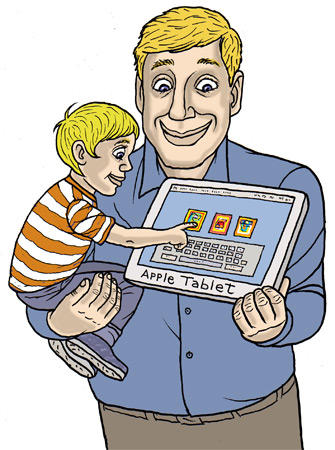
I think Farhad has put his finger on the most important feature of the tablet. It’s not designed for nerds, like traditional PCs (even the Mac) but for ordinary consumers who have no interest whatsoever in learning how to use a computer.

If you can get your noodle around it, it’s an astonishing thought. Steve Jobs is attempting to reinvent computing again, but to do it right this time.

The tablet will usher in a new era of consumer-level computing that will be utterly different to computing in the past. Instead of mice and keyboards, there’ll be a new generation of software designed for fingers and voice. It’ll be a lot easier to use (see all those videos of toddlers using iPhones), and a lot easier to maintain. Thanks to Apple’s controls over app installation, it’ll be largely free of the viruses, driver issues and tech-support headaches of traditional PCs. Of course, we’ll sacrifice some freedom to tinker for all this — but who cares? (Our own Leigh McMullen for one. See his “My Tablet Won’t be Running any Silly Phone OS.”)

No wonder Steve Jobs is so excited about the tablet. All the way back to the Apple II in the late 1970s, his earliest ambition was always to make computers accessible to mere mortals — to make the computers “for the rest of us.” It’s the realization of his earliest dreams.

OS X 10.7 spotted in the wilds of open source databases and traffic logs

By

post-27445-image-9041498d9e768874b583978a69c92e8b-jpg

Utter folly for a silicon company to rest on its laurels after the success of their last operating system, lest the competition pass you by. That goes doubly for Apple in the wake of Snow Leopard: although the latest version of OS X saw the highest upgrade rates yet for an Apple OS, 10.6 didn’t really add any new features into the mix, but was instead focused on tightening the engine bolts and preparing OS X for the future of multicore processors. That was an admirable, even revolutionary goal, but people are going to expect a lot more flash from 10.7.

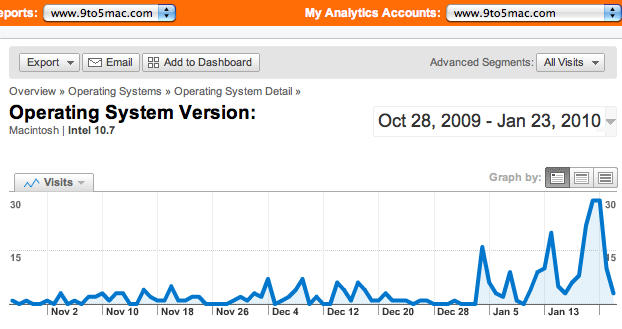
It’s not surprising, then, that new reports are circulating, indicating that OS X 10.7 has been under development at Cupertino for the last couple of months. The first comes by way of the change database of the open source launchd framework, which specifically references the text astring “11A47” and seems to be the build number for the next version of OS X.

Tablet Forecasts: What’s In, What’s Out

By

apple_tablet2
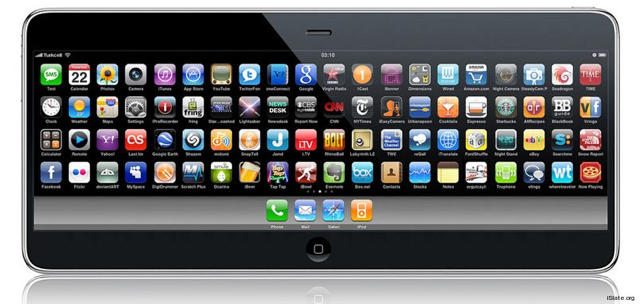
Render via iSlate.org

Well, it’s finally here: Tablet Week. Or, as I like to think of it, it’s time for there to be Just One More Thing. We all know how significant we expect this announcement to be. A major new advancement in computing, a killer device for a market that has failed time after time, and, just maybe, the last great breakthrough product of Steve Jobs’s amazing career.

All will be revealed on Wednesday, but since we’ve got to something in the interceding 60 hours, I’ve decided to go all in and actually make some bets on killer features for the Apple Tablet With No Name. They’re my best guess based on what we know about the existing tablet and eReader markets, soon-to-launch technologies, and past actions of Apple itself. I haven’t touched one, I haven’t talked to anyone who has, and the Apple employees I’ve seen in the last few weeks are people who know even less about the big secret project than I do.

Tablet Speculation With Beautiful Mockups: Developer Says Tablet Will Be “Big iPod Touch”

By

ChilliXAppleTablet01

Here’s some sensible tablet speculation from UK app developer Dave Hornsby of Chilli X.

A levelheaded Englishman, Hornsby reckons the tablet will be a big iPod touch running iPhone OS 4.0, which is basically the iPhone OS with support for larger screen sizes.

Hornsby doesn’t have any special knowledge of what Steve Jobs will release next week. He’s just thinking aloud. Here’s his reasoning:

“It won’t be running Snow Leopard – there’s no point putting the same operating system that people use to do high end rendering and print ready artwork on a small, less powerful device. If it was to run Snow Leopard then Apple would have to figure out a way of stopping you installing certain types of application and that’s just messy.

It won’t run the current iPhone operating system either, although it will run most existing iPhone apps in smaller windows (almost like OS X dashboard widgets). My guess is that they’ll use the event to announce iPhone OS 4.0 with lots of cool new features including support for larger screen sizes. It makes perfect sense – everyone loves the iPhone OS. Users because it’s slick, fun and easy to use and Apple because of all the money they make from the App Store – why would they want to use Snow Leopard and not be able to control what software goes on there (and get a cut of it).”

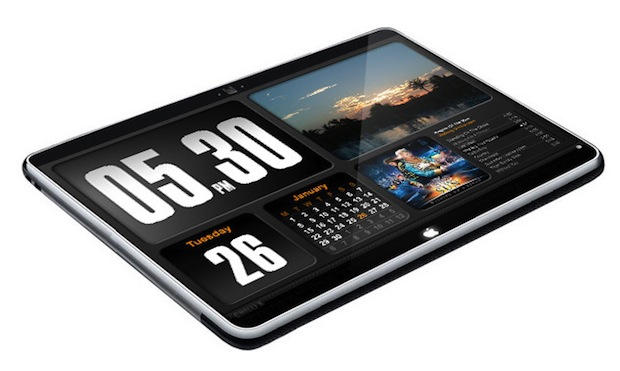
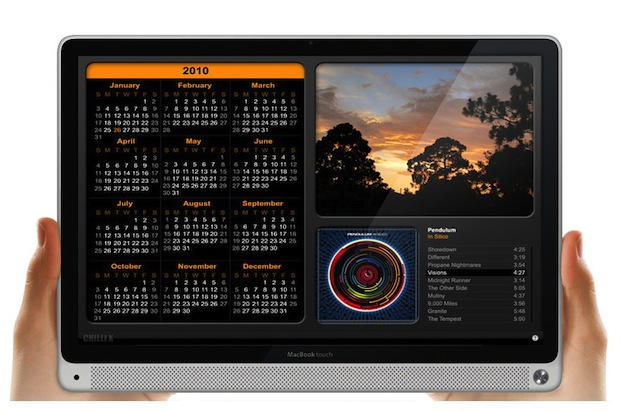
Hornsby figured it would be fun to imagine what his iPhone apps would look like blown up to tablet size. See the fantastic mockups above.

“Imagine what we could do with all these extra pixels,” says Hornsby. “So we’ve used some of our existing apps as a starting point and mocked up these images showing the type of app we’d like to build. Imagine a combination of PhotoFrame, DeskClock and PlaySafe – what do you think?”

Review: VoiceBand App Ushers In The Age Of The Three-Dollar Rock Star

By

voiceband

Sometimes I wake up from a dream where I’ve fashioned a majestic rock symphony. I’ll fumble around for my trusty digital recorder, groggily hum a few throaty bars and fall back asleep; then in the morning I find myself listening to something that sounds like a drowning donkey (or more frequently, I find I’ve forgotten to flip the “hold” switch).

Well, hell with that — for $3, I bought VoiceBand by WaveMachineLabs and turned my iPhone into a recording studio. What’s really cool is that all I have to do is vocalize into the mic and the app transforms my voice into a remarkably credible imitation of a musical instrument.

YouTube and Vimeo get HTML5 video

By

post-27272-image-16bd7b4b073c1062931acf43697c63f8-jpg

Apple doesn’t seem likely to introduce Flash to the iPhone or iPod Touch anytime soon, and you can take it pretty much as read that the Apple Tablet will have the same limitation. That’s a pain for those who want to play Flash games (and, in fact, its the possible dilution of App Store sales numbers that is making Apple so reticent to incorporate Flash), but it also means that sites that use Flash to serve up video are inaccessible.

Given how strongly focused on video media the Tablet looks like it’s going to be, the majority of online video sites may simply not be ready for Apple’s newest product. But a solution is in sight: the HTML5 standard will actually serve streaming video without installing Adobe Flash on compatible browsers, including good old Safari.

Even better? Both YouTube and Vimeo have rolled out opt in, beta versions of their HTML5 video players, and they work excellently on Safari in the iPhone or iPod Touch.

Scottish school can’t deploy iPod Touches to students because of smutty App Store

By

cult_logo_featured_image_missing_default1920x1080

There’s small enough smut worth bothering about on the App Store, but if you’re the type who worries that exposure to, say, the hypnotic iBoobz app could your child into a sex-crazed Onanist for life, you probably have sympathy for the problem facing the Cedars School of Excellence in Greenock, Scotland.

The Cedars School wants to give iPod Touches to every one of their 100 students next fall. The only problem? Even though the iPhone OS has parental controls preventing kids from downloading apps rated 17+, you can still browse potentially illicit screenshots of these apps in iTunes.

In fact, the school is so alarmed by the fact that their students might be exposed to apps like Amateur Swimsuit , Movie of Sexy Japanese Girl and A Hidden Cam Thong that they are ready to disable Internet access to iTunes’ App Store schoolwide.

It all seems prudish, but silly or no, the school has an obligation to parents to filter their minor charges’ access for objectionable content, and it seems a strange oversight that Apple wouldn’t allow parental controls to be set across all sections of the iPhone app ecosystem.

Teachers Protest After School District Scraps Macs Over Cost, Performance

By

post-27289-image-89d33738723f803f89c93d1e714b79ea-jpg

httpv://www.youtube.com/watch?v=Pje8AQg8y3M

The Toronto District School Board decided to phase out Apple computers — about 8% of the 63,000 machines used by some 250,000 kids — in mid-November.

It seems board members bought in to the idea that Macs are more expensive than PCs:

“The Apple computer in a large-scale network―their capabilities for automatically managing that many machines really pales to what’s available in the PC world,” Lee Stem, general manager of Information and Technology Services for the Board, told Torontoist.

“At the end of the day, it really comes down to getting as many devices in the hands of as many people as possible,” added Stem. “Every penny that we save…all that money is going to bring more technology into the hands of kids.”

Teachers in the district are using those last Apple computers to plead with the bureaucrats to keep Macs in the mix.  (No more Apple computers will be bought for general use, though they may still be purchased for “special use” classes, like art, video editing or music composition.)