Despite the rumblings that both Apple and AT&T were ready to see the end of each other’s exclusivity deal, Jobs just announced that the iPad will be an AT&T exclusive.
Two great plans: for up to 250MB transfer every month, it’s only $14.99 a month.
Wasnt unlimited? AT&T will cover you for $29.99.
The big news! No frickin’ contract. Cancel anytime. Does this mean no subsidies?
Also, you get free use of AT&T WiFi hotspots, like the iPhone.
The network card uses new GSM micro sims, according to Jobs.
International contracts will be available in June. Sorry, rest of the world! The USA gets it first.
Apple introduced a whole new category of mobile device today with the iPad and in so doing has opened new vistas for software development that could eclipse the iPhone App Store’s 140 thousand titles in short order.
Not suprisingly, Apple VP Scott Forstall waxed giddily about the fact that iPhone apps will run on the iPad straight away, saying, “We built the iPad to run virtually every one of these apps unmodified right out of the box. We can do that in two ways — do it with pixel for pixel accuracy in a black box, or we can pixel-double and run them in full-screen. This is really cool.”
But the presentation also showed how developers have a new palette with the iPad’s display that broadens the development horizons quite a bit.
“If the developer takes the time, they can also take full advantage of the large touchscreen display in the iPad. We did that with our own internal apps, and we expect developers will want to do that too,” Forstall noted.
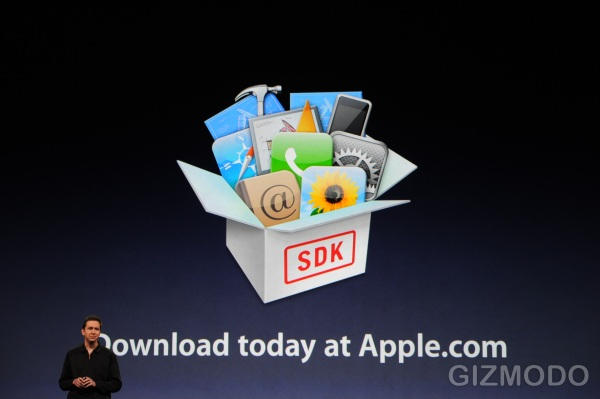
The new SDK is available today and includes all the tools developers need to create custom apps for the iPad.
I’m on the hardware beat of CoM’s iPad coverage, so while the App Store devs take the stage, I wanted to just a quick aside on why I think the iPad is a terrible name for the Tablet, as spontaneously ill-considered as my opinion might be.
In an earlier post, I swore that if Apple was creatively bereft enough to call their tablet the iPad, I’d eat an extremity… but not that one. Either way, I’m reneging on my promise, since I like my digits.
But I wanted to point out quickly why I think this is such a terrible product name. I’m from Boston originally. We have an interesting way of pronouncing our a’s.
Call up a friend with a Boston accent and ask them to say “iPad.” They might just pronounce it pretty similarly to “iPod.” We’re weird that way. Or as Jake von Slatt just said to me: “Here in Boston, we’d say ‘Do you haave the big iPohd or the little iPohd?'”
Even if the pronunciation is different for everyone, though, iPad still seems a bad choice. A one letter difference makes for a lot of possible confusion.
iSlate had its problems — I equate a slate with something monochrome, fragile, easy shatterable — but it was a lot better than iPad.
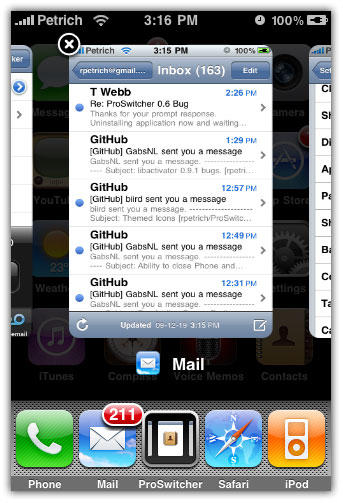
It’s been 50 minutes into the event and There’s no sign of multi-tasking. To switch between apps, all they are doing is simply closing the current and opening a new – no ProSwitcher like card management. This is definitely going to be a deal breaker for the most who are planning to trade their netbook for this device.
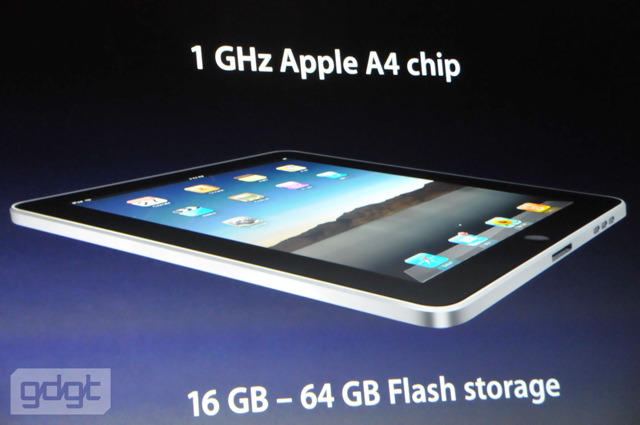
Also, the screen’s got some good real-estate, seems like 2x the resolution of the iPhone. However,
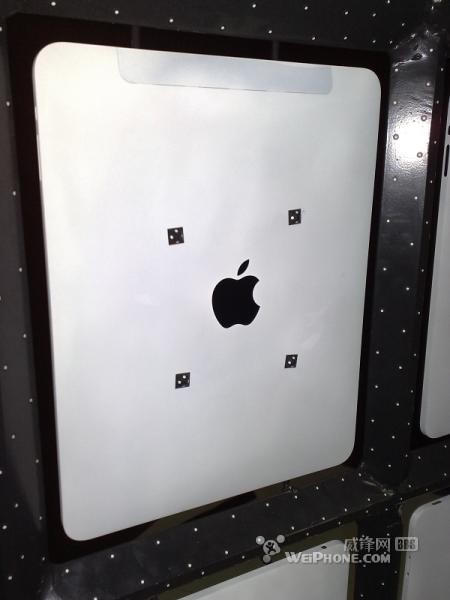
A Chinese website published, then withdrew photos purporting to be the exterior of Apple’s much-awaited tablet device. The photos seem to show the rear, screen and some software involved.
According to reports, the photos from the Weiphone website “look like leaks from a component manufacturer” taken at a testing facility.
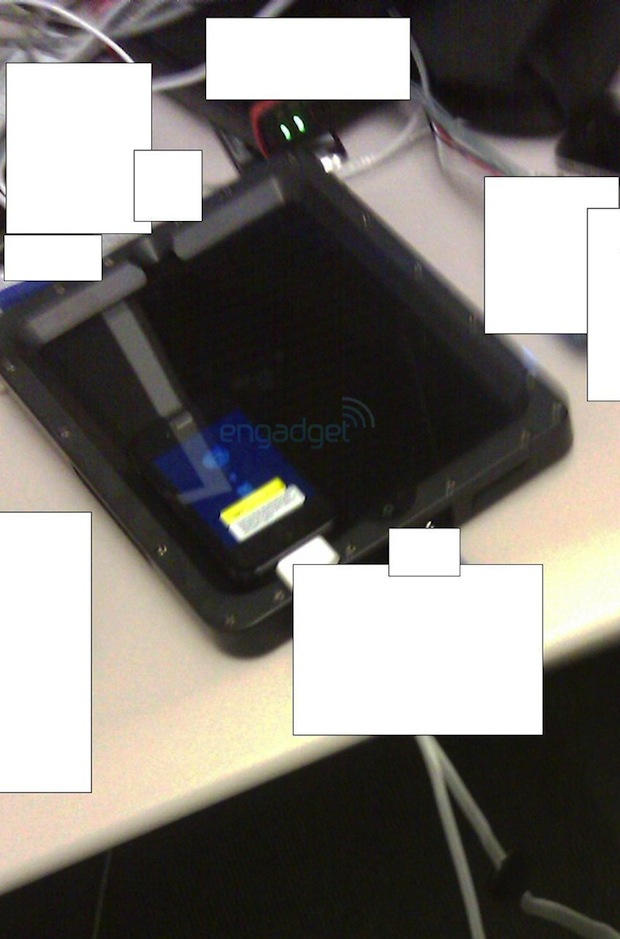
Engadget has just published another picture of the tablet prototype, which clearly shows a forward-facing camera. Earlier rumors, which weren’t very plausible, said the tablet wouldn’t have a camera.
The latest spy shot (if it’s real) also clearly shows the size. That’s an iPhone in the corner, and by the looks of it, the tablet’s screen is larger than 10-inches. (The iPhone may also be a prototype: it has a black bezel, like the tablet).
The tablet’s bezel looks pretty deep. Not one of the myriad mockups floating around the internet envisioned such a beefy bezel.
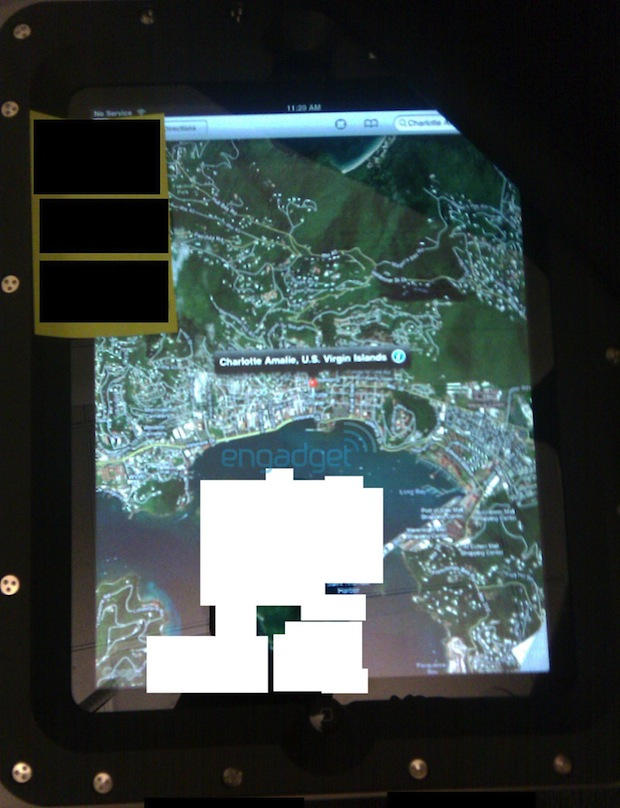
Everyone’s getting very excited by these Engadget pictures, which purport to show a prototype of Apple’s tablet. Says Engadget:
“It’s big — really big — and it’s running what clearly looks like an iPhone app, although we’ve never seen an iPhone app with that interface or at that resolution before. We also see a WiFi icon and a cell service indicator, although tragically there’s no carrier listed.”
But color us skeptical. The pictures appear to have been sent in anonymously (“Okay, we obviously can’t confirm this…” the post starts). And trying to explain the bolts around the edge, Engadget suggests it has been bolted to the table. Bolted to the table? WTF? Why would it be bolted to a table?
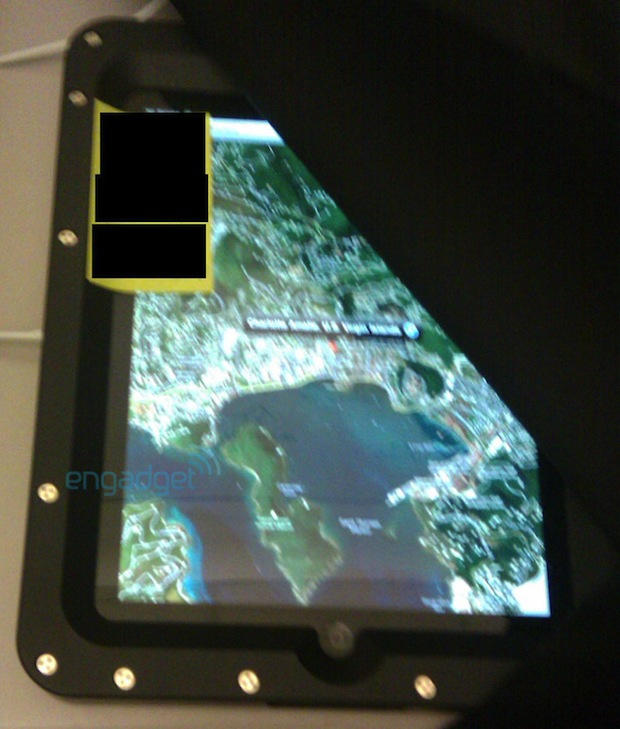
And what’s going on in the picture below, in the bottom left corner of the screen? It looks like the screen is transparent, and its showing a support of some kind underneath. Or is it a reflection? Perhaps it is an Apple prototype, but a tabletop system, like Microsoft’s Surface table?
In the picture below, at the bottom of the screen, is the reflection of what looks like a utility pole (with transmission wires running left to right) and the image of the photographer, who has been whited out.
So the picture was taken outside (in the U.S. Virgin Islands perhaps?), while the picture above looks like an indoor shot. The tablet seems to be sitting on a tabletop, with white wires running underneath — perhaps the AC charger and headphones. Note the Home button sitting right in the middle of the shortest edge, plus the recessed screen. It looks to be the same size and shape as a tea tray.
The bolts around the edge are reminiscent of the bolts used in the stairs at Apple’s stores, and the pivot arm of the old G4 iMac. However, it seems unlikely that Steve Jobs and Jonny Ive would leave bolts exposed in the final design.
Still, after being initially highly skeptical of these pictures, they’re now starting to look more real. What are the blacked out labels though?
Nick Merritt at TechRadar says the arrival of the tablet highlights the sad state of modern computing: “…This view sees the iSlate as the Omega to the Mac’s Alpha, the final delivery of the Holy Grail of computing, the fabled ‘information appliance’, completing the job the Macintosh started. How? By finally delivering on Jeff Raskin’s/Larry Ellison’s visions: something so flexible yet simple to operate a baby could use it.”
Photographer and self-confessed Apple fan Paul Inskipspells out his thoughts: “By my own admission I’m an Apple fan but this is another case where if Apple re-writes the rule book on tablets and creates something it helps to push everything forward. CES saw the same tired laptop-into-a-tablets computers thrown about hoping to ride the wave of the Apple device but they will end up looking like the chunky ‘smartphones’ of old before the iPhone came out.”
Finally, Jeff Harper at the Canadian Chronicle Herald has this to say about the tablet’s possible effect on the publishing industry: “Newspapers that were struggling to make money with their online product will now be able to harness the power of Apple’s iTunes store and sell monthly subscriptions there. It also allows papers to reach readers outside each business’s traditional boundaries of provinces and state lines. If your content is good, people will buy it.”