Mobile menu toggle

Search results for: Apple One

Would-be iPad killer, the HP Slate, is just a Windows 7 netbook on the inside

By

zdnet-hp-slate

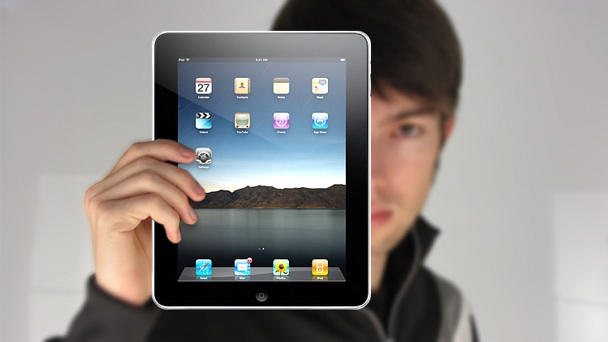
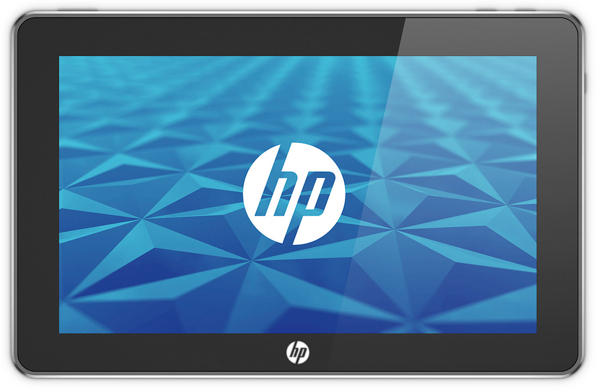
Back when everyone thought Apple’s tablet was going to be called the iSlate, HP stole the rumored name for their own iPad-esque wedge of aluminum and metal, the HP Slate, but the specs remained a mystery. Now Spanish gadget blog Clipset has the details on HP’s forthcoming tablet, confirming pretty much what we knew all along: it’s basically a netbook with the keyboard broken off.

According to Clipset, the HP Slate is driven by Intel’s Atom processor, and contains built-in USB ports, a memory card reader for expandable storage, and the poorly thought-out placement of a backwards-facing webcam.

That Intel Atom processor would be just fine if the HP Slate was being driven by a custom touchscreen OS like the iPhone OS, but instead it runs Windows 7, which runs chunkily at best on netbook processors and has a long way to go as a multitouch-driven OS.

The cost? €400, or almost $550, although my guess is that in the US, HP won’t dare go higher than the entry-level iPad’s $499 price.

It’s a nice try, but one that falls short. They might confuse some people: in chassis design, the HP Slate looks so much like the iPad that it resembles a Chinese knock-off more than a competing product. Caveat emptor. But there’s just no way anyone is going to mistake Windows 7 for iPhone OS.

[via Gadget Lab]

Intel struggling to cope with Core i3/i5/i7 drought as MacBook refresh remains MIA

By

post-34234-image-a57461697e8d95bd82287ebd5d1a3832-jpg

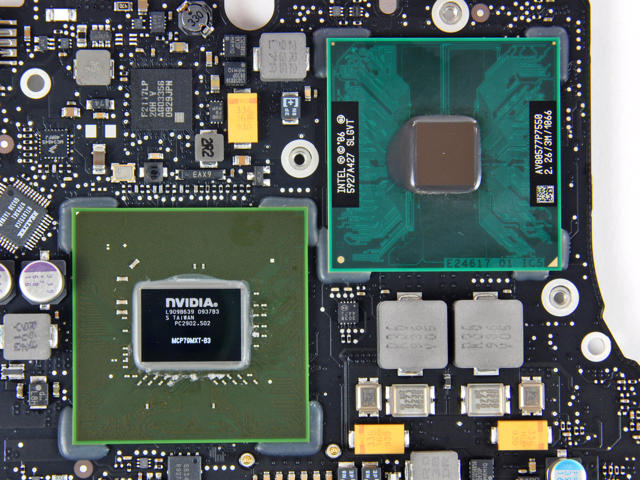
A terse entry from the sometimes reliable Digitimes might spell bad news for MacBook owners waiting for an imminent hardware refresh: Intel is having a hard time meeting demand for their latest Core i3, i5 and i7 processors, the most likely CPU candidates for the next iteration of Cupertino’s laptop line.

It all comes down to Acer. Apparently, the Windows laptop maker was so optimistic about consumer demand for Intel’s latest processors that they made an abnormally large order, slurping up practically every batch spit out of the assembly line. This has caused Intel to prioritize delivery of the remaining chips to major clients.

The question is: is Apple still considered a major client for Intel? Intel and Apple simply aren’t as close as they were two years ago, mostly due to Apple’s GPU partnership with NVIDIA: now, with Apple getting into chip development of its own, Intel may well see the writing on the wall… Apple’s an up-and-coming competitor.

Amazon releases Kindle for OS X beta

By

kindle-for-mac-tcg._V216904008_

Thanks to some great hardware design and some daringly surreptitious pricing agreements between Apple and the biggest publishers out there, Amazon’s Kindle e-reader has been feeling the pinch from the still unreleased iPad for the last few months, and it’s only going to get worse from here.

Still, the Kindle has at least one advantage the iPad doesn’t (yet): cross-platform libraries. Until (or even if) Amazon can put together a next-gen Kindle device that out-iPads the iPad, it behooves them to get their Kindle e-reading application on as many devices as possible as a stop-gap measure.

No surprise, then, that after a delay of several months, Amazon has finally brought the Kindle application to OS X. Unfortunately, it has all of the hallmarks of a panicked beta release (which is probably what it is) including some very sloppy and un-Mac-like interface design, the bizarre omission of a search function and some very swampy text rendering.

In other words, download at the peril of your sense of clean OS X aestheticism and functional application design. Unless you don’t plan on picking up an iPad, or have a large existing library of Kindle e-books, there’s little reason to give this a go.

Report: ‘Hundreds of Thousands’ of iPads Already Sold

By

CC-licensed. Thanks to Rego on Flickr.

Despite last-minute hang-ups on getting content onto the iPad, Apple has sold “hundreds of thousands” of the tablet devices since the Cupertino, Calif. company began taking pre-orders a week ago. The report seems to mirror a Venezualan blogger and analyst who predicted Thursday Apple will reach the 200,000 mark sometime today.

Apple could sell more iPads than it did iPhones during the same first three months, “people familiar with the matter” told the Wall Street Journal. Blogger Daniel Tello has said Apple could reach the 200,000 mark for online pre-orders of the iPad by mid-Friday. Tello, also known as Deagol, bases his estimates on order numbers buyers submitted since Apple unleashed pre-orders March 12. An equal amount of in-person pickups at Apple retail locations are also expected, according to Fortune.

How To Get MobileMe For Free Using Google and Dropbox [How To]

By

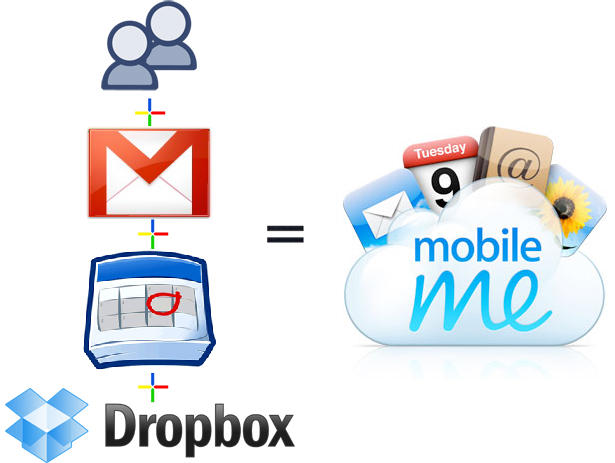
MobileMe for Free.

A couple of weeks ago I canceled my MobileMe account. Why? Because it didn’t do the one thing I wanted it to do: share my calendar with my wife so we could coordinate our busy lives. That’s all.

I love MobileMe’s email, calendar, contact syncing (especially on the iPhone) and even iDisk. I gave Apple a year to improve it, but nothing happpened, so I switched.

Here’s how to recreate all of MobileMe’s features for FREE (except one) and how I use it to sync my iMac, MacBook and two iPhones.

The iPad is Coming, But Where’s The Content?

By

CC-licensed, thanks Richard-G on Flickr.

You may have beat the crowd to pre-order an iPad, but when you pick it up April 3, Apple still doesn’t know content will be available for it.

According to a Wall Street Journal report, Apple is “scrambling” to firm up content deals just weeks before the device ships.

All of the usual unnamed insiders say that Apple has had a hard time lining up TV programs, digital newspapers and other content before the launch as media titans weigh the advantages of jumping on the iPad bandwagon against the potential threat to current revenue streams.

Talks are still on, according to these Cupertino deep throats, to secure discounted TV shows.  iPad users would get $0.99 downloads instead of the $1.99 and $2.99 they pay now at the iTunes store. Deals with newspapers, magazines and book publishers have all been put on the back burner for now.

If the numbers insiders cited in the story are correct — hundreds of thousands of iPads have been pre-ordered and Apple could sell more iPads in the first three months than iPhones in the first trimester after debut– the content owners could soon be the ones scrambling.

What, if any, content do you consider essential for the iPad?

Via WSJ

Pwnage Smackdown In Vancouver Next Week

By

20100318-brokenmac.jpg
Will the Mac break first? CC License pic by mcbarnicle on Flickr

Next week sees the opening of the CanSecWest digital security conference in Vancouver, British Columbia.

It’s also going to be host to the annual Pwn2Own contest, where a variety of computers are offered up as prizes to the first individual who can crack their way into them.

This is the fourth year of Pwn2Own and the total prize money has ballooned to US$100,000. Nice work if you can get it.

This year the browser targets are: Microsoft Internet Explorer 8 on Windows 7, Mozilla Firefox 3 on Windows 7, Google Chrome 4 on Windows 7, and Apple Safari 4 on MacOS X Snow Leopard.

There’s also a separate part of the contest aimed at mobile devices, which this year will be: an Apple iPhone 3GS, a RIM Blackberry Bold 9700, a Nokia device running Symbian S60 (probably the E62), and a Motorola phone running Android (probably a Droid).

There are some interesting omissions from the target list this year: no Ubuntu desktops? No Opera Mobile?

In 2009, the a MacBook Air was the first device to be won. Wonder how Snow Leopard will fare this year?

Stunning Glimpse Into The Future Of Magazines

By

cult_logo_featured_image_missing_default1920x1080

Take a gander at the clip up there. It’s been forty-odd years since Bobb Goldsteinn coined the term “multimedia,” but I think — and maybe you’ll agree with me — this is the first time I’ve felt that I could easily apply the word and think “yeah, that’s exactly what it is.”

In the clip, Alexx Henry of Alexx Henry Photography guides us through a behind-the-scenes peek at the production of an issue of online-only Viv Mag, tailored for consumption on the iPad. Along the way, you’ll see references to some of the other forerunners of this transformation that we’ve written about in the past, like Wired and Bonnier.

Probably the coolest way I’ve heard anyone yet sum up the new paradigm, from Alexx Henry, late in the clip: “We aren’t making moving pictures — that’s what movies do. We’re creating pictures that move.”

WSJ, NPR to Create iPad Web Sites with Limited Flash

By

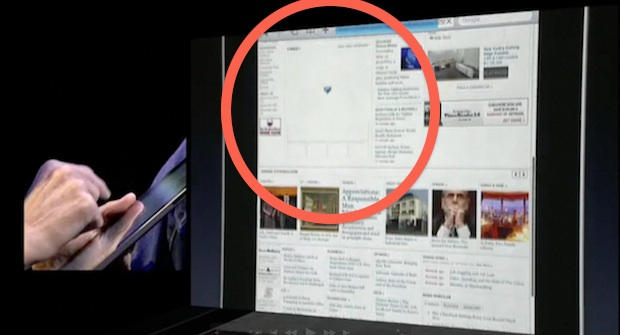
The iPad will notr support Adobe's Flash, which is widely used across the web for rich media. During Steve Jobs' introduction of the device, he loaded the New York Times homepage, which had a big blank spot where it's Flash movies are located.

At least two media sites are following Apple’s no-Flash policy when it comes to the iPad. The Wall Street Journal and National Public Radio have produced versions of their Web sites with front pages that do not require Adobe’s Flash, reports say. However, possibly more interesting is how publishers view the iPad experience differently than the iPhone. The iPad, it seems, has jumped that evolutionary hurdle from strictly a computing device to more akin TV.

Kinsey Wilson, NPR’s head of digital operations, told MediaMemo‘s Peter Kafka iPhone apps are a ‘very intentional experience’ where people actively search for information. That possibly is why pages on the NPR Web site deeper than the front page are customized for the iPhone.

What’s Next For the iPad? A Tabletop iPad, According to Xerox PARC Circa 1991

By

samsung_multitouch_board
A 50-inch multitouch screen from Samsung shown off at CES in 2009. These devices will soon be common, according to a visionary, 20-year-old report from Xerox PARC. Image: Engadget.

Way back in 1991, just as Apple was transitioning from 68k to PowerPC chips, the braniacs at Xerox PARC were predicting it’s entire iPod, iPhone and iPad strategy. And next up for the iPad is a blackboard-sized device.

Nearly 20 years ago, just as personal desktop computers were taking off, researchers at Xerox started thinking about the next stage: ubiquitous computers and the cloud.

They envisioned a range of always-connected devices that came in three basic form-factors: Tabs, Pads, and Boards. They are described thus in a Scientific American article:

“Ubiquitous computers will also come in different sizes, each suited to a particular task. My colleagues and I have built what we call tabs, pads and boards: inch-scale machines that approximate active Post-It notes, foot-scale ones that behave something like a sheet of paper (or a book or a magazine), and yard-scale displays that are the equivalent of a blackboard or bulletin board.”

The inch-scale “tabs” are Apple’s iPhone and iPod touch, plus smartphones from Google and Palm. The foot-scale “pads” are the iPad and the 50-odd tablets coming out this year. And next up are yard-scale “boards,” which will act a big-screen hubs in the home and interactive workspaces in the office. Microsoft’s Surface table is the best current example, but more big-screen devices are inevitable as component prices come down thanks to the flat-screen TV industry.

What’s amazing is how twenty years later PARC’s vision describes Apple’s transition into a “mobile” company with a range of devices accessing the cloud. It’s fitting that the vision that should come for the same lab that invented more-or-less personal desktop computing.

Via Adam Rosen: Ubiquitous Computing 2010 – Tabs, Pads, Books and Clouds.