Mobile menu toggle

Search results for: Apple One

Why Microsoft’s Mall of America Store Will Fail

By

5053633367_2227ddcb38_z

Software giant Microsoft plans to open a new retail store Nov. 6 in Minnesota’s gigantic Mall of America — directly opposite from the Apple Store.

I predict that the Microsoft Store will fail spectacularly.

PC giant Dell tried retail locations a few years ago — the company peaked at 140 mall kiosks before the company announced that electronics superstores and the dell.com web site were better places for customers to buy.

Gateway tried it, too. The company opened more than 260 “Gateway Country” stores several years ago before shutting them down and selling out to Acer.

Microsoft’s Mall of America store will be much larger than the Apple Store across the walkway — reportedly 8,600 total square feet and 5,200 of which devoted to public showroom. And it will be a lot bigger than Microsoft’s existing retail stores in Scottsdale, Ariz., Lone Tree, Colo., and Mission Viejo and San Diego, Calif. (Apple has 310 stores.)

The new Microsoft store will mimic Apple’s shiny modern industrial wood, metal and glass architectural style. Employees will high-five customers as they stream in on Day One. There will be computers and tablets and smart phones displayed.

Microsoft’s strategy for competing technologies has always been to “embrace and extend.” The strategy for retail appears to be “copy and outspend.”

Why the Microsoft Store Will Fail

Tech giants, including Apple, open retail stores for four reasons:

1. Increase sales

2. Improve branding awareness and affinity

3. Improve public familiarity with products

4. Provide a place for tech support

I predict that Microsoft will fail in all four of these areas. Here’s why:

Apple Stores are profitable. The Microsoft store will not be. It probably wasn’t designed to be. It probably can’t be. The details of Microsoft’s money-losing retail strategy, especially for this giant store, will be contrasted unfavorably with the details of Microsoft’s incredibly lucrative retail strategy. Microsoft will probably lose a lot of money on this store, and the fact will embarrass.

The majority of PC users and the majority of cell phone owners — in other words, the majority of mall goers — do not use Apple products. Apple increases sales with its Apple stores by introducing people to its products.

People may walk by the store fogging the glass 10 times before they ever go in. Once inside, they play around with the computers, fondle the iPads, and allow themselves to be dazzled by the big screens.

For the average mall goer, the Apple Store is a journey into an exotic and beautiful alternative universe. But the Microsoft Store will be like a journey into… Best Buy.

Placing the Microsoft Store directly opposite from the Apple Store is an error. Once the novelty has worn off, the Apple Store will be consistently busier with a much broader spectrum of consumer. While the Microsoft store may be a hit with a 13-year-old boys who want to play Xbox on giant screen, proximity will expose differences in the consumer appeal of each company.

Note that Microsoft has many loyal and enthusiastic business customers. But they won’t be at the mall to represent.

Apple has its Genius Bar, which is a mixed bag of customer service experiences. Some people walk away unhappy, but some people are completely satisfied.

Offering tech support at the Microsoft store is probably a bad idea. Because the Windows platform is what Steve Jobs would call a “fragmented” environment (OS from one company, hardware from another), tech support issues are likely to require intervention by companies other than Microsoft. So Microsoft may not offer tech support, which makes the company look bad. Or it may offer tech support, which makes the company look worse. It’s a no-win for Microsoft.

The problem with Microsoft opening a store directly across from an Apple Store is that it invites comparison between a company that’s in a position to benefit from retail against one that isn’t.

Retail benefits Apple because the company’s products are more beautiful than its competition and less familiar. Retail benefits Apple because its products are all of a kind, they look as if they come from the same company with the same aesthetic value. So the Apple Store has a unified appeal that Microsoft won’t be able to fully replicate.

Microsoft may be a great company with much to offer. But it has nothing to gain from a retail store — especially one right across from an Apple Store — except embarrassment.

11-Inch MacBook Air Is Ultra Portable And Surprisingly Powerful [Review]

By

OLYMPUS DIGITAL CAMERA

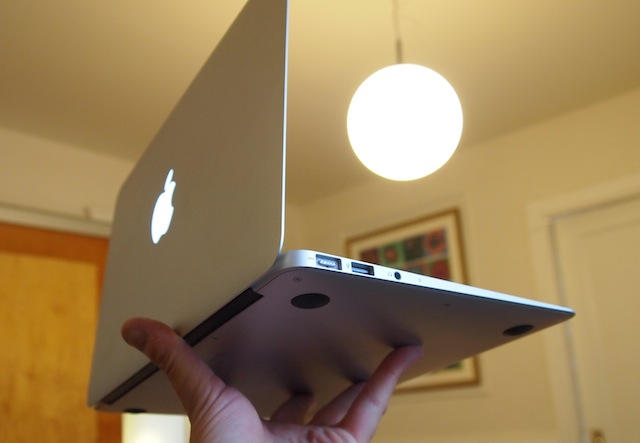
Apple’s new 11-inch MacBook Air is astonishing. It’s unbelievable. It’s the most exciting consumer PC that’s come out for years. It’s a netbook, but it’s not a PoS. It’s blazing fast. It’s unbelievably light and thin. It’s beautifully made. Really beautifully made.

It has an older CPU and skimpy RAM, but it is NOT underpowered. For users like me, who aren’t editing Hollywood movies, it’s more than adequate. Heck, it’s a huge leap forward. Like Jobs said at the launch, this is the future of notebooks. Extremely thin and light, yet capable of running dozens of applications without bogging down. There are compromises, of course, but the most important things — portability, durability and functionality — are very much in place.

Last year, I bought a 13-inch MacBook Pro, which I loved. But in comparison to the 11-inch Air, it looks like a bloated old relic. It’s positively primitive: a porky throwback to a previous computing era.

I know what you’re thinking, “Cult of Mac. This guy’s a zealot. He’ll buy anything Steve Jobs tells him too.” I admit, I’m a fan. But the Air is important. It’s different. It’s right up there with the iPad and the iPhone. This is a breakthrough product.

New TV App Mimics Netflix Suggestions [First Look]

By

peel 106

Couch potatoes take note: Peel, a free app that’s a sort of mix between Netflix’s movie suggestions and TV Guide, made its debut last week.

And it’s got a star-studded development team backing it up. Core members of the original iTunes team helped create Peel’s interface, and a team that beat Netfilx’s movie-suggestion algorithm in a competition worked on Peels innards.

Steve Jobs Isn’t Big Brother, and the Mac Remains Open [Mac Skeptics Part 2]

By

20101021-appstore.jpg

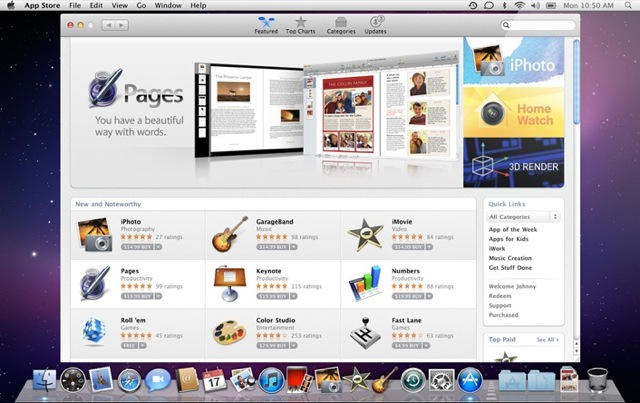
Previously on Cult of Mac, I decried the growing alarmism of tech punditry regarding Apple’s as-yet-unreleased Mac App Store. GDGT’s Ryan Block citing something about the cloud or something, noted that his pet applications are probably not going to be hosted by the App Store, which therefore means that meaningful innovation in desktop software is impossible. I begged to differ.

But my greater scorn has been reserved for the subject of this post, the Gizmodo commentary “Big Brother Apple and the Death of the Program,” by Matt Buchanan. If you haven’t read it, do yourself a favor and check it out. It’s a doozy of tortuous logic, FUD, and faulty analysis well-worth your time. The following is my rebuttal to several of its most absurd assertions.

Take Double Exposures With Pinhole Camera [Review]

By

20101025-pinholecam.jpg

Photo effects apps are two-a-penny on the App Store now, so if your photography app is going to make a splash it needs to offer something more than just whimsical visual effects and a selection of fake-Polaroid borders.

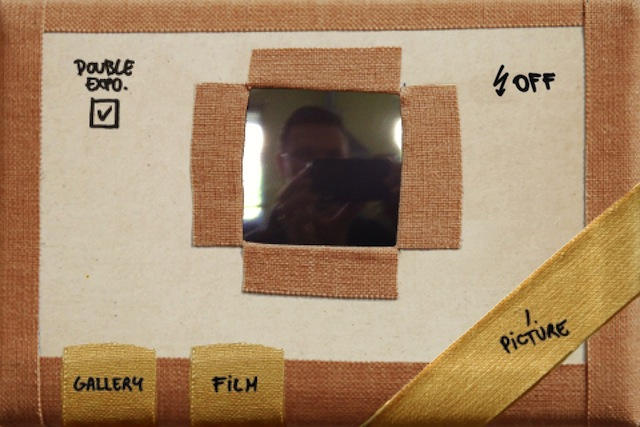
Pinhole Camera claims to turn your iPhone into a digital pinhole camera. It’s quite fun to use, mocked up like a home-made pinhole cam made of sticky tape and cardboard.

But what sets it apart isn’t the basic photos – it’s the double exposure feature that lets you merge two photos into one.

Lies, Damn Lies, and Mac App Store Skeptics [Part 1 of 2]

By

post-65869-image-053af2279995d12e8c33c9aa5cf5cab5-jpg

I’ve noticed an alarming trend over the five days since Steve Jobs introduced the Mac App Store at Wednesday’s Mac-focused media event. On all sides, the internet is being overrun by otherwise savvy tech pundits who have decided that Apple’s efforts to provide an easy-to-use, accessible, and intuitive marketplace for Mac software is irrelevant at best and, though you didn’t hear it from me, evil, too.

The most alarmist such pieces I have encountered thus far are Ryan Block’s “Will the Mac App Store have enough to sell?” from GDGT, and Matt Buchanan’s “Big Brother Apple and the Death of the Program.” The former, as you might imagine, argues that desktop software is dead, while the latter, predictably, foretells a grim future in which you won’t be able to read these words, and the keyboard I’m typing this post on write now will instead devote itself to composing Jobs-praising hymns.

I don’t often give myself over to Fisking, but I think it only makes sense to deconstruct these pieces by responding to specific arguments within. I am, necessarily, only excerpting from each piece, so I encourage you read them in their entirety — the full context is as ridiculous as the smaller slices. Up first, Ryan Block tells us why your notebook doesn’t have any software on it.

Release Your Inner Spielberg with iMovie ’11 [Review]

By

post-65569-image-814f14807f086ec54459af82a5f9a1b0-jpg

Apple’s new iMovie ’11 is here and while it isn’t the best part of my iLife, like iPhoto, it does make an occasional cameo appearance in my life. The new iMovie features that Apple announced last Wednesday are pretty good making an already great program better.

The new movie trailers, improved audio editing, one-step side effects, people finder, themes, and world premiere all bring new or improved features the give me more opportunities to be creative. I’ll be able to finally craft movies that are almost as good as the ones made by Steven Spielberg. Well maybe not that good, but definitely better than before.

This Week’s Must-Have iOS Apps: Printer Pro, Simply Postcards & More!

By

post-65738-image-75a8c210ea85e2803b0fa7cad3e3568f-jpg

One of our favorite applications this week is a great new photography app called Simply Postcards that lets you turn any photo into a real postcard that you can have printed with a personal message and mailed to friends and family.

Printer Pro is Readdle’s latest application for iOS, and one of the most impressive applications in our favorites this week. It allows you to wirelessly print a whole range of documents direct from your iPad, including email attachments, web pages, and iWork documents.

Also featured is a great language translator for the iPad, and the most definitive guide to Central Park for your iPhone.

This Week’s Must-Have iOS Games: Yoo! Sports, Reckless Racing, Angry Birds & More!

By

post-65648-image-0606aabdde7e70362a4f4194296fbb4c-jpg

This week’s must-have iOS games features a great new sports package for the iPhone that offers 5 action-packed sports games including archery, bowling, and tennis. Yoo! Sports claims to be the next generation of iOS gaming.

Reckless Racing is EA’s fantastic new dirt-road racer and another of our favorite games this week. It combines traditional top-down racing with state of the art graphic environments optimized for the Retina display.

Angry Birds Halloween also features – the ghastly special edition of one of the best-selling iOS games in the App Store.