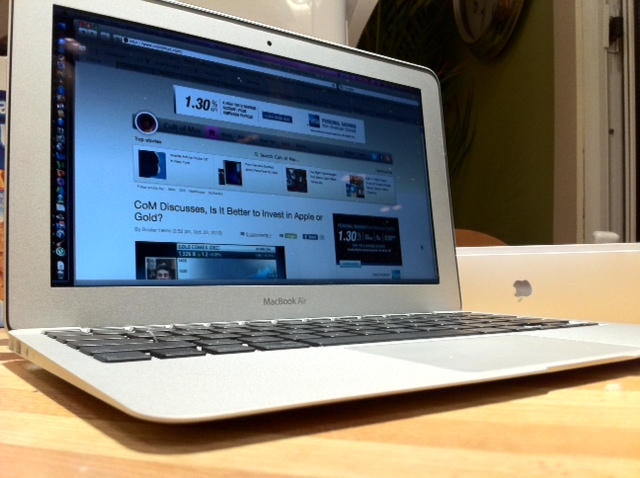
Holy Mackerel this thing is fast! 46 tabs in Safari and 21 in Chrome; 18 open applications, including hogs like Safari, Mail and iTunes.
No spinning beachballs!
There’s no slowdown whatsoever. It’s amazing. This thing flies. It’s the $999 11-inch MacBook with only 2GBytes of RAM — the machine people said would be underpowered. But it’s not. Not by a long shot.
It’s the fastest laptop I’ve used in years, and Apple is going to sell boatloads of them. It’s very exciting.
I’ve got to go on a scout trip with my son. Full review on Monday, and more pictures after the jump.
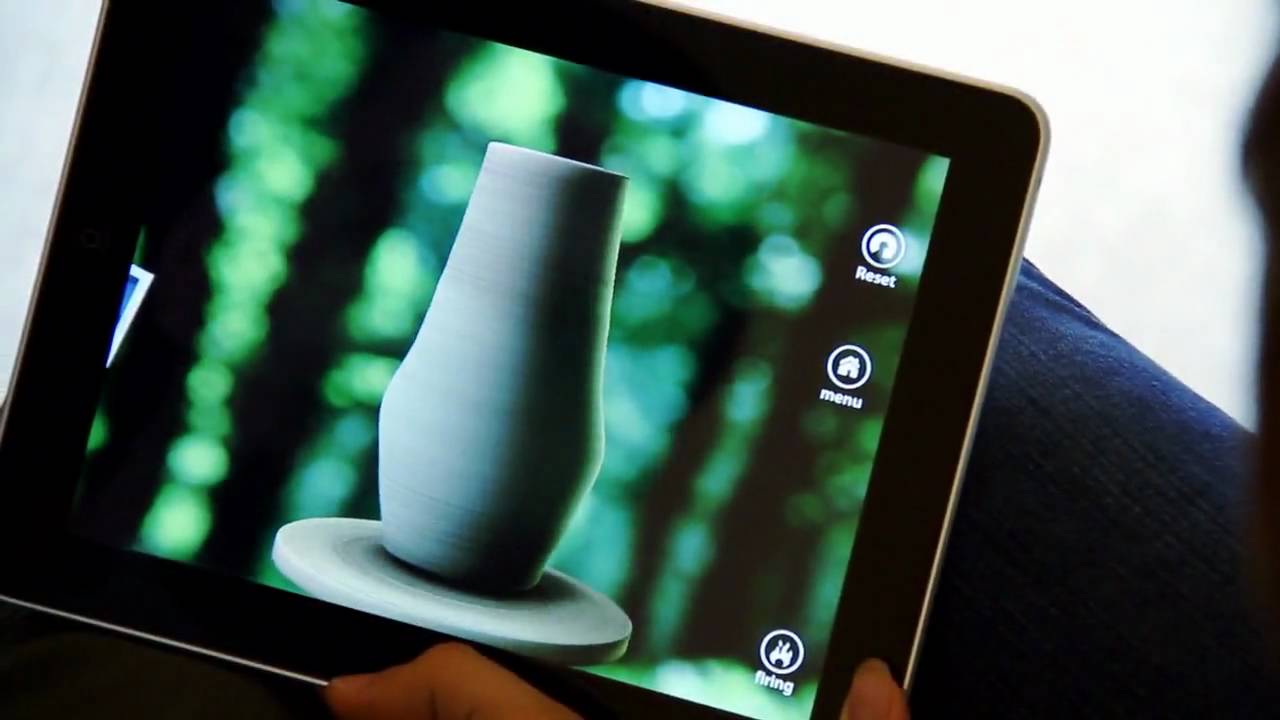
This is turning out to be a pretty artsy weekend for the iPad. Not only will there be an explosion of iPad and iPhone art at the first ever Mobile ArtCon in Manhattan, but Infinite Dreams has also just launched a free version of their Let’s Create Pottery HD app, which turns the iPad into a virtual pottery wheel and kiln and has to be one of the most stunning creative apps we’ve seen on the device. there’s even a virtual showroom, where finished creations can be displayed.
The full, $5 version of the app will also be on sale at $3 through the weekend, though it’s not immediately clear what the differences are between the two.
A fingerpainting of the New York skyline by Benjamin Rabe. Courtesy iAMDA.
Artists who have traded canvases for touch screens and brushes for the Brushes app will meet up at a Digital Art Conference in New York City this weekend.
The iAMDA (International Association of Mobile Digital Artists) has organized its first ever MobileArtCon taking place at the New York University’s Interactive Telecommunications Program (ITP), October 23-24.
Cult of Mac talked with artist and organizer Matthew Watkins — whom we featured when his iPhone art was the first to hang at an Apple reseller — about what to expect from this weekend meeting of digital artists.
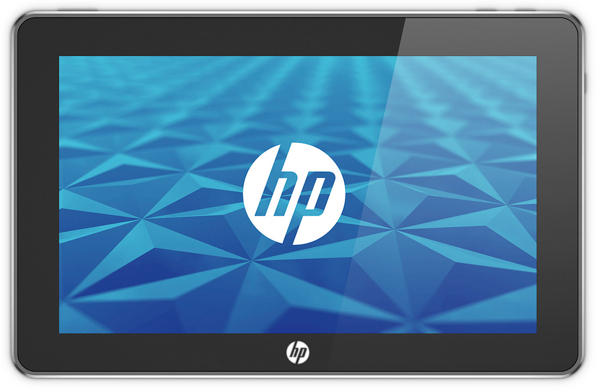
Earlier talk of the death of HP’s Slate tablet was incorrect – sort of. While a consumer-oriented tablet using the webOS acquired from Palm may have to wait until 2011, the computer maker is reportedly on the verge of unveiling the HP500, an $800 Windows 7-based tablet designed for the office.
The Slate 500 (the official HP Slate webpage redirects visitors to the company’s inventory of business laptop and tablet pcs) uses a full version of Microsoft’s Windows 7, weighs in at 1.5 pounds and includes an 8.9-inch multitouch screen.
The device also supposedly is powered by a 1.86 GHz Intel Atom chip. Apple’s 64GB iPad uses the in-house 1GHz A4. Apple CEO Steve Jobs recently commented on rival tablets. “Our potential competitors are having a tough time coming close to iPad’s pricing. iPad incorporates everything we’ve learned about building high value products,” he said Monday. The proof will be in the pricing of our competitors’ products, which will offer less for more,” Jobs claimed.
Sure, they’re not likely to impress Apple fans, but Samsung’s actually one of the few companies around that is managing to release products to rival Apple’s iOS devices. The Samsung Galaxy S is a capable smartphone that almost has the luster of the iPhone 4; likewise, the Galaxy Tab is probably the only real competition to the iPad out there in the tablet market.
What about Samsung’s answer to the iPod Touch, though? Meet the Samsung Galaxy Player in this utterly charming little commercial.
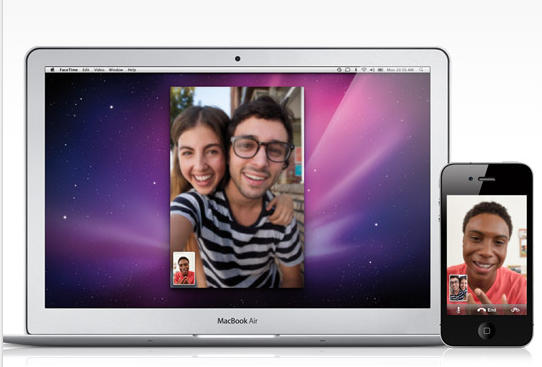
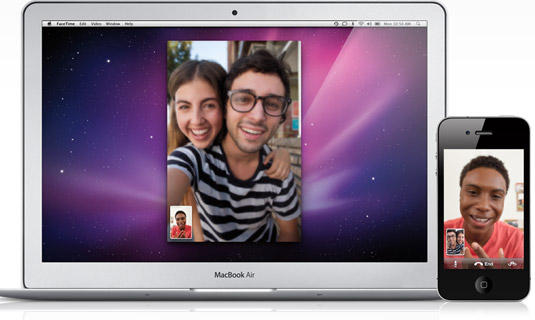
When Steve Jobs announced at the Back to the Mac event that the iPhone 42 s video chat feature FaceTime would be spreading to all Macs, our thoughts naturally turned to porn.
While interactive video sex chats are nothing new, FaceTime brings portability and convenience or, as the Apple site touts it: “Now your smile goes even further” — so we wanted an opinion from iP4Play, the first porn service to target FaceTime when it was only available for the iPhone 4.
Cult of Mac spoke with Travis Falstad, managing director of iP4Play, about these exciting new developments and “porn-free” devices.
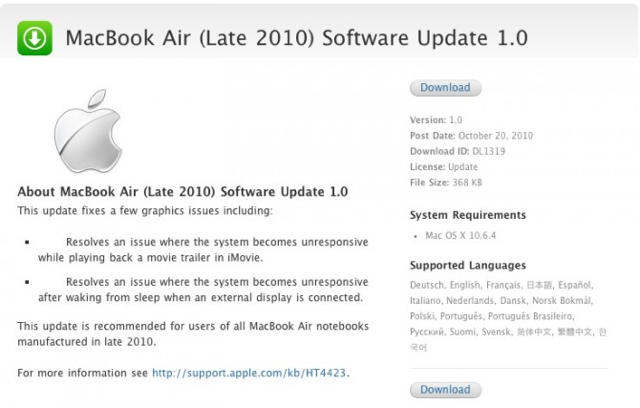
Well, that didn’t take long: the first MacBook Airs were barely in users’ hands before Apple has seen fit to squirt out their new laptop’s first Software Update.
What does the update fix? Mostly graphics issues, including one which strikes when a user opens iMovie ’11. It also fixes some sleep issues when the MacBook Air is hooked up an external display.
Here are the official notes:
This update fixes a few graphics issues including: Resolves an issue where the system becomes unresponsive while playing back a movie trailer in iMovie. Resolves an issue where the system becomes unresponsive after waking from sleep when an external display is connected. This update is recommended for users of all MacBook Air notebooks manufactured in late 2010.
The update weighs a paltry 368KB and can be downloaded here.
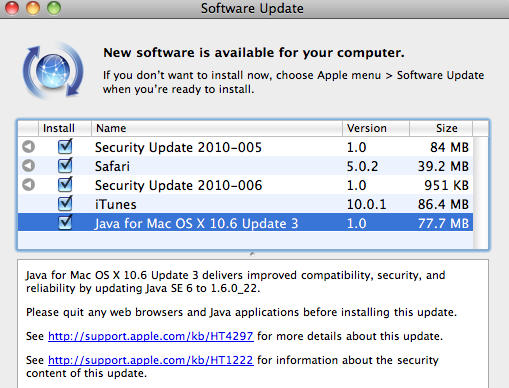
Yesterday, Apple quietly announced that they would cease future distribution of their own custom Java packages, concerning some Java developers. But no need to worry, Steve’s already already explained Apple’s thinking on the matter, and it makes sense to us.
First, Apple’s announcement of Java deprecation. According to the updated developer documentation for the Java updates for OS X released yesterday, Apple will no longer be maintaining their Java runtime at the same level, and it may even be removed from future versions of Mac OS X.
So does that mean that Macs will no longer have up-to-date Java? A concerned Java Developer from Portico Systems emailed Steve Jobs, asking that very question.
Jobs’ response:
Sun (now Oracle) supplies Java for all other platforms. They have their own release schedules, which are almost always different than ours, so the Java we ship is always a version behind. This may not be the best way to do it.
In other words, Apple’s leaving Java to the company that does it best… that is, if Oracle decides to step up and produce their own version of Java for Mac, as they do for every other platform. My guess is they will quickly fill the void and it’ll be a win for everyone: Apple no longer has to spend the money to produce custom-baked, already-obsolete versions of Java, and Mac users will get Java of the same level and quality as it is available on other platforms.
For a few hours yesterday, the Internet lit up with reports originating from Macwelt.de that there was a serious security hole in the FaceTime for Mac beta.
Frankly, calling it a “security hole” seemed even at the time a tad hyperbolic. Basically, the hole in FaceTime for Mac beta meant that once a user had logged into his account, that user’s AppleID and password could be altered within the app by anyone with physical access to the computer, without any other security checks.
At this point, we’re not really surprised when Apple’s new software drops support for old PowerPC Macs. Apple’s been building PCs on Intel hardware for four years now: at some point, going through all the expense and bother of coding for obsolete hardware just stops being worth it.
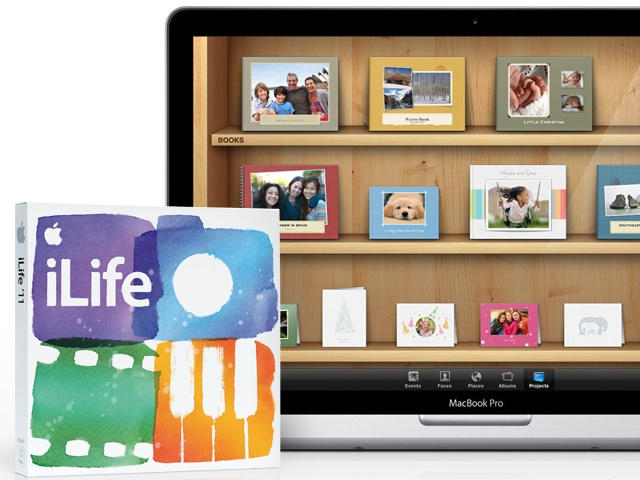
So when iLife ’11 dropped PowerPC support, we weren’t surprised. It’s not really a big deal: the previous version of iLife works just fine on the PowerPC architecture, and if you’re going to work on a five year old computer, you can live with a two year old media productivity suite, we reckon.
More surprising to us is iLife ’11’s strict requirement for a minimum OS install of Snow Leopard. That’s more than a little strange, although during the presentation, Jobs did mention that iLife ’11 was built upon many of the core technologies introduced in Snow Leopard.