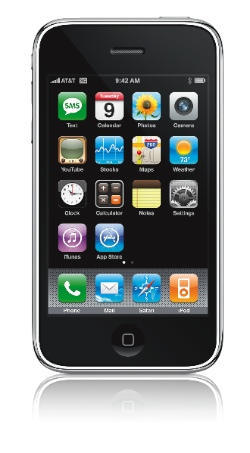
As the holidays loom ever closer and the global economic get worse and worse, Apple’s doing its bit to encourage a little seasonal spending.
The new iPhone Your Life section on apple.com is full of tips and tricks for new iPhone users, encouraging them to dive into the App Store and look around.
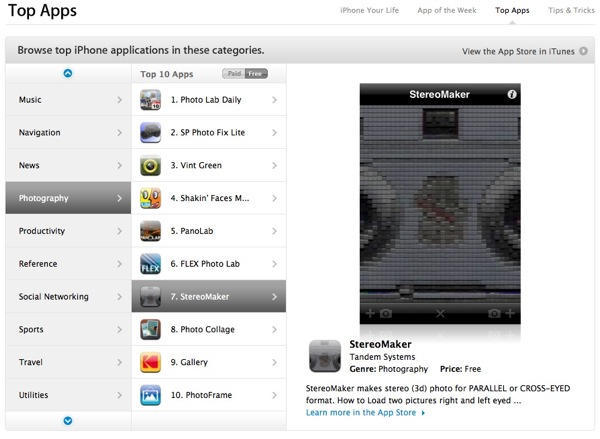
There are recommendations and staff picks, and on the Top Apps page there’s limited web-based access to best selling apps in a range of categories – the first time I’ve seen Apple replicating some of the App Store functionality on the web.
The Tips and Tricks page is also a good starting point for Christmas Day iPhone newbies (of whom, I have no doubt, there will be many).
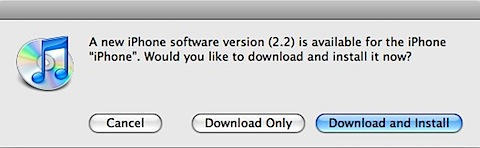
As has been widely rumored, Apple rolled out iPhone OS 2.2 tonight via software update, which brings Google Street View, mass transit directions, location sharing by e-mail, and, most excitingly, over-the-air podcast downloads, which has been a fairly glaring oversight (and source of considerable controversy).
At the same time, Apple has whipped out iTunes 8.0.2, which is basically a bug fix, plus improved results for VoiceOver, Apple’s accessibility technology for the visually impaired.
Nothing big, but good to see Apple improving its software nonetheless.
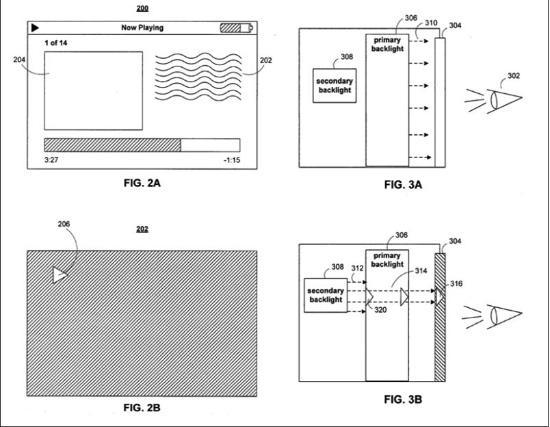
A diagram in Apple's iPhone status patent application.
Apple has filed a patent application to add always-on status indicators to the iPhone. The innovation would address a common task for cell phones but a headache for owners of the touch-screen handset.
In most flip-phones and even other touch-screen devices, users can instantly know when they’ve missed a call or received a voice-mail message. However, for iPhone users, it requires turning on the phone and going into settings to retrieve the information.
The big tech news of the last few days is that Hewlett-Packard‘s 2008 earnings are better than analyst estimates — and this most recent quarter should be their strongest. It was a major bright spot from one of the world’s largest companies, showing that the current credit crisis doesn’t actually mean that the entire economy has shut down. Specifically, the tech sector might be in less trouble than everyone else.
And it made me wonder, yet again, why exactly stock analysts continue to assume that Apple can’t continue to grow and innovate in the coming years. After all, if one organization knows something about hitting the gas during a down time to get light years ahead of the competition, it is Apple. The stock chart I’ve reproduced above from Google shows the performance of AAPL since the introduction of the iPod in the depths of the post-9/11 and -Enron recession. Even with the recent precipitous drop in AAPL (it’s down almost 60 percent since January), the stock is worth about eight times what it was before the iPod (when you factor in the stock split in 2005).
The iPhone is burning up the charts. Apple has its strongest line-up of laptops in the history of the company and is gobbling up market share. The iPod touch and new nano has cemented Apple’s lead in the media player market. When people aren’t buying cars and houses, they still find time for personal entertainment — it’s a comfort when everything else is crazy. With Apple’s current technology and product pipeline, I believe that Steve has the organization poised to thrive once again. They’re going to maintain their position, continue growth, and get out ahead in creating new markets while their competitors are battening down the hatches and sticking to doing what they already know.
What Apple has to offer isn’t going away because credit is scarce. If anything, it may grow even more appealing.
For at least two weeks running now, the most popular free app on the iTunes AppStore is Stylem Media‘s Backgrounds app.
Offering thousands of wallpapers in expected categories such as Nature, Beaches, City, Cars, Stars, Sunsets, Patterns, Swirls, Hearts, Animals, Models, Trees…the app appears to be a wild success.
Has the iPhone begun to diminish Apple users’ reputation for creativity? I mean, how hard is it to find a wallpaper of your own design?
Apple is now Steve Jobs has said he wants to enter by the end of 2008. However, there may be several snags delaying the iPhone getting into the hands of the world’s largest cell phone market.
The new Apple employee would “focus on international releases of our iPhone and iPod touch products for Beijing,” the post reads.
Earlier this year, Jobs told CNBC he thought iPhone launches in China and Russia would “happen later this year.” Although Russia announced in October, an agreement with China has been held up by technologic and political roadblocks.
The drumbeat continues as Barclays Capital Friday became the latest analyst firm to trim its projection of iPhones sales for the first quarter of fiscal 2009. Citing the weak economy, analyst Ben Reitzes believes 5 million handsets will be sold during the quarter, down from the previously expected 6.2 million.
In a note to investors, Reitzes cited a “continued weakness in the economy” and an inventory already flush with 2 million iPhones.
Barclays also cut its target price for Apple shares to $121 from $125, however retained the Cupertino, Calif. company stock as overweight.
Apple will report $9.6 billion in revenue for the December quarter and $35.7 billion for fiscal 2009, down from $36.1 billion, the note predicted Friday. Apple reported $7.8 billion for the quarter ended Sept. 31.
Cupertino, Calif.-based Apple is finding a warmer reception in Europe than at home, two new surveys indicate. The iPhone, which sold 6.9 million units during the third quarter, now owns 17.5 percent of the smart phone market, beating RIM for second place among European mobile phone users.
Analysts at Canalys reported Thursday Apple experienced 523 percent growth during the quarter, outpacing RIM, which registered an 83 percent increase to 15.2 percent market share compared to 2007.
Apple’s rise trimmed Nokia’s market leadership, the Finish handset giant slipping to 38 percent of European cell phone sales, down from 51 percent a year ago.
Apple may have cut by 40 percent fourth quarter production of its flagship iPhone handset, a Friedman, Billings, Ramsey analyst said Monday.
The drop in production would be far deeper than the 10 percent cut previously anticipated.
“Our new checks indicate that iPhone production could fall more than 40 percent sequentially in the 4Q,” FBR’s Craig Berger wrote in a note to clients.
The drop in production shouldn’t be interpreted as a dip in iPhone demand. In October, Apple reported shipping 6.9 million iPhones during the third quarter.
However, the lowered production may signal “no market segment will be spared in this global downturn,” wrote Berger.
Apple has traditionally been viewed as a company limited chiefly to domestic sales. However, a review of sales figures suggests the iPhone 3G could unlock international markets, providing a ‘halo effect’ for other Apple products.
A halo effect has long been described to explain how iPod sales could boost purchases of Macs. Now some experts believe the iPhone 3G could give Apple a foot in the door to countries once alien to the Cupertino brand.
At the heart of the theory are numbers indicating Apple sold as many as half of iPhone 3Gs internationally. Apple shipped between 2.4 and 4.5 million of the 6.9 million iPhone 3Gs during the fourth quarter ended Sept. 30. The exact numbers depend on who’s talking.