Zach over at Boy Genius Report shares that he’s getting tons of e-mail from iPhone owners on the East Coast reporting that data services are completely out, but that it’s iPhone-specific. AT&T is investigating and has issued # TT000008107719 to blanket all such problems.
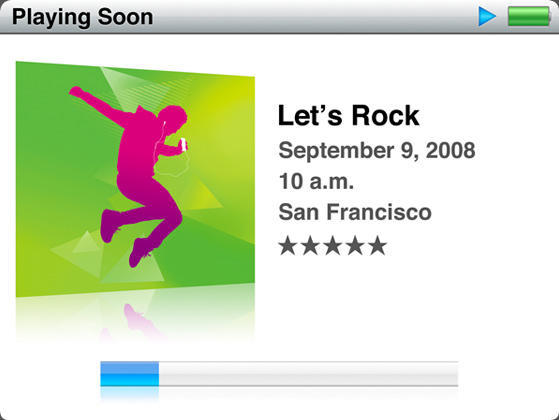
Steve Jobs will host Tuesday’s “Let’s Rock” media event at Yerba Buena Center for the Arts in San Francisco
Apple PR is pulling out the stops to get media in SF next week, saying the announcement on the 9th is a “big deal.”
One East Coast journalist, who writes for a big news weekly, said Apple PR called and urged him to fly to San Francisco next week for the press event.
“Apple just told me it’s a big deal and I should try to be there,” said the journalist, who asked to remain anonymous.
The call is unusual for Apple’s PR department, which rarely gives clues to the import of its press events.
The event is scheduled for 10am, September 9th at San Francisco’s Yerba Buena Center for the Arts and is widely expected to showcase updates to the iPod product line, with some hoping for new Mac notebooks and even possible indications of a touch-screen Mac tablet.
Veteran Mac expert and writer Joe Kissell is among the first to report that Google’s brand new Chrome browser appears to be “way faster” than Safari, even running in a virtualization environment like VMWare Fusion.
Kissell ran a quick, informal head-to-head on his MacBook Pro, comparing Safari on OS X to Chrome running under Windows XP and VMWare Fusion.
“Chrome launched in the blink of an eye (really shockingly fast) and I tried a few web pages side by side in Chrome and the Mac Safari, and they loaded noticeably faster in Chrome,” said Kissell.
Chrome is Google’s entry in the web browser sweepstakes, currently a Windows-only offering that launched today. The browser is based, however, on Apple’s webkit, the same rendering engine that powers the Safari browser. Mac and Linux versions of Chrome are in the works but Google has yet to announce a time frame for releasing those versions.
Kissell’s initial report came over Twitter, saying he ran Chrome in XP under VMware Fusion on a MacBook Pro and that it “is way faster than the Mac version of Safari on the same machine. Wow.” But some of his reaction may be chalked up to perception, and later off-the-cuff speed tests presented a mixed bag.
In tests done on a regular work machine with a zillion things running in the background, not a clean environment to be sure, but representative of the “real world” in which many are likely to use the browser,
Chrome launched in < 2 seconds in XP under VMware Fusion
Despite his admittedly highly unscientific testing, Kissell reported “AJAXy things like Google Docs seemed zippier in Chrome, but it’s possible that my perceptions are incorrect, because I expect everything in a Windows VM to be slower.”
Let us know in comments below how Chrome works for you.
Apple has scheduled a “special event” for September 9th at San Francisco’s Yerba Buena Center for the Arts. The event is presumably to announce long awaited, much-rumored updates to the iPod product line and, who knows what else?
If you’ve accumulated any amount of gadgetry in the past several years you may consider from time to time the carbon footprint you lay down charging their batteries up every day and overnight.
Well, if designer Vivien Muller ever gets production funding for her concept solar charger, you’ll be able to rest easy and get visitors talking about your impeccable taste in futuristic decor.
Blogger Ian Hoar details a method for creating a custom icon for your website that will show up on iPhones when someone bookmarks your site.
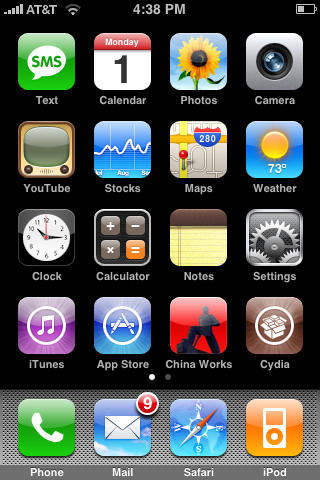
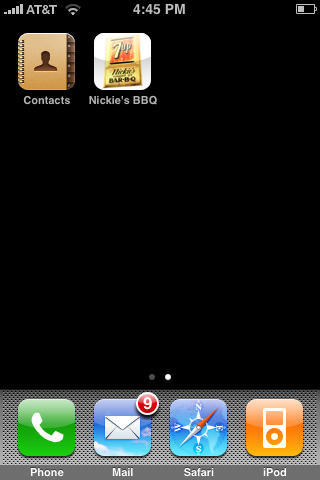
I made icons out of images I created for a couple of projects called China Works and Nickie’s BBQ, and bookmarked them to my iPhone. Hoar’s process is easy and it works!
Basically, just save any graphic image you like as a 57×57 PNG file, name it apple-touch-icon.png, put it in the root directory of your webste, and iPhone will do the rest. Hoar details a method for saving multiple icons in different directories by using a “link rel=” line in the “head” of your web page, so be sure to check it out.
O2 finally announced today its pricing for pay as you go iPhones in the UK. The 8 GB model will cost £349.99 and the 16 GB model will be an extra 50 quid. Bundled in is a year’s unlimited browsing and Wi-Fi, which then costs a tenner a month, although you can unsubscribe prior to that if you feel the need.
The all-important date: September 16. The all-important caveat: no visual voicemail (bizarrely) and call-merging on Pay & Go. Still, for those iPhone-loving Brits who think mobile phone contracts are the work of the evil one, this is clearly great news.
Update: Belkin has now confirmed that this story is a hoax.
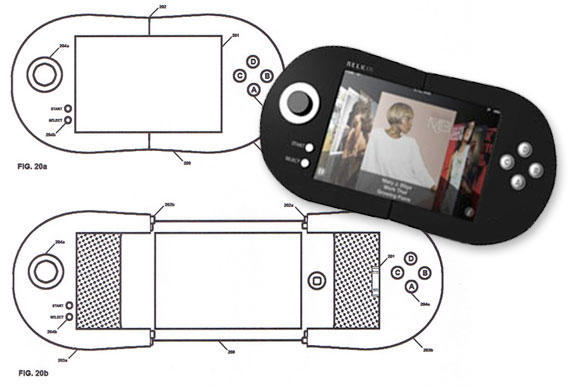
This past weekend saw the rumor mill go into overdrive regarding iPhone games controllers. While the chaps at iControlPad valiantly soldier on with their home-grown iPhone games controller that relies on jailbroken iPhones, Touch Arcade provided images of a rival (shown above)—supposedly from Belkin—that will have official App Store support.
The two-piece device would slide on to your iPhone, providing a joystick and six face buttons, akin to the configuration on the Nintendo DS. This means games developers wouldn’t have to rely on the iPhone touch-screen and tilting mechanism, instead being able to offer more standard control methods for iPhone games.
Predictably, some screamed “fake” once these images appeared, and others merely screamed, barely coherently ranting something about how AWFUL it would be to have a controller like this, because it’s the iPhone’s bizarre-o-controls that make it what it is regarding games.
Yeah, yeah, whatever. I love innovation, and I love people doing different stuff with iPhone gaming. However, I’m old, and I’d rather like to have a copy of Pac-Man on my iPhone that can actually be controlled via a non-stupid (sorry, non-innovative) method, as I hinted at a couple of months back. (Mind you, I’m probably not going to be totally happy until someone finds a way to run C64 games on iPhone and also plug in a Competition Pro…)
Update: Lonnie’s interview with TalkingHeadTV below.
Although not a Mac itself, iPhone instigated a major shift in the personal computing market not unlike the original Mac, and its arrival has propelled Apple’s remarkable turnaround onward–the one started by the Bondi Blue iMac, itself something of a successor to the original Mac. Therefore, at the very least, iPhone deserves to be on this list, because its success means a healthier Apple, which in turn means healthier Macs. However, it also has to be on this list, because iPhone undoubtedly provides a glimpse of what the future of the Mac will be.
Craig Grannell:
Of our list of 25 Mac moments, this is one of the most contentious for me. The iPhone is not a Mac. Its operating system is OS X, rather than Mac OS X. And the only obvious relationship it has with a Mac is that a typical iPhone user is somewhat likely to plug their iPhone into one at some point.
However, some commentators argue that the iPhone is effectively the next-generation of the Mac, and even if that isn’t the case, it’s pretty clear Apple’s smartphone is in one sense a sounding board for the future of its company, and that technology from the device will eventually trickle down to future Macs. And for that reason, iPhone justifies its place in our top 25 Mac moments.
Pete Mortensen: As an audience member when Jobs took the wraps off the iPhone, the biggest impact that it left on me was this: that Apple’s business plan was not just a pattern of steady upgrades across an established product portfolio. This was a company prepared to not just make the best media players and computers in the world, but one that was prepared to bring about world-changing innovations that are years ahead of the competition. It was confirmation, once and for all, that the iPod was never a fluke, but a signal that Apple could do something far more than what it was doing today.
In short, the iPhone made it exciting to think about where Apple is capable of going in the next five years.
Leigh McMullen: See now, I absolutely believe that iPhone is a Macintosh. It’s more powerful than all but the top of the line Macs from the 2002-2003 era. As we move more towards “cloud computing” processing power “in hand” becomes less important than connectivity and functionality. iPhone may just be a phone / ipod / camera / blender today, but it is also very much the future of both Apple and Macintosh.
Photographer Pat St. Clair has a couple more panoramic images from Thursday’s big night for the Democratic Party at Invesco field in Denver.
Above is a still shot from his vantage point near the Jumbotron behind the media pavillions. St. Clair made it from three fisheye images stitched and interpreted usung PTGui Pro 7.8 on a McBook Pro. The original size image is here.
Go here for a dynamic four-image shot that captures the enormity of that historic evening.
Unlike St. Clair, I was in Denver without the benefit of a Press Pass or professional photographic equipment and struggled to capture my own memories with the rudimentary camera in my iPhone.
Judge for yourself the quality of the iPhone’s camera by clicking on the gallery thumbnails. Large pics and descriptions after the jump.
The Hills screensaver is about the coolest screensaver I’ve seen for Mac OS X, but it’s not easy to get.
The screensaver shows beautifully rendered rolling green hills covered in perfectly-manicured grass. You fly over them as though gliding in a silent helicopter. It’s utterly hypnotic — and very relaxing, especially on a big display.
The developer, Chris Kent, was hosting it on a .mac account, but he exceeded bandwidth limits and it’s now gone.
Searching for it in Google brings up a bunch of old links — it’s very frustrating.
So we’re hosting the file here. Download The Hills version 1.1: hills-1-1.dmg.
Flickr user Danial Forsythe has taken matters into his own hands and found a way to manually refocus the iPhone’s camera. Long derided as a deficient feature of Apple’s popular handset, the iPhone camera’s default focal length is set to infinity, which makes for less-than-stellar close up shots. Forsythe has posted instructions detailing a way to open up the case, get the screen out of the way, flip the camera up, break the glue, adjust the lens, and plug the screen back in to check the focus.
If that sounds like more getting “under the hood” than you might be comfortable with, third party lenses and filters do exist to help you try and get more out of your iPhone’s camera.
Photographer Pat St. Clair shot a super-cool QuickTime panoramic photo from last night’s historic session of the Democratic Party’s convention at the Pepsi Center in Denver, CO.
Working on assignment for LightSpeed Media, St. Clair shot the DNC image using a new Canon XSi with a Sigma 8mm f3.5 circular fisheye lens. It was four shots around on a custom rig, with the camera set to ISO 1600 and aperture priority metering.
He shot RAW files, used Photoshop Camera Raw to render them to tiffs, stitched the panorama in PTGui Pro 7.8. and authored the final pan in Cubic Converter, all on a MacBook Pro.
Nasty glitch today on the newswires. It seems Bloomberg updated its readymade obituary for Steve Jobs, which sent the article to all of the organization’s subscribers. Most prominent figures have their obits written up in advance, but they usually don’t get sent around unless they, you know, actually need to be used. As a former copy editor, I remember well the day that Pope John Paul II died, which sent every newsroom in the world into a tizzy.
Anyway, a totally false alarm, even if it comes during a renewed period of concern about Steve’s health. It’s interesting reading, but I won’t post it here.
Sitting for my 12th straight hour in a hospital waiting for the wife to download the latest tricycle motor, my mind started to wander and the solution to Psystar’s counter suit just occurred to me: Give Away Mac OS X.
This isn’t an argument for any open-source / open-license nonsense, just that Apple ought to effectively “shelve” Mac OS X as a product folks paid for, and make Mac OS X upgrades akin to firmware updates, completely proprietary to the machine.
By offering customers free upgrades to Mac OS X (presumably your initial copy came free with your purchase of an Apple computer), Apple would completely eliminate the “consumer harm” predicate of the anti-trust suit as one can’t be a “consumer” of a product you didn’t buy.
The revenue hit would be trivial as Mac OS X isn’t a profit center for the company, and the increase in customer loyalty and positive experience would likely offset any losses. Also as an additional carrot for Windows switchers it might prove to be an irresistible temptation. I can see the ads now:
Get the world’s best operating system with free upgrades for life with the purchase of an Apple computer.
Third party iPhone application developers have taken to paying each other $1 in order to get around communication restrictions in the iPhone developrs’ NDA, according to a story in the LA Times.
By making themselves “subcontractors” to one another, they can discuss issues related to programming for the iPhone, communications Apple has sought to restrict through the Software Development Kit’s Non-Disclosure Agreement. Developers have bristled at the company’s refusal to let the NDA expire now that the iPhone is available on the commercial market, with many feeling Apple’s continued restrictions are stifling innovation.
UPDATE: You can fix the hole by remapping the “Home” button. In the iPhone’s Settings/General/Home Button, assign double clicking the Home button to “Home” — not “Phone Favorites.”
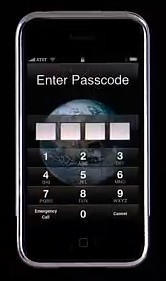
iPhone’s 2.0.2 firmware allows almost full access to your iPhone even when it’s under password protection, according to a report in MacRumors. Access can be gained through the “Emergency Call” keypad that appears on the passcode entry screen, allowing unrestricted use of Safari’s browser as well as access to Mail, SMS, Contacts, Maps and more.
Here’s how it works:
1. On the passcode screen hit “Emergency Call” button at bottom left.
2. In the Emergency Call screen, hit the “Home” button twice. You’ll be taken to the Favorites screen.
3. From there, hit the blue arrow next to a contact’s name.
4. You can now access all the iPhone’s functions by selecting their email address, homepage URL or address.
5. For example — hit the contact’s “Homepage” URL — and you are straight into Safari.
6. Hit the email address, and you enter Mail. Cancel the message, and you have full access to the iPhone’s email.
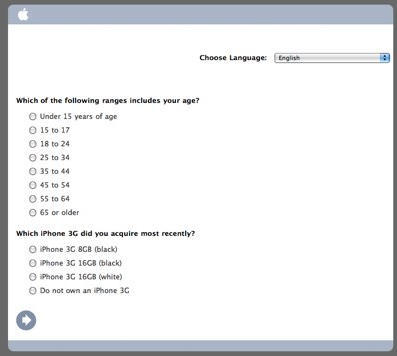
Apple wants to know what you’re thinking about your new iPhone 3G and has been sending out email surveys asking questions such as where you’ve gone for iPhone help, whether you’ve returned your handset to your carrier for repair or replacement, whether you primarily use Windows or Mac, whether you primarily use your iPhone for work or play, whether it’s your first Apple product, and general demographic info.
The company promises not to use your responses to sell you products or services.
Though everything Apple gets covered with fanatical precision, life inside One Infinite Loop these days is something of a black box for non-Appleites. Steve Jobs has made secrecy job one. Which just makes Jon Phillips’s article for MacLife about dining in the Apple corporate food court that much more fun. This is a must-read:
“Oh. My. GOD. My first impression was that I had somehow found my way into the Prepared Foods Department of Whole Foods. Station upon station upon station offered a mind-boggling variety of international cuisine. There were kiosks for burritos, pizza, pasta, sushi, hot entrées, burgers, sandwiches, salads, smoothies, frozen yogurt. They even had a gelato bar.
Then there were the kiosks for Spanish tapas and paellas. For British bangers and mushy peas. For Ethiopian wat and injera bread. And for traditional Inuit preparations of caribou, walrus and seal. Amazing.
OK, truth be told, I didn’t see any kiosks for food from Spain, England, Ethiopia or the Canadian Arctic. But because the Caffe Mac food selection was so incredibly plentiful and varied, I couldn’t help but imagine such exotic cuisines. And, in fact, because this new world order of lunch possibilities was so overwhelming, I found myself paralyzed with indecision. Pizza or pasta? A sandwich or sushi? Or maybe a bold trifecta of blended and/or frozen delights?”
Pre-release testing of the Blackberry Bold 3G smartphone appears to show the new handset may suffer from connection problems similar to those that have plagued the iPhone 3G. Citigroup investment research analyst Jim Suva reported occasional 3G signal dropping troubles at some locations, “especially on high-rise building streets on our 34th floor… which may be why AT&T has yet to launch the product,” according to AppleInsider.
Because the Blackberry uses a component of its Marvell processor as its 3G modem, where iPhone 3G uses a different Infineon chipset, previous speculation about problems with Apple’s hardware appears less likely to be the cause of iPhone 3G connection instability.
3G network performance varies greatly among different 3G carriers throughout the world, according to survey released this week on the Wired blog. Users in Europe, which has some of the most mature 3G networks, reported the fastest overall results, while US-based iPhone owners suffer the largest number of failed data speed tests, particularly in dense urban areas, according to the Wired survey.
Citibank’s Suva speculates that the Bold won’t be released in the United States until AT&T rectifies its 3G network issues.
In what can only be considered a turn of logic from an alternative “evil twin” universe, Hackintosh maker Psystar answered Apple’s cease and desist lawsuit of July 3th with their own alleging restraint of trade and antitrust violations.
It’s been long anticipated that Psystar would play the “Antitrust Card” in defense of its illegal activities. The only thing is, it’s not illegal to have a monopoly. The key predicate to an antitrust suit is that the consumer must in some way be harmed by the monopolistic behavior of the defendant. Rudy Pedraza, Psystar’s president summed up their consumer harm argument by saying: “It’s not that people don’t want to use Mac OS X, but they’re not open spending an exorbitant amount of money for something that’s essentially generic hardware.”
So that’s it, ‘the Apple’s hardware is too expensive’ argument we’ve heard time and time again, and have time and time again refuted. On a direct feature for feature comparison with Sony, HP or IBM, Apple hardware is no more expensive than the competition.
Our industry is FULL of monopolies that no one seems to disagree with, examples follow:
Tivo has a monopoly on the Tivo OS, in that it too can only be employed on Tivo or licensed 3rd party hardware.
Sony has a monopoly on the PlayStation, PS2, PS3 and PSP operating systems and regulates very closely the hardware they’re allowed to run on
IBM has a monopoly on mainframes and the mainframe Z-OS
even Microsoft has a monopoly on XBox OS and limits the hardware it can run on
While I can understand that free spirited hackers take unbrage at being locked out, there is nothing inherently wrong or illegal with Apple’s strategy of controlling the whole widget. Monopoly “sounds” bad on it’s own, but in Apple’s case they’re not abusing their power.
Some iPhone owners continue to report an alarming bug in the device that causes 3rd party applications to crash or fail to load and makes media stored on the phone inaccessible. Calling it a “tragedy of monumental proportions” given that the phone just launched in 22 additional countries over the weekend, writer Jonny Evans reports in MacWorld UK the “well-known bug means none of my third-party apps work, and I can’t access any media held on my iPhone.”
“Frequent requests to Apple PR have yielded no response at all – and people inside the company dance around the matter, or so it seems,” according to Evans.
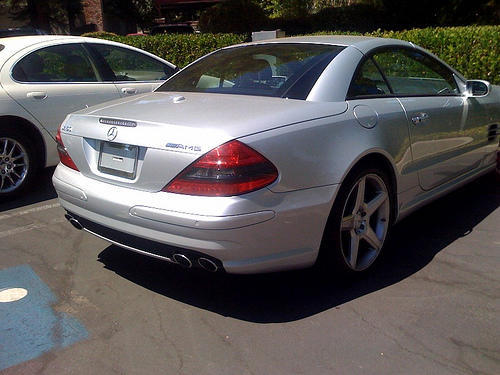
Snapper Rana Sobhany spotted Jobs’ Mercedes SL55 AMG parked in a handicapped spot at the Apple campus over the weekend.
“Mercedes? Check. No license plate? Check. Handicap spot? Yep, this is Steve Jobs’ car!!!” she writes.
Jobs, of course, has a long history of parking in handicapped parking spaces at Apple. The reports go back years, and have recently been documented on Flickr.
Since 2006, Jobs’ car has been snapped in handicapped parking spaces at Apple at least five times. See the pictures after the jump.