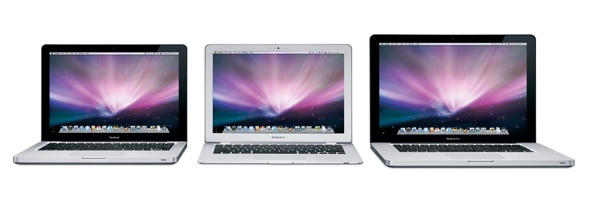
AT&T, after using the iPhone to salvage its fourth-quarter revenue, is in talks with Apple to team up for a 3G data service aimed at MacBook owners, reports said Thursday.
At the heart of the speculation is a brief comment to Fortune by the carrier’s Emerging Devices group president Glenn Lurie. Lurie said he’s talked recently with interim Apple CEO Tim Cook.
“I would very much like to do more business with Apple, and I hope that we do,” Lurie said Wednesday. Although the AT&T executive said he was having similar conversations with other companies, Apple has been an especially profitable partner.
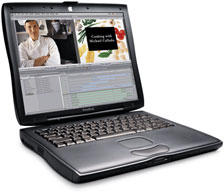
Eagle-eyed CoM reader Joaquin Jang spotted what looks like a either a Pismo, the last G3 PowerBook launched in 2000, or its close cousin, the Lombard PowerBook G3 laptop launched a year earlier, in a recent Wells Fargo bank banner.
He writes, “Imagine my surprise when I went to log in to my bank account at Wells Fargo’s website and found this picture which appears to show my first Mac laptop, the Pismo, it could also be a Lombard which had a similar form factor.
While the Pismo still does some work for me, it’s not my everyday machine since it is nearly ten years old. Yet, it still makes it into a website ad nine years after it was introduced.”
So, which one is it?
Many thanks to Joaquin for the tip and screenshots.
CoM readers: if you spot other interesting Macs starring in ads, let us know!
If we ever do become a paperless society, Houdah Software’s ACTPrinter apps for Mac, iPhone and iPod Touch are likely to be among the solutions credited with helping to get there.
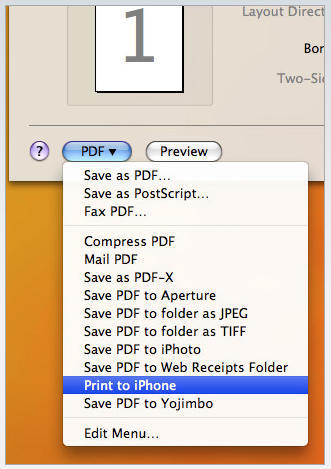
With a Mac running OS X Tiger or Leopard and an Airport/WiFi card installed, ACTPrinter Mac (a free DOWNLOAD) works in concert with ACTPrinter 1.1 ($1.99 for iPhone or iPod Touch) allowing you to “print” from any application which uses the standard “Print” dialog. On the Mac you simply “Print to iPhone” and documents (emails, web pages, letters, and more) are sent wirelessly to your iPhone. With this app, documents have finally become mobile.
Aside from being a handy way to store important papers on your mobile device, one of ACTPrinter’s most effective uses stems from the fact that bar codes embedded in documents can now be scanned directly from the touch screen.
The US Transportation Security Administration is currently testing a pilot program at 13 US airports, with the intention of standardizing the electronic boarding pass nationwide in about a year.
Follow after the jump for a list of the participating airports and airlines, and for a full list of features included in the latest ACTPrinter 1.1 update.
The BBC’s coverage of the Mac’s 25th has in some cases left something to be desired, the nadir being a bizarre video showing a Microsoft employee battling with an original Mac and comparing it against her Windows laptop. Ex-Macworld UK head honcho Simon Jary rightly pulled said video apart on his PC Advisor blog, although he didn’t note how, amusingly, the Mac boots much faster than the PC, despite MSN tech editor Jane Douglas cunningly refraining from giving the Mac its system disk until the PC’s been whirring away for a good few seconds.
Presumably wanting to avoid the same level of oddness, BBC Radio Five Live’s Pods and Blogs scoured the internet, looking for a Mac expert to chat to. Failing that, they ended up with me (Oho! You self-deprecating Brit, you!–Ed.), and I spent a happy 20 minutes talking to the extremely personable Jamillah Knowles about all things Mac.
As is always the case, the interview itself was knifed somewhat (due to it being nearly as long as the entire podcast was supposed to be), but there’s still a reasonable chunk left. Importantly, the Mac doesn’t come off looking too bad, although I do wonder what Jamillah’s co-presenter is going on about regarding how rubbish Macs used to be for getting online. (I’ve never had such a problem.)
Although Mark Papermaster begins working for Apple in April, his ties with former employer IBM will continue. The former IBM executive is required to legally declare he hasn’t used insider information as part of his new job heading Apple’s iPhone and iPod design team, reports said Wednesday.
Papermaster, who battled IBM in court to join Apple, must submit declarations that he has not disclosed information he obtained while at IBM. Apple said Tuesday Papermaster will start as the senior vice president of devices hardware engineering April 24.
He must submit the declarations in July and October.
Apple has expanded the refurbished products offered at discounted prices from its online store. The Apple Store now includes newer iPods, as well as refurbished aluminum unibody MacBooks and MacBook Pros.
The Cupertino, Calif.-based company now sells its latest 1GB iPod shuffle for $39. Available colors include silver, green, blue and pink.
The latest 8GB and 16GB iPod nano is being sold refurbished for $129 and $169, respectively.
Here’s an Apple keyboard spray painted snowy, pure white — nothing to stop your eye but if your touch typing skills are still at high-school level, you’re in trouble.
“The design snob in me isn’t particularly happy with Apple’s recent trend of using two colors (black and silver, white and silver) on their stuff.
So. Combine my pedantic taste for minimalism with nerdy touch typing abilities and a cheap can of white spraypaint, and you end up with my keyboard – possibly the most pretentious keyboard in existence.”
AT&T Wednesday deemed Apple’s iPhone 3G a “success,” reporting adding 1.9 million of Apple’s smart phones before the end of 2008. The news comes as the exclusive U.S. iPhone carrier appears to have sold double the Blackberry handsets of rival Verizon Wireless.
The carrier said it had activated 4.3 million iPhone 3Gs since the handset’s launch.
Despite being a $450 million drag on AT&T earnings, the carrier announced new iPhone subscribers helped it post a 2.4 percent revenue increase for the quarter, reports said.
The DC Public Library’s first-in-the-nation iPhone App giving users access to card catalog and reservation systems almost cries out for an “if they can do it in Washington” joke.
Still, it’s pretty cool DC residents have access to (indeed, anyone in the world can have it) vital library information, with an iPhone app providing 24 hour a day, on the go access to the Library’s card catalog and reservation systems. One might think any forward-looking City in the nation would want to have one of these in the AppStore in no time.
There’s at least a few jobs in that gig all over the world, right?
FastMac is selling t-shirts with three new retro-inspired designs for $5.25 until midday tomorrow or until supplies are exhausted. This is a Special 1-day only sale, limit 1 per customer of any 25th anniversary design @ $5.25, additional shirts will be priced @ $9.99.
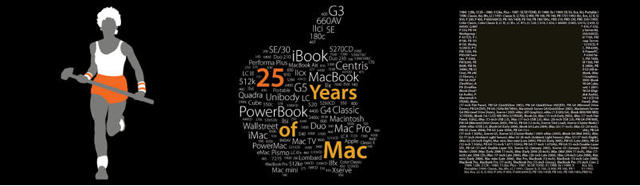
The designs include an homage to Apple’s classic 1984 commercial, and two other designs formed using a “word cloud” that lists every Mac ever made. This is probably one of those “don’t-blink-or-you’ll-miss-it” kind of deals.
CAVEAT EMPTOR: The FastMac store pretty much sucks with respect to navigation and, as of this posting, the special pricing is either not loaded or they have already sold out of the specially priced gear.
UPDATE: I just spoke with FastMac tech support and they are working on getting the pricing into the store as we speak. Check in after 3pm PST.
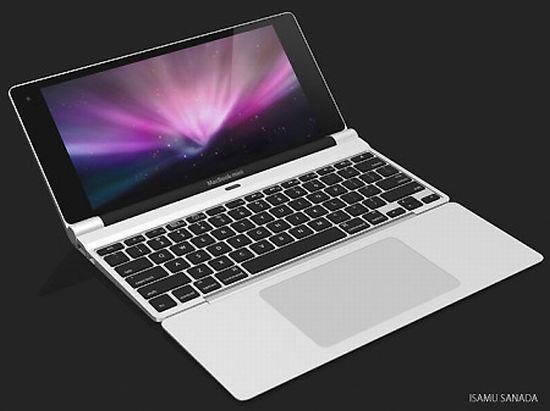
Japanese photographer Isamu Sanada is no stranger to the enticing realm of Apple mockups, and the whole netbook idea just refuses to die, so it should come as no suprise to see this one, a kind of interesting tri-fold take on the idea.
What do you think? Should Apple spend bandwidth going in such a direction, or is the iPhone/iPod Touch really the end of the story when it comes to an Apple netbook?
Given a recent assessment by pro photographer Rob Galbraith that puts Apple’s MacBook Pro display behind the Lenovo Think Pad and the Dell Mini 9 in color accuracy, Apple may want to take a closer look at what’s already in the line-up before going for new product dollars.
Formerly very appreciative of Apple’s display properties from the perspective of a demanding visual artist, Galbraith says of the new high-end Apple laptop, “in ambient light environments which induce screen reflections, the late-2008 MacBook Pro 15 inch’s glossy screen moves deep into the not acceptable category.”
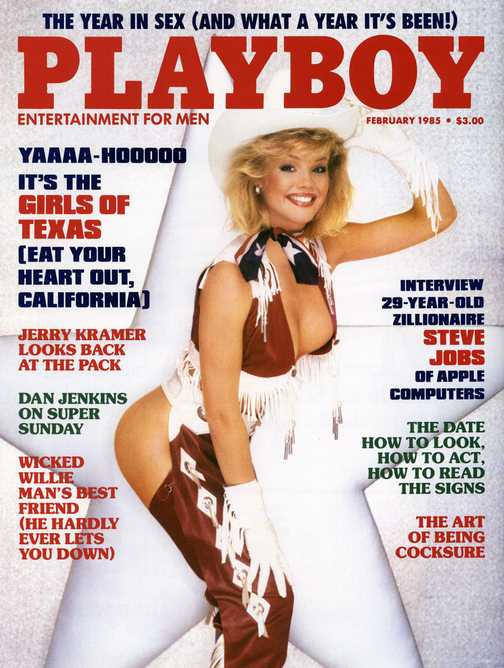
Back in the dark mists of Time before the internet, Playboy magazine was among the more popular media vehicles serving up a stimulating cocktail of news, opinion, creative writing, gadget reviews and naked flesh. And over the years, the Playboy Interview gained quite a reputation for getting the most interesting newsmakers and personalities of the day to open up about their lives and philosophies in ways other mainstream publications could never quite match.
The Playboy interview with Steve Jobs was published in the February 1985 issue of the magazine, just a little more than a year after the debut of the Macintosh and a few short months before the Apple CEO would be ousted from the company he helped found. The long piece finds a 29 year-old Jobs at the top of his intellectual game and elicits commentary that, looking back on it now, makes Jobs appear both prescient and consistent in his views and in his dedication to Apple’s success.
Follow after the jump for a few choice comments from the interview and be sure to click through to the full piece from the Playboy archive.
Mark Papermaster, the former IBM executive at the center of a legal battle, will begin work April 24 as Apple’s senior vice president of devices hardware engineering.
In an announcement, Apple said “the litigation between IBM and Mark Papermaster has been resolved.” The company said Papermaster would lead Apple’s iPhone and iPod development efforts.
Papermaster had sued his former employer after IBM had asked a court to halt him joining Apple. The technology company had argued the new employment would violated a prior agreement not to work for a rival.
Have Apple lawyers targeted Palm as a potential target for patent-infringment lawsuits? Concerns sent shares of the Palm Pre handset slipping Tuesday.
Palm shares were down $0.40 as of 1:22 p.m. Eastern. Apple’s stock was up $0.86.
Worries were renewed earlier today on word Apple had been granted a patent covering a “touch screen device, method, and graphical user interface for determining commands by applying heuristics,” according to the Wall Street Journal’s AllThingsD.
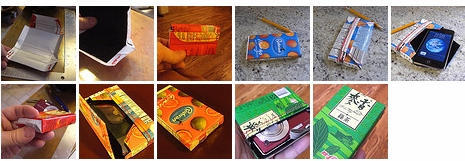
Turn a humble juice box into an iPod case. These cheap and cheerful cases are the handiwork of Ross, who wanted to create a decoy case to disguise expensive electronics as well as protect them.
You’ll need spray glue, some sand paper, a little knack with a sewing machine and about an hour.
Since the boxes are typically made from six layers of paper plus polyethylene and aluminum foil, Ross reckons they should be sturdy as well as practical, especially with an added velvet lining to protect from scratches.
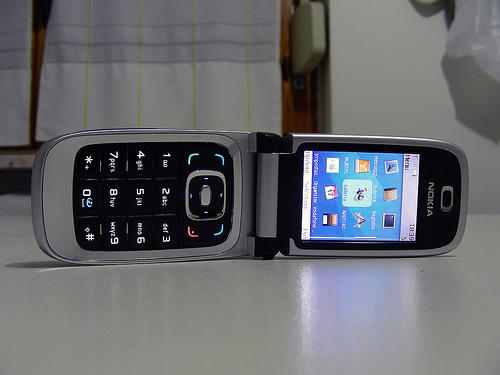
Can’t afford an iPhone? Me neither. That’s why I was so excited to see this photo of a Nokia phone dressed up as a Mac on Flickr. My old phone could use some panache.
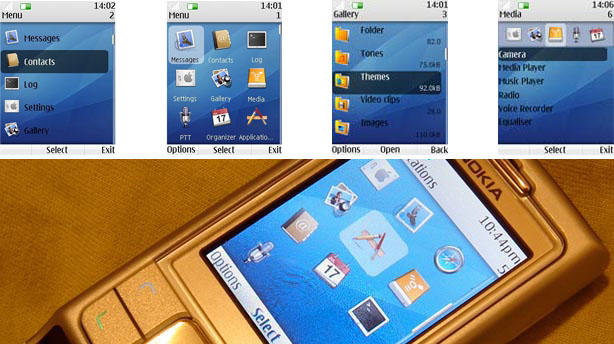
A quick search through the comments shows that this is a theme from Dan Schwartz, and it’s compatible on quite a few different phones. It’s hard to find on his website, tucked into the About pages, but you can get the theme for your Nokia phone here.
Source: Dan Schwartz
The theme imitates the Mac without interfering with the phone’s functions. Dan used the application icons from Mac OS X’s system and one of the gorgeous Apple default backgrounds to give you the full experience. The theme even goes so far as to closely imitate the fonts used in the Mac system. All in all, these themes are an excellent escape for those of us who want to keep a little Apple with us all the time.
Turns out, while the iPhone and iPod Touch are just about the awesomest fart-generating devices ever, the considerable power of Apple’s mobile devices can also be marshaled to more productive uses, such as processing credit card sales.
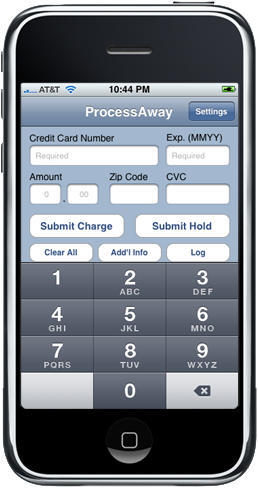
ProcessAway, a Tustin, CA-based company has submitted to Apple software that will allow busiiness owners to process credit card transactions over any available network connection. The app is designed for use in places such as conventions, street fairs, antique shows, and by business owners performing mobile detailing, on-site consultation or construction, but certainly the list of scenarios is virtually endless where on-the-spot transaction processing could be useful.
ProcessAway software utilizes the Authorize.net gateway (one of the very first Internet payment gateways) with one of the largest customer bases in the card processing industry. “The Authorize.net API fueled development of ProcessAway,” according to spokesman Randy Palermo, allowing “millions of iPhone (and iTouch) users to turn their device into a credit card terminal.”
Authorize.net merchant accounts used with ProcessAway include an option to download transactions into Quickbooks and also a comprehensive Virtual Terminal. This will give business owners the benefit of processing transactions out of the office with ProcessAway as well as in the office through the web-based Virtual Terminal, all with a single account. Even though the Virtual Terminal is available, ProcessAway was designed as a stand-alone comprehensive processing solution that can be used effectively in any environment.
ProcessAway software will be sold through the iTunes AppStore for $19.99. A fully functional free version, called ProcessLite, will also be available, identical to ProcessAway except the charge amount is limited.
The apps were submitted to Apple on January 26 and the developer offers a notification sign-up page should you want to hop on this one as soon as it’s available.
A city councilor in Dartmouth, England has sparked debate by wearing his iPod earbuds to drown out prayers traditionally said before town council meetings.
Brian Boughton, an atheist, put in his earbuds on during the short prayer in protest. His iPod wasn’t turned on but fellow councilors branded the move disrespectful.
Boughton told the BBC: ‘I accept that they want to continue with the tradition but that leaves the problem for those like myself who do not wish to participate.
“I was accused of being disrespectful which I never intended. Listening to the iPod was a way to get the debate going but I never had it switched on. I’ve asked the mayor to consider opening up the prayers to other people.”
Apple was granted a key patent covering many aspects of the iPhone interface as well as potentially other “multi-touch” handsets. CEO Steve Jobs was listed among the inventors in a 358-page filing awarded last week.
The patent covers the iPhone, gestures and the handset’s OS X operating software.
U.S. Patent No. 7479949 comes saber-rattling between Apple and other touch-screen handset makers. Last week, interim Apple CEO Tim Cook warned unnamed competitors that the Cupertino, Calif.-based company would protect its intellectual property.
Meet Rob Baca. He’s a serious vintage Mac collector, with a total of 75 machines in his possession. He’s also the man who co-directed the documentary Welcome to Macintosh, which counts among its interviewees our very own Leander Kahney.
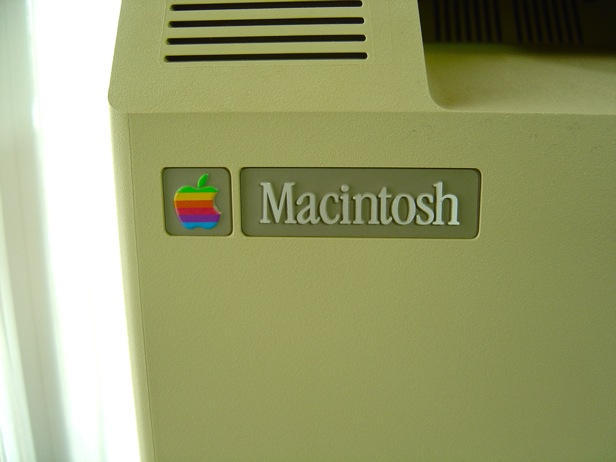
One of Rob’s computers – bought from a friend on the condition that Rob would give it a loving home – is this original 128k Mac.
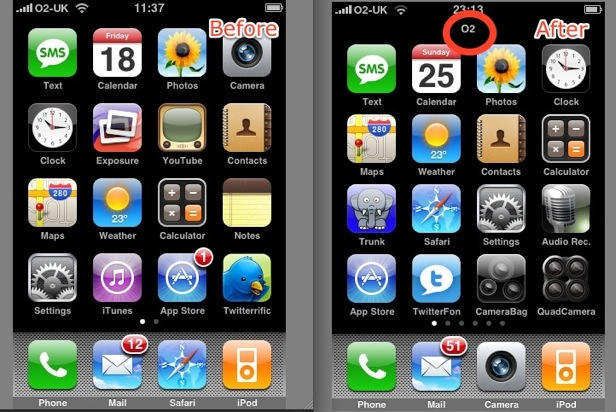
Here are two iPhone home screens. On the left, my iPhone home screen from a few months ago. Everything normal.
On the right, my iPhone home screen from yesterday. And something weird has happened.
An additional line has been added to the status bar at the top, pushing all the app icons closer together. It displays only the characters “O2” – the name of my British network provider. Which is already displayed, of course, in the main part of the status bar. What, as they say, the frak?
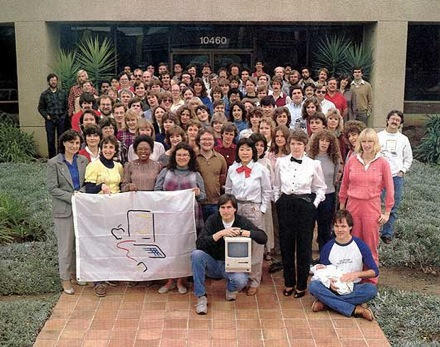
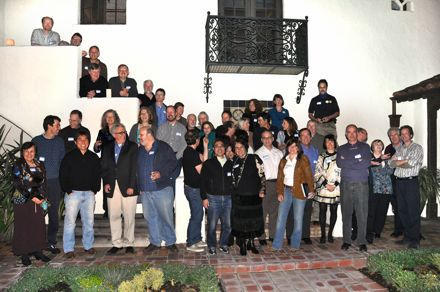
Apple’s Macintosh Division had a 25th Anniversary reunion at the home of Alain Rossman (software evangelist) and Joanna Hoffman (the division’s conscience and first marketing person) to celebrate the unveiling of the Macintosh on January 24, 1984 – and Guy Kawasaki has a bunch of pics up from the event, complete with interesting tidbits and backstory info on the people and events that drove the evolution of Apple’s groundbreaking invention.
He’s also got a couple of interesting videos up, one of which we’ve posted here, showing Steve Jobs unveiling the Mac for the first time.
Apple’s advertising for the iPhone is changing in interesting ways. When the product was brand new, all of the attention was on the interface, just introducing people to the idea of multitouch. Now, the focus has shifted to what you can do with an iPhone that you either can’t do or is too much harder to do on any other phone. The one above, “Fix,” is all about the little everyday problems the iPhone can solve, like finding a taxi, calculating your tip, or checking how level a shelf is. All of the featured applications (Rocket Taxi, Tipulator and Multilevel) are third-party, and each has a nice UI and a cool hook into signature iPhone 3G features, like GPS or the accelerometer.
Another new ad fits the same pattern, this one entitled “Read,” which goes into the many things you could read on the iPhone, including restaurant reviews (Yelp), an MRI (!) (OsiriX), or, well, a book (Classics). I’ve embedded it after the jump.
It’s a really smart way for Apple to make the App Store its own…killer app. How long until Apple makes the “Fart” commercial?
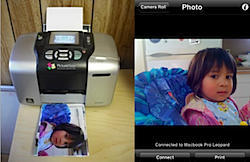
Very cool new iPhone app just out called Air Photo that allows printing directly from an iPhone to a printer connected to a computer. Basically, you download a Mac or Windows software program called Air Photo Server, then head to the iTunes store to pick up the Air Photo client, which is $2. Then you can just use WiFi to connect your computer and your iPhone, and away you can go.
For owners of HP InkJets, this technology already exists in a free app called HP iPrint Photo, but this is the chance for people with other kinds of printers to get in on the action. I think the scenario of use for this technology that I like best is treating the iPhone kind of like a Polaroid camera at a party. Walk around taking pictures, then have them start printing from across the room. Just get more of a keepsake feel to the whole process. More organic.