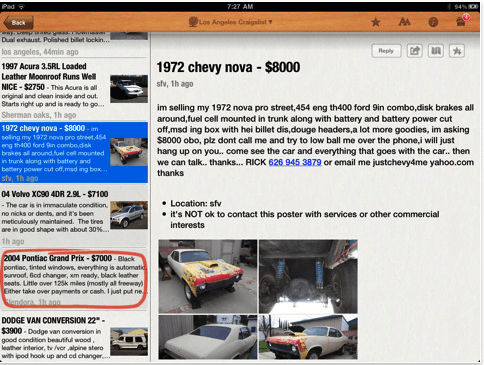
Like a lot of people, I have mixed feelings about Craigslist. It’s like Ikea: in theory, you’d rather patronize mom-and-pop shops or get your stuff elsewhere. But somehow on a rainy Saturday afternoon: there you are.
Craigslist can be a pain to use or search – but if you’re looking for a garage sale, love connection or that elusive floor lamp with a table in it – you end up there.
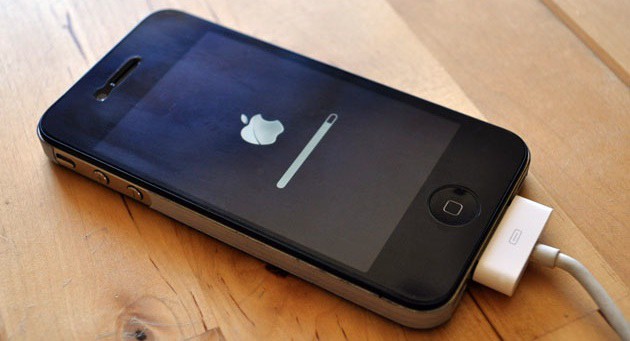
Yesterday, BGR made a SNAFU and claimed that iOS 4.3 was due to be pumped down to users in just a couple of hours. Obviously, that didn’t happen, but The Loop’s Jim Dalrymple has iOS 4.3’s actual release pegged for later today.
That’s looking increasingly likely. Earlier today, and less than a week after releasing iTunes 10.2, Apple has released iTunes 10.2.1 through the usual channels, which is solely a release paving the way for iTunes 4.3.
In fact, it appears to be mostly a small bug fix release, as Apple’s release notes state that iTunes 10.2.1 offers the ability to sync with an iPhone, iPad, or iPod touch running iOS 4.3, as well as improved Home Sharing, letting users browse and play from their iTunes libraries with Home Sharing on any iPhone, iPad, or iPod touch running iOS 4.3. That’s the same as iTunes 10.2.
No other features or bug fixes are mentioned in the release notes, but you can bet that if Apple didn’t feel that a new version of iTunes so shortly after the last version’s release was critical, they wouldn’t have pushed out so quickly. Expect iOS 4.3 to drop in a few hours.
Remember that 64GB iPhone 4 prototype we posted about yesterday, seemingly legit right down to its blanked out serial number and crossed out capacity? The lovely lads over at MIC Gadget got a chance to play with it hands-on themselves, and unless they’re in on the conspiracy, their hands-on time seems to confirm that the 64GB iPhone 4 was very real indeed. It even has the same silver ring around the camera lens that the lost Gizmodo bar prototype had.
But who cares if an iPhone 4 prototype has 64GB of storage if you can’t buy one, right? Interestingly, though, MIC Gadget’s source for the prototype — who says it was leaked from Foxconn’s Shenzhen factory — says he’s heard that the next iPhone will bring 64GB of storage capacity to all users.
That’s interesting for more than just the obvious reason. The iPhone has only one flash module inside of it, compared to the iPod Touch’s two, so it implised the iPod Touch might make the leap to 128GB of capacity in September. Once that happens, say goodbye to the iPod Classic: it’s managed to hold on until now simply by being the iPod you buy if you want to carry your entire music library with you, but once the Touch reaches 128GB, it’s all over for the iPod that started it al.
Although Apple’s next-generation iPad 2 won’t be released until Mar. 11, experts are already warning rival tablet makers more than half of their devices could be left unsold. Recalling images of the Internet bubble of 2000, one analyst predicts an “increasing risk of a bubble burst” for iPad competitors during the second half of 2011.
Improvements announced in the iPad 2 “make it tougher for the first generation of competitive offerings to play catch-up, meaning actual shipments could fall well short of plan,” JP Morgan Research analyst Mark Moskowitz told investors Wednesday.
At last week’s iPad 2 launch event, Apple surprised many of us by failing to announce anything in regards to iOS 5 or the forthcoming MobileMe revamp. In retrospect, it makes sense: although comparatively modest an update, the iPad 2 event was jam packed as it is with sales figures, new software, new accessories and hardware improvements, all of which needed their presentation time. iOS 5 is going to need an entire event all to itself.
So when will Apple debut iOS 5 and MobileMe? German site Macerkopf is citing a source that says Apple plans an early April media event to introduce iOS 5 and the new revamped MobileMe.
The easiest way to tell what Apple is going to do in the future is look at what they’ve done in the past. Last year, Apple held their event debuting iOS 4 on April 8th, 2010, giving developers two or three months to get on board with changes in the operating system before the release of the iPhone 4 in late June pushed it out to end users. It would make a lot of sense if Apple did the same this year with iOS 5 as well.
We start the day with two hardware deals under the spotlight. First up is a number of Mac Mini desktop machines from the Apple Store, starting at $599 for the 2.4GHz model. Next is a deal on iPads with $120 shaved from their original price, including a 32GB Wi-Fi tablet for just $429. The spotlight wraps-up with Apple’s iLife ’11, a suite of home productivity applications, for just $30.
Along the way, we also check out new cases for your iPod and iPad, as well as a replacement front screen glass lens for your iPhone 4. As usual, details on these and many other items can be found at CoM’s “Daily Deals” page right after the jump.
Photographer Stefano Pesarelli, an Italian expat who also runs an tour company in Malawi, traversed six African countries documenting daily life with his iPhone.
The project, called Africa through iPhone, takes him and his trusty iPhone 3GS from his adopted home through neighboring countries Kenya, Zambia, Mozambico, Tanzania and Kenya.
Pesarelli’s journey shows scenes from everyday life, snapped with the lens of his iPhone and altered with various apps.
Adobe’s Flash Player is a bizarre, convoluted product, to say the least. In fact, it’s about as un-Mac-like a piece of software as you can possibly imagine.
For example, did you know that if you want to change your Flash Player’s settings on the Mac, there’s no easy way of doing so locally? Instead, you have to visit a special web link to change your privacy, storage, microphone or web cam settings, or even flush out your cache.
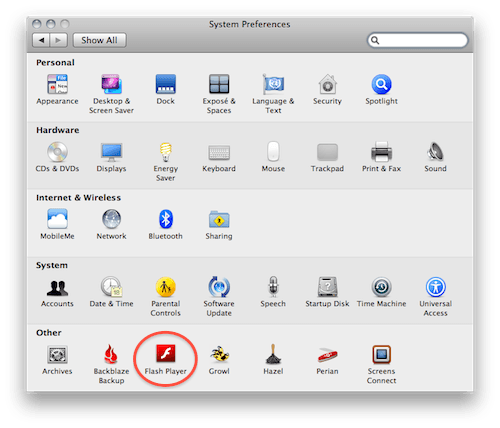
Ridiculous, right? Thankfully, Adobe seems to have taken one more small step to get in line with best Mac practices with the latest beta of Flash Player 10.3, which adds a prefpane to your Mac’s System Preferences panel allowing you to change Flash Player’s settings locally, including Storage, Camera and Mic, Playback and more.
It certainly took you long enough, Adobe, If you want to take Flash Player 10.3 Beta for a spin, you can grab it for Mac here
It’s a classic photo op: Apple releases a product and that night we see lines of early bird shoppers forming. The pictures may not be an accurate portrayal of consumer demand, one analyst suggests Tuesday. A combination of wider distribution, the day of the week and pre-orders could mean short lines, but a huge number of buyers.
Indeed, Piper Jaffray analyst Gene Munster says Apple has 10 times the number of distribution points, compared to a year ago, when the original iPad went on sale. Little wonder, then, the analyst is predicting iPad 2 sales will hit 1 million units quicker than the first-generation tablet. But never mind the lines.
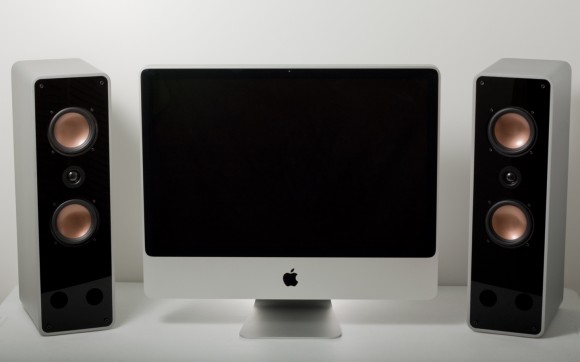
If only Apple offered their own standalone speakers, we imagine they’d look something like this gorgeous DIY 2.1 speaker set-up, designed specifically to match the aluminum unibody aesthetic of Apple’s 27-inch LED Cinema Display. Finding nothing available commercially, DIY modder Brett turned to a CNC machine to make his own speaker set-up, worthy of the mind of Ive.
Originally, the plan was to integrate a subwoofer into the desk housing the display and speakers itself, complete with box paths and room in the back for a USB hub, a power supply and storage. Unfortunately, that phase of the project has yet to kick-off, and so now these gorgeous and elegant speakers pump out their bass through umbilical to a subwoofer sitting on the floor.
Of course, while undeniably attractive, this 2.1 speaker set-up isn’t really totally loyal to the modern Apple aesthetic. In particular, the gold finish of the speaker phones isn’t exactly the sort of thing Jobs would approve of, and it’s hard to imagine Apple ever releasing a pair of speakers at all… let alone a pair this ginormously room commanding. Still, for audiophiles, these are the iSpeakers of which they’ve always dreamed.
One of the most highly touted features of iOS 4.3 is Personal Hotspot. Although Verizon iPhone owners have had access to the feature since iOS 4.2.6, the latest iOS update will bring Personal Hotspot to AT&T iPhone users as well, allowing up to three other devices to connect to it at once.
Interestingly, BGR is reporting that Apple may have made concessions to the carriers to get this feature out the door: they say that Personal Hotspot can technically support up to five connect devices, but that Apple agreed to give carriers the power to specify the maximum number of simultaneous connections. Boo. Expect this to become just one more bartering chip in AT&T and Verizon’s war to get your business.
In other news, BGR is also reporting that they think iOS 4.3 will be released at 10AM PT this morning. That seems unlikely to us: Apple themselves said it would land on March 11th, and Apple generally doesn’t release a new iOS version before the hardware meant to be debuting it. Still, I guess we’ll all know in just a few hours.
Might be time to get rid of this vector for security exploits, yeah? Photo: Adobe
Adobe has finally released a tool allowing developers to convert Flash content to HTML5 format used by Apple’s iPad, iPhone and iPod touch. The pre-release version of the ‘Wallaby’ conversion route may lessen tension between the two companies who last year fought a war of words over Apple’s decision to stop supporting Adobe’s widely-used Internet language.
The software permits developers to drop their Flash designs into an Adobe Air application which converts the original into HTML code that can be edited via Adobe Dreamweaver or a simple text editor. The process will “extend the reach of your content to devices that do not support the Flash runtimes,” Adobe announced. The new tool is best suited for iOS 4.2 and may have trouble converting all aspects of Flash Pro, such as 3D transforms, ActionScript and embedded audio and video, reports say.
Now that Apple has tipped their new, dual-core A5 SoC as the central cortex of the iPad 2, it’s reasonable to expect that the chip will start creeping down the rest of the iOS line-up later this year. That means an A5-equipped iPhone 5 in June, followed by an A5-equipped iPod Touch in September.
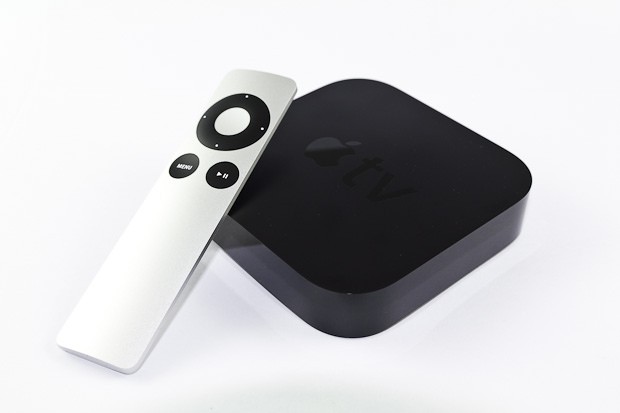
But even though it doesn’t look like one, there’s one other member of the iOS family: the Apple TV. Can we expect Apple to update their set-top box offering as well?
For those of us who hate juggling tracks on our iPhones, a 64GB iPhone 4 would be a godsend. It should be more than technically possible: the iPod Touch comes in a 64GB variety, after all. For whatever reason, though, Apple’s let almost five generations of iPhone pass without rolling out a 64GB iPhone.
At least it appears that they thought about it, though. MIC Gadget points out that some alleged iPhone 4 prototypes with 64GB storage capacities that are making their way into the Chinese grey market right now.
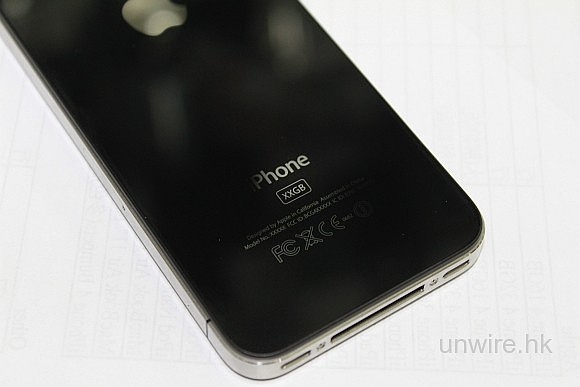
Technically, this could be faked, but it looks legit, right down to the correct amount of useable space reported within the iPhone 4’s settings (at 59.1GB, it’s identical to the amount reported by a 64GB iPad). Also, like the found Gizmodo iPhone 4, the back shell of the leaked prototype has the same “XXGB” demarkation.
Obviously, we never ended up getting a 64GB iPhone 4, but let’s keep our fingers crossed that 64GB is the new high-end iPhone 5. It certainly looks like Apple wants it to be.
Every so often, a new Apple product comes along with a breakthrough form factor that Jonathan Ive’s design team will riff on for years to come. As a result, there are many recurring motifs that provide clues to where Apple’s industrial design is heading.
Engineers built and flew a replica of the flying house in Pixar’s “Up” — setting the record for the largest cluster balloon flight ever.
It took 300 balloons, each 8-feet tall and filled with an entire tank of helium. The stint was for or National Geographic Channel’s “How Hard Can It Be?” show. Watch the video report:
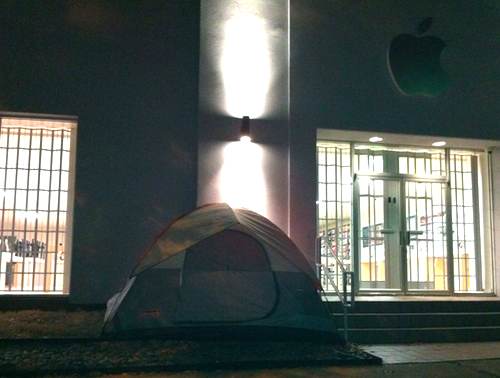
Four days before the iPad 2 goes on sale, the first line is already forming.
Apple fan Justin Wagoner has set up camp outside an Apple Store in Dallas, Texas. Here’s a snap of his tent taken by a MacCast reader.
Wagoner appears to be the first person lining up for the iPad 2, which goes on sale on Friday at 5PM. Apple isn’t taking preorders, so its first come, first served.
Wagoner also camped out to be first in line for the iPhone 4 last year. He has set up a site to document his camping trip: iJustinOfficial.com.
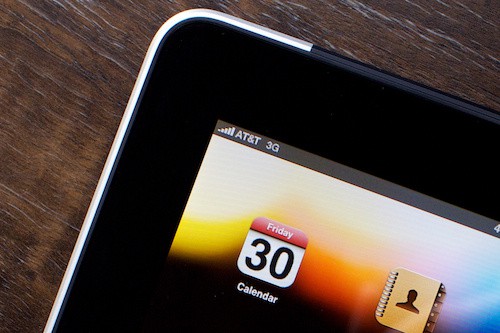
When the iPad first debuted, it launched with a $30 unlimited, month-by-month data over 3G courtesy of AT&T… who within months recanted the deal and switched it out with a 2GB per month subscription plan for $5 less per month.
AT&T couldn’t just bait-and-switch existing customers, though: as long as you signed up for the original unlimited plan and never cancelled, they couldn’t downgrade all existing customers to 2GB. That left a big question: when Apple finally announced the iPad 2, would AT&T figure out a way to weasel out of the grandfathered unlimited subscriptions once and for all?
Apparently not: AT&T has just confirmed that grandfathered unlimited data plans will continue to be offered on the iPad 2. So if you’ve got grandfathered unlimited, rest easy: you can upgrade to the iPad 2 safely.
We start the week with a mix of deals for the Mac fan. First up is a series of MacBook Pro laptops, starting at $929 for a 2.4GHz unit. Next is a TuchWallet for the iPod touch and a 27-inch LED Cinema Display for just $849.
Along the way, we’ll also take a look at ways to protect your iPad, either in faux leather case or an envelope sleeve. Also on tap: software, such as iWork ’09 and Navicat for SQL Server 9. As always, details on these and many more items can be found at CoM’s “Daily Deals” page right after the jump.
While most journalists spent their scant Apple-given minutes with the iPad 2 playing with apps and snapping photos, CNET UK went straight to business, jumping into Safari and running the SunSpider JavaScript Benchmark to measure how much better Mobile Safari’s new JavaScript rendering engine was over the original iPad’s.
According to CNET, quite a bit: the iPad 2 is up to four times faster in JavaScript rendering than the original iPad, and it’s not just a matter of beefier hardware. Even on the original iPad running iOS 4.3, there’s a 1.5x boost in JavaScript rendering compared to an iPad running iOS 4.2.
Most impressively, the iPad 2 is faster at JavaScript than all competing tablets, with the Galaxy Tab processing JavaScript at only 1/3rd of the speed of the iPad 2. The web just is faster on iOS.
Apple reportedly sold 1.1 million MacBook Air laptops during the December 2010 quarter, 63 percent above analyst expectations. The 1.1 million figure could mean MacBook Air sales represented about 40 percent of the 2.9 million notebook sales reported by the Cupertino, Calif. company for the three-month period.
The December sales numbers were 400,000 higher than the 700,000 units previously expected by Concord Securities analyst Ming-Chi Kuo.
Although the results are undeniably gorgeous, Apple’s decision to switch from the 3GS’s plastic back to a glass one for the iPhone 4 has been a disastrous one. Not only did Apple have to put out the fires on “Glassgate” shortly after the fiasco of Antennagate thank to the the glass backing’s tendency to crack when used with a slider-style iPhone case, but the glass backing has also proven to be a nightmare for Apple when it came to releasing the white iPhone 4, thanks to the glass’ tendency to leak light onto the camera sensor.
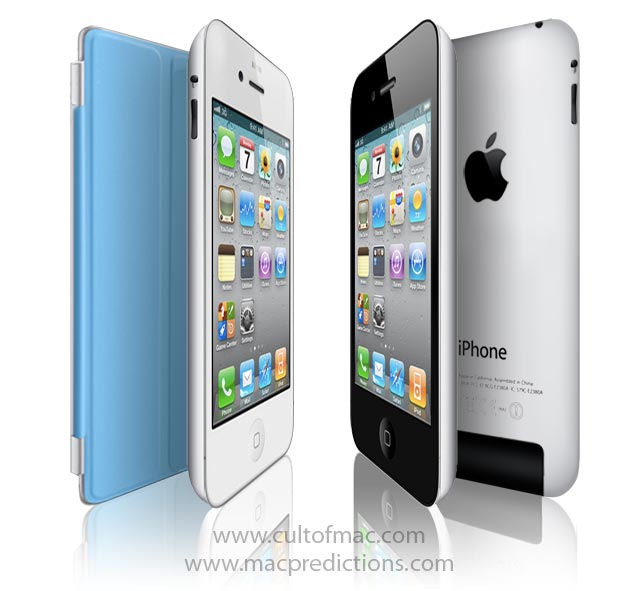
Reports now indicate that Apple wants to ditch the glass in the iPhone 5, instead moving back to the aluminum back found in the original iPhone. Cupertino ditched aluminum in the iPhone 3G because of wireless and cellular connectivity issues, but it’s thought that advances in antenna design might have mitigated the connectivity drawbacks of aluminum.
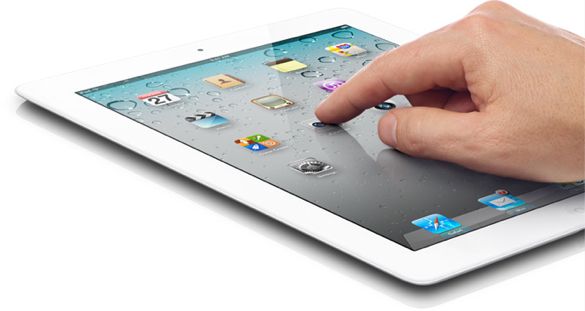
One big question we had here at Cult of Mac when the iPad 2 was first announced was whether or not developers would have to update their apps to take advantage of the iPad 2’s faster, dual-core A5 SoC. Now Apple’s clarifying the matter: no, you don’t have to, but it’ll help.
According to a new note posted on the iOS Dev Center, Apple has asked devs to update their apps for the iPad 2 in order to take advantage of the new hardware. Mentioning that most operations inside of applications will be faster just by dint of the jump to a dual-core processor, Apple concedes that software can become faster still if they tune up their software for the iPad 2 with tools like OpenGL Profiler. Devs are further asked to enhance their apps with the “new user experiences” made possible by the iPad 2’s cameras and gyroscope/accelerometer combo.
The first-gen iPad was a sneak peek at what Apple had in store when it came to the iPhone 4’s hardware, and we imagine the iPad 2 will be no different in this regard when it comes to the iPhone 5. Developers honing their apps for the iPad 2 now will be able to reap the benefits immediately upon the release of the next iPhone.
If there was ever an Apple launch that seemed to favor the Greg Packers of this world, it’s that of the iPad 2. Uncharacteristically, Apple won’t be taking any orders for the device until the date it hits store shelves: March 11th.
It’s hard to say what this implies. By one way of thinking, it means Apple’s not confident it can supply iPad 2 pre-order demand; thought of another way, Apple may simply want to avoid the problem of customers getting their new products delivered several days early by FedEx.
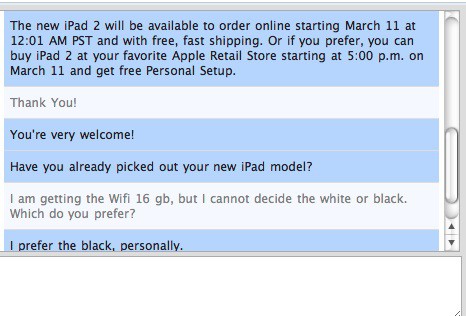
Either way, though, it’s left most of us wondering just when Apple will allow customers to start ordering the iPad. It looks like now we know: MacAppsDaily is reporting that an Apple phone rep told them that online sales of the iPad 2 would begin at 12:01am PT on March 11th, with “free, fast shipping.” 9to5Mac has also confirmed that time as well.
Looks like a late night for me on Friday. Who else will be awake?