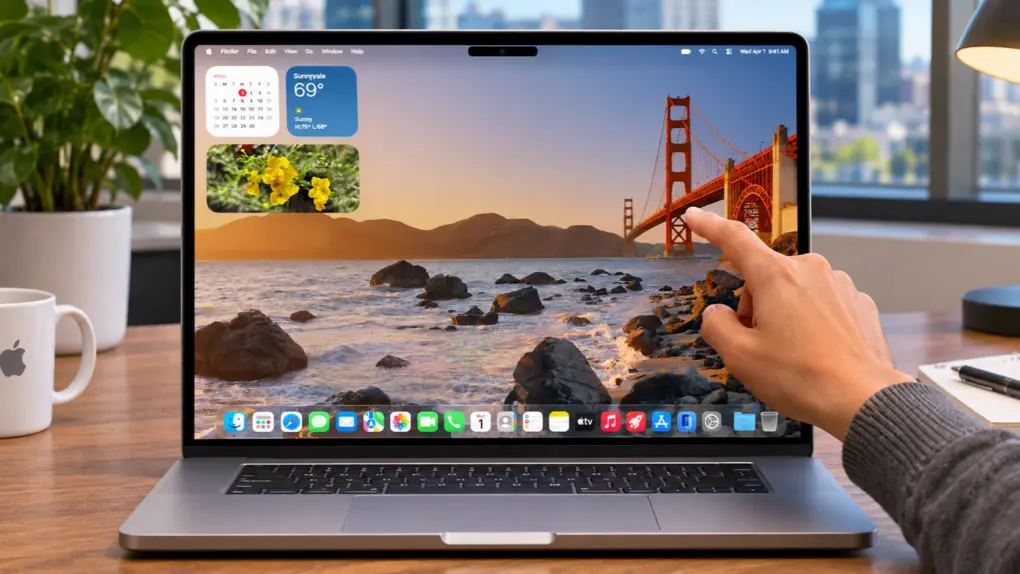
We’re apparently just days away from Apple launching a touchscreen-enabled MacBook Pro. And that’s not the only major change — this is the most significant revamp of the MacBook line since 2021. It’ll set the pattern for macOS models for years to come.
Here are five reasons to get excited about the touchscreen MacBook Pro expected to launch at Apple’s “Pro and Tell” event on Wednesday.
Time for a MacBook Pro redesign
Apple last gave the MacBook Pro line a major redesign way back in October 2021, when it introduced the 14-inch and 16-inch models powered by the M1 Pro and M1 Max chips.
Significant changes to the notebook included a flatter chassis, a mini-LED display with ProMotion, a notch for the webcam and the return of the HDMI port and SD card slot. Apple also eliminated the Touch Bar in favor of a traditional row of function keys.
As of October 2026, that design is a full five years old. More recent MacBook Pro updates focused on faster processors rather than an exterior redesign.
But the time for a redesign is almost here. And there are plenty of reasons to get excited about it.
1. Touchscreen breaks MacBook Pro out of the rut
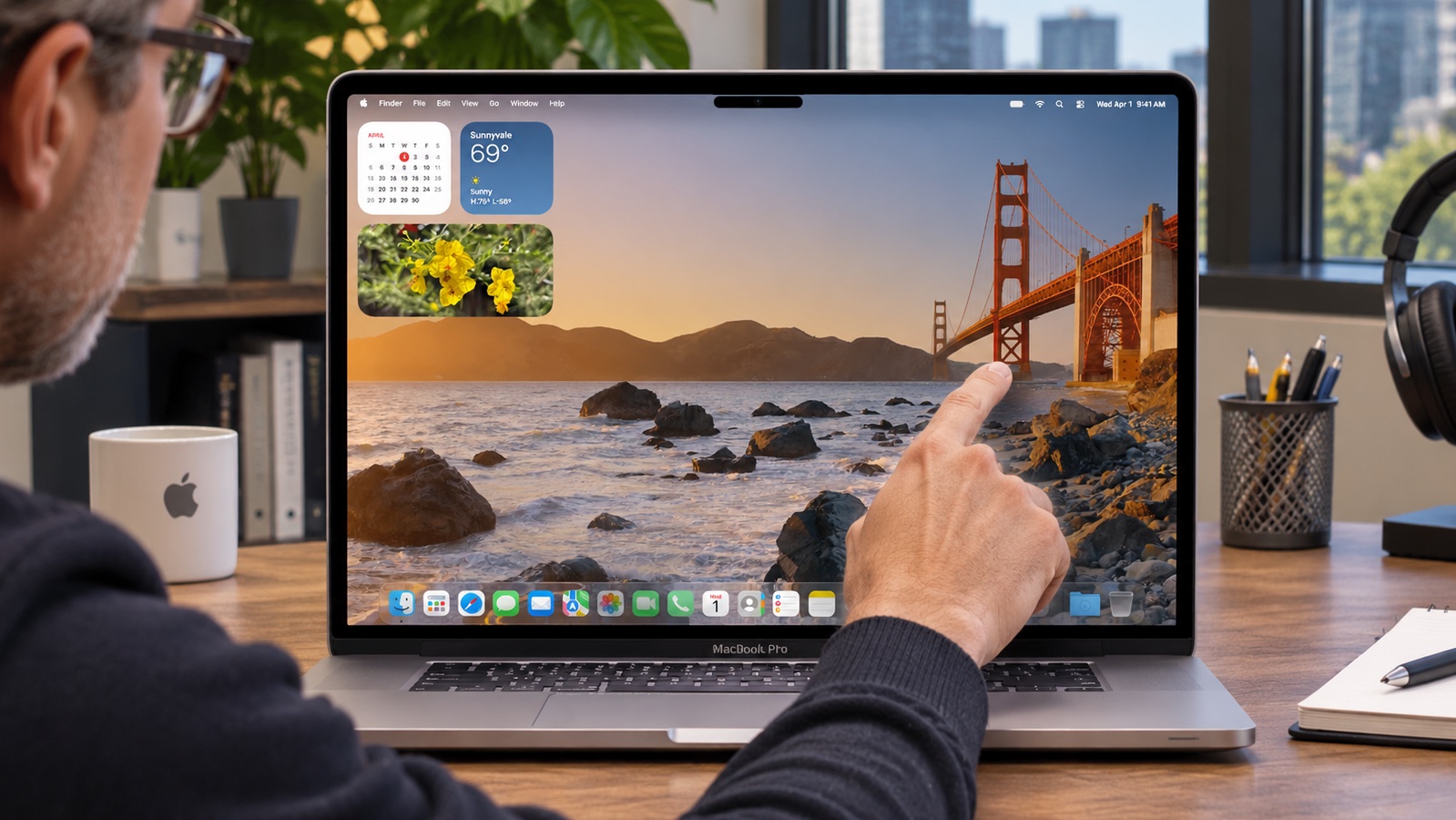
Concept art: Apple/Cult of Mac
As brilliant as MacBooks are, Apple has played it safe with their design. The last fundamental change was the Touch Bar, and that didn’t work out.
The company is about to break out of its comfort zone with a touchscreen MacBook Pro. This isn’t speculation — it’s been the subject of rumors for months… years.
Still, there’s pushback on the whole idea of adding touch control from some current MacBook users. And Apple itself helped foster that resistance when it said that touchscreens work best on tablets, while Macs are better suited to a keyboard and trackpad.
But now Apple apparently sees the value in adding touch support to MacBook Pro. The change acknowledges that with touchscreens on iPhones, iPads and even Apple Watches, many users want the flexibility to tap, swipe and move content directly on their laptop’s display.
It also gives Apple a way to bring some of the iPad’s intuitive touch controls to its professional laptop without abandoning the traditional Mac experience.
And that last point is important: code found in early macOS 27.2 versions shows the operating system is being tweaked to support touch, not overhauled.
2. Beautiful OLED display
I already mentioned that virtually every Apple device but MacBook Pro has a touchscreen. Well, nearly all of those are also OLED. According to many, many sources, OLED is finally making it to Apple’s premium notebook, bringing marked visual improvement.
OLED pixels produce their own light, allowing them to turn off completely to display true black. That delivers much higher contrast and richer colors, making photos and other content look better. For creative professionals who rely on accurate colors and deep blacks, an OLED MacBook Pro could be a particularly welcome upgrade.
But the benefits extend to all users. OLED panels also offer faster response times, reducing motion blur during fast-moving video and games.
Another potential advantage is improved power efficiency when displaying dark content. The screen doesn’t have a backlight, so when a pixel is dark it’s using almost no power. That said, actual battery life depends on the OLED panel.
3. Lighter, without sacrificing ports
The redesign of the touchscreen MacBook Pro supposedly involved Apple reengineering the notebook’s internal components, making them smaller and rearranging them to reduce weight. The computer isn’t expected to be much smaller, but it should be lighter. And don’t underestimate the value of that.
The best computer is the one you have with you. And if you leave your MacBook Pro at home because it weighs too much, then it is not the best computer.
Even better, Apple didn’t cut out ports to make the device lighter. In general, it seems Apple didn’t change already popular aspects of the product, including 16-inch and 14-inch options.
4. Smaller screen cutout in new MacBook Pro: Hurrah!
The rumor that Apple replaced the screen cutout with a smaller iPhone-style Dynamic Island in the next MacBook Pro isn’t the same kind of fundamental change as a touchscreen or an OLED display. Still, any improvement is welcome.
Third-party software developers have worked hard to make the notch useful, putting in notifications, media controls and more. But they can only do so much.
And looking beyond the imminent reduction in size, it seems Apple is on the way toward eventually removing the need for a screen cutout from the iPhone, tech which will also benefit Macs.
5. Reveals MacBooks for years to come
From what we can tell, this first touchscreen model will be part of the MacBook Pro line, not be dubbed something like “Ultra” or “Touch.” Which means Apple expects it to be a mainstream device, and its design will be around for years.
Considering Apple’s strategy of not revamping MacBook models very often, if you buy a MacBook Pro anytime in the next five or six years, it’s almost certainly going to look much like the one being announced on Wednesday.
The same goes for MacBook Air. While this notebook line is always sleeker and lighter than any MBP, the Air takes its design cues from the premium model. Expect the M6 MacBook Air coming in 2027 to look like a slimmer version of the new Pro.
So be sure to check back on Wednesday to see what Apple announces at the Pro and Tell event.

Ed Hardy has been writing full-time about tech for 26 years, and using it for much longer than that. His intro to Apple was a Macintosh SE/30 (which he still has), but now he uses a 13-inch iPad Pro as his primary computer.
That’s because he’s a “tablet first” type of guy. Rather than use a Macbook, he connects a keyboard case to the iPad. And instead of a desktop Mac, he connects his tablet to a 27-inch display and full-size keyboard. (So don’t try to tell him that everyone has to use a Mac to be productive.)
Before coming to Cult of Mac, Ed wrote for NotebookReview, TabletPCReview and Brighthand, as well as other sites.