Mobile menu toggle

Should the FDA Monitor Health Apps?

By

Picture 7


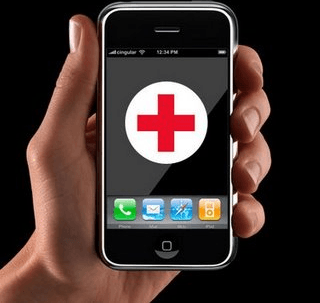
The Food and Drug Administration (FDA) is proposing guidelines to monitor a “small number of mobile apps.”

Before you start wondering whether the feds are going to jump into your pocket along with your ever-present smartphone, it doesn’t look that way yet.

They won’t be in your business for all those apps that do things like track your weight or give you tips on breastfeeding.

Namely, they will be keeping an eye on apps that “could present a risk to patients if the apps don’t work as intended” — those that should be used by health care professionals, like ultrasounds and an application for iPhones and iPads that allow doctors to view medical images and X-rays.

The proposed monitoring would not cover apps that could potentially cause damage if used by lay people like the growing number of CPR or first responder apps. (Developers can, however, elect to register and list and to seek approval or clearance for mobile apps with the FDA.)

Still, parsing the thousands of health-related apps may be a harder job than they first thought: the guidelines were due in March.

“There are advantages to using medical apps, but consumers and health care professionals should have a balanced awareness of the benefits and risks,” says FDA policy advisor Bakul Patel.

The FDA says it wants consumers to weigh in on the guidelines during a 90-day public comment period once the guidelines are published in the Federal Register July 21. (You can preview the document online here).

“We want to hear from as many consumers, advocacy groups, health care professionals and software creators and distributors as possible to help us finalize the proposed guidelines,” Patel says.

You can submit comments on the proposal online or in writing to: Division of Dockets Management (HFA-305), Food and Drug Administration, 5630 Fishers Lane, Rm. 1061, Rockville, MD  20852.

Do you think the FDA should monitor health apps?

Via FDA

  • Subscribe to the Newsletter

    Our daily roundup of Apple news, reviews and how-tos. Plus the best Apple tweets, fun polls and inspiring Steve Jobs bons mots. Our readers say: "Love what you do" -- Christi Cardenas. "Absolutely love the content!" -- Harshita Arora. "Genuinely one of the highlights of my inbox" -- Lee Barnett.

16 responses to “Should the FDA Monitor Health Apps?”

  1. CharliK says:

    If it is an app designed for and marketed to professionals. Yes. THe FDA should monitor them just like they do everything else. 

    The rest should be required to put the same disclaimers that food supplements etc have to put saying they are not validated and consumers proceed at their own risk

  2. JayeDee369 says:

    The FDA, the same FDA that let some medicines out in the wild that are hazardous to people, the same FDA that can’t even monitor themselves with some of the mistakes that have put the public at risk, the same FDA that caters to lobbyists, insurance companies and other unsavory sorts-How about if you disband, I’ll think about it because you’ve been unhealthy for the public for years! I say no, you can’t even governor yourselves properly, what could you possibly tell me isn’t good for me

  3. Patrick M Phillips says:

    HELL NO!

    The same FDA that knowingly approved Vioxx that ended up killing by their own conservative estimates 20,000+ people.  The FDA should be abolished.  It’s nothing more than a front for drug companies to make a fortune at the expense of medical progress.

  4. Patrick M Phillips says:

    I’m a nurse and I’m telling you, there is absolutely NO need for this.  If it’s an app marketed to “professionals,” there are companies that are already well known and trusted.  NOT because the FDA said we can trust them, but because they’ve been naturally selected over the decades BY medical professionals. 

    Oh, and if you think the FDA is composed of selfless public servants who have nothing but the welfare of humanity at heart then I’ve got a bridge or two to sell you.

  5. MikeT5 says:

    I take issue with one specific point in Patrick’s post; that the medical community can regulate its corporate partners.

    Suggesting that the medical community can ‘select’ the good ones is a bit unreasonable– just look at Medtronic (one of the largest med device companies on Earth) and their medical device INFUSE.  This is just the latest example of a company suppressing side effect information, allegedly paying kickbacks to docs, and “not” suggesting off label uses of the device (which lead to harm and even death).  Irresponsible behavior promoting a med device.  And this corporate partner has been around for decades.  With this scandal, will the medical community kick them out?  Not likely.  Will they even stop using INFUSE?  Well, they’ll use it less, but I doubt they’ll abandon it. 

    As this is only a fresh example (not an exception), I do not trust ‘professionals’ to select responsible, trustworthy corporate partners.  They aren’t regulators, and I don’t want them to be– i want my medical pro’s to be focused on delivering medicine, not constantly assessing/ second guessing the quality of the products they are using.  That should be done before those products ‘get’ to the market. For that, I’ll take the FDA.

    Look, I know we don’t want the innocent app maker to be overly burdened by regulation, but once they stop making apps that track your meal’s calories (relatively lightweight) and start making heart monitoring apps for CHF patients (pretty hardcore)… are we still going to be ok with ‘woops, the beta drop had a glitch, all the data was lost in transmission’  or worse ‘transmitted to your insurance carrier’?  Or will we want more rules & guidance in place other than marketplace laissez-faire?

    Getting into (‘hardcore’) health apps should require a new corporate competency for market participants– namely, competency at navigating regulatory requirements, just like other medical device makers. 

    And I’m ok with that.

  6. Jesse_EngAmer says:

    More fiscally irresponsible regulation from the FDA. Big surprise. 

    Medical apps are a small proportion of our medical devices. 50% of our medical devices and 80% of our pharmaceuticals are imported according to the FDA themselves in their report Pathway to Global Product Safety and Quality.  They also said themselves that “The safety of America’s food and medical products remains under serious threat… it would take 9 years just to inspect every high-priority pharmaceutical facility alone, let alone those of lower priority.” The FDA is lacking in resources and manpower. The FDA’s budget was slashed recently by 258 million. This new set of regulations is only one instance of new regulations that are taking away resources from more important areas. This lack of resources has made the 2011 Food Safety and Modernization Act reactionary instead of preventative as the FDA will need to establish a myriad of partnerships, coalitions and improved intelligence-gathering techniques.  Even then, resources will still be deployed on  “data-driven risk analytics.” Hardly all-inclusive, hardly preventative. By overregulating this new field of technology and handing over monopolies to big pharma, we crush innovation. Many companies, especially small tech startups cannot afford the increased research. For example since 1968 about 41 less new pharmaceuticals have been approved each year according to the Independent Institute and even more aren’t even researched due to the costs associated. 

    Initially, for the first 86 years of FDA’s existence, from 1906-1992the U.S. treasury department funded the FDA. In 1992 a law passed allowing pharmaceutical companies to provide funding for their own research that smaller companies could not put forth. 

    Once again the FDA kills growth and initiative in favor of Big Pharma.

  7. mai duc chung says:

    The usual idea is that you would use NFC to set up the link between the two devices and then do an automatic hand over to a different protocol for doing the actual transfer of data – eg Bluetooth,iphone 5

  8. 1Suresh_Babu says:

    Mobile devices now are the disease management devices and not just the communication device. The m-health is a distant patience care service that benefits the patient and the doctor with timely updates and monitoring. Thanks for the mention.

Leave a Reply

