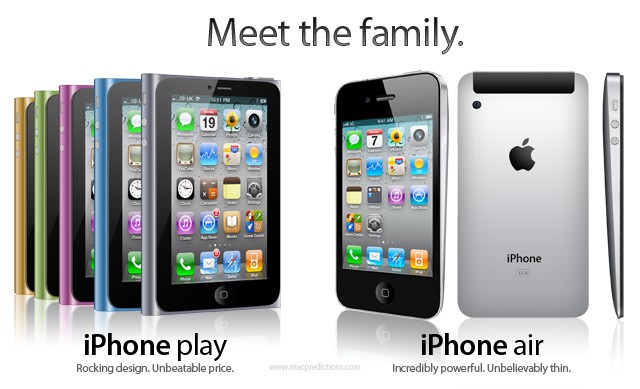
This week, Bloomberg, The Wall Street Journal and TechCrunch all published rumors that Apple plans to compete in the mid-ranged smartphone sector, with the launch of a smaller, more affordable iPhone, to be sold alongside the iPhone 4. At Cult of Mac, we predicted as much six weeks ago.
Of course, rumors of a smaller, cheaper iPhone are nothing new. They’ve been around for almost as long as the iPhone itself. And with good reason. Any seasoned Apple watcher will recognize this as Steve Jobs’ standard MO. Launch an iconic, up-market product, allow the market for it to grow and mature, and when the underlying technology becomes cheap enough, introduce a smaller, more affordable mass market version.
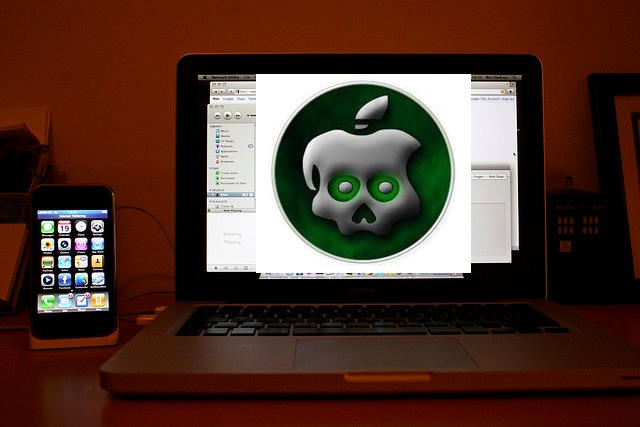
The recently released Greenpois0n jailbreak tool has been updated to release candidate 6 today, and this particular version will allow you to jailbreak your second-generation AppleTV and install the popular NitoTV software, adding a few great new features to your device.
The process is exactly the same as that used for release candidate 5, and just as before, this will provide an untethered jailbreak for all devices, meaning you won’t need to plug them in to your computer when you want to boot them.
Greenpois0n RC6 is available for both Mac and Windows, and you can download it now from here.
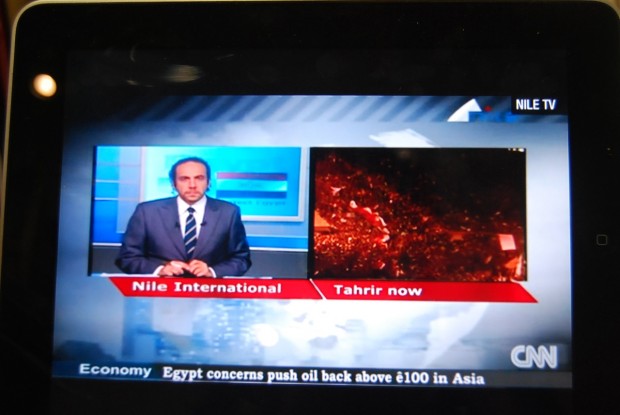
Going around town today, I didn’t have time to plop myself in front of a television, and so I constantly checked my iPad when at WiFi hotspots to update myself on the exciting developments in Egypt.
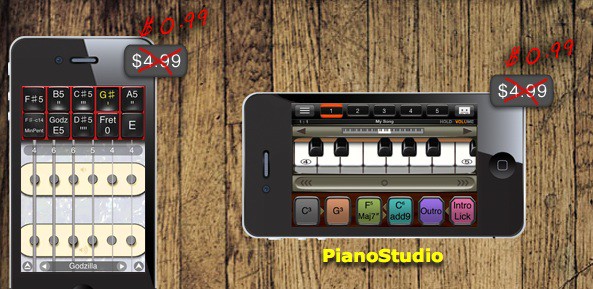
Oh, there’s gonna be a bumper crop of iPhone musicians born this weekend if Frontier Design Group has their way. Practically all their music-slinging iPhone apps are on sale to celebrate the iPhone coming to Verizon, including the highly regarded iShred app — sister app to the free iShred LIVE app required to use Griffin’s GuitarConnect and StompBox accessories — GuitarStudio and PianoStudio, all three of which are normally $5 each, but on sale for a buck apiece.
As musician and fellow Cult of Mac contributor Lonnie Lazar says, these apps won’t turn you into a Rock God; but they’re certainly a truckload of fun and great tools to learn with. Sale ends tomorrow, so don’t mess around if you want ’em.
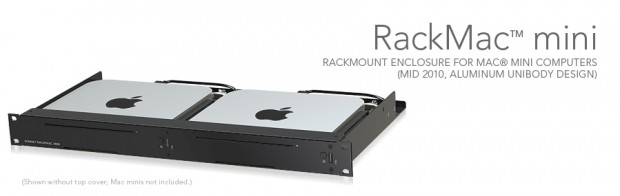
Now that Apple’s killed off the XServe once and for all, there’s not a lot of options when it comes to fitting the existing Mac server options into a standard 1U rack space… or is there?
The RackMac mini by Sonnet Tech allows system admins to install two Mac minis in a standard rackmount enclosure while allowing full access to the CD drive, power LEDs and even the IR port on the unibody mini.
I’m no admin, but Sonnet seems to have thought of everything here, right down to a wiring and ventilation system to prevent the Mac mini from overheating. Each kit costs $16.
Apple doesn’t let app developers assign functions to the iPhone’s physical buttons. It’s easy to understand their point in the matter — those physical buttons are for system settings, not as function keys — but I’ve always wished Apple would make an exception when it came to camera apps. Using an onscreen shutter button just isn’t very nice, especially when you’re trying for a self-portrait.
The Camera Mic App is an ingenious dodge against the prohibition against using the iPhone’s physical buttons as a shutter in a camera app: instead, it uses the iPhone’s mic itself as a shutter button. Just load the app and tap the mic when you want to take a picture.
Briilliant, and only $0.99. If you take a lot of duck-lipped Facebook self-portraits, this is the app for you.
Over at Geek.com, I took Sparrow — the new Tweetie-esque Gmail client for Mac, now available on the Mac App Store — for a spin.
What’d I think? I really liked it… so much so that it has dislodged Postbox 2 as my e-mail client of choice.
Here’s a bit of my review:
Sparrow treats email a lot like Twitter, a four-year old micro-blogging medium still in the process of evolving. It’s a presumptuous move on the part of Sparrow’s developers, and one many users will just never be able to get beyond, either because they needmore functionality from an email client… or, after decades of using email one way, they just can’t believe that they could be more productive treating it more ephemerally…
How seriously do you take your email? How much can you go with its flow? Power users will be driven mad by the lack of sophisticated mail wrangling functionality in Sparrow, but that’s the whole point. Sparrow wants you to treat your inbox like a stream that can be dipped into, not an ocean to be tamed; it’s the equivalent of skipping stones, not piloting a submarine.
You can read the whole review here, and stay tuned to Cult of Mac for an interview with the Sparrow team next week in which we discuss the philosophy and future of the app.
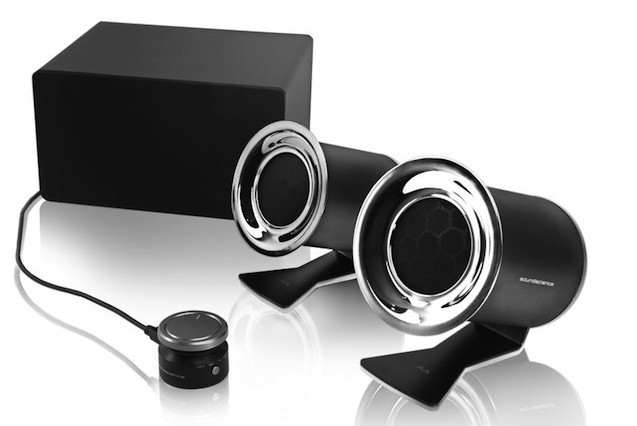
When I wrangled a brief listen to Antec’s new soundscience rockus 3D 2.1 system at CES last month, I was pretty sure this was a direct challenge to Bose’s venerable Companion 3 system. All the pieces are there: subwoofer, two satellite speakers and the stand-alone volume dial; even the price, $250, is the same.
Antec’s take, though, takes more style risks and adds this: an active system that feigns 3D, giving the impression of a 5.1 system by processing incoming signals and “placing” the sounds in a virtualized 3D soundscape to create the effect. At least, that’s the idea; the little taste I received at CES certainly inicated they might have got it right. Full test coming.
The profile image on Twitter for Egyptian activist Wael Ghonim shows him wearing a Pharoah’s crown, typing away on a Mac laptop. Ghonim, a Google marketing exec in Cairo, was released after 12 days in custody by authorities for a Facebook pageFacebook Page about the death of everyman activist Khalid Said that catalyzed protests.
I got to talk to a researcher this week about social media in the Arab world – and how the services many of us use to keep in touch with far-flung old flames and cousins serve as portable microblogging and news distribution tools in places where most media is state-run or party-funded.
We’ll try to catch up to Ghonim after the euphoria dies down to ask him what role Apple devices play in these historic events.
UPDATE: we corrected the FB page thanks to reader ademsemir who says that iPhones played a big part in recent events.
UPDATE: I sent an email to App Remix’s CEO Jonathan George asking whether his company was going to be bought by Apple. His response? “No comment…” he said.
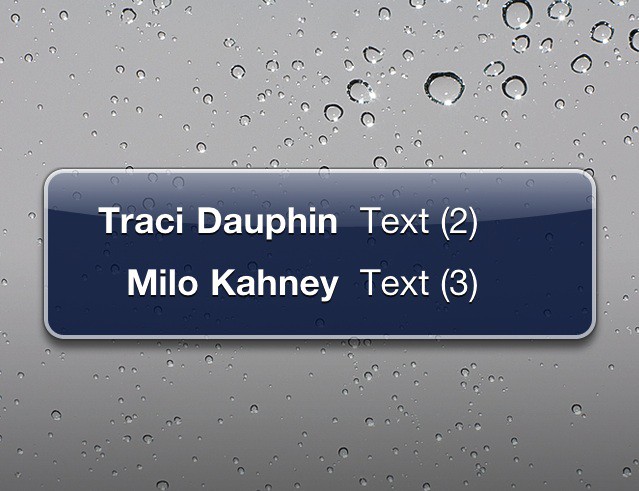
Apple is working on a new notification system for iOS and will be buying a small company to build its technology into the operating system, according to one of our sources.
Apple’s pop-up notification system for new text messages, voicemails and the like has often been criticized as one of the weakest parts of the iOS. Notifications are intrusive, modal and often cryptic. It’s a mess.
HP/Palm’s webOS banner notification system, on the other hand, has been widely praised for its utility and ease of use. And from this week’s preview, it looks to be getting better.
There were rumors last year that the iPhone’s notification system would be fixed after the chief architect of Palm’s system, Rich Dellinger, returned to work at Apple. However, the system still hasn’t been fixed, and according to our source, Apple is now trying to buy a small app developer to fix it.
Our source, who asked to remain anonymous, didn’t know the identity of the company, except it already has an iPhone app in the App Store.
One candidate is Boxcar, a free app from App Remix that enables push notifications for Twitter, Facebook, and email. Boxcar’s system has been highly praised, especially the new iPad version.
Other than that, we couldn’t find other obvious possibilities for the company Apple is buying. If anyone has a good idea, please leave it in the comments.
Dude, Valentine’s Day is like four days away! Haven’t bought your sweetie a gift yet? Don’t despair, we have some clever gift ideas that will make you look like a hopeless romantic. Or at least you won’t be in the doghouse!
Above: When saying it just isn’t enough, show her how much you love her with the Love Quotes Wallpaper for Valentines day. With over 450 glow effects in 24 patterns and 20 colors, you are sure to find something for your sweety. The more sickly sweet the better! You can even share by Facebook, Twitter and Email.
Love Quotes Wallpaper for Valentines Day App is available from iTunes for free
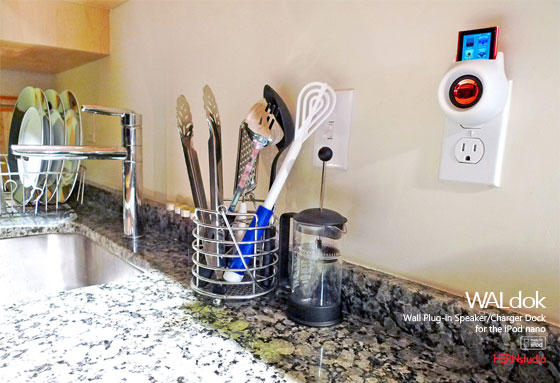
We see a lot of Kickstarter pitches come through our inboxes, but WALdok is one of the rare ones that actually catches our interest.
The idea is pretty simple. The WALDok is a compact speaker dock for the new iPod Nano that fits into any wall socket, juicing your Nano even as it plays your tunes. That’s not particularly innovative in and of itself, but where WALdok is aiming to distinguish itself is in audio quality: not only does the design include a large 40mm driver for precise highs, excellent audio clarity and robust volume, but the WALdok has been designed with a spacious bass chamber inside the body to act like a subwoofer, achieving a fuller and richer low-end response,
WALdok looks like an absolutely gorgeous product, taking complete advantage of the modularity and portability of the Nano while making it easy to take both your tunes and your charger with you on the road, wherever you go. WALdok is now looking for backers, and production will begin once $30,000 has been committed, with a single WALdok starting at $79.
Nothing like a fresh round of recriminations from the music industry against Apple’s dominant digital delivery platform, iTunes. The latest round comes from Sony, which hints it may pull the likes of Bob Dylan and Beyonce from Apple following a dust-up over the Cupertino, Calif. company’s rejection of Sony’s ebook reader application.
In an AdAge interview, Sony executive Michael Ephraim charges music publishers are looking for alternatives to iTunes. (Sony just happens to own one of those alternatives, “Music Unlimited”, which the company plans to launch.) In addition, Ephraim asks and answers whether the music giant will continue selling titles at Apple.
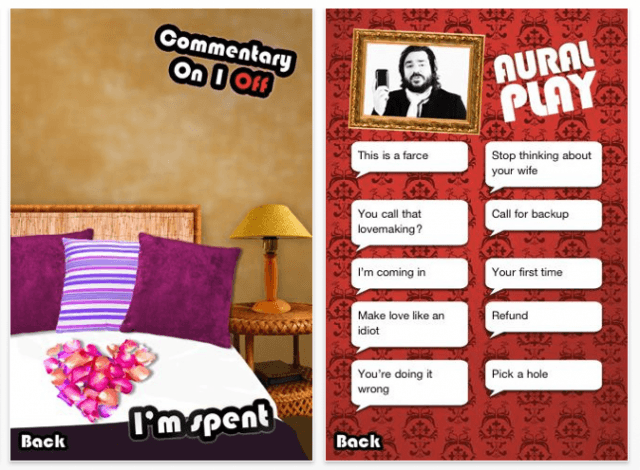
If you need a good laugh as much as you need a roll in the hay, a new app that promises to synch music to the intensity of your lovemaking may be just the thing.
The Matt Berry Sexytime Soundtrack App works using the iPhone’s accelerometer – put your phone on your bed and it should regulate the music to your amorous ministrations. So the harder you go at it, the raunchier the music gets.
Just don’t expect to keep a straight face: you’ll be goaded and chided by the voice of Matt Berry, who interjects things like: “You’ll probably get breakfast for this.”
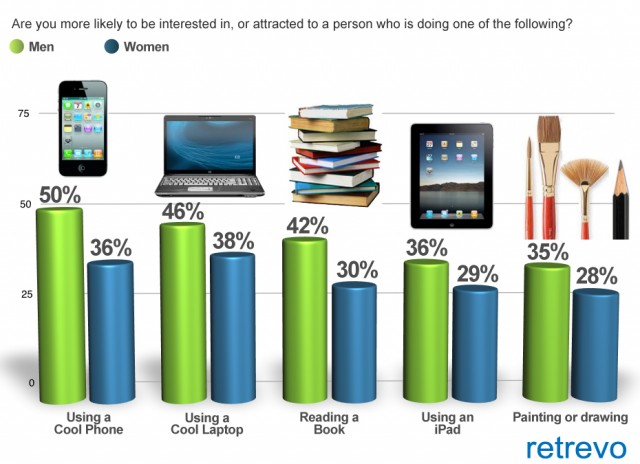
Sorry, guys. If you want to woo that random slice of scrumptious across the cafe, making eyes at her over your iPad isn’t the way to do it: you’d be better off pulling out your MacBook Air.
So says Retrevo, who have asked consumers in time for Valentine’s Day if they notice other people’s gadgets, and how likely they are to be attracted to someone based upon that gadget.
As you can see, according to Retrevo’s results, reading a book is sexier than e-reading your iPad. An iPhone or MacBook is the most likely gadget to get you some action. As for showing an interest in the creative arts, it seems universal: artists give pretty much everyone a big rubbery one.
Notice that the results, though, are heavily skewed towards men finding a girl attractive if she’s reading, drawing or using a gadget. The fairer sex, on the other hand, seems less interested in the superficial traits implied by an iPhone 4, iPad, drawing easel or volume of Sartre.
In other words, if you’re a girl and want a guy to notice you, play the geek. Guys? As usual, you’re out of luck: women just aren’t superficial enough to be easily seduced. Or so my girlfriend keeps telling me.
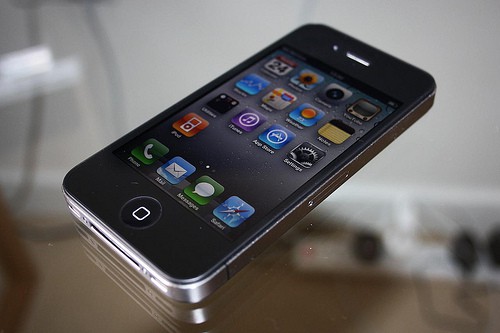
The Verizon iPhone may cost the same as its GSM counterpart, but it’s making Apple about $16 more profit per handset sold, according to the latest data from iSuppli.
iSuppli’s teardown of the Verizon iPhone’s bill of materials adds up to just $171.35 for every 16GB device, compared to the $187.51 estimated cost of the AT&T compatible iPhone 4.
iSuppli asserts that Apple had made “significant changes in its design and component” selection for the Verizon iPhone.
Apple’s usually pretty good about making sure that even if their latest iPhone doesn’t ship fully patched, an update is waiting for users the second they plug it into iTunes for the first time.
No surprise, then, that on the first day of the Verizon iPhone’s official release, Apple has already issued a patch to the firmware, resolving a bug that affects the accuracy of the Verizon iPhone’s exclusive (for now) Personal Hotspot… namely in its data reporting.
Of all the bugs to afflict the Verizon iPhone at launch, one that potentially misreported how much data was being used is the most egregious. Because Verizon charges $20 per month for 2GB of tethered data, with each additional gigabyte costing another $20, any discrepancy in data reporting could have led to some big problems.
If you don’t intend on using the Personal Hotspot feature on your new Verizon iPhone, this is not a critical patch… but if you do, better grab it now, before you find yourself staring at a higher bill than you expected.
What does Nokia’s decision to junk Symbian for Microsoft Windows Phone 7 mean for Apple? The view on Wall Street is that the Cupertino, Calif. iPhone maker will stay strong – and its strength only increase the longer the Finnish cell phone maker waits to release handsets.
“The more time it takes for [Nokia] to launch their product, the tougher it will be for them to compete against iOS and Android-based devices,” ISI analyst Abey Lamba remarked Friday. Lamba expects Apple “will remain the leader.”
Apple is among only two notebook makers in early 2011 experiencing strong demand, with the Cupertino, Calif. firm doubling orders for some “hot-selling” MacBooks, according to a Friday report. The news follows indications the Apple notebook was “flying off the shelves” during the holiday buying period.
HP was the only PC notebook brand seeing first-quarter demand amid a flaw discovered in an Intel chipset which depressed production levels. HP could ship 10 million notebooks during this year’s first quarter – down from 11.13 million units shipped last quarter. The chipmaker says its Sandy Bridge chips won’t return to full production until April. (MacBooks should see an update of the Intel chips in June, other reports indicate.)
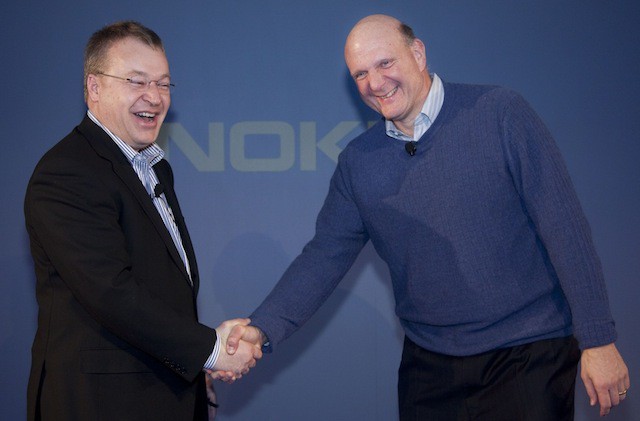
With these words, Nokia CEO Stephen Elop declared his intentions for the future as part of his company’s strategic partnership with Microsoft. Both companies are trailing in Apple’s wake and urgently need to catch up.
The first part of Elop and Steve Ballmer’s open letter is somewhat dull, but the final paragraphs contain the real meat.
“Today, the battle is moving from one of mobile devices to one of mobile ecosystems,” they declare. “Ecosystems thrive when they reach scale, when they are fueled by energy and innovation and when they provide benefits and value to each person or company who participates. This is what we are creating; this is our vision; this is the work we are driving from this day forward.”
And then this declaration of war: “There are other mobile ecosystems. We will disrupt them.”
I, for one, welcome our new Nokisoft overlords; and I’ll happily raise a glass to disruption. Let’s see what actual shipping products they come up with, shall we?
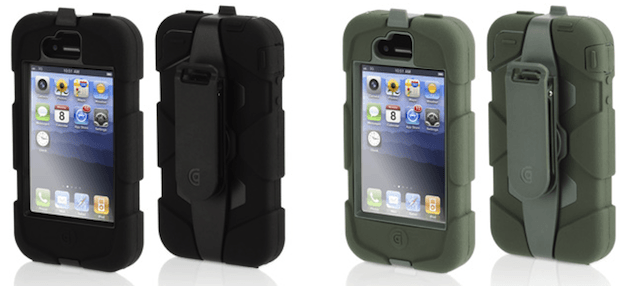
Griffin Technology has announced the release of their Survivor iPhone 4 case which is made for warriors of all types. Even if pink is their favorite color. Personally I’ll stick to black and that’s the color of the case I’d probably buy if given the chance.
The Survivor case retails for $49.99 and it is one of the most heavy-duty iPhone cases I’ve seen similar to the Ballistic HC I reviewed previously, but it is also the first I’ve seen that is compatible with the Verizon version of the iPhone 4.
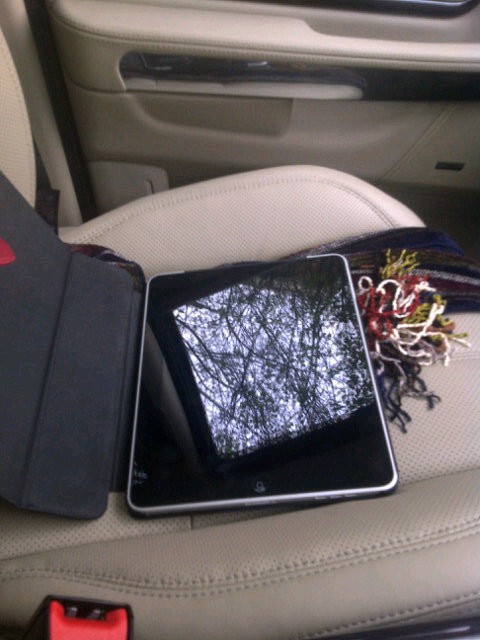
Carling's rescued iPad. He joked that he might test it for fingerprints.
Former England Rugby captain Will Carling left his iPad on a train (doh!) but recovered it using the Find My iPhone App.
When Carling logged on to his laptop at home, he thought some good samaritan had turned in the device to the station’s lost and found, since the location dot was beeping nearby. He drove back to the area only to find the GPS chip led him to an apartment building.
“There was no answer, so I wrote 18 notes and put them through the doors,” he said. “Part of me thought, what if they take it the wrong way? But I just thought, to hell with it, I want my iPad back.”
As Apple’s stock takes a pounding on rumors that Steve Jobs is in hospital, the Wall Street Journal says he’s up and about and still on the job.
According to the Journal, Jobs is still on the job, taking meetings about the IPad 2 and iPhone 5:
The 55-year-old Mr. Jobs, whose ailment hasn’t been disclosed, has been taking business meetings at home and on the phone, these people said.
He also has been seen on Apple’s Cupertino, Calif., campus and in public in Palo Alto, Calif., with a company executive, said people familiar with the matter.
There’s the possibility that the WSJ story is a plant from Apple’s PR department to counter the Wall St. rumors. Apple’s stock started plunging at around 3PM EST: the Journal’s story, which is based on unnamed sources, appeared about three hours later, at 6PM. The timing may also be a coincidence, of course.
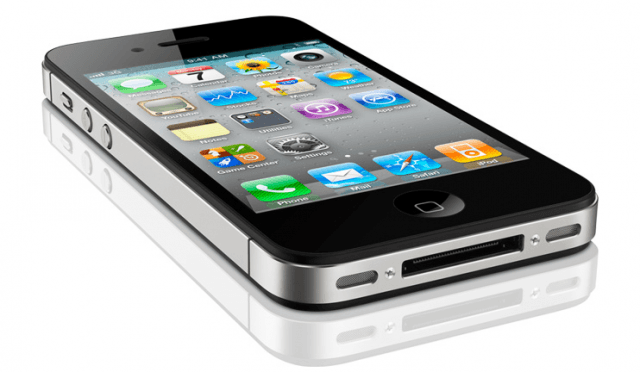
We like the sound of this one: Apple is rumored to be working on a smaller, cheaper iPhone — the iPhone nano. Best of all, the $200 iPhone will be contract free and may be dual-mode.
According to Bloomberg, the new handset will be about one-third smaller and be based on older, cheaper components to keep the price down. Apple already has a prototype (more likely, prototypes) and plans to introduce the new iPhone mid year.
The new iPhone may also be dual-mode. Bloomberg says Apple is also working on a dual-mode GSM and CDMA handset that would work on almost all networks — this may or may not the iPhone 5, and may or may not be in the new, smaller iPhone. Would make sense if it was though.
The cheaper handset is to counter the relentless march of Android phones, which are beating iPhone market share (but not iOS market share).
Bloomberg has great sources and has a good track record with Apple rumors. If true, it’s huge. It would upend carrier subsidies and the whole wireless business, givung control back to consumers and device makers.
As we noted in our prediction piece, Apple is currently competing only at the high-end, and has nothing to counter Android at entry-level prices. We predicted Apple will introduce a cheaper iPhone this year to widen the “price umbrella.” We called the cheaper iPhone, the “iPhone play.”
Of course, the iPhone nano rumors are as old as the hills.