OpenAI has been secretly developing a smartphone designed to compete directly with iPhone, supply chain analyst Ming-Chi Kuo said Sunday. It’s a significant reversal from the company’s previously stated hardware strategy, which included smartphone alternatives like AI companion devices.
OpenAI secretly developing iPhone competitor
In a post on X Sunday, Kuo revealed OpenAI is working with MediaTek and Qualcomm to develop smartphone processors. This suggests it will build a smartphone in addition to other potential smartphone-alternative devices in the works, like earbuds and other AI companion gadgets. OpenAI will tap Luxshare Precision Industry as the exclusive system co-design and manufacturing partner. Mass production is expected to begin in 2028, with chip specifications and additional suppliers finalized by late 2026 or the first quarter of 2027, he wrote.
Luxshare has long been a key player in Apple’s supply chain. Kuo suggests the company stands to benefit substantially from an early stake in what he describes as the next generation of smartphone hardware — and an opportunity to diversify away from its Apple dependency.
Why OpenAI thinks a phone is essential
Kuo’s analysis goes beyond just the hardware specs. He argued the smartphone remains uniquely positioned for AI agent use. That’s because it’s the only device that captures a user’s full real-time state — including location, activity, communication and context. That makes it the most important input for real-time AI inference.
It appears Kuo thinks AI agents will fundamentally change how people interact with a phone. The focus may shift away from opening individual apps toward completing tasks through a continuous, context-aware interface. To deliver that experience properly, Kuo argued OpenAI would need full control of both the operating system and the hardware. That’s a philosophy Apple has long championed with iPhone.
A subscription-bundled business model could let OpenAI build a developer ecosystem around those agents, Kuo suggested. That’s similar in spirit to the App Store model Apple pioneered.
A notable change of direction
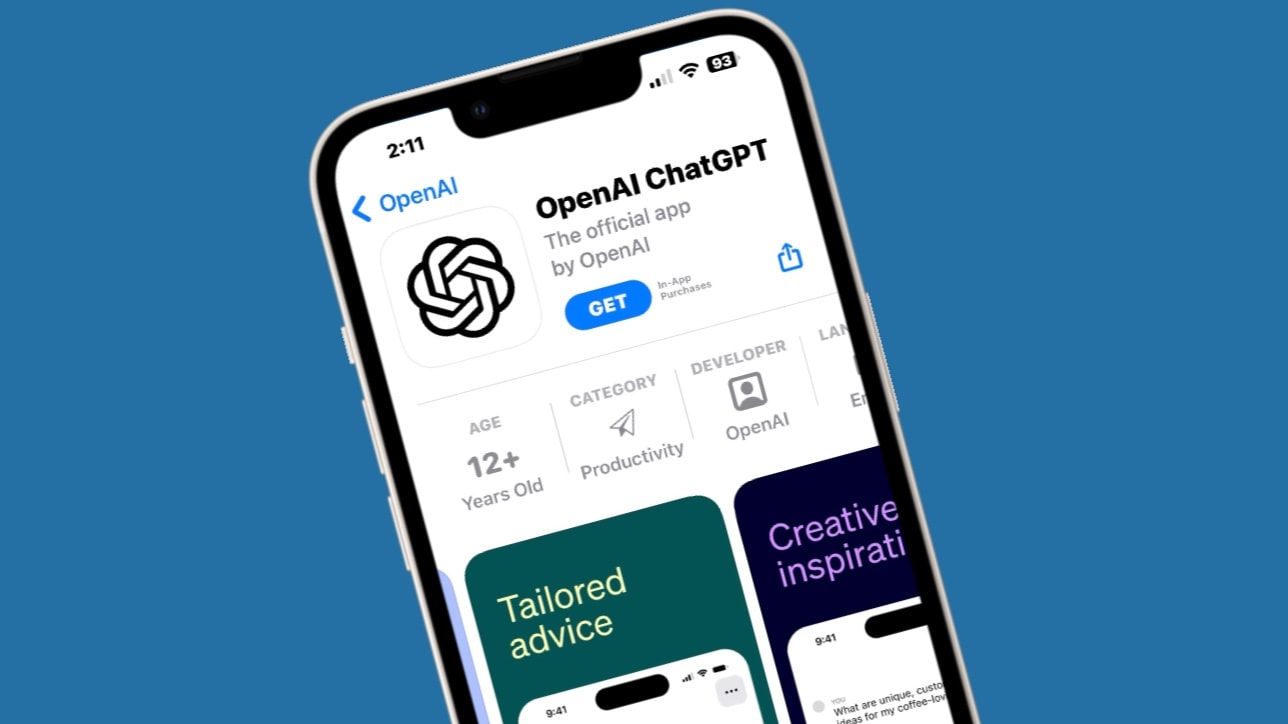
Photo: Cult of Mac
This development marks a sharp turn from what OpenAI had publicly described as its hardware vision. Previous reports consistently described the company’s hardware ambitions as centered on non-phone form factors developed in collaboration with Jony Ive. He is, of course, the former Apple design chief whose startup io Products OpenAI acquired for $6.5 billion. Those plans include a smart speaker likely to be the first product to market, along with smart glasses, a smart lamp and potentially earbuds. A first announcement could come in the second half of 2026.
It appears OpenAI may now believe the smartphone itself is too central to people’s daily lives — and too important to AI’s future — to cede entirely to Apple and Android.
What Sam Altman hinted
feels like a good time to seriously rethink how operating systems and user interfaces are designed
(also the internet; there should be a protocol that is equally usable by people and agents)
— Sam Altman (@sama) April 26, 2026
The timing of Kuo’s report is hard to ignore. OpenAI CEO Sam Altman posted on X the same day Kuo published his analysis, writing that it “feels like a good time to seriously rethink how operating systems and user interfaces are designed.”
For iPhone users, the prospect of an OpenAI phone raises obvious questions about privacy. Apple built its brand around data minimalism and on-device processing. But OpenAI’s entire business trains and runs AI models in the cloud. A phone designed to capture your “full real-time state” — Kuo’s own words — would represent a very different set of trade-offs than what iPhone users expect.
With mass production still two years away, much can change. But if Kuo’s supply chain checks prove accurate, OpenAI’s ambitions include much more than a smart speaker.

David Snow, an expert on Apple hardware and software, writes on a variety of technological and cultural topics for Cult of Mac. They include Apple news, technology buying guides, and features about computer setups and Apple TV shows and movies.
With 30 years of experience covering technology and other subjects, he has written and edited for numerous print and online publications, including CMP Media, TechTV.com, CNET, Wired News, Red Herring magazine, Law.com, The National Law Journal and Law Technology News magazine. Among other roles, he served as executive editor of the Law.com network of websites and editorial director, technology, for ALM Media.
Snow graduated with a B.A. from Syracuse University with majors in magazine journalism and psychology. While there, he worked as a reporter for The Daily Orange newspaper and associate editor of Equal Time magazine.
Founder of the blog At the Waterline, he can be reached on X (formerly Twitter) via @atthewaterline and on Mastodon via @dsnow.