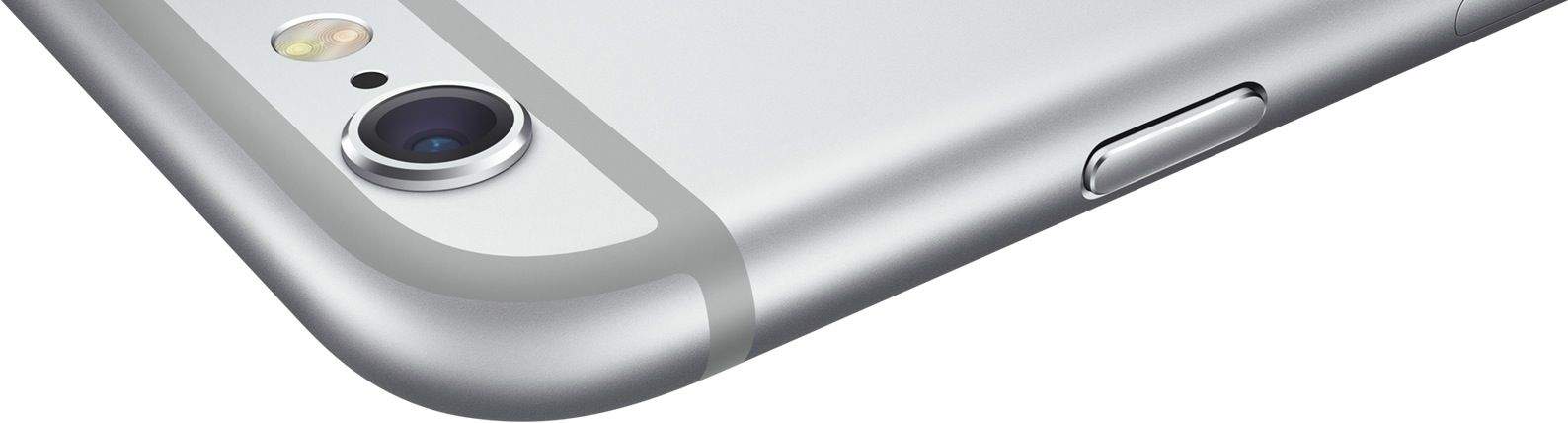
Two things strike me about the camera in the new iPhone 6 models. One is that you can take better pictures; the other is that the iPhone is now a much better place for viewing those pictures.
With their bigger, brighter screens — and iCloud’s new Photo Albums feature (which stores all your photos, ready to view, in iCloud) — the iPhone 6 and its larger sibling, the iPhone 6 Plus, are looking to be the best smartphones yet, from a photographic point of view.
Stills
The two new models get the same new sensor, the same ƒ2.2 lens and the same new front-facing camera (also ƒ2.2) that Apple says captures 81 percent more light, making your selfies way better. The front-facing camera also gets burst mode, which was available on the rear camera of the iPhone 5s. And both iPhone 6 models get the new “Focus Pixels” (more on those in a sec).
In fact, in camera terms, the only difference between the two iPhone 6 versions is the addition of Optical Stabilization on the bigger model, likely made possible due to the extra battery capacity and space in the iPhone 6 Plus.
Focus Pixels
The new iPhone sensor has what Apple calls Focus Pixels, which allow for much faster autofocus like you get in an SLR. In the olden days, cameras used a separate sensor just for focus, because the pixels used for focusing couldn’t also capture image info. Therefore, if you put them on the picture sensor, you’d be left with gaps in the image.
A few years ago, Fujifilm started using a sensor that used hybrid “sensels,” or sensor pixels, which could capture light and detect focus. And this led to compact cameras that could use the much-faster phase detection autofocus.
Phase Detection AF
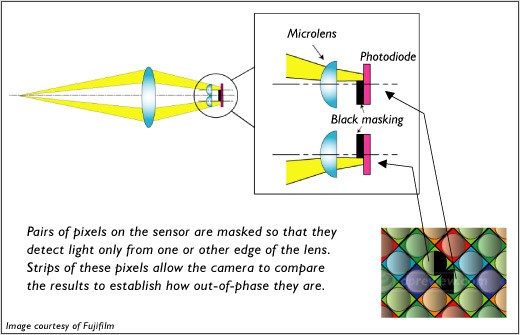
Phase detection works by taking two images from different parts of the lens and comparing them. If they line up, the image is in focus. If they don’t, the camera knows how far apart they are and can calculate how much it needs to move the lens to focus. That’s it in principle — dead simple. It looks like a combo of new hardware (Focus Pixels) and software (the new image-processing chip is fast enough to compute the focus) is responsible for the changes.
The advantage of phase detection over the contrast detection normally seen in phones and compact cameras is that it’s faster and more accurate. With contrast AF, the camera roves around until the image is sharp. With phase detection, it knows exactly how far, and in which direction, to move the lens before it moves it. Thus it can make a quick adjustment to the right spot, in one go.
Phase detection also makes possible the iPhone 6’s new continuous focus in video mode. Contrast detection AF would have to hunt again for focus, even while you’re recording. Phase detection can work out where the focus should be, then go there, with no blurry wavering in between.
In practice, this should make focusing almost instant. Give that focusing is the slowest part of iPhone photography, that’s great news.
Video
Video gets even more new features in the new iPhones, and some of these are thanks to iOS 8. Time-lapse video, for example, comes to the iPhone 5, too (although with Instagram’s amazing new Hyperlapse app delivering excellent time-lapse video, you might not care).
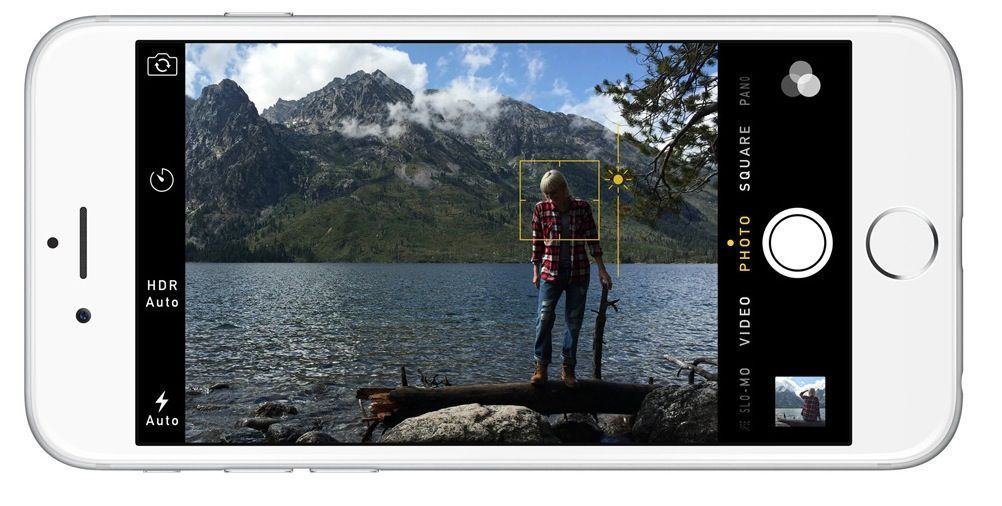
The most impressive feature is the new 240 frames per second slo-mo mode, half the speed (or double, depending on how you look at it) of the slo-mo in the iPhone 5s. You also get 60 fps video in HD in slo-mo so you can replicate the horrible soap-opera effect that Peter Jackson used to ruin the Hobbit movies.
You can now shoot HDR movies, too. HDR is the trick of taking three (or more) images at different exposures — one regular, one dark and one light — and combining them to make one image with more detail in the highlights and shadows. This iPhone 6 does the same, only for video.
Conclusion
Despite the lack of a big headline feature, this camera upgrade looks pretty amazing. Focus speed will help out every time you take a photo, and iOS 8 features like manual exposure and a self-timer (finally) will make the iPhone 6 work much more like a “real” camera. Which is great, as the iPhone is the only camera most people really need.

Charlie Sorrel writes reviews and how-tos. Follow Charlie on Twitter at @mistercharlie, and at micro.blog on @mistercharlie

35 responses to “The iPhone 6 camera is the only camera you need”
Isn’t it ironic that the iPhone gets a self-timer just when the phone’s design changes to no longer allow the phone to stand on its side? I don’t know about you guys, but I have often done that (with the help of a third-party app for the self-time part) with my iPhone 5. I will miss that design.
Also ironic: while iPhone 6’s more rounded edges make it look more like a Samsung Galaxy phone (or iPhone 3GS, if you prefer), Samsung’s new Galaxy Alpha looks almost exactly like an iPhone 5 – including the flat edge!
when they zig you already zag ;)
Still no optical zoom. :(
forget about it, Apple won’t release a thick iPhone just because of optical zoom
I thought it was only the selfie camera that was getting HDR video.
Apple’s own site specifically says “Auto HDR for photos and videos” only under the FaceTime Camera category, then only says “Auto HDR for photos” under the iSight category.
Anyone who is seriously into photography knows that this is simply not true. 8mp and no optical zoom means close-ups are something you won’t get unless you get close-up.
So the iphone 6 won’t have OIS, but the iphone 6 plus will?? What since does this make? Apple willfully withholds features so you can pay to increase their profit margins!!!
Um…yup. That’s what companies that sell stuff do. They make you pay more for the good stuff. This surprises you?
It’s sad to see people fall for the Apple marketing strategy. You payed all that money for the new iphone only to find out features were left out purposely, so you could contribute to increasing their profit margins by getting the 6 plus. And you don’t see anything wrong with that?
Not saying it isn’t shady, I’m just having a chuckle that anyone would be surprised by the behavior. Apple isn’t your your friend. Apple is, like all corporations a leech that wants your money. This should not come as a surprise to anyone.
It doesn’t surprise me at all, I know what time it is. It’s just a shame because the media/people deem Apple as the perfect angel each iphone release. When they pull stunts like this all the time and now one says a word about it or call them out! So now Apple supporters feel they have a superior product because they payed more for it when in reality it’s inferior compared to market standards.
Your post is such a muddle of drivel, its amazing. Nothing you’ve said makes any sense at all. Yes, the more expensive phone has an extra feature. EVIL!! I mean, what? You’re literally insane, probably because you’re an anti-Apple zealot.
Who puts extra features in one phone and not the other upon release, but Apple? I guess you see nothing wrong with it.. Amazing…
Uhh…no. Those features require more space and battery, which is why they are limited to the 6+. Work on your reading comprehension.
Likely made possible. Stop assuming that’s the reason why!! U don’t know what taking about. I bet you will pay the high price tag anyway!!
Fortunately, I do know what I’m talking about and I won’t be buying the 6+. You still haven’t learned how to gain credibility; the first step is proper grammar.
Thank you, English professor…
I hate inflammatory headlines like this. But I guess the clickbait nonsense works. Charlie, you can keep the teeny tiny sensor on that thing and quint at your poorly captured memories in the years to come. I’ll stick with a real (no quotes, because I’m not a butt hurt a-hole) camera, thanks.
“Charlie, you can keep the teeny tiny sensor on that thing and quint at your poorly captured memories in the years to come.”
What an idiotic comment. Squint? Maybe you cant figure out how to take a photo in focus with an iPhone, but most everyone can. I’m pretty sure no “squinting” is required. My iPhone 5S photos look stunning on my Retina MBP, which shows an insane amount of detail and potential flaws. Enough with the ridiculous hyperbole.
http://www.theverge.com/2014/6/12/5802800/iphone-photography-awards-2014
OH NO SO MUCH SQUINTING!! HORRIBLY CAPTURED!!
See my reply to PMB01 below. It applies to you to. :D
Except you are a butt-hurt a-hole. You also have no clue what you’re talking about.
Bwahaha Ok little troll, because you’re either a nine year old or have an actual learning disorder, I’m not going to crap all over your blind Apple love. What I am going to do is educate you as to why headlines like the one on this article tend to annoy those of us who do, in fact, know a bit about photography. I’ve got no illusions that you’ll either read or understand what I’m about to say, but it’s more for everyone else who comes to this article and is confused by someone not agreeing that the iPhone is the bestest camera EVAR.
First a couple of caveats.
1. The best camera is the one you have with you. No argument. But if you actually care about the pictures you take and you aren’t just dumping piles of selfies or dick pics on your unsuspecting stalking victims, then the camera you have with you ought to be better than this.
2. I’m aware it’s possible to take very nice pictures with an iPhone, when the user is someone who knows what they’re doing. Most people don’t, and the ones who do would have created objectively better images with a better camera. Just because you can train yourself to chop food really well with a butter knife, doesn’t mean you shouldn’t use a better knife.
3. I don’t hate Apple products. I’m typing this on an iPad (which I love), I’ve owned iPhones, and I tend to like the build quality of Apple products better than that of its primary competitors in almost every product category. What I hate is when people make dubious claims that make the people who believe them dumber.
Alrighty then.
Click this link: http://www.gizmag.com/camera-sensor-size-guide/26684/pictures While you’re over there take a look at the sensor size in the bottom right of that graphic and then take a look at the one a row up and a column to the left from it. Those are going to be our comparison points for this lesson.
Sensor size is important in photography because it determines the amount of light that’s available to render your image. When you take a picture you’re essentially capturing the reflected light bouncing off your subject onto your camera’s sensor, which then translates that light into data and resolves an image based on that data.
The more light your sensor can capture (sensor size=light capturing surface) the more accurate the data (light) your camera uses to create images will be.
There are a few key things this affects.
1. Low light performance. If you’re taking pictures in shitty lighting conditions, the smaller your sensor is, the worse your image will look. There’s simply not enough light to render an accurate image. That’s why your lowlight pictures using a smartphone are grainy. That grain is called noise, as in signal to noise ratio, and is basically your phone guessing at what the sensor is trying to render because it doesn’t have enough data available to render the image accurately.
2. Subject isolation. The science here would take pages to explain, but the simple version is a bigger sensor gives you more control over what parts of our image are in focus. When you see a picture of someone where the subject is super sharp and the background has a kind of dreamy out of focus quality to it, that’s subject isolation. Yes there are apps and software that can fake that look in post production. They all suck and look incredibly obvious to anyone with working eyes.
3. Colour reproduction. Bigger sensor=more light captured. Colour is an effect of light. Ergo, the more light (data) collected, the more colour (data) collected, the more faithful the images you’re photographing will be to realistic colouring. Again, software can be used to limp you along, but you can always spot an over saturated image or one where the colours look wrong. And most, not all because some people take the time to carefully edit their images, but most pictures taken with a smartphone have objectively shitty colouring.
So if you go back to the graphic showing all the sensor sizes, the one used by an iPhone is that teeny tiny 1/3” in the bottom right corner. By definition it is incapable of reasonable low light performance, subject isolation, or accurate colour rendition, as well as a host of other qualities of an image that depend on light gathered to achieve their best effect.
Now, a smartphone camera is definitely better than nothing, but there’s a far cry between “better than nothing,” and “the only camera you’ll need.” If you care about the pictures you’re taking (and, since you clicked on an article with words “camera” and “need” in the title, I’m guessing you do) then you need to take them on a real camera. And a real camera isn’t necessarily a bulky DSLR or Mirrorless ILC. It just means a camera that’s actually capable of more or less faithfully reproducing what you see in front of your eye.
The single biggest advantage a smartphone camera has is that it’s always on you. And it’s always on you because it does other things you need, but also because it’s small enough to fit into your pocket.
If you go back to that graphic and look at the second sensor size I mentioned up at the top, you’ll now find a pile of great camera options that utilize that size sensor, (the sony rx100 being a fantastic example, but there are others) and are small enough to comfortably fit into your other pocket. And they’ll give you way, way better images than your smartphone, provided you take the time to learn to use it properly.
Haha. WOW! You wrote ALL that because of a 9 yo troll?
Spoiler Alert: You really don’t think he’s a troll at all do you, and you HAD to justify your insecure non-existence.
So to clarify, I come to the table with facts, that disprove the dumb assertion made by this article, and your response is to be a whiny, insulting child?
Bravo. You’ve redeemed my opinion of the Internet.
Agreed 100%
I carry a DSC-RX100 III with me along with my iPhone. I do use my iPhone to snap shots here and there but there is no way I could rely on it.
I also have Nikon D610 for the major hauling but my Sony does well in most cases.
I spend a lot of time in cemeteries in little to no light and can honestly say the iPhone couldn’t take a decent low light shot to save it from destruction.
Some people just don’t understand the complexity of photography and believe that the shots they take in the bathroom mirrors are “Da Bomb” and nothing you say will ever change the defensive stance they get on comments like yours (or mine) if it doesn’t fall into the “If its Apple, there’s nothing better” attitude.
Typed on my 2013 Mac Pro
Wow discus changed may pics
Sure, if the only camera you need is a low-to-mid range point and shoot.
You haven’t tried it before?
One site compared the 20 MP Sony Experia Z3 to the 8 MP iPhone 6 and the 20 MP-sporting Experia was declared the camera winner by default. There’s no way you can convince a consumer that a 8 MP camera will produce better photos than a 20 MP camera. Almost everyone believes that the more megapixels a camera has the better the photos are. Overall, the Experia Z3 was declared the far better smartphone because all of its specs were more impressive than the iPhone 6’s specs. Unfortunately Sony Experia sales are not even close to iPhone sales for reasons I’m not even sure Sony knows.
Maybe cause apart from the camera, its a pretty shitty phone? Are you actually wondering why its not getting iPhone level sales? There’s more to a smartphone than the camera. The iPhone is most well-rounded smartphone in the world, which is one of the reason it sells so well.
I bet you really believe that!! Most well rounded smartphone in the world, Lol. Purely objective. I bet have never touched anything but an Apple product.. Your bias shows
Z3 is a fantastic phone (way ahead of the iphone 6). Will the iphones sell better. Of course, but that doesn’t make the iphones better, it just shows that Apple remains the king of shifting mediocre phones as if they were premium ones. If sales figures alone indicated quality and performance, a Honda Civic would be superior to a BMW M5… The problem with this analogy is that the iphones are priced as if they were BMWs and the Sony Z3 as if it was the Honda. I guess that only demonstrates that people are dumb…
I’m sorry to be that guy, but this is still a phone, with an itty bitty sensor that takes sub par photos. There’s no way you can argue otherwise. You can argue convenience but you can’t say with a straight face that this is the only camera you need.
I can definitely say with a straight face that this is the only camera MOST people will need- Yes. In most conditions, the iPhone 6 will take excellent photos. Most people are not photographers, and do not need anything better. They wont print massive prints of their photos. So yeah, there’s no problem with that assertion. Nobody is saying the iPhone 6 holds a candle to real SLRs. But that wasnt the assertion.
It’s a good camera, but it’s severely lagging behind the competition. It’s essentially the same camera hard-ware wise as on the 4s, and that’s not acceptable. Sure, there are some software upgrades, but it’s just too little and too late. Apple’s “Focus Pixels” is nothing new (only the name is new), and already standard on Samsung and LG flagship phones. Will it take good pictures? Yes, it will. The 4s and the 5 also took good picture. Is it the best camera in a phone? Far from it. Nokia, Sony, Samsung and LG all offer phones with much better cameras…