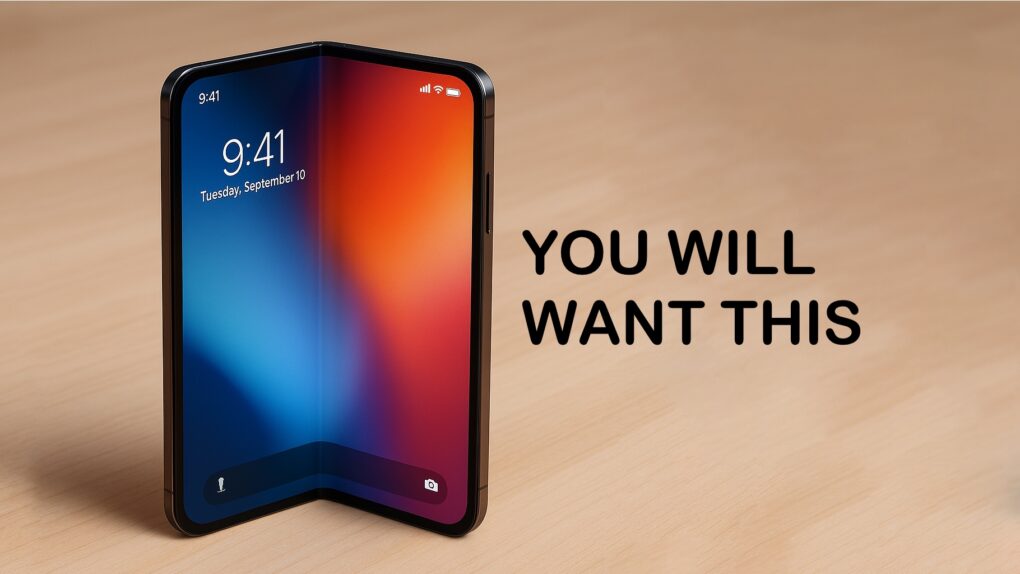
Consumers stay away from foldable handsets in droves, and a new survey found that a majority of Americans are not interested in one. So it might seem surprising that Apple reportedly plans a folding iPhone for 2026. But it’s typical of Apple.
Apple doesn’t make what you think you want. It never has. It makes what you don’t yet realize you want, and it’s been fantastically successful at it for decades.
64% of Americans aren’t interested in folding phones
A new survey by Cnet has nothing but bad news for makers of foldable phones. “64% of respondents say they aren’t willing or interested in buying a foldable smartphone in the next year, while just 13% say they are,” says the report, published Tuesday.
There’s a lot of resistance. According to the survey, “Some of the biggest issues preventing people from buying a foldable smartphone are high prices (36%), durability concerns (31%), not understanding the advantages over a regular phone (31%) and a perceived lack of practicality (26%).”
Don’t close your mind about a folding phone until you see Apple’s
Apple is apparently paying no attention to what consumer surveys say about foldables — numerous leaks and rumors point to a foldable iPhone in 2026. Why? Because Apple has never cared what people think they want before they see Apple’s version of it. It’s all summed up in a quote by Apple co-founder Steve Jobs:
“Some people say, ‘Give the customers what they want.’ But that’s not my approach. Our job is to figure out what they’re going to want before they do. I think Henry Ford once said, ‘If I’d asked customers what they wanted, they would have told me, “A faster horse!”’ People don’t know what they want until you show it to them. That’s why I never rely on market research. Our task is to read things that are not yet on the page.”
There’s no better example than the original iPhone. When the iPhone debuted in 2007, everyone used tiny flip phones to make phone calls and send texts.
Apple’s touchscreen device was judged to be too different. Consider this review from The Guardian: “Apple’s iPhone combines a phone, music and video player with web and email capabilities, but researchers found demand for these converged devices was lowest in affluent countries.” In other words, if you asked someone on the street in 2006 if they wanted a device like today’s iPhone or Android, most of them would have told you “no.” And we all know how that turned out.
Apple can overcome consumer resistance to folding phones
The respondents to the Cnet survey based their opinions on foldable Android models because of course they did … that’s all that’s currently on the market. But those products came out before the technology for flexible screens was ready for mainstream use. And it shows — they’re fragile devices whose bendable displays quickly develop ugly creases.
Apple held off until now on a folding iPhone because it refused to make something so obviously flawed. Most notably, reports indicate the folding iPhone coming in 2026 will not be burdened with an unsightly crease across its display. Apple also poured tremendous effort into developing a durable hinge. In short, Apple addressed potential buyers’ worries about durability.
Apple marketing will make you crave a folding iPhone
Two of the other main consumer concerns come down to people not seeing a need for foldable phones. That’s where Apple’s marketing mojo comes in.
Once the folding iPhone hits store shelves, there’ll be a barrage of advertisements on TV, social media, podcasts … everywhere. You can expect them to explain why you absolutely must have the Best. iPhone. Ever. It’s the biggest iPhone screen you’ve ever seen! And it fits in your pocket!!
Yes, the high price will keep some folks from buying
Realistically, even with loads of marketing hype, taking the folding iPhone mainstream won’t be easy. The major concern expressed to Cnet about foldables was price, and that’s going to be a factor for Apple’s offering, too. Most people expect it to cost about $2,000 — but so does the Samsung Z Fold 7.
Given that hefty price, the folding iPhone is likely to stay a niche product until the cost comes down. So what? From what we can tell from early leaks, it’ll be an addition to Apple’s smartphone line, not a replacement for the iPhone 18 Pro Max with a traditional slate design. No one will force you to buy the folding version.
Even so, Apple boasts a long history of turning products that consumers previously rejected into huge successes, and not just the iPhone. Just think of Apple Watch, iPad and even the iPod — very few people were interested in smartwatches, tablets and MP3 players until Apple got into the game. Then Cupertino sold tens of millions of them.
In other words, wait until you see the iPhone Fold to make up your mind.

Ed Hardy has been writing full-time about tech for 26 years, and using it for much longer than that. His intro to Apple was a Macintosh SE/30 (which he still has), but now he uses a 13-inch iPad Pro as his primary computer.
That’s because he’s a “tablet first” type of guy. Rather than use a Macbook, he connects a keyboard case to the iPad. And instead of a desktop Mac, he connects his tablet to a 27-inch display and full-size keyboard. (So don’t try to tell him that everyone has to use a Mac to be productive.)
Before coming to Cult of Mac, Ed wrote for NotebookReview, TabletPCReview and Brighthand, as well as other sites.

