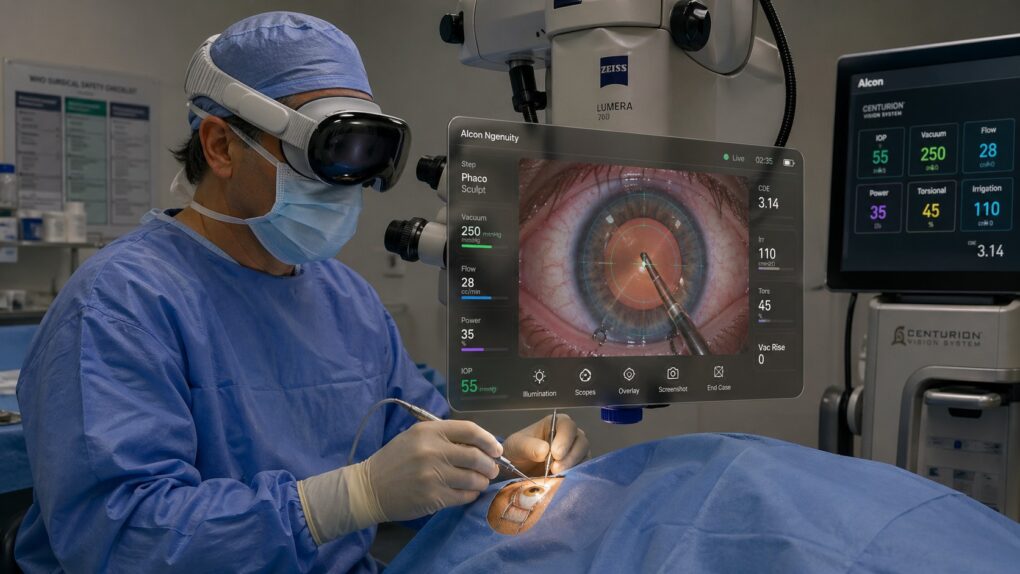
A New York ophthalmologist made history recently, becoming the first surgeon in the world to perform cataract surgery using Apple’s Vision Pro headset, according to a new report. It offers a compelling new use case for a device that has struggled to find mass-market traction.
“We are now able to bring the world’s best surgeon into any operating room, at any hour, from anywhere on the planet,” Dr. Eric Rosenberg said. “From residents performing their first cases to surgeons facing unexpected complications, this technology democratizes access to expertise — and that will save vision.”
Surgeon uses Vision Pro in cataract surgery for the first time
Rosenberg of SightMD completed the first cataract procedure with Vision Pro back in October 2025 and replicated it many times since, according to the company’s press release. It’s another milestone in Vision Pro’s medical journey. (See also: Vision Pro keeps making the healthcare cut for surgery and other uses.)
After that initial surgery, Rosenberg and his team performed hundreds of additional cases using the platform, demonstrating both its scalability and real-world clinical viability.
How ScopeXR works
The procedure was made possible by ScopeXR, a mixed-reality surgical platform co-developed by Rosenberg. The software integrates with existing 3D digital surgical microscopes like the Ngenuity 3D Visualization System from Alcon. They work via HDMI, USB or wireless protocols to stream real-time surgical imaging directly into the Vision Pro headset.
Using ScopeXR, the surgeon can view the operative field in immersive stereoscopic 3D. At the same time, they can access real-time surgical overlays and comprehensive preoperative diagnostic data. Crucially, ScopeXR is hardware-agnostic. That means it can work across a wide range of surgical systems without requiring major changes to existing operating room infrastructure.
Remote collaboration and surgical education
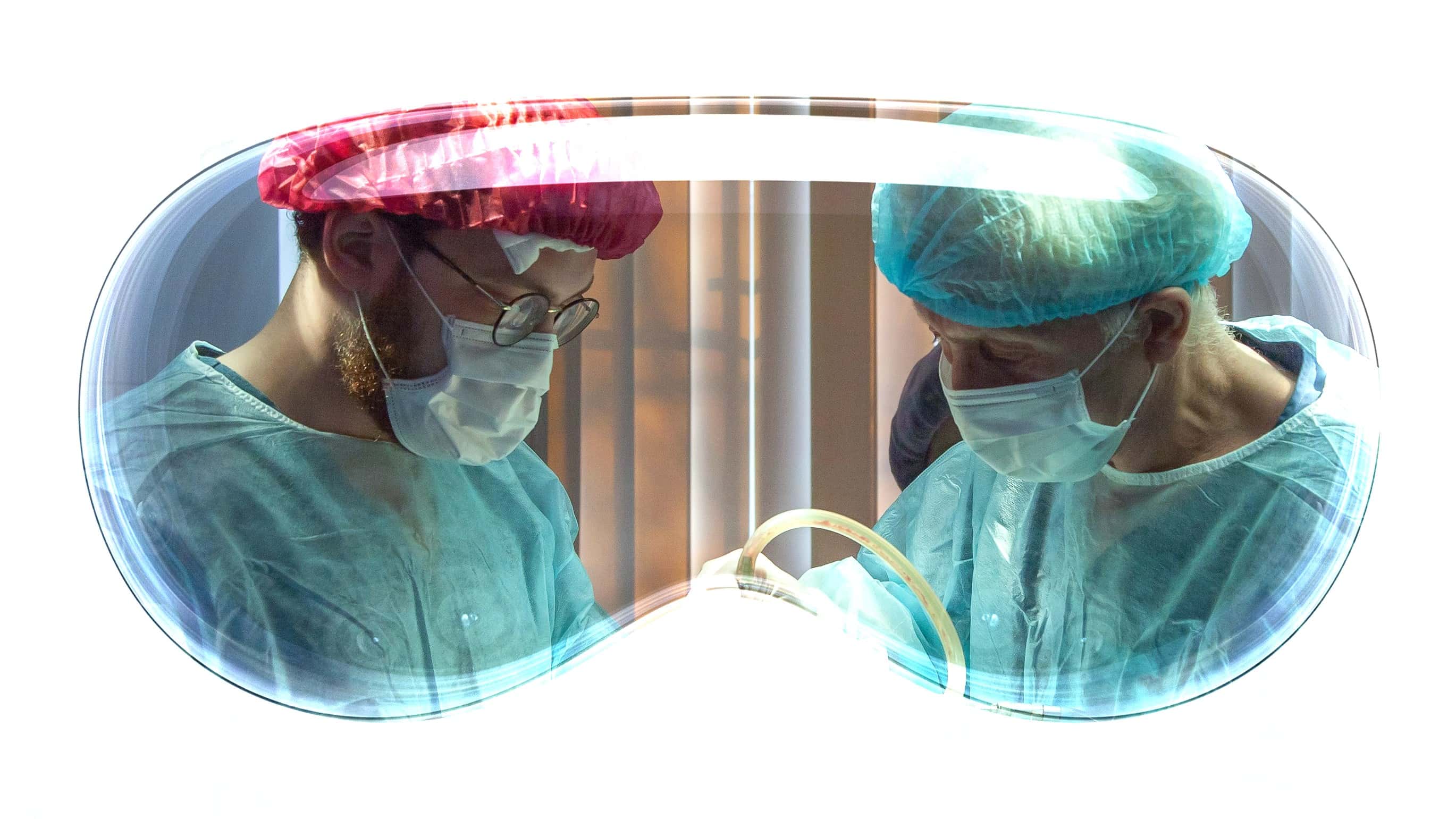
Image: Apple and Olga Guryanova/Unsplash License/Modified by Cult of Mac
One of the platform’s most striking features is its ability to beam expert guidance into any operating room in real time. Surgeons, mentors and consultants anywhere in the world can virtually join a procedure. They see exactly what the operating surgeon sees — including live microscope feeds and diagnostic data — while communicating via secure, two-way audio.
The platform also has significant implications for surgical training. It enables medical students, residents and fellows to observe procedures remotely with unprecedented clarity and immersion. And it reduces the need for additional personnel in the operating room.
Vision Pro in cataract surgery: Another Vision Pro win in the enterprise

Photo: Sharp HealthCare
The development is another example of Apple’s push toward enterprise and professional applications for Vision Pro. It comes as widespread consumer adoption remains hampered by the headset’s $3,499 starting price and bulky form factor. Apple has increasingly leaned into specialized applications in fields like medicine, aviation training and industrial design. The device’s capabilities can more readily justify its cost in those markets.
Reports suggest enthusiasm for Vision Pro has cooled faster than anticipated. And based on the latest information, there are no new Apple Vision headsets currently in active development, with Apple’s focus reportedly pivoting toward lightweight smart glasses (see also: Apple smart glasses come into focus: Cult of Mac podcast No. 16). The most recent hardware update was last October’s refresh, which introduced an M5 chip to the existing Vision Pro design.
For now, though, the operating room may be where Vision Pro finds its most meaningful and lasting purpose — helping surgeons see more clearly so their patients can do the same.

David Snow, an expert on Apple hardware and software, writes on a variety of technological and cultural topics for Cult of Mac. They include Apple news, technology buying guides, and features about computer setups and Apple TV shows and movies.
With 30 years of experience covering technology and other subjects, he has written and edited for numerous print and online publications, including CMP Media, TechTV.com, CNET, Wired News, Red Herring magazine, Law.com, The National Law Journal and Law Technology News magazine. Among other roles, he served as executive editor of the Law.com network of websites and editorial director, technology, for ALM Media.
Snow graduated with a B.A. from Syracuse University with majors in magazine journalism and psychology. While there, he worked as a reporter for The Daily Orange newspaper and associate editor of Equal Time magazine.
Founder of the blog At the Waterline, he can be reached on X (formerly Twitter) via @atthewaterline and on Mastodon via @dsnow.


2 responses to “Eye doctor uses Vision Pro in cataract surgery for the first time”
Wow. You could’ve saved some natural resources by not using unneeded AI slop featuring the biggest human eye in existence.
At first, I thought you were talking about the eye on the computer screen, but now I can’t unsee this!