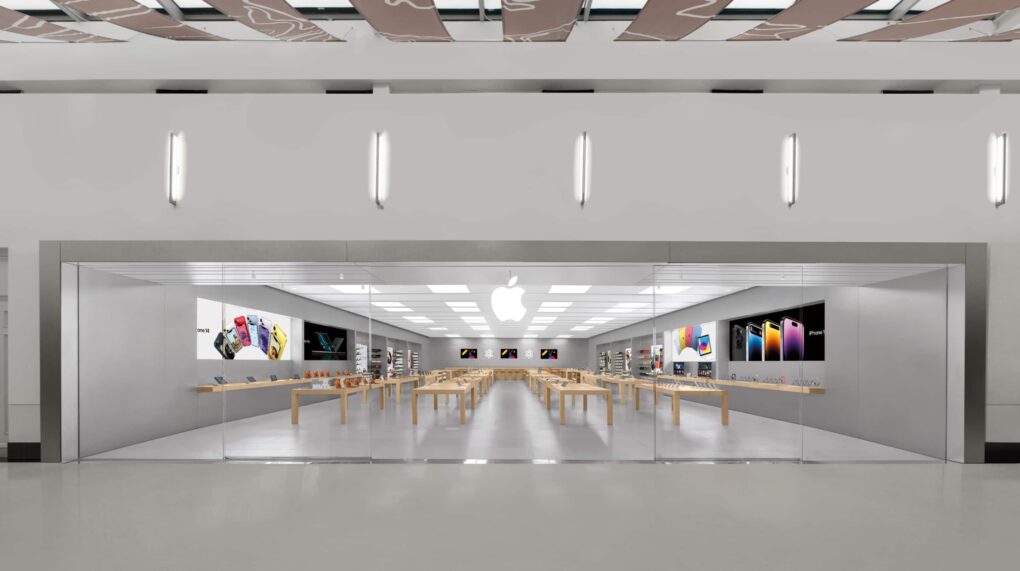
With a letter signed by 40 members of Congress sent Monday, Apple faces increased federal pressure over its plan to shut down the Apple Towson Town Center store in Maryland. The location, set to close on June 20, holds the distinction of being the first Apple retail store in the United States to unionize.
The congressional letter pulls no punches. The lawmakers describe the closure as “unacceptable in its impact, and deeply troubling in its national implications for workers’ rights.”
Congress pressures Apple to keep first unionized U.S. store open
Apple’s plan to shutter its first unionized U.S. store is no longer just a business decision or a labor dispute — it’s becoming a political battle. Members of Congress argue that shuttering the store would undermine workers’ organizing rights and send a chilling message to employees nationwide.
The clash thrusts Apple deeper into the growing national debate over organized labor in the tech industry, where unionization efforts remain rare but increasingly visible. The Towson store’s fate is becoming a symbolic test case for both Apple’s labor relations strategy and the broader future of worker organizing in Silicon Valley.
The 40 members of Congress who sent the letter, addressed to outgoing Apple CEO Tim Cook and and incoming John Ternus, urged the company to reconsider its decision to shut down the Towson store, announced in early April 2026. Signatories include prominent progressive legislators such as Alexandria Ocasio-Cortez, Ilhan Omar, Ro Khanna, Ayanna Pressley and Rashida Tlaib.
How we got here
In early April, Apple pointed to Towson Town Center as one of three retail stores that would close in June. It cited the departure of other retailers and generally deteriorating conditions at the malls where those stores operate.
In 2022, Towson store workers voted in favor of joining the International Association of Machinists and Aerospace Workers (IAM) Union. In the years since, workers fought for and eventually secured a first collective bargaining agreement.
The closure announcement became contentious when it emerged that Towson employees would be treated differently from workers at other closing stores. Apple said the union contract only obligates it to offer transfers within 50 miles of Towson and severance beyond that. But the IAM Union argued that denying workers the broader relocation options available to employees at non-union locations constitutes retaliation on Apple’s part.
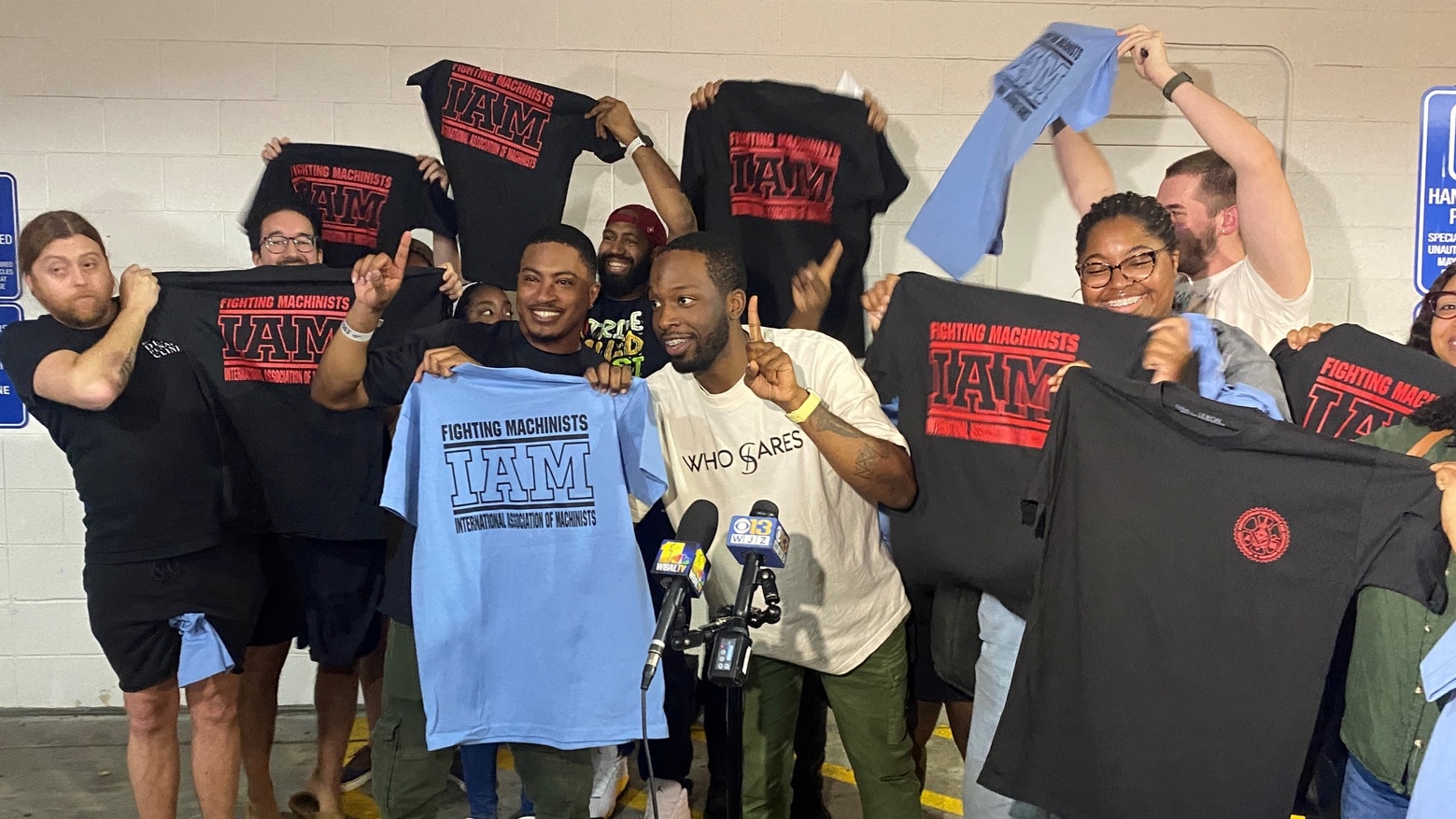
Photo: International Association of Machinists and Aerospace Workers
What Congress said
The congressional letter characterizes Apple’s planned shutdown of the Towson store as “the latest move in a union-busting effort.”
The letter makes two core demands:
1. First, Apple should reconsider closing the store at all. The letter described the Towson location as a high-performing store where management recently hired additional workers. Nearly 100 technologically skilled employees would lose their jobs during what the letter describes as one of the most difficult economic periods in recent history.
2. Second, if the closure proceeds, lawmakers insist Apple treat Towson employees the same as workers at other closing stores. That means they should be offered transfers to nearby locations rather than having to reapply for jobs from scratch (a requirement Apple attributed to the existence of the collective bargaining agreement).
The letter also invokes federal labor law directly. Members of Congress warned Apple that its actions appear to constitute unfair labor practices in violation of Section 7 of the National Labor Relations Act. It protects workers’ rights to organize and bargain collectively without interference or coercion.
The broader stakes
The lawmakers stressed that what happens in Towson carries implications well beyond this single store. They argued Apple appears to send a message to other stores currently considering or in the process of unionizing that such efforts will be met with pushback.
The IAM Union had already filed an unfair labor practice charge against Apple in April, prior to the congressional letter. This latest development from Capitol Hill adds federal legislative pressure on top of that pending legal action.
What’s next
Apple’s website currently shows the Towson Town Center store will close on June 20. Apple has not publicly commented on the congressional letter. The legal proceedings will likely determine whether Apple’s decision to close the store constitutes legitimate business judgment or an attempt to undermine union activity.
The congressional letter also requests that Apple work with federal and Maryland state officials to identify alternatives that could preserve employment for the store’s skilled workforce.
Read full text of congressional leaders to Apple
Here’s the text of the letter, as posted to the IAM Union website (.pdf):
Dear Mr. Cook and Mr. Ternus:
We are writing today regarding Apple’s announcement on April 9, 2026, that it intends to close the Apple retail store location located in the Town Center Mall in Towson, Maryland, on June 20, 2026. This decision is unacceptable in its impact, and deeply troubling in its national implications for workers’ rights and the ability of multi-trillion-dollar corporations to undercut their efforts to collectively bargain for better pay, benefits, and dignity on the job. As U.S. Representatives concerned with the implementation of and compliance with labor law, we are deeply alarmed that this closure appears to be just the latest move in a union-busting effort. As lawmakers with common legislative goals of promoting fair and equitable economic growth and good jobs, we urge you find alternative solutions that would ensure that the Baltimore region retains both skilled technical employees as well as access to technology and products that help drive business and industry in the region forward.
Should this location close, almost 100 technologically skilled workers will be left unemployed during one of the most difficult economies in recent history. This would be despite the fact that the Towson location itself is a high-performing store, and that management at this location have very recently hired workers to augment the workforce.
We understand that workers at this location were the first in the United States to organize with a union. They voted to join the IAM Union in 2022, and Apple management fought them every step of the way. They negotiated a similarly hard-fought first contract two years later. And now, as management has communicated to these workers, they are now the only Apple Store employees who will not be transferred to nearby locations, but instead must apply for jobs outright. Apple is blaming this disparate treatment on the fact that the workers have a collective bargaining agreement—an agreement that Apple signed, which requires equal treatment for these workers to non-unionized employees. If this store closure occurs in June, there will only be one unionized Apple store left in the country.
In that context, it certainly appears that Apple has decided to retaliate against the workers at this location for forming a union and collectively bargaining to secure their wages, hours, and working conditions. It also appears that Apple is trying to send a message to other stores who are in the process of unionizing or considering unionization that their efforts to collectively bargain will be met with resistance and retaliation.
As Members of Congress, we remind you that these actions would qualify as unfair labor practices, which are illegal as violations of Section 7 of the National Labor Relations Act. This law provides workers the right to choose their representation in the workplace, to negotiate working conditions, benefits, and other terms of employment without interference or coercion.
This decision by Apple not only impacts these hard workers but also their families and communities. We urge Apple to fully explore alternative locations to protect these jobs. Should Apple not choose to reverse its decision to leave the Baltimore area, given the national ramifications of that choice and our legislative focus on policies that protect American workers, we strongly urge you to reconsider how you will fully support these employees, and assist them in transferring, just as other employees of closing stores are allowed to do.
Our concerns mirror those of the Maryland congressional delegation, who we know have already reached out to you with their own letter. Americans value employers who invest in their workers and honor their relationship with the communities that help build their success. We hope Apple will demonstrate that same commitment now. We urge you to work with any relevant federal and local Maryland officials to identify opportunities that could help sustain employment of these skilled technology workers.

David Snow, an expert on Apple hardware and software, writes on a variety of technological and cultural topics for Cult of Mac. They include Apple news, technology buying guides, and features about computer setups and Apple TV shows and movies.
With 30 years of experience covering technology and other subjects, he has written and edited for numerous print and online publications, including CMP Media, TechTV.com, CNET, Wired News, Red Herring magazine, Law.com, The National Law Journal and Law Technology News magazine. Among other roles, he served as executive editor of the Law.com network of websites and editorial director, technology, for ALM Media.
Snow graduated with a B.A. from Syracuse University with majors in magazine journalism and psychology. While there, he worked as a reporter for The Daily Orange newspaper and associate editor of Equal Time magazine.
Founder of the blog At the Waterline, he can be reached on X (formerly Twitter) via @atthewaterline and on Mastodon via @dsnow.


One response to “Congress pressures Apple to keep first unionized US store open”
Shut it down!