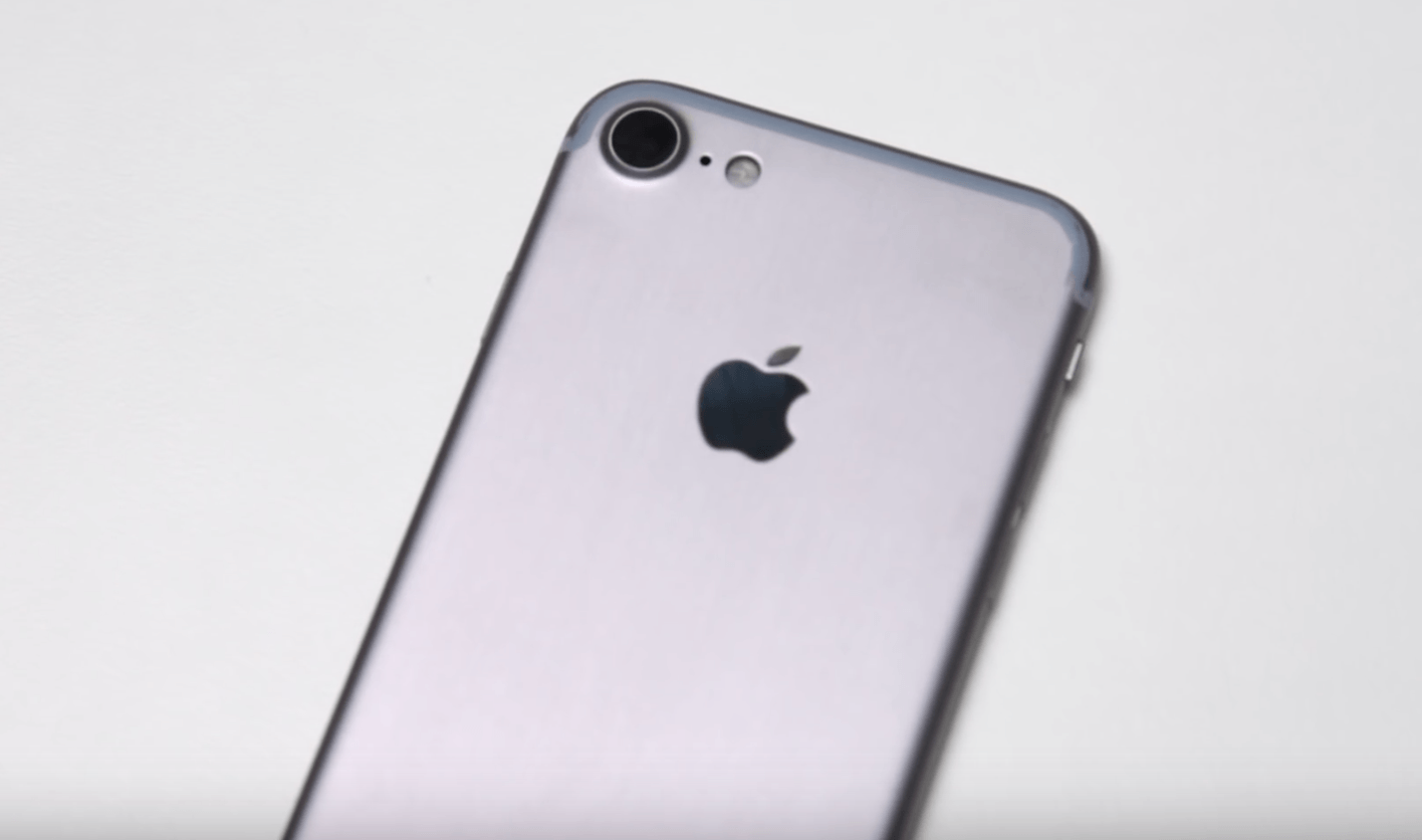
Purported benchmark results for the upcoming iPhone 7 Plus reveal Apple’s next-generation A10 processor could be a big improvement over last year’s A9. Despite maintaining only two cores, the A10 achieves significantly higher scores in single- and mulit-core tests.
According to the result for an “iPhone 9,3,” which is thought to be the iPhone 7 Plus, the device achieves a single-core score of 3,379 in Geekbench tests, while the multi-core score clocks in at an impressive 5,495.
In comparison, the iPhone 6s Plus powered by an A9 processor achieves a single-core score of 2,526 and a multi-core score of 4,404. The supposed iPhone 7 is even able to outperform Android-powered rivals with processors that look superior on paper.
For instance, the new Galaxy Note 7 when tested with a quad-core Snapdragon 820 processor — the latest and greatest chip from Qualcomm — achieves a single-core score of 1,896 and a multi-core of 5,511 on Geekbench.
This proves that hardware isn’t anything, and that the efficiency of iOS goes a long way. That is, of course, if these benchmarks are genuine. It’s easy to fake Geekbench listings like this one, so it might be best to take them with a pinch of salt for now.
Via: PhoneArena

Killian Bell is a freelance writer based in the U.K. He has an interest in all things tech and also covers Android over at CultofAndroid.com. You can follow him on Twitter via @killianbell.


5 responses to “Apparent iPhone 7 benchmarks hint at big speed improvements”
The Snapdragon 820 is supposed to be able to do 4K video at 30fps, the A9 did that, so the A10 should probably do 4K at 60 fps.
This has to be a fake. It says it’s a dual core 400MHz processor.
I don’t know if it’s fake or not, but it’s not uncommon the clock rate to be wrong on new products, I’ve seen this before with an ARM SoC. Also the ‘iPhone 9,3’ will change to ‘iPhone 7 Plus’ (or the actual name to be announced tomorrow!) in an updated version of GeekBench. I’ve see this happen with my iPhone 6,1, iPhone 7,1, and iPhone 8,2 changing to iPhone 5s, iPhone 6 Plus, and iPhone 6s Plus.
Even more interesting is the apparently Alpha release/version of iOS 10.1, since there is no Beta of 10.1 released. iOS 10.0 is still in Beta! Though I expect the Golden Master to be released this week.
Quote:
“This proves that hardware isn’t anything, and that the efficiency of iOS goes a long way.”
Actually the hardware is something. If one were able to install android on this benchmarked iPhone and run the exact same software and GeekBench as on the Galaxy Note 7 with the SnapDragon 820, they would get approximately the same score as they did running iOS.
iOS may be efficient in many things and speed up the real world experience, but it can’t magically help a processor report much higher benchmarks. This illustrates the same misunderstanding as with the MHz Myth of 10-20 years ago. For example, PPC and x86 architecture ran at different clock rates but performed similarly in many instances.
Apple A-series SOCs simply do more calculations per clock cycle than most other ARM SOCs such as the Snapdragon or Exynos series.
Benchmarks are one thing, perceptible performance difference another. I’ve directly compared my 6s Plus to my girlfriend’s 6 in terms of app loading times and general speed and noticed almost no difference.