
Apple stopped more than $2.2 billion in potentially fraudulent App Store transactions last year and rejected over 2 million problematic app submissions, the company reported Wednesday. It’s all part of what it said is a sustained, multilayered effort to keep the App Store safe for both users and developers.
App Store blocked $2.2 billion in fraudulent transactions in 2025
The figures bring Apple’s six-year total of prevented fraudulent transactions in the App Store to more than $11.2 billion. Last year’s net topped 2024’s $2 billion, for reference. And these small victories come as the company faces growing pressure from increasingly sophisticated bad actors. They’re using AI-powered tools and bot networks to game the platform.
App Store now draws more than 850 million weekly visitors across 175 storefronts worldwide. Apple framed its fraud-fighting investments not just as a protective measure, but as something that benefits developers directly. By making the review process more efficient, the company said, legitimate apps and updates reach users more quickly.
Fake accounts and fraudulent developers
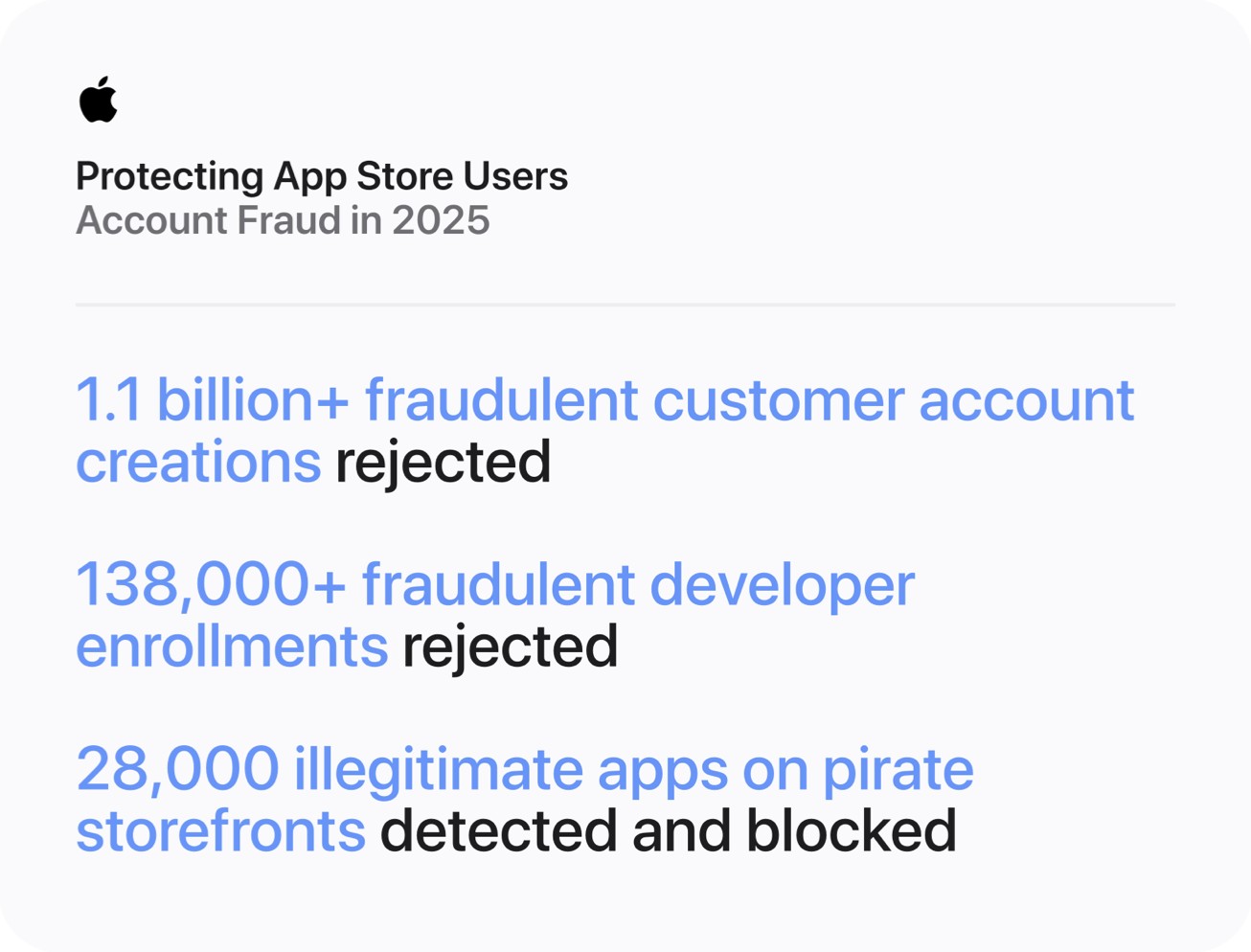
Photo: Apple
One of the most significant battlegrounds is account fraud. In 2025, Apple’s Trust and Safety teams blocked 1.1 billion fraudulent customer account creations. They stopped bad actors before they could gain a foothold. And they deactivated an additional 40.4 million existing accounts for fraud and abuse.
On the developer side, Apple terminated 193,000 developer accounts over fraud concerns and turned away more than 138,000 fraudulent developer enrollment attempts. The company also detected and blocked 28,000 illegitimate apps on pirate storefronts. That includes malware, pornography apps, gambling apps and unauthorized copies of legitimate App Store titles. In the past month alone, Apple said it prevented 2.9 million attempts to install or launch apps distributed outside the App Store or approved alternative marketplaces.
App Review catches millions of bad submissions
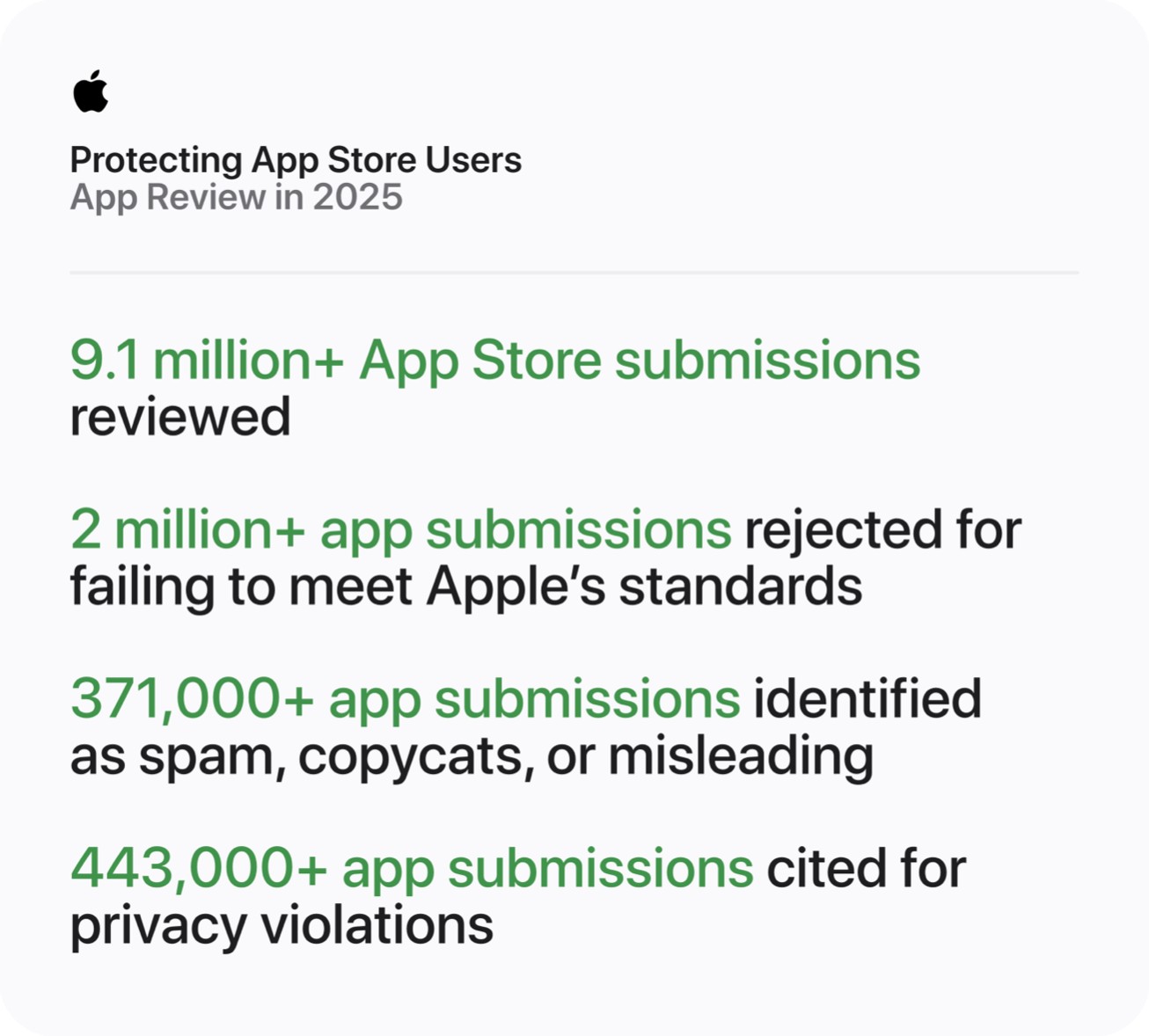
Photo: Apple
Apple’s App Review team evaluated more than 9.1 million app submissions in 2025. The surge in AI-assisted app development helps drive that volume. The team rejected more than 2 million of them. Of those rejections, over 1.2 million were new apps and nearly 800,000 were updates to existing ones.
The reasons for rejection varied widely. Apple turned away more than 443,000 submissions for privacy violations. Over 371,000 got flagged for copying other apps, being spam or misleading users. Another 22,000-plus submissions got the hand for containing hidden or undocumented features.
One growing concern Apple highlighted is the “bait-and-switch” tactic. That’s when an app passes initial review as something innocuous — a puzzle game or a calculator, for example — and is then quietly modified after approval to facilitate financial fraud. In 2025, Apple removed nearly 59,000 apps for this behavior.
Apple also screened prerelease software through its TestFlight platform. There it blocked more than 2.5 million submissions from reaching testers due to fraud or security concerns.
Ratings manipulation and discovery fraud
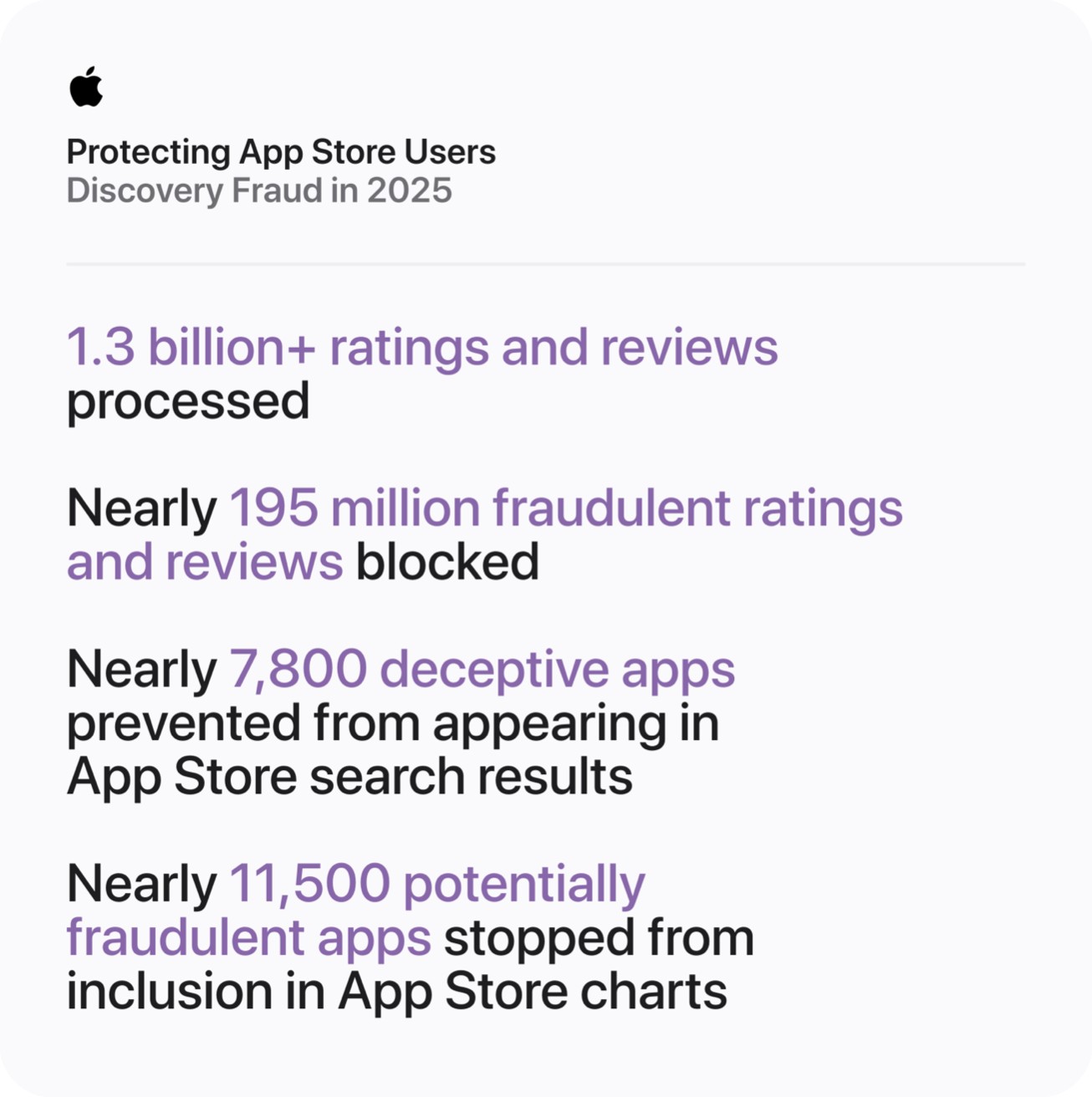
Photo: Apple
Fake reviews and inflated ratings don’t just mislead users — they disadvantage honest developers competing for visibility. Apple processed over 1.3 billion ratings and reviews in 2025. And uusing proactive AI-powered detection, it blocked nearly 195 million fraudulent ratings and reviews before they ever appeared publicly.
To further protect the integrity of search and discovery, Apple blocked nearly 7,800 deceptive apps from appearing in App Store search results and an additional 11,500 apps from App Store charts.
Stolen credit cards and payment fraud
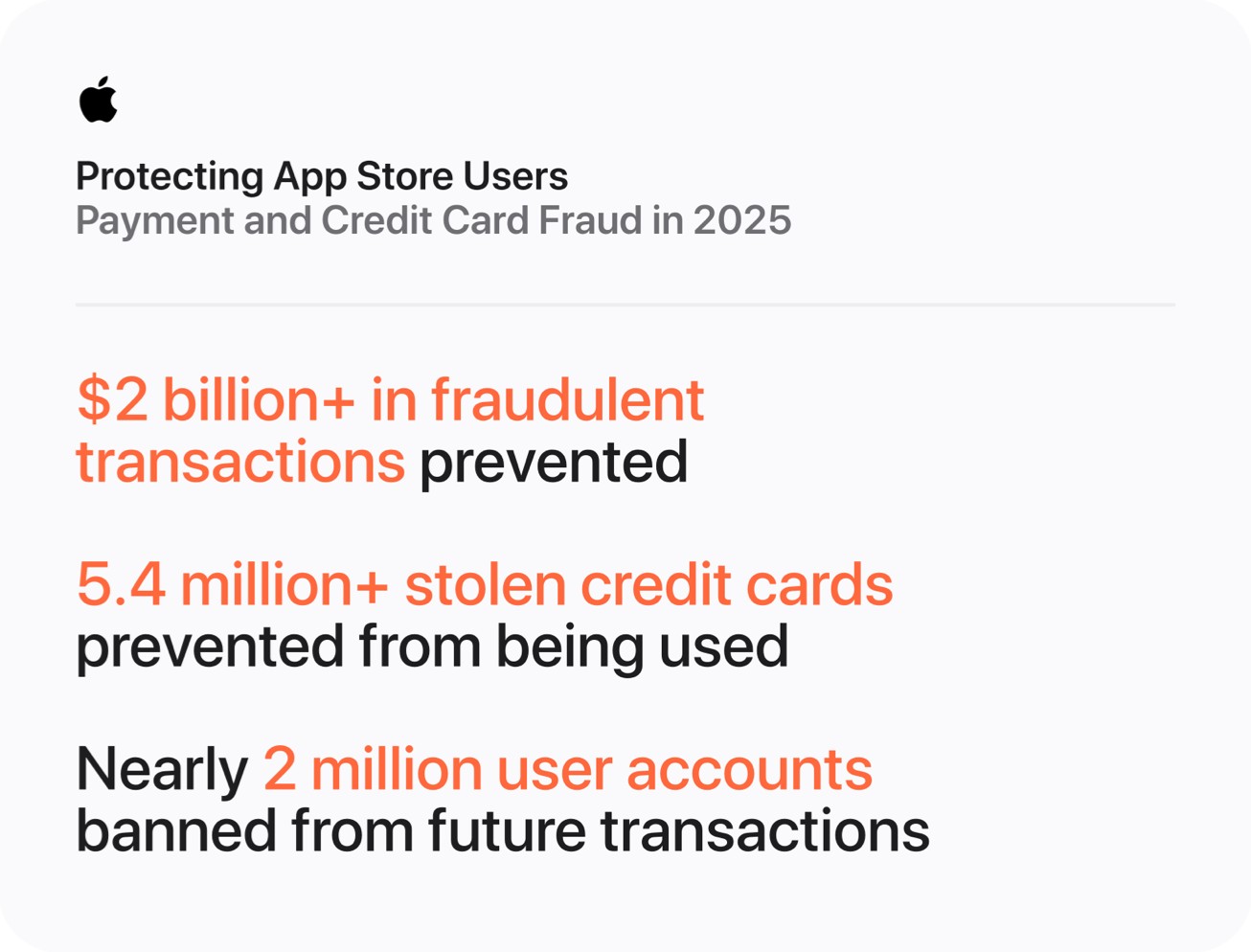
Photo: Apple
Apple’s payment protections prevented more than $2.2 billion in fraudulent transactions last year, stopped more than 5.4 million stolen credit cards from being used for purchases, and banned nearly 2 million accounts from transacting on the platform again.
More than 680,000 apps currently use Apple’s payment technologies, which the company says protect users through end-to-end encryption.
Tools for families
Apple also called attention to protections specifically designed for younger users. More than 5,000 apps were rejected from the Kids category in 2025 for failing to meet its stricter guidelines around age ratings and advertising.
Parents can use Screen Time to set app limits and content restrictions, and the Ask to Buy feature to approve every download and in-app purchase on a child’s device. Users who encounter problems with any app or purchase can flag it through Apple’s Report a Problem tool.
Apple said it will continue investing in its defenses as deceptive tactics grow more sophisticated. More information on staying safe on the App Store is available at support.apple.com/en-us/122712.

David Snow, an expert on Apple hardware and software, writes on a variety of technological and cultural topics for Cult of Mac. They include Apple news, technology buying guides, and features about computer setups and Apple TV shows and movies.
With 30 years of experience covering technology and other subjects, he has written and edited for numerous print and online publications, including CMP Media, TechTV.com, CNET, Wired News, Red Herring magazine, Law.com, The National Law Journal and Law Technology News magazine. Among other roles, he served as executive editor of the Law.com network of websites and editorial director, technology, for ALM Media.
Snow graduated with a B.A. from Syracuse University with majors in magazine journalism and psychology. While there, he worked as a reporter for The Daily Orange newspaper and associate editor of Equal Time magazine.
Founder of the blog At the Waterline, he can be reached on X (formerly Twitter) via @atthewaterline and on Mastodon via @dsnow.


One response to “How Apple blocked $2.2 billion in App Store fraud in 2025”
I am glad Apple is on top of it… AI is evil