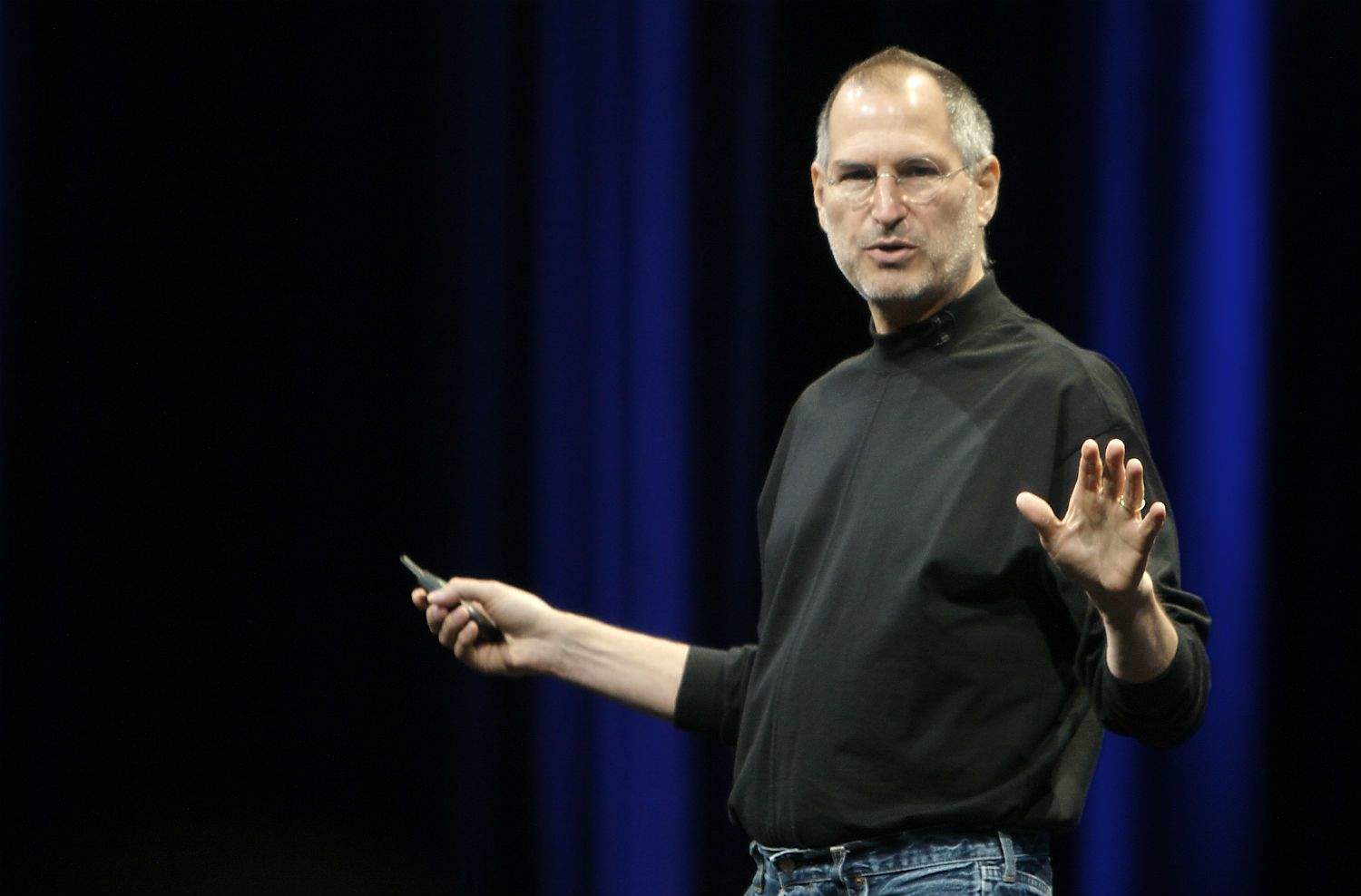
Apple fans will never revel in the glory of another Stevenote. But an essay that imagines how Steve Jobs would have introduced the Apple Watch just might be the next best thing.
Lesson No. 1: He wouldn’t have called it the “Apple Watch.”
Apple fans will never revel in the glory of another Stevenote. But an essay that imagines how Steve Jobs would have introduced the Apple Watch just might be the next best thing.
Lesson No. 1: He wouldn’t have called it the “Apple Watch.”
Thousands of angry iPhone users have found an album they weren’t looking for: U2’s Songs of Innocence.
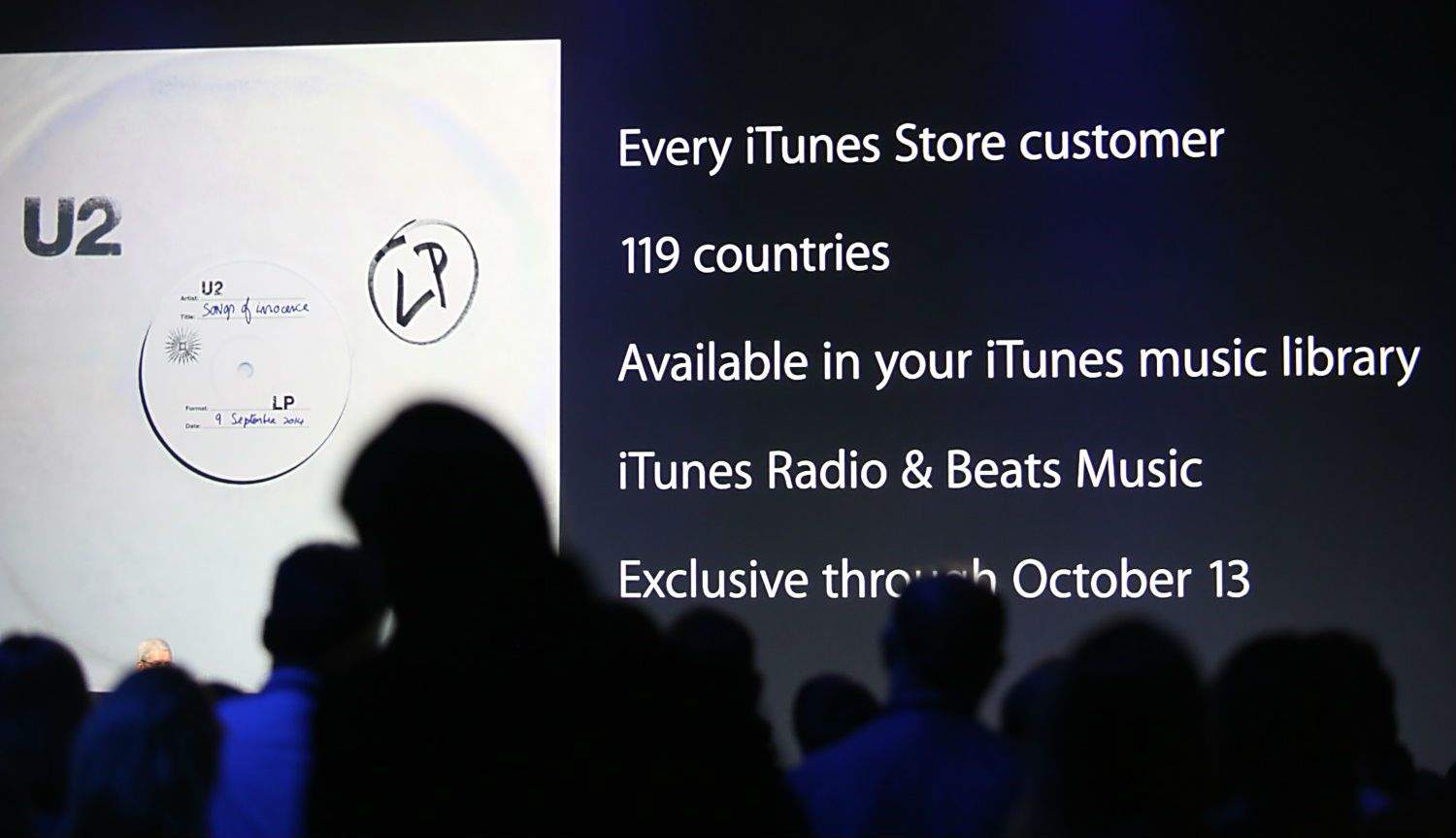
Instead of making the band’s mediocre new album an opt-in freebie, Apple jammed it down the throats of a half-billion iTunes Store customers, enraging some of the company’s most loyal fans. Whether they wanted the album or not, it’s now showing up as “purchased” in individuals’ iTunes libraries on their computers and phones.
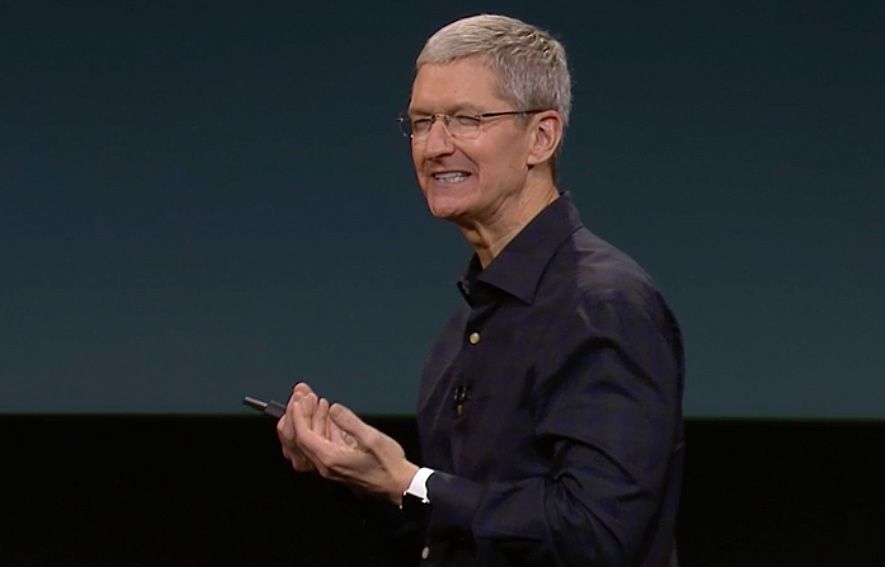
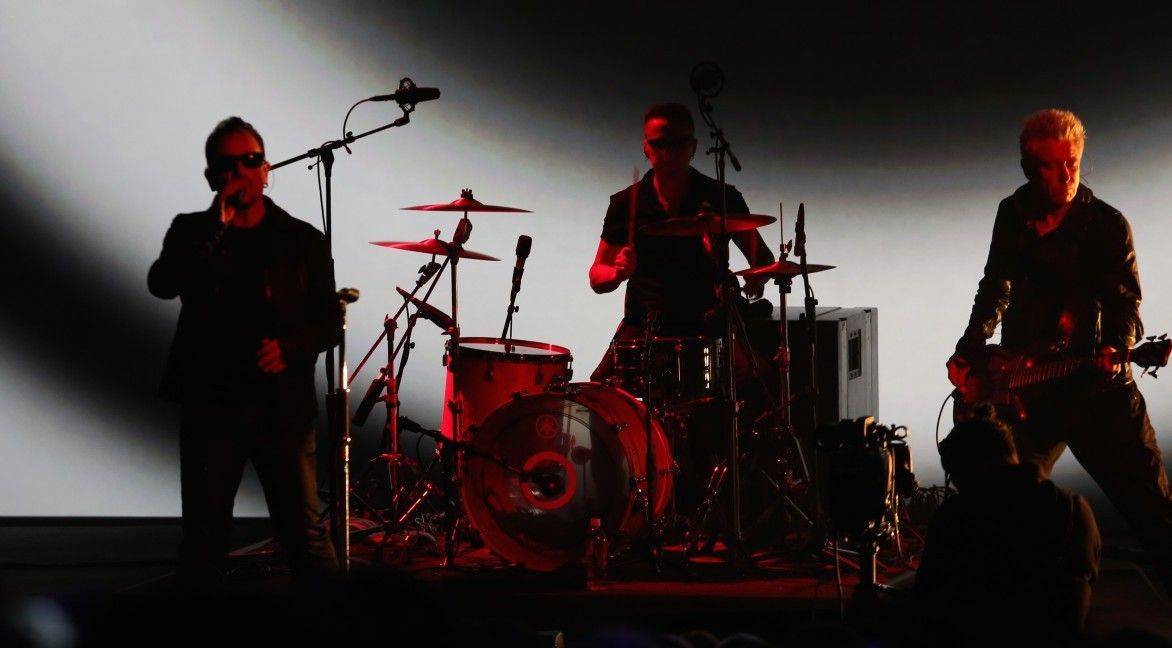
When Tim Cook trotted out the Irish rockers for a limp finale to Tuesday’s big Apple Watch announcement, he called giving away the band’s new record “the largest album release of all time” — but now it looks like one of the dumbest.
Dragging U2 onstage to end Apple’s big iPhone 6 event was more than a disappointing denouement to an otherwise solid piece of marketing theater: It was a tacit admission that the recorded music industry is gasping for its last breath.
During his peculiar onstage banter with Bono, Apple CEO Tim Cook called the iTunes-exclusive release of U2’s new album, Songs of Innocence, “the largest album release of all time.” He also crowed that dumping the record for free on iTunes’ half-billion users would make music history.
It did, but for all the wrong reasons.
If you don't have a dedicated roadie or one of those robotic tuning guitars, there's no easier way to tune your ax than with a Snark. Just squeeze the thumb-size mount and slide your headstock between the rubberized grips. Then press the little button on the front of the Snark's colorful LCD readout, pluck a string and get your instrument ready to play.
Lightweight and accurate, the Snark SN-2 All Instrument Tuner works with acoustic or electric guitars and basses, mandolins, banjos, whatever. It's perfect for situations like in-studio radio shows, where you don't want to drag around a stompbox tuner or a large amp that might have one built-in tuner. It also boasts pitch calibration, which lets you tune to something besides A-440, and a metronome that I can't complain about because I've never used it. The Snark SN-2 is a great buy at $39 list (and a steal at Amazon's price of $12.99). — Lewis Wallace
Photo: Jim Merithew/Cult of Mac
A comic book movie about misfit space superheroes might not seem to have much in common with Apple’s long-rumored entry into wearable computing. However, for a handful of reasons, Guardians of the Galaxy is to Marvel Studios what the iWatch is to Apple –- a high-profile release that’s critical to the company’s future success.
Here’s why.
Who are the Guardians of the Galaxy and why should you care? Marvel Studios gave lucky fans a nice long look at the weird team of space heroes during an extended sneak preview of the upcoming Guardians of the Galaxy movie.
The 17 minutes of footage introduced the five key players: Peter Quill, aka Star-Lord (played by Chris Pratt); talking raccoon Rocket and his treelike buddy/protector Groot; beefy blue badass Drax the Destroyer (part-time WWE wrestler Dave Bautista); and steely, green-skinned assassin Gamora (Zoe Saldana). It also gave us a sustained looked at the movie’s not-so-secret weapon: humor.
You know what I hate about Apple computers? The precious keyboards. They look lovely, with their sleek designs and tiny little keys, but they absolutely kill my wrists and fingers. That’s why I plug a grimy old Goldtouch keyboard ($129 list when they made ‘em) into the MacBook Air that I use for work. I even take the weird-looking A-frame keyboard with me when I travel. It’s not an elegant-looking solution, but it’s a lifesaver.
I’ve dealt with typing-related RSI for decades. While I use voice recognition when I have to write something lengthy, it’s not the perfect tool to accomplish every task in every situation. Sometimes I need to hammer away on a keyboard, and when I do, the Goldtouch makes the experience far less painful. It’s split down the center, with a ball joint that lets me adjust the angle between the two halves as well as the height at the center. And the soft-touch keys just feel good to me. — Lewis Wallace
P.S. I haven’t tried the updated Goldtouch V2 ($115) or the company’s Go!2 Bluetooth mobile keyboard, but when ol’ faithful finally gives up the ghost, that’ll be my move.
Photo: Jim Merithew/Cult of Mac
Siri: “How long should a keynote last?”
As anyone who watched Wednesday’s nearly three-hour livestream of the Google I/O kickoff, the answer to that question should be 90 minutes or less.
As the event dragged on, the tone on Twitter went from restrained interest about Google’s somewhat underwhelming announcements to reports of sleeping reporters and jabs at the ponderous presentation’s length. “Apple just launched a keynote shortener,” tweeted Dave Pell.
SAN FRANCISCO -- While Apple watchers tuned into last week's Worldwide Developers Conference keynote for a look at where the company might be headed, coders at the annual convention were getting a look at the current state of the art when it comes to the company's software.
Cult of Mac asked developers from around the world who were in town for WWDC (or its indie sibling, AltConf) what they thought about changes coming in iOS 8 and OS X Yosemite. We also asked them about their favorite apps as well as their views on Swift, the new programming language Apple introduced at WWDC. Get their takes in the gallery above.
Got your own favorite features in Apple’s latest releases? Let us know in the comments below.
Photos: Jim Merithew/Cult of Mac
Instead of dropping a smartwatch or some other hardware bombshell at WWDC 2014, Apple showcased the futuristic tools it will use to extend its rapidly growing empire.
“Apple engineers platforms, devices and services together,” said Apple CEO Tim Cook as he wrapped up the Worldwide Developers Conference keynote Monday in San Francisco. “We do this so we can create a seamless experience for our users that is unparalleled in the industry. This is something only Apple can do.”
Casual observers (and stock analysts) might fret that there was no big wearables reveal, no amazing new Apple TV, not even a spec boost for an existing device during the highly anticipated WWDC kickoff. Yet while there were was absolutely no talk of new hardware, Apple offered an exciting peek at where the world is headed next with iOS 8 and OS X Yosemite, both of which are available to developers now and will be released to the public this fall.
“We’re always future-focused,” said Cook, who shared presenting duties with Craig Federighi, Apple’s senior vice president of software engineering, and others. Here’s a look at the shiny, translucent, interconnected future Apple is focusing on.
Gibson’s luthiers prototyped the Explorer (alongside pointy siblings the Flying V and the apocryphal Moderne) in the ’50s. The space race was on, rock ‘n’ roll was coming into its own and cars boasted bold curves and sci-fi fins. The Explorer and Flying V were released in 1958, a year after the Soviets launched Sputnik 1. (The Moderne didn’t makes its official debut until 1982.)
Like the beautiful but doomed Power Mac G4 Cube, the radically shaped guitars were clearly ahead of their time: These pointy instruments, which years later would become staples of heavy metal and hard-rock style, flopped hard. Gibson discontinued both lines within a few years.
In 1976, spurred by the success of competitors’ Explorer clones, Gibson came to its senses and reissued the Explorer. The natural mahogany finish on the best of these, much like the lighter Korina of the original models, gave the strangely shaped guitars a retro-futuristic look. That marriage of old and new is coming back into fashion now as designers tumble to the innate beauty of natural materials.
The Power Mac G4 Cube, introduced in July 2000, delivered a fair amount of Apple computing power in a unique see-through enclosure made of acrylic glass. Designed by Jony Ive, the futuristic-looking Cube offered a glimpse of the sleek industrial design that would come to epitomize Apple’s upscale take on consumer technology.
“I just remember it being this incredibly elegant, sexy machine that looked nothing like a computer,” said Randall Greenwell, director of photography at The Virginian-Pilot and a longtime Apple aficionado, in an email to Cult of Mac.
The Mac turns 30 today. It’s a big day for Apple, and obviously it’s a big day for every member of the Cult of Mac (that means you!).
Here’s a roundup of all our stories about the Mac’s milestone:
Siri has a dark side. Try to send a text in a movie theater, and you might feel the life-destroying wrath of Apple’s perky AI helper.
That’s the message delivered in a new PSA-style video that’s the Alamo Drafthouse‘s latest salvo in the war on rude moviegoers. The creative clip, which will be shown ahead of screenings of Spike Jonze’s Her at the indie tastemaker’s theaters, uses the voice of Siri to send an anti-texting message.
It’s not easy making a posthumous movie about the world’s most well-known and beloved control freak. Just ask Joshua Michael Stern, director of new Steve Jobs biopic Jobs. The film delves into the early days of Apple Computer as Stern paints a picture of a man he calls a “brutally honest character.”
Don’t go into the PG-13 Jobs expecting any bombshells about Apple’s late, great maximum leader — you won’t find any. Instead, what you’ll get is a straightforward cinematic take on Jobs’ early partnership with Apple co-founder Steve Wozniak (played mostly for comic relief by Josh Gad), a healthy dose of Hollywood-style boardroom intrigue and a few glimpses into Jobs’ personal life. Many of the scenes, whether factually accurate or not, have been woven into the tapestry of tech history. And Jobs, who died of pancreatic cancer in 2011, obviously isn’t around to fact-check the past or exert his famous control over the final product.
“Part of the shackles for me as a director was, we really had to do everything that was sort of public domain, you know, we couldn’t stray too far off of what we basically knew about Steve,” Stern told Cult of Mac during a recent interview at the Ritz-Carlton hotel in San Francisco. “But the interesting thing about Steve, being such an enigma, there really isn’t that much more to know at all. I mean, everyone knows what they know.”
Some space geeks are calling today “The Day the Earth Smiled,” because the Cassini probe is set to take a picture of our planet as seen from Saturn later this afternoon. To honor this momentous occasion, the maker of astronomy software SkySafari is giving away basic versions for iOS and OS X (and discounting the Android version) through Sunday.