White iPhone this! White iPhone that!
Who’s sick of it already?
[polldaddy poll=4975121]


White iPhone this! White iPhone that!
Who’s sick of it already?
[polldaddy poll=4975121]


If you’ve run up against the New York Times‘ new paywall, here is the simplest way to continue reading — guaranteed. This isn’t just a Mac tip: it works on Windows too.

The iPhone LocationGate scandal continues to escalate.
Senator Al Franken has summoned Apple and Google to appear before a Senate judiciary hearing on mobile privacy in May.
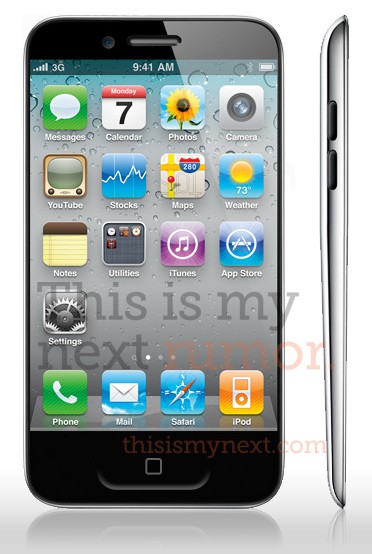
Apple may be prototyping an iPhone 5 with a tapered design, a larger 3.7-inch screen and a gesture-sensitive Home Button.
This is according to the ex-Engadget crew at the new “This my Next” website, who whipped up the mockup above to illustrate the various rumors they’re hearing.
Joshua Topolsky warns, however, that none of this is set in stone: “Keep in mind that this info isn’t fact — we’re getting lots of threads from lots of places and trying to make sense of the noise. The versions of devices our sources are seeing could be design prototypes and not production-ready phones. Still, there are strong indications that Apple will surprise a public that’s expecting a bump more along the lines of the 3G to 3GS — and this is some insight into where those designs might be headed.”
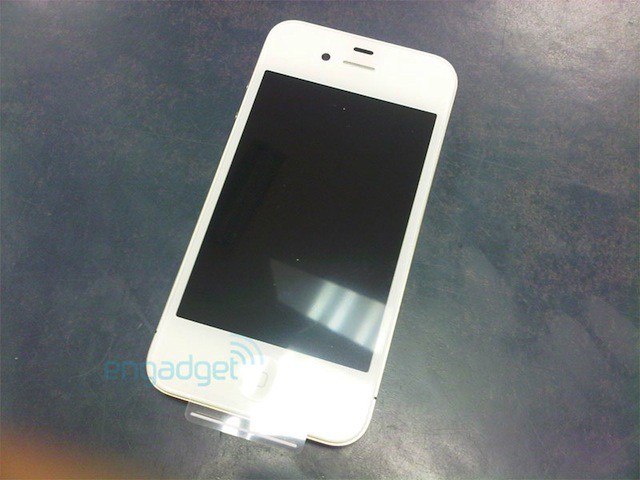
Looks like the white iPhone 4 is just about to be released.
One customer in the UK was able to buy a 16GB white iPhone 4 from Vodaphone, and an internal memo from BelCompany in the Netherlands says the near-mythical handset is being released next week — Wednesday, April 27th.
In addition, retailers in Europe are getting supplies of the iPhone with “do not open until April 27” stickers, says 9to5Mac.
It is not clear, however, if that is the worldwide launch for the white iPhone 4. But it certainly looks like it.
In a post this morning, Daring Fireball‘s John Gruber says that the tracking data stored by your iPhone and 3G iPad is a bug that will likely soon be fixed.
Citing a “little birdie” (friend inside Apple), Gruber says the consolidated.db file is a supposed to be temporary cache of location data (As we reported yesterday).However, because of a bug — or more likely, a programming mistake — the file isn’t purged of historical data.
I don’t have a definitive answer, but my little-birdie-informed understanding is that consolidated.db acts as a cache for location data, and that historical data should be getting culled but isn’t, either due to a bug or, more likely, an oversight. I.e. someone wrote the code to cache location data but never wrote code to cull non-recent entries from the cache, so that a database that’s meant to serve as a cache of your recent location data is instead a persistent log of your location history.
Gruber bets the oversight will be fixed in the next iOS update. Apple still hasn’t officially commented on the issue, which is a big story in the mainstream press today.
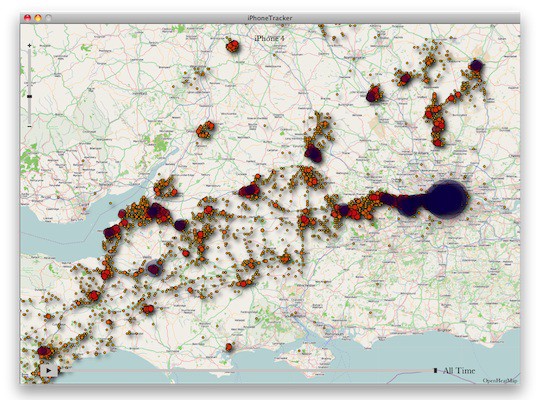
The iPhone tracking issue that’s causing a big privacy stink isn’t new and isn’t really tracking users, says an iOS forensics researcher.
It’s actually a data file that is used internally by the iPhone to do things like geo-tag photos, and it’s been in iOS for a long time (in a different form).
What’s new is a nifty extraction tool called iPhoneTracker that pulls the data off your hard drive and makes a striking map out of it. iPhoneTracker was released this week at O’Reilly’s Where 2.0 conference, causing a huge outcry about privacy and prompting U.S. Senator Al Franken to write to Steve Jobs.
In addition, the file has become more accessible than it used to be because it’s now used by third-party apps that require location data.
“It is not secret, malicious, or hidden,” writes Alex Levinson, an iOS forensics researcher.

Senator Al Franken (D-MN) wants answers about the iPhone’s undisclosed tracking features.
As reported, the iPhone and 3G iPad secretly record your location as you travel around and sync it with your computer. It appears to be a serious violation of privacy. It was first disclosed by security researchers Alasdair Allan and Pete Warren at O’Reilly’s Where 2.0 conference.
Apple hasn’t yet explained the matter, prompting Sen. Franken to publish an open letter to Steve Jobs demanding answers.
Sen Franken wants to know why Apple is collecting the data; how it is collected; what it is used for; why it isn’t encrypted; if the data is shared; and why consumers aren’t asked before the data is collected.
Here’s the full text of Sen. Franken’s letter to Jobs:

From today’s Q2 analyst conference call:
On Steve Jobs: “He is still on medical leave, but we do see him on a regular basis. And as we previously said, he continues to be involved in major strategic decisions. I know he wants to be back full-time as soon as he can.”
On iPad 2: “Demand on iPad 2 has been staggering.”
On Android: “We continue to believe—and even more and more every day—that iPhone’s integrated approach is materially better than Android’s fragmented approach, where you have multiple OSes on multiple devices with different screen resolutions and multiple app stores with different rules, payment methods, and update strategies.”
On Samsung: “We are Samsung’s largest customer. And Samsung is a very valued component supplier to us, and I expect that strong relationship will continue. Separately from this, we felt the mobile communication division of Samsung had crossed the line.”
On Japan: “… there’s aftershocks, there’s still uncertainty about the nuclear plant, there’s power interruptions. If that stays at the level that it is today, I’m not as worried. I would worry if something happened and took a turn for the worst.”
On iPad in education: “… last quarter, we were about a 1:1 ratio of iPads to Macs, which is, I think, amazing given the short life of the iPad. And really demonstrates what kind of opportunity there probably is there.”
And one from Apple’s chief financial officer, Peter Oppenheimer, on iPhone: “We saw stunning iPhone sales.”
From Macworld: Tim Cook speaks! Apple’s COO on Android, Japan, iPad 2
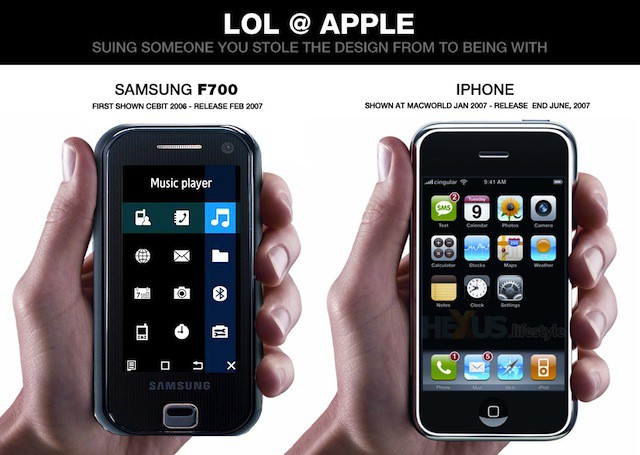
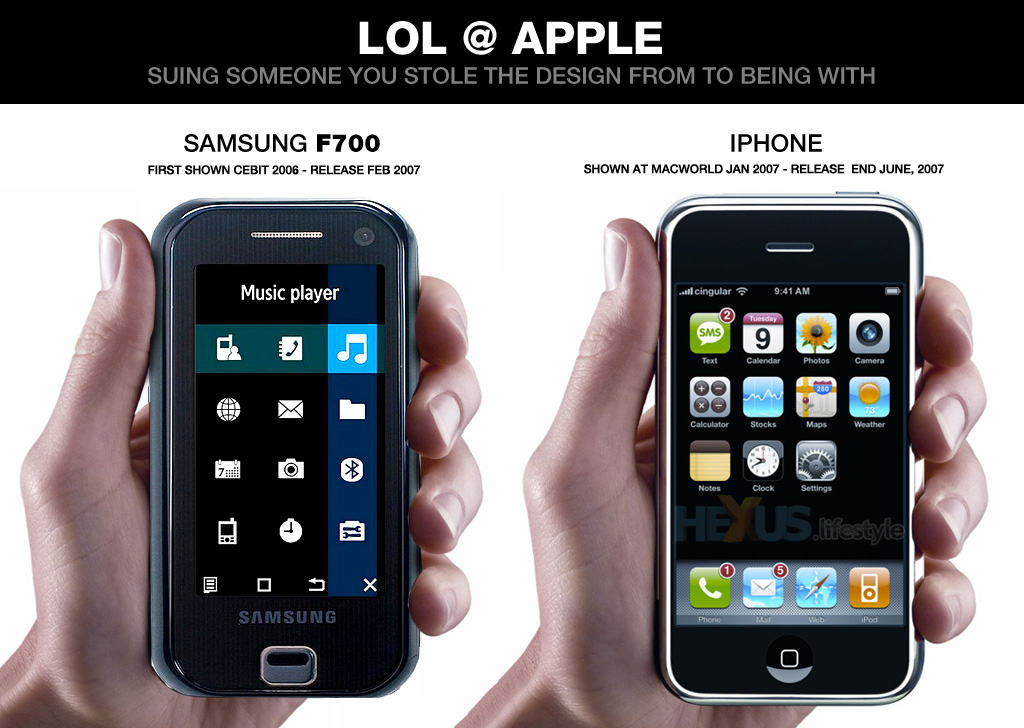
Apple critics are accusing the company of ripping off Samsung, not the other way around. They say the Samsung F700, first shown at Cebit in 2006 and released in February 2007, is the inspiration for the iPhone, first shown at Macworld 2007 and released in June that year. LOL @ Apple: Suing someone you stole the design from to begin with.
UPDATE: It looks like the F700 was actually first announced in February 2007 — a month after Steve Jobs debuted the iPhone — and was released in December 2007, months after the iPhone’s debut. Worse, it was greeted with accusations of being a complete iPhone ripoff!
What do you think? Did Apple copy the iPhone from Samsung?
[polldaddy poll=4942753]
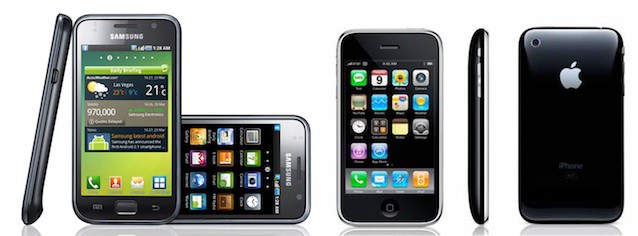
The blogosphere is seething today with theories about why Apple is suing Samsung, one of its key suppliers and partners.
It’s been suggested that Apple has little interest and chance of winning a “look and feel” lawsuit, otherwise known as “trade dress.” It’s a tactical move, a way to win concessions from either Samsung or Google. Silicon Alley Insider, for example, says it’s to force Google to charge hardware makers for Android, which is currently free.
But the real reason is this: Apple is pissed off with getting ripped off. And it has a good chance of winning, because it has won several trade dress lawsuits before.
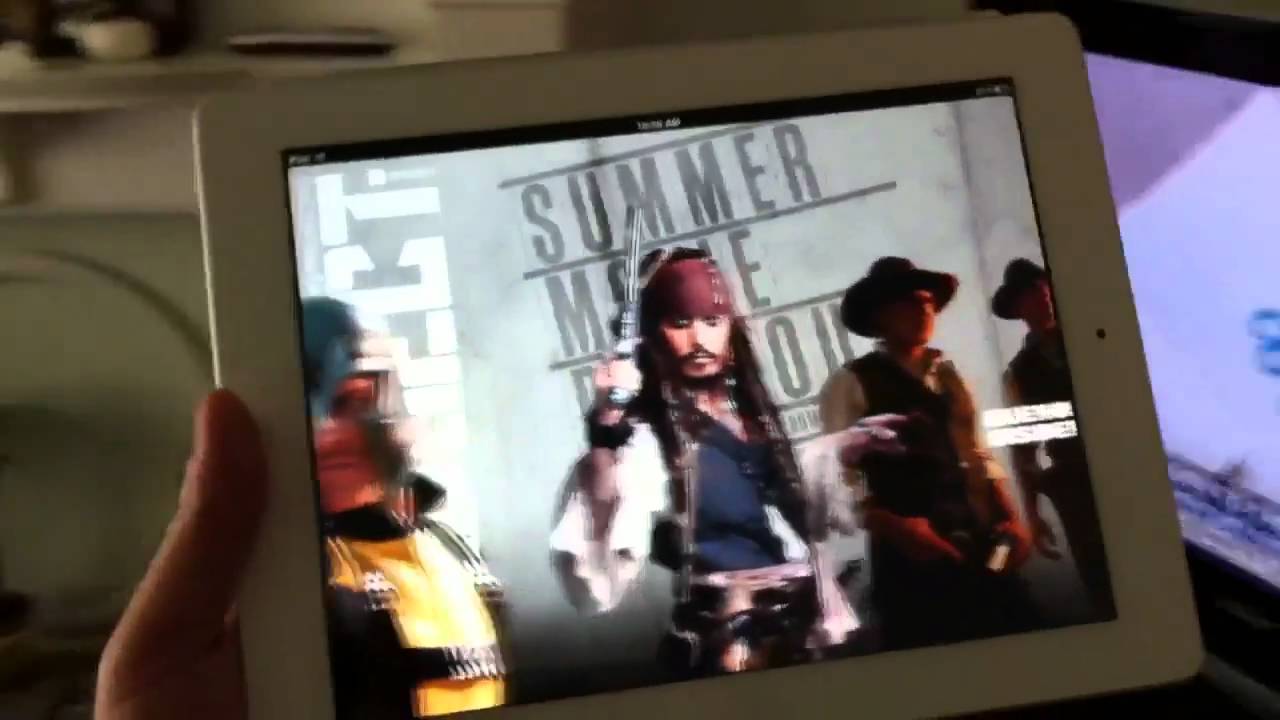
Here’s a quick video of Project magazine’s panoramic cover for its latest issue.
The iPad-only magazine uses the iPad 2′s gyroscope to create a cover that moves through 360-degrees as you sweep the iPad around the room. It is available now from the App Store for $2.99.
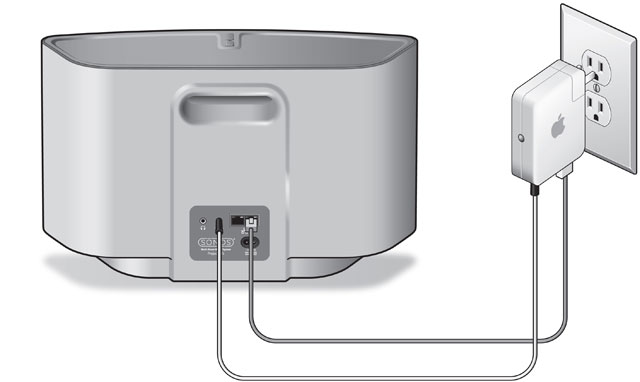
Good news If you’ve got a Sonos music system and an Apple AirPort Express: a free software update will make your multi-room Sonos system AirPlay compatible.
Available today as a free download, Sonos System Software 3.4 adds AirPlay compatibility to a multi-room Sonos music system. You do need an Apple AirPort Express though, which when plugged into any ZonePlayer’s line-in can be played across multiple systems across the house — so-called Party Mode.
Apple is suing Samsung for copying the look and feel of its iPhone and iPad, reports the Wall Street Journal.
The lawsuit claims several of Samsung’s smartphones and tablet — the Galaxy S 4G, Epic 4G, Nexus S and the Galaxy Tab — copy Apple’s intellectual property. The suit, filed last week in Northern California, claims:
“Rather than innovate and develop its own technology and a unique Samsung style for its smart phone products and computer tablets, Samsung chose to copy Apple’s technology, user interface and innovative style in these infringing products,” the lawsuit said.
Of course, Samsung makes a lot of components for Apple’s products, from RAM used in MacBooks to flash memory used in the iPhone and iPad. It aslo manufactures the A4 and A5 processors for Apple.
Update: An Apple spokesperson elaborated on the charges for Mobilized:
“It’s no coincidence that Samsung’s latest products look a lot like the iPhone and iPad, from the shape of the hardware to the user interface and even the packaging. This kind of blatant copying is wrong, and we need to protect Apple’s intellectual property when companies steal our ideas.”
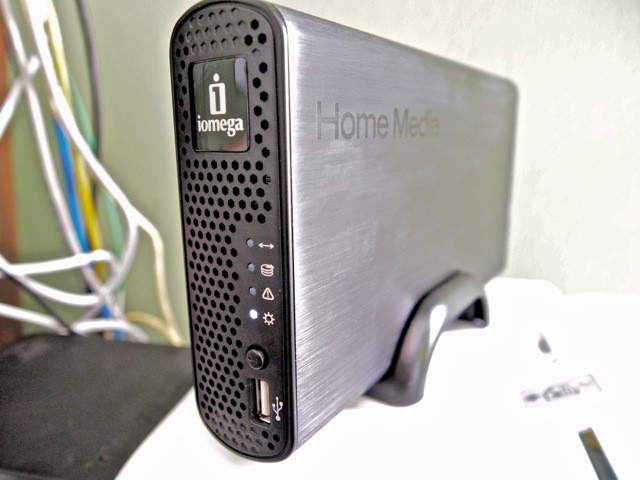
It’s a little admitted secret, but one of the biggest reasons people like Network Attached Storage drives is for Torrent downloads. They’re the easiest ways to download obscure British TV shows, for example, that can’t be easily had here in the U.S. After downloading a couple of shows, users watch them via WiFi streaming on their MacBooks or iPads.
Trouble is, Torrent downloads slow everything on the home network to a crawl. Everyone complains when the network is clogged with Torrents of Shameless or The Killing. Well, not any more. You can set up one of Iomega’s new Home Media Network Hard Drive, Cloud Edition at work and use the office’s net connection to download Torrents at night. Then you stream them over the net to your home.
I’ve been testing one of the Home Media Drives for several weeks. There’s a been a few glitches, but on the whole, it works well. Now I’ve got my own little Amazon S3 system, with none of the monthly fees.

MacTech Boot Camp is coming to Dallas next week and is filling up fast, but CultofMac.com readers can get last-minute tickets — plus a $200 discount.
MacTech Boot Camp is an intensive one-day training program for Mac consultants and IT technicians. It boasts more than a dozen sessions covering everything from effective marketing to proper support call technique. There are also sessions on networking, printers, Windows on Mac, security, scripting and command line — plus a bunch more. If you want to get up to speed as an independent Mac consultant, this is the program for you.
The Dallas event is April 27 at the Hyatt Regency DFW.
Tickets are normally priced at $495. To save $200, just follow this special CultofMac discount link and get in for just $295.
You can even take an exam to become an Apple certified tech at the show. There’s a study group before a proctored Apple Certification Exam. There’s also a discount for MacTech attendees: take the test for $199 (It’s normally $299).
If you’re not in Texas, no worries. MacTech Boot Camp is a traveling roadshow. There’s a show coming up fast in Boston (May 18 at Royal Sonesta Hotel), followed by Los Angeles (July 27) and Chicago (Aug 31). Attendees can save $200 by registering early.
CultofMac.com is a media partner of MacTech Boot Camp.
Here’s more info about MacTech BootCamp:
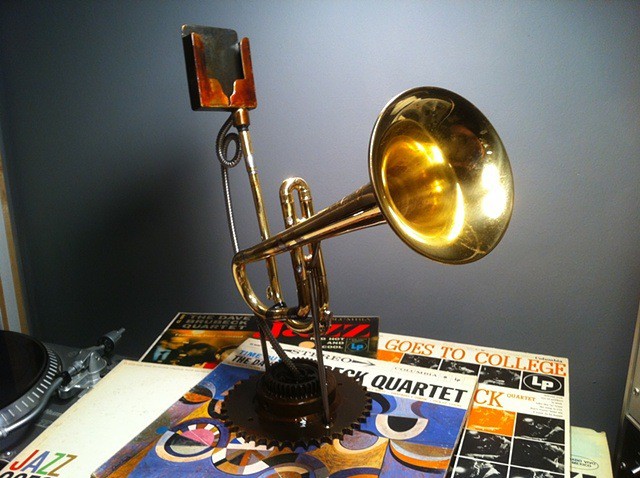
Artist Christopher Locke makes iPhone speakers from salvaged trumpets.
Selling for $400 apiece, you’d be surprised how good they sound. Check out the video below:

The latest beta version of Safari now features a do-not-track privacy setting to prevent online advertisers from tracking users as they surf the Web.
The tool has been added to the latest version of Safari in Lion, the upcoming update to OS X expected to go public this summer.
Safari is the third major browser to add a do-not-track setting. It joins Microsoft’s Internet Explorer and Mozilla’s Firefox include it, but Google’s Chrome does not — yet.
Google, of course, is one of the web’s biggest online advertisers. It’s also worth noting that Apple offers an in-app advertising program called iAds that competes with other forms of advertising, online and off.
Wall Street Journal: Apple Adds Do-Not-Track Tool to New Browser
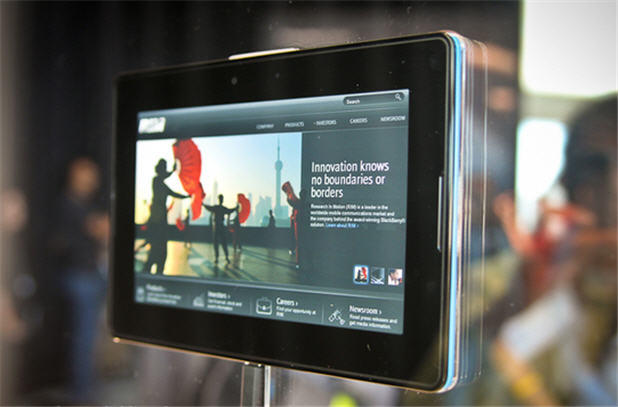
Oh dear. RIM’s iPad competitor, the PlayBook, gets a solid panning from the New York Times’ David Pogue.
The main problem is the lack of apps. Not even native apps. It doesn’t even have built-in email! The hardware is pretty limited too — no 3G or GPS.
The PlayBook, then, is convenient, fast and coherently designed. But in its current half-baked form, it seems almost silly to try to assess it, let alone buy it.
Remember, the primary competition is an iPad — the same price, but much thinner, much bigger screen and a library of 300,000 apps. In that light, does it make sense to buy a fledgling tablet with no built-in e-mail or calendar, no cellular connection, no videochat, no Skype, no Notes app, no GPS app, no videochat, no Pandora radio and no Angry Birds?
On the bright side, it does have a couple of spectacular features: its secure, can be synced wirelessly, and can power an external screen independently (the iPad only does mirroring). RIM promises updates to the hardware and software throughout the year, but by then, Apple will be finishing the iPad 3. It looks like a bomb.
New York Times: A BlackBerry Tablet, but Where Are the Apps?
UPDATE: WSJ’s Walt Mossberg slams it too: “I recommend waiting on the PlayBook until more independently usable versions with the promised additions are available.”

SAN FRANCISCO — The survival of Apple beyond the 1980s comes down to a single piece of software, says Guy Kawasaki, bestselling author and Apple’s former chief evangelist. That single, miraculous piece of software — Aldus PageMaker — fueled a desktop publishing revolution, and saved Apple’s bacon in the process.
The comment came Tuesday during a highly entertaining keynote speech at the Ad:Tech conference here to promote Kawasaki’s new book, Enchantment. The book is a manual of persuasion in the mold of Dale Carnegie’s famous How to Win Friends & Influence People. (I’m reading it and will post a review soon.)
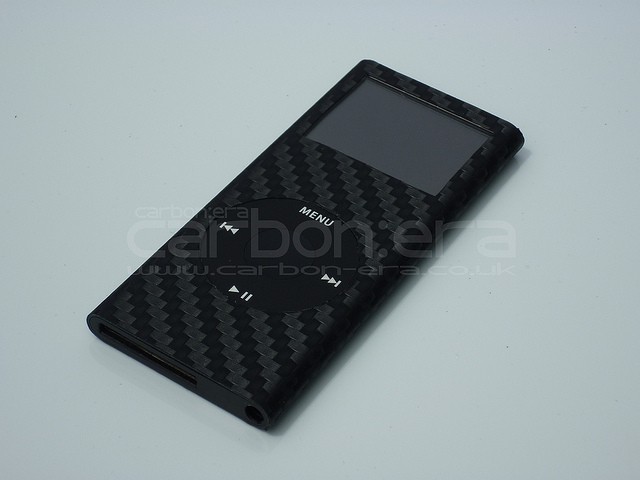
Steve Jobs is keen to bring wireless syncing to iPods this year, and carbon fiber may be the key.
Following the news that Apple has just hired a leading carbon fiber expert, we can reveal that the company has been testing Wi-Fi syncing in iPods for the past two years.
Getting large libraries of music and movies to synchronize wirelessly over WiFi hasn’t been easy, according to a source close to the company who asked to remain anonymous. But Steve Jobs himself sees it as key to updating the aging devices, which are becoming increasingly obsolete in the iPhone/iPad era.
“Jobs is pushing hard to get WiFi syncing into the next-generation of iPods,” says our source.
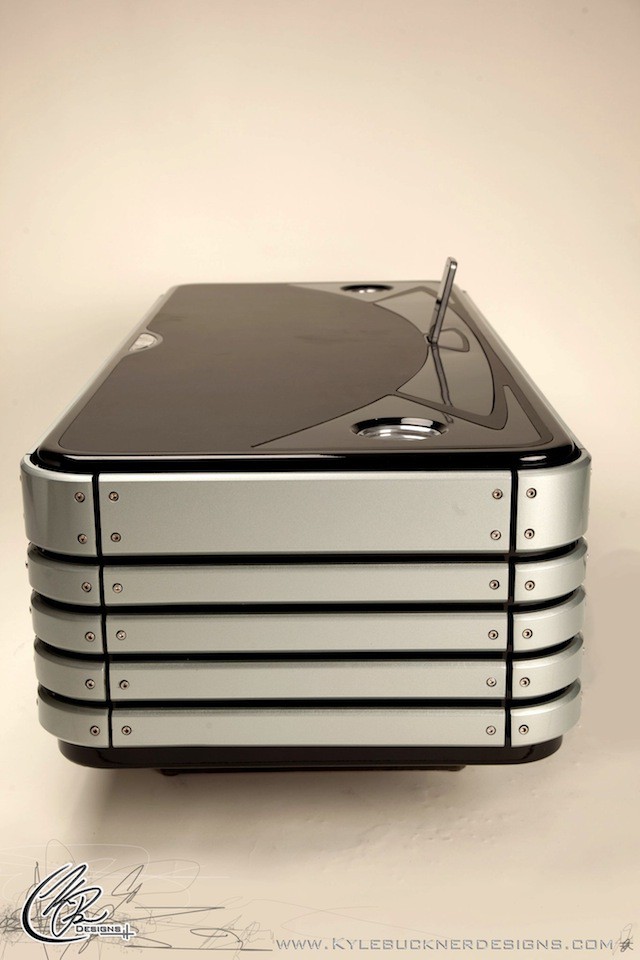
It looks like a stack of iPhone 4s, but this is a coffee table — the iTable.
It’s also a speaker dock with a motorized speaker bar that rises like a stage organ when your hand is swiped across the touch-sensitive controls (see the video below).
Designed a built by Kyle Buckner, who is best known for custom car interiors, the iTable is the first in a line of Apple-themed furniture.
“I am creating a line with this category,” said Buckner by IM.
Lots more pictures and a video after the jump:
https://www.youtube.com/watch?v=5Sj2Q0rGUmo
Here is British comic Eddie Izzard on OS X’s Software Update. It’s pretty funny and spot on.
The clip is taken from his Izzard’s live show at the Madison Square Garden, which is just out on DVD.
It has got to be the first standup skit ever about OS X’s Software Update. In fact, it’s the first skit I’ve seen from a popular comic about Macs in general, except Sinbad of course. A sign of Apple’s ever-expanding popularity?
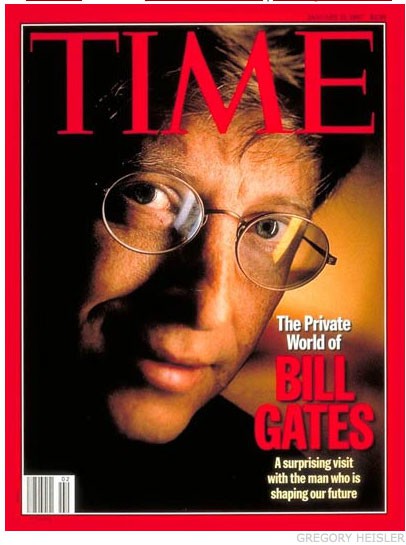
Author Walter Isaacson’s authorized biography of Steve Jobs is likely to be a doozy, if this fascinating profile of Bill Gates in Time is anything to go by.
I just spent the last hour or so reading the 1996 profile, which Isaacson published when Gates was at the height of his power. Isaacson managed to get full access by persuading Gates it was a shot at winning Time’s Person of the Year. Gates didn’t win, but the profile is a great piece of work. It’s full of personal anecdotes and is psychologically penetrating. Isaacson talked to Gates’ friends, family and colleagues, and paints a rich, detailed portrait. It’s highly readable but also critical of Gates. We can only hope Isaacson does the same thing for Jobs, who has famously resisted biographers so far. As previously reported, Jobs has granted Isaacson full access for iSteve: The Book of Jobs, which is to be published early next year. (I don’t think it’s fair, but columnist Michael Wolff says Isaacson is a social-climbing sycophant).
Here’s a taste of the Gates piece:
When Gates decided to propose to Melinda in 1993, he secretly diverted the chartered plane they were taking home from Palm Springs one Sunday night to land in Omaha. There Buffett met them, arranged to open a jewelry store that he owned and helped them pick a ring. That year Gates made a movie for Buffett’s birthday. It featured Gates pretending to wander the country in search of tales about Buffett and calling Melinda with them from pay phones. After each call, Gates is shown checking the coin slot for loose change. When she mentions that Buffett is only the country’s second richest man, he informs her that on the new Forbes list Buffett had (at least that one year) regained the top spot. The phone suddenly goes dead. “Melinda, Melinda,” Gates sputters, “you still there? Hello?”
Time: IN SEARCH OF THE REAL BILL GATES
Via Apple 2.0: The man who won Steve Jobs’ trust
https://www.youtube.com/watch?v=isUFXNYT80k
You’ve got to watch this video. I know April Fool’s Day is long gone, but this one is worth it. It’s the perfect set-up: a local news team prepped a segment about a new app that emits smell and taste via “piezo-electrics.” The other anchor, who’s in on the joke, tells his colleague that amazingly, it works. Skeptically, she tries it out, and everyone cracks up. Very funny.