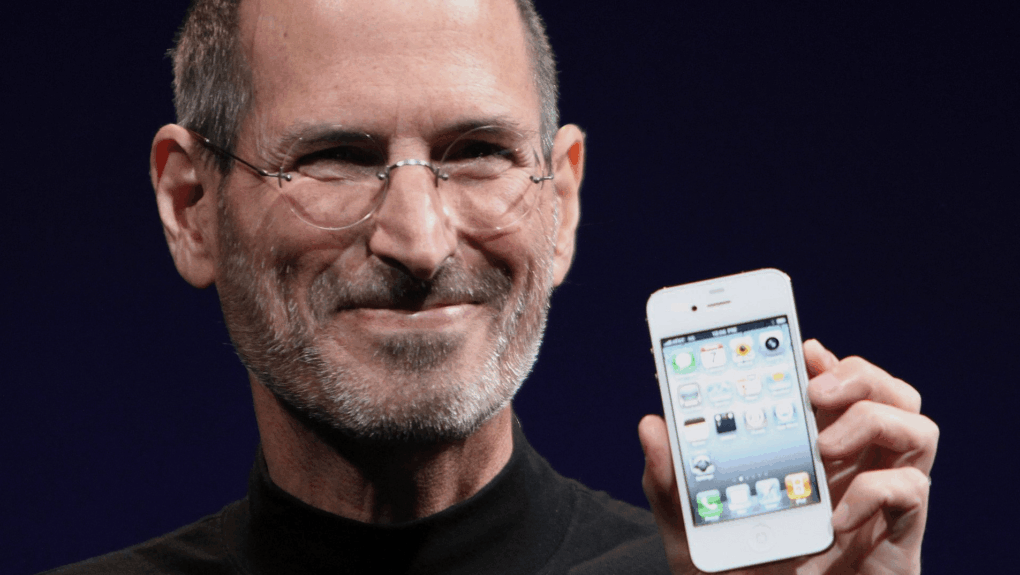
 June 7, 2010: Steve Jobs introduces the iPhone 4 at Apple’s Worldwide Developers Conference in San Francisco.
“For 2010, we’re going to take the biggest leap since the original iPhone,” Jobs says, addressing a crowd inside Moscone Center. “So today, we’re introducing iPhone 4. Fourth-generation iPhone. Now, this is really hot.”
He then touted the device’s all-new design — and cracked a joke about the sensational leak that revealed the iPhone 4’s look in the preceding months.
“Now, stop me if you’ve already seen this,” Jobs said, to raucous applause, before cannily reclaiming the narrative. “Well, believe me, you ain’t seen it. You’ve gotta see this thing in person. It is one of the most beautiful designs you’ve ever seen.”
Steve Jobs introduces iPhone 4 at WWDC 2010
These days, with the iPhone 4 no longer capable of running the latest version of iOS, it’s easy to look back on the fourth-generation handset as a piece of ancient tech. In fact, the device was incredibly significant. The iPhone 4 introduced some very important features — and also addressed concerns that remain important today.
The iPhone 4 launched the same year as the iPad, marking the first year that established the now-familiar packed release cycles that Apple continues to stick to.
But even taken on its own merits, it was a significant release. The iPhone 4 introduced FaceTime calls, an upgraded 5-megapixel camera with LED flash and a VGA-quality front-facing camera. It also benefited from a significant Retina display screen resolution upgrade — with four times the number of pixels as its predecessor.
I’ve always been partial to the iPhones of this era. The 3.5-inch size, combined with the flatter, Braun-esque design (a whole 24% thinner than the iPhone 3GS), made it Apple design chief Jony Ive‘s best iPhone design yet.
If the iPhone 4 had a problem, it was that, like many first-gen Retina devices, it struggled at times to push all the necessary pixels around — although Apple did give us a boost in RAM (to 512MB) and processor (the A4). Plus, most envy-inducing today, it introduced useful battery life.
Check out Steve Jobs unveiling the iPhone 4 below.
Do you have fond or less-than-fond memories of the iPhone 4? Leave your comments below.

Luke Dormehl is a U.K.-based journalist and author, with a background working in documentary film for Channel 4 and the BBC. He is the author of The Apple Revolution and The Formula: How Algorithms Solve All Our Problems … and Create More, both published by Penguin/Random House. His tech writing has also appeared in Wired, Fast Company, Techmeme and other publications.

3 responses to “Today in Apple history: Steve Jobs introduces the iPhone 4”
I had a 3Gs so I had to wait for the 4s. Still far and away my favorite form factor. I would love to see a similar design for 10th anniversary iPhone.
It will always be remembered for antennagate.
Steve Jobs’ last iPhone event. He died the day after Tim Cook led the iPhone 4s event.