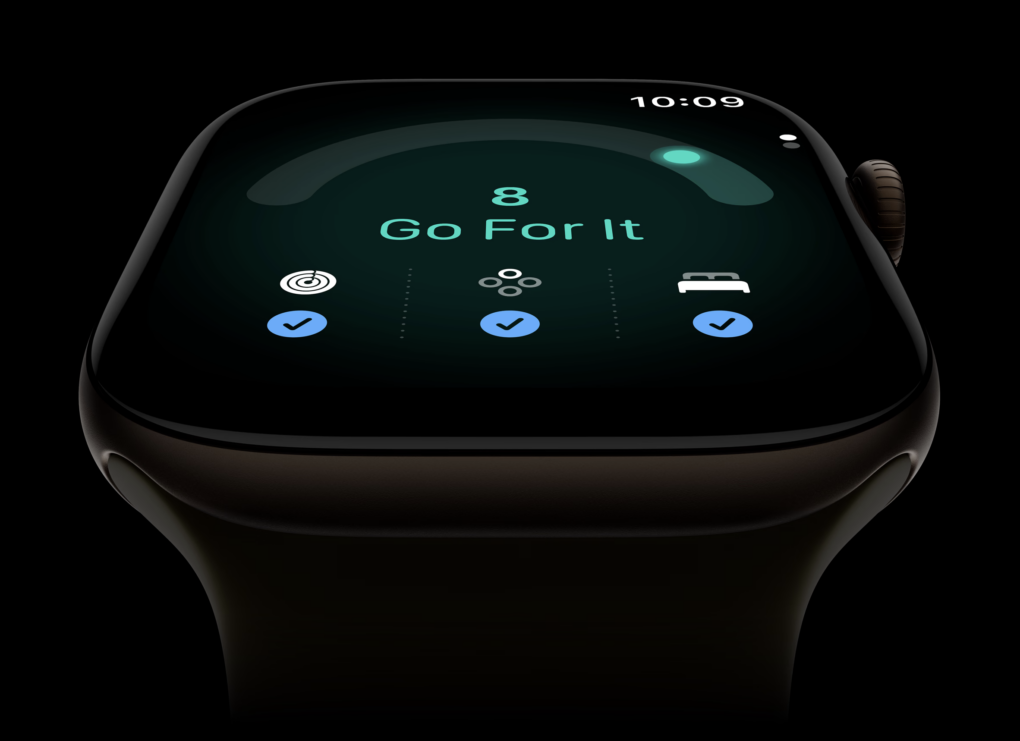
Apple introduced a new fitness feature for Apple Watch called “readiness” during its Surprise and Shine event today. Readiness gives you a score from zero to 10, along with recommendations like “recover,” “pace yourself,” “ready” or “go for it.”
But what exactly is it telling us we’re ready for? According to Apple, your readiness score “tells you when to rest or put yourself to the test.” But can a smartwatch really know that?
What happens when your Apple Watch tells you to “go for it,” but your body tells you otherwise? Most personal trainers will tell you that learning to listen to your body is an important part of training. So what should you do when your body and your Apple Watch disagree?
With readiness and Health Age, Apple enters crowded space
Apple has always positioned the Apple Watch as a health device that surfaces meaningful signals that can identify both positive trends and potential health concerns. Now, with the new readiness and Health Age features, Apple’s edging into more subjective territory. These features combine sleep, heart-rate and activity data to produce a score that purports to tell you how ready you are for the day or how your health compares with your chronological age.
Wearables offering readiness scores like this are nothing new. Fitbit, Whoop and Garmin have offered variations on the idea for years. Plenty of third-party Apple Watch apps, like Bevel and Outsiders, do something similar.
But Apple has historically been more conservative about introducing this type of feature. Its health marketing has emphasized “meaningful insights, backed by science.” I always assumed that scientific caution was one reason Apple had resisted jumping aboard every new wellness-metric bandwagon.
New Health Sensing System in Apple Watch Series 12 and Apple Watch Ultra 4
The problem is not that the data behind Apple’s Readiness feature is meaningless. Far from it. Readiness takes advantage of the new Health Sensing System in Apple Watch Series 12 and Apple Watch Ultra 4, including more frequent heart-rate and HRV measurements.
Apple says it developed the readiness algorithm using data from the Apple Heart and Movement Study, in collaboration with exercise scientists and physicians. The question is, what happens when all that complex data gets boiled down into one simple number?
Our bodies are complicated. How we respond to exercise varies enormously from person to person and from day to day. A wrist-worn device can collect some useful clues about what is happening inside us. But that’s very different from knowing our “capacity to take on the day.”
Is Apple’s readiness score genuinely simplifying complex science in a useful way? Or is it simplifying it until much of the meaning gets lost?
How I learned to stop worrying and love my doctors
The quantified-self trend has always worried me. I’m a natural worrier, so I guess that’s no surprise.
More than a decade ago, I had a serious health scare. I got Stage IV cancer and went through chemotherapy. Until then, I had been a hypochondriac, worrying about every little ache and pain.
Going through cancer treatment changed that. I realized I couldn’t spend the rest of my life constantly looking for signs that something might be wrong. Once I had the medical care I needed, I decided to leave the worrying to the professionals. I’d trust my doctors to do their jobs, and I’d do what they told me. I didn’t Google a thing about my condition. I didn’t want to know.
Fifteen years later, I’m still here. I have my doctors to thank for that, not a dashboard full of wellness scores. I don’t want to waste a minute of my life worrying about metrics unless there’s a good reason to.
I realize health and fitness stats don’t affect everyone this way. Some people genuinely enjoy monitoring their sleep scores and heart rate variability. But if you’re like me and find that all this data makes you more anxious rather than more informed, there’s another option: Don’t look at it.
Apple Watch will still alert you to certain things that might warrant attention, like an unusual heart rate. I find far more value in that distinction: Tell me when there may be something worth paying attention to, rather than constantly giving me another score to worry about.
- See also: All the ways Apple Watch has saved lives
Do fitness scores actually tell us anything useful?
Even if you’re perfectly happy being bombarded with metrics, that doesn’t necessarily mean they’re telling you something useful or actionable.
Take Apple Watch’s Sleep Score. Some of my friends tell me they monitor their sleep and find their Sleep Score useful. But when I ask why it’s useful, the answers get hazier. Sometimes they’ll even tell me the score is wrong: “It says I slept badly, but I actually slept great!”
Which makes me wonder: If you already know better than your watch how well you slept, what exactly has the score added?
Ready for what, exactly?
Garmin introduced its Training Readiness metric in 2022. The name at least makes its purpose clear: It’s intended to inform your training. But Garmin tempers this with a note of caution: “The insight you gain from the training readiness widget is only one of the perspectives you should use to guide your training efforts. As always, listen to your body, consider the data together with how you feel and adjust your plans and expectations accordingly.”
Apple’s proposition is much broader. Its readiness score isn’t merely Training Readiness. Apple says it measures your “capacity to take on the day,” whether you’re training for a race or juggling a busy schedule. That’s an extraordinary amount of meaning to squeeze between zero and 10.
Apple says it bases the readiness score on recent activity, training load, vitals and sleep. Those are all useful pieces of information. But whether I’m ready to attempt a personal best in the gym, go for an easy walk, give an important presentation or spend eight hours sitting at my Mac are very different questions. Can one number meaningfully answer all of them? And can it all really be gleaned from metrics gathered by sensors on my wrist?
And if, as Garmin suggests, we’re ultimately supposed to look at the score, consider how we actually feel, understand its limitations, and then use our own judgment anyway, I wonder what the score is adding.
You can’t cheat Father Time … or can you?
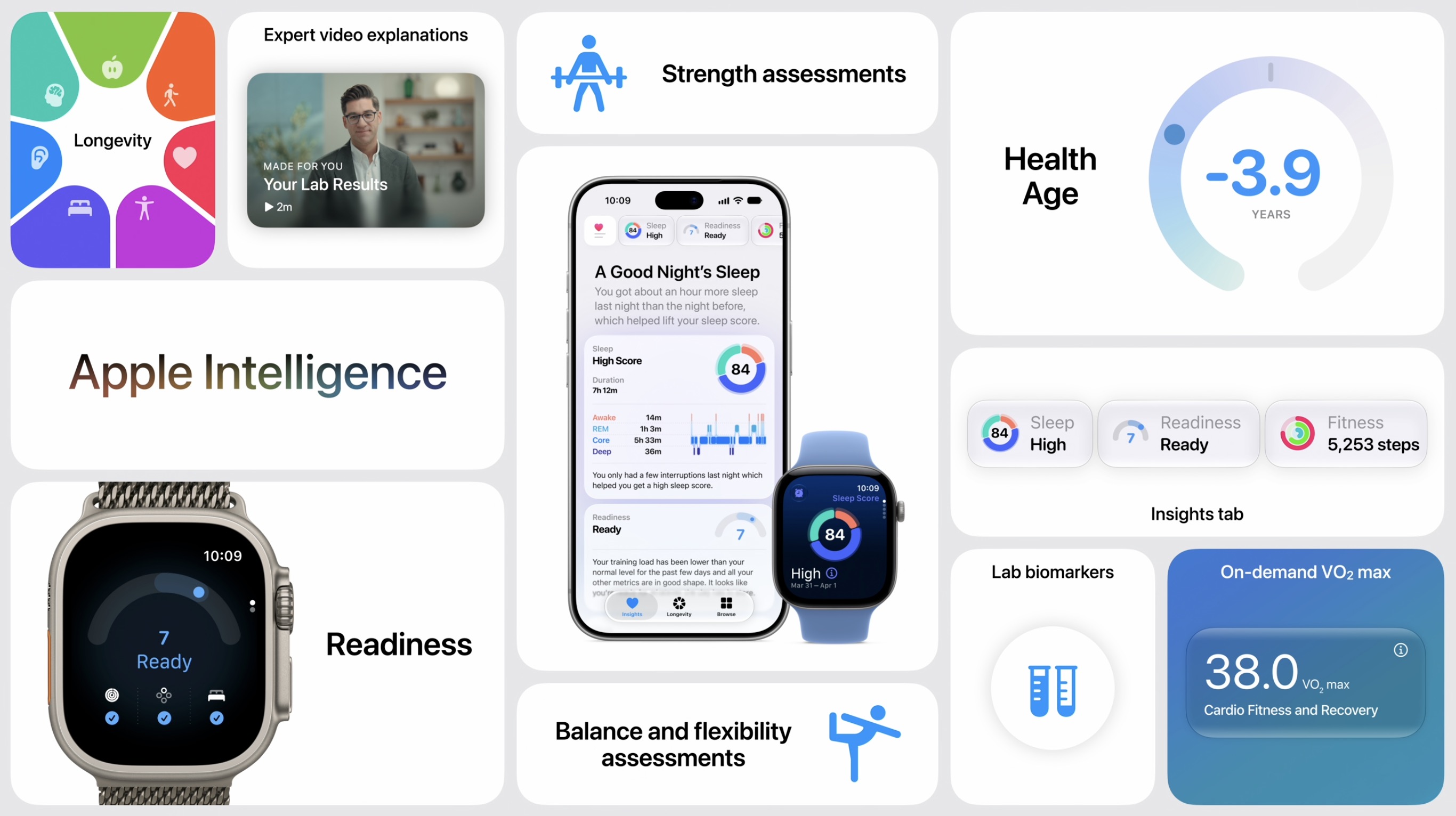
Image: Apple
That brings me to Apple’s other new metric: Health Age. This one’s coming to Apple’s redesigned Health app later this year in iOS 27 and iPadOS 27. It requires an Apple Watch and an Apple Intelligence-capable iPhone or iPad.
The underlying idea isn’t nonsense. Many of the things Apple uses to calculate Health Age, like resting heart rate, can tell us meaningful things about our health and are associated with health outcomes. My problem is with turning all of that complexity into years.
Apple says Health Age shows “exactly which factors are adding years and which ones are taking them off.” That word “exactly” is doing a lot of work.
We’ve all heard about people who smoked, drank or avoided exercise and somehow lived to a ripe old age. Those anecdotes don’t invalidate the science. Healthy habits improve our odds. Regular exercise matters. A balanced diet matters. Not smoking matters.
But they are odds, not promises. Genetics, disease, environment and sheer bad luck all play their parts. Someone can have excellent cardiovascular fitness while having another health problem a smartwatch cannot see.
That’s why expressing all this as an age bothers me. If my Health Age says I’m 35 when I’m actually 45, Apple hasn’t discovered that I’ve secretly acquired another decade of life. It has taken a selection of measurable risk factors and expressed how they compare with population norms using the metaphor of age.
You might say it doesn’t matter, as long as it’s helping people make healthier choices. And perhaps you’re right. But there’s something about extrapolating the data to this extent that makes me uneasy. Your age is how old you are. And if you’re very lucky, you might even get to become old one day.
I thought Apple was playing a different game
There was plenty I got excited about at today’s Apple event. The folding iPhone Duo looks amazing, and I’m looking forward to upgrading my Apple Watch. I also think Apple is heading in an exciting direction with Siri AI and the potential for a new generation of AI experiences powered by Apple silicon.
But the health and fitness announcements left me strangely disappointed.
When friends and colleagues have criticized Apple in the past for being slow to adopt trendy metrics like Body Battery, Fitness Age and Workout Readiness, I’ve always defended Cupertino. I thought Apple was deliberately playing a different game by sticking to more concrete metrics.
With today’s announcements, Apple is pivoting to take on the competition at its own game. And I think that’s a shame. Apple is always at its best when it dances to its own tune.

Graham Bower is a designer, writer, fitness geek, and long-time Apple user. He is the co-host of Apple Core, a podcast about the history of Apple, and the developer of Reps & Sets, a fitness app for iPhone, iPad, and Apple Watch. Connect with Graham on Bluesky or at www.grahambower.com.

