Increasingly, some Apple fans think Jony Ive has lost it.
He’s killing ports and headphone jacks left and right. The latest MacBooks value form over function. He’s designing gold watches for the 1 percent.
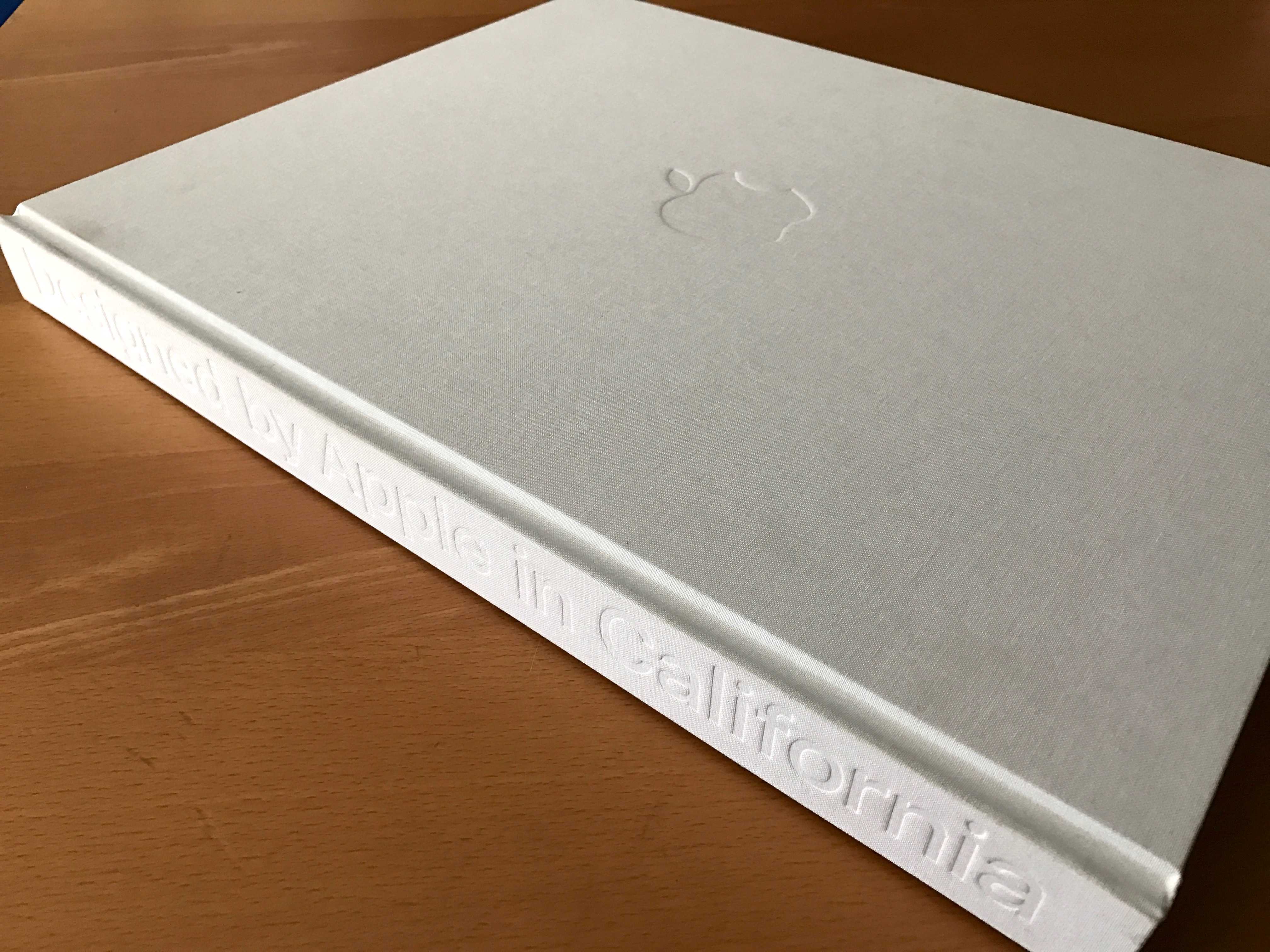
And now his glossy new photo book, Designed by Apple in California, looks like a $300, linen-bound ego trip.
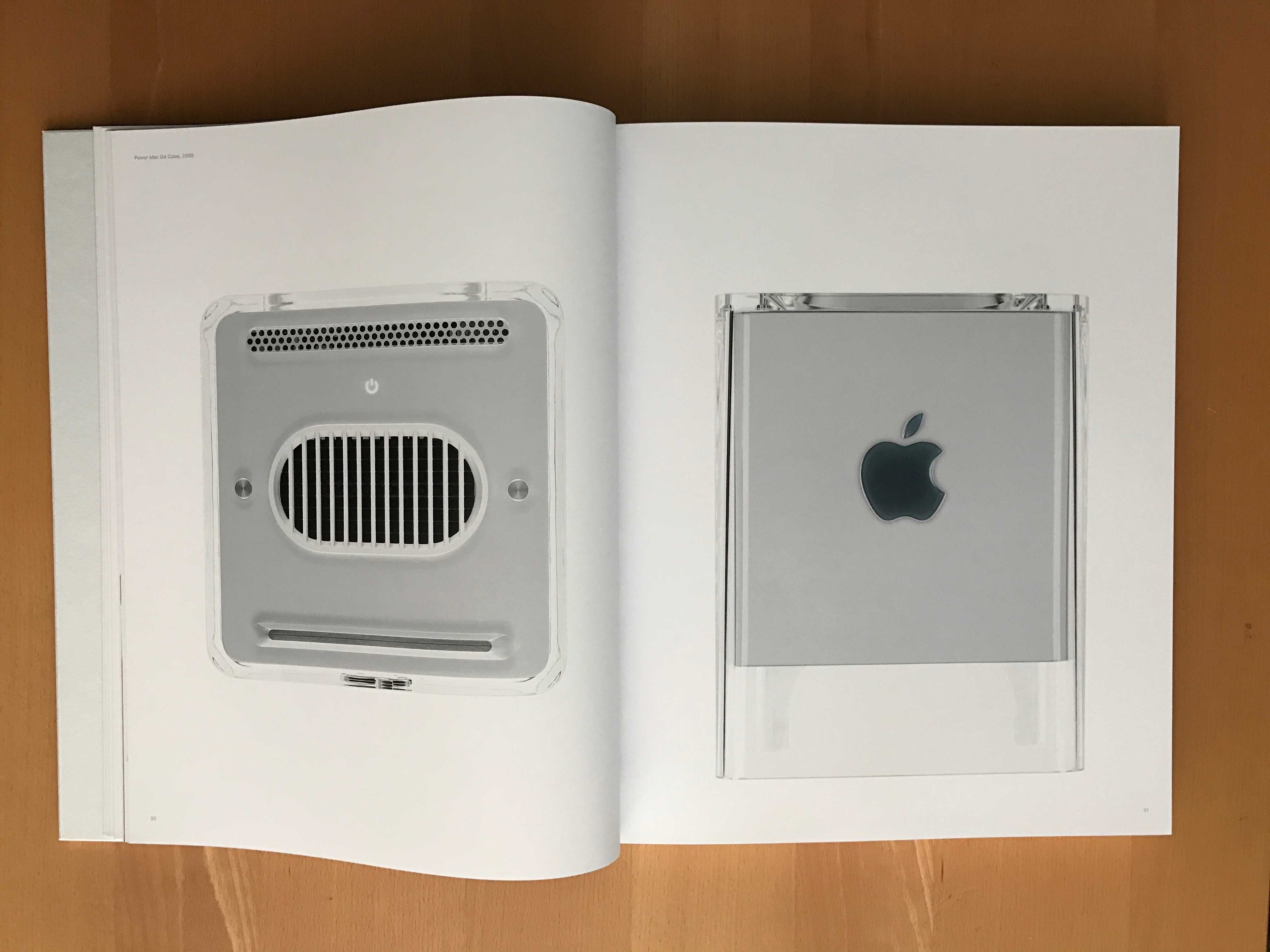
Photo: Designed by Apple in California book
The giant, 300-page book is a retrospective of the products developed by Ive’s celebrated industrial design team. Filled with 450 photos of Apple products, the book was eight years in the making and required nothing short of the rethinking of paper itself. It’s printed on custom-milled sheets with gilded silver edges, using special low-ghost ink. It comes in two sizes and costs an arm and a leg ($199 for the smaller version; $299 for the bigger one).
It all sounds very precious and it’s driving some Apple fans absolutely crazy. As Paul Haddad, a long-time Mac and iOS developer, wrote on Twitter:
Hell if I wanted to see old Apple crap all I have to do is look around my office, $300 I would’ve never spent anyways, saved.
— Paul Haddad (@tapbot_paul) November 15, 2016
But here is why the book is a worthy effort.
A short history of Apple design
Designed by Apple in California is a catalog of Apple’s products from 1998’s iMac to 2015’s Apple Pencil.
It doesn’t include all the products in that time frame — just the ones the team deemed significant. Significant in terms of impact, or materials used, or where they learned something. Some of the pictures are just products they are fond of.
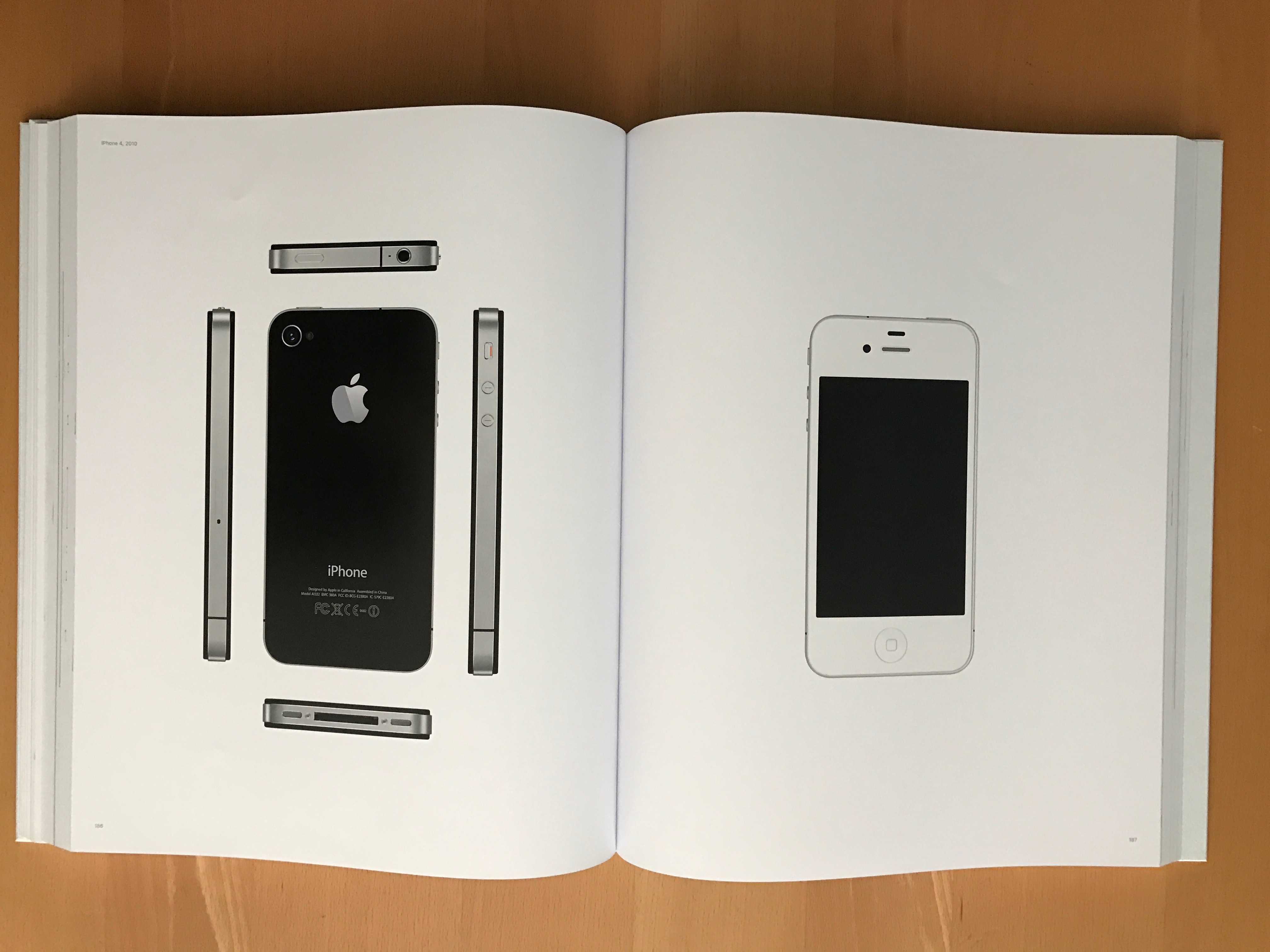
The photos were shot by photographer Andrew Zuckerman, who has collaborated with the design team before. The photos are shot in Zuckerman’s signature style — high-contrast images with stark-white backgrounds.
Zuckerman and the design team didn’t have all the products on hand, so they had to go out and buy some vintage Apple gear for the shoot, according to this interview in Wallpaper. The first image in the book is of five multicolored iMacs arranged in a circle, recreating an early ad for the machines. They couldn’t use the original photo — it wasn’t up to scratch.
The book is light on details. There’s a short introduction by Ive at the front, followed by 300 pages of nothing but photos.
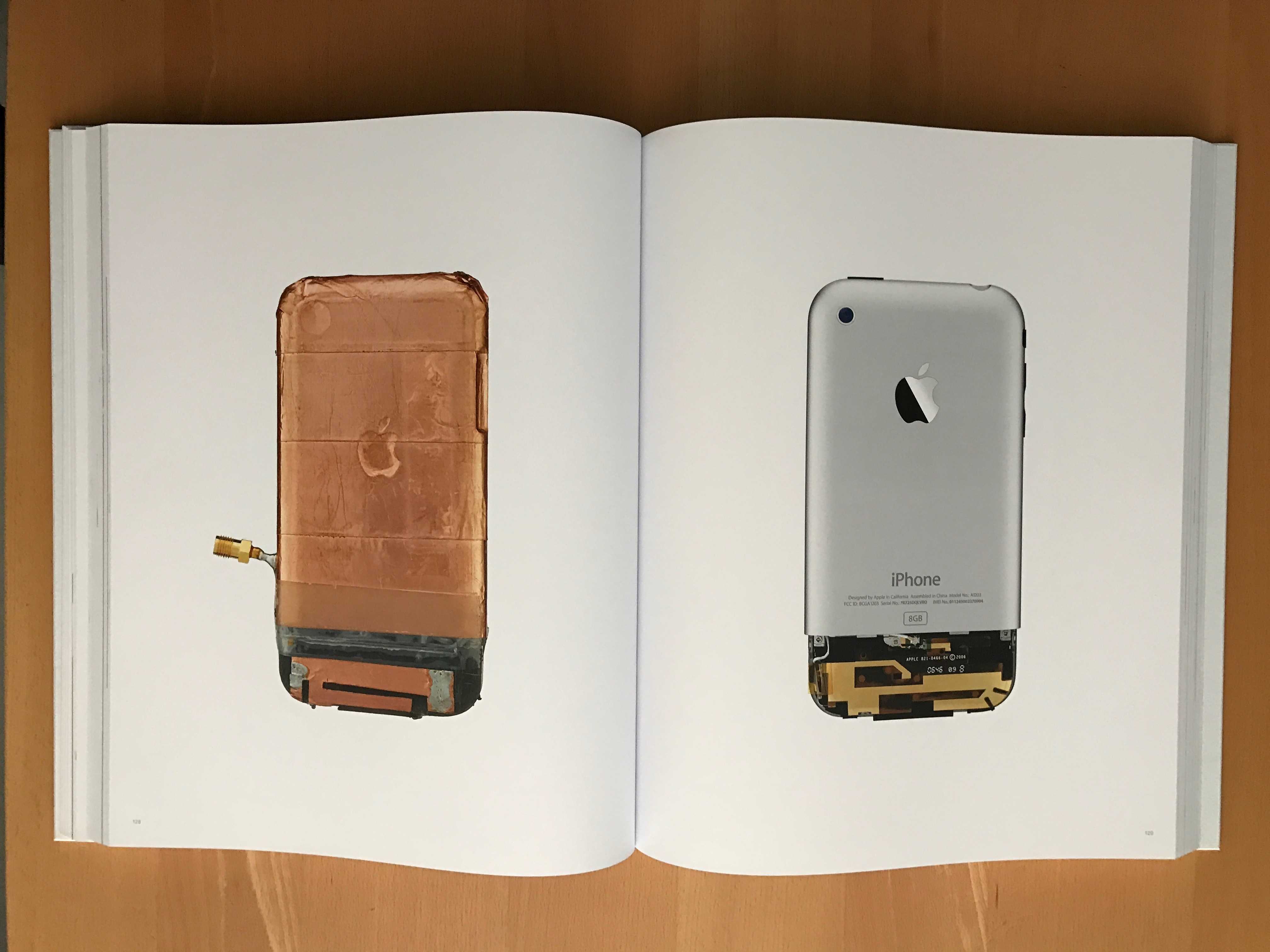
At the back you’ll find a booklet that partially details what’s seen in the pictures. The notes tend to be short and technical. Some are borderline inscrutable. Here’s one:
iPhone, 2007, p.126
The spline on the 5052 aluminum alloy housing for every iPhone was custom fit to the unique shape of each 304 stainless steel bezel.
This brevity is the book’s biggest disappointment. It’s sometimes unclear what you are looking at, especially the images of the tools or production processes that are sprinkled throughout. Pictures of polishing wheels, molds and drill bits look fascinating, but their role in the products’ manufacturing remains unclear.

Sadly, the notes provide little context or explanation.
There’s no narrative, no explanation of problems encountered or solutions discovered. I’d love to know why the designers picked one design over another; why they chose a particular finish or material; how a product went through a series of iterations until Apple settled on its final form.
There’s nothing about the team’s philosophy or workflow — the constant brainstorming, sketching and prototyping.
In this sense, Designed by Apple in California is the opposite of the last design book I’ve collaborated on, Paul Kunkel’s Appledesign. That book contained several hundred pages of dense text, with a few pictures in a middle insert.
Kunkel’s book details the previous era of Apple design, from the late 1980s to the late 1990s before Steve Jobs returned. Ive makes an appearance toward the end of Appledesign, which details his work on the Apple Newton (a product Jobs discontinued) and the 20th Anniversary Mac. Kunkel’s book is a tough read. It’s dense and detailed with little narrative flow. The new book has the same problem, even though it’s all pictures and no words.

Dedicated to Steve Jobs
Designed by Apple in California is dedicated to the memory of Steve Jobs. The book is a catalog of the products developed under Jobs’ rule, starting with 1998’s iMac. (The iMac was the first product in Jobs’ turnaround plan, and the first radically new design-driven machine).
The dedication is driving some people up the wall, too. Jobs was famously unsentimental. He often said Apple focused on the future and never looked back.
This was certainly part of his unsentimental personality. Jobs wasn’t nostalgic at all. He ruthlessly killed underperforming products and set Apple on an aggressive path to “cannibalize” its own products before competitors could do so.
Critics say that Jobs would never countenance such a book. And in doing so, Apple is looking backwards. Bu it’s because of Jobs that this book exists.
Hit products, but no recognition
Woking with Jobs, Ive’s team developed an amazing string of hit products: iMac, iPod, PowerMac Cube, titanium PowerBooks, iPhone, iPad and so on.
During this time, the design team got little or no recognition. It received design awards, including prestigious black pencils from the D&AD, which named Apple’s crew the best design team of the last 50 years.
Ive was permitted to appear in product videos, talking about design with a white background, but his team got scant recognition.
This is important because no single individual at Apple is responsible for any one product or innovation. All design decisions are worked out by the entire team. Ive led the team and signed off on the big design decisions, but the products are truly a team effort.
Apple’s designers gave no interviews during that time and didn’t attend any conferences.
Meanwhile, Jobs hogged the spotlight, getting all the praise and credit. The public perception is that Jobs dreamed up Apple’s products from whole cloth. In reality, many of them sprang directly from the creative minds in Apple’s design studio.
Books like Walter Isaacson’s Steve Jobs biography only made things worse. It perpetuated the myth that Jobs alone was responsible for Apple’s success. It didn’t detail how he worked or who he worked with. Or, more importantly, who did what inside Apple.
The situation chafes a lot of Apple staffers.
They feel like they made important contributions to historic products, but nobody knows about their efforts. Their work is entirely anonymous. There’s no public recognition, and they are forbidden from talking, thanks to to Apple’s strict secrecy policies.
Designed by Apple in California sets the record straight, at least a little bit.
“We started the project about eight years ago, with the feeling that we had a responsibility to try and create an archive of what we’ve done,” Ive told Dazed. “Honestly, it felt more of an obligation than something that we felt really compelled to do.”
Apple’s wall of secrecy has been crumbling in recent years due to a slow thawing of relations with the media. For instance, The New Yorker profiled Ive in a 14,000-word piece that pulled back the curtain a bit.
Still, I know Ive is tightly constrained in what he can say. Apple views its processes as industrial secrets that provide a competitive advantage. The company closely guards those secrets.
That’s why Ive often talks in maddening generalities that sound like platitudes and designer cliches. He is forbidden from being more specific.
[contextly_auto_sidebar]
Designed by Apple in California is very much in that vein. It reclaims a small portion of credit for the design team — the designers’ names are listed in the back (a rarity outside of obscure patent filings) — without being too specific about the company’s secrets.
The result is frustrating because there’s a ton left unsaid. There’s a lot left to learn.
But I think it’s fair that a team that worked so hard and so successfully is now getting a little bit of ownership over its hard work. Members of Apple’s industrial design team deserve to be better known. This book is a small push against Apple’s strict secrecy policies, which rob staffers of the credit they deserve.
Should you buy Designed by Apple in California? Sure, if you can afford the Apple-esque $300 price tag. I would rather it cost $30 and came crammed with interviews of Apple designers, but it doesn’t. It could be worse. Apple designer Marc Newson’s book Works costs a cool $6,000.

Leander Kahney is the editor and publisher of Cult of Mac. Leander is a longtime technology reporter and the author of six acclaimed books about Apple, including two New York Times bestsellers: Jony Ive: The Genius Behind Apple’s Greatest Products and Inside Steve’s Brain, a biography of Steve Jobs.
Leander has written for Wired magazine, Scientific American, The Guardian, The Observer, The San Francisco Chronicle, MacWeek and many other publications.

18 responses to “Jony Ive’s design book is much more than an ego trip”
Yep, its more than an ego trip. Its also a shameless money grab too.
It’s only a “grab” if you grab it. Otherwise, it just sits on the shelf. No harm, no foul.
“Hell if I wanted to see old Apple crap all I have to do is look around my office, $300 I would’ve never spent anyways, saved.” —tweet by Paul Haddad
I’ve never heard of “long-time Mac and iOS developer Paul Haddad”, but I hope he writes code better than tweets. “Anyways?”
What critics of this compendium of Ive’s work seem to be missing is that no one is •forced• to buy it. Unless the upcoming administration passes a law that compels the rest of us to purchase products (and nothing is out of the realm of possibility now), I think it’s safe to simply pass right by the book without even a glance. Personally, I wouldn’t mind having a copy.
It’s not hard to click the link to the tweet and find out Paul Haddad is one of the guys at Tapbots, makers of Tweetbot. Most users think it’s pretty good code.
I don’t think critics are upset that they have to buy the book. I think they’re upset that the Mac Pro hasn’t been updated in forever and they’re wasting their time on vanity projects no one wants that cost more than most people want to pay.
Not a Twitter user here, so I couldn’t care less. No judgement intended. Still, the use of the word “anyways” always raises my eyebrow, especially from a writer, whether of prose or code.
However, I rather doubt a Mac Pro refresh has been delayed by anything having to do with this book. Marketing propaganda aside (special paper, gilded edges, etc.), it’s just a book. I suspect a couple of young graphic designers in a small office somewhere deep in Apple are responsible for this tome, with an occasional visit from Jony Ive. They’re probably as unrelated to a hardware design team as anyone could be. I know a lot of people who use Mac Pros, and not one of them complains about its performance or pines for a new issue.
Pffff! This is pathetic. These blood suckers could had just made the photos in order to create an (beautiful) IG account ! Nope they need to make money as much as they can.
I’m surprised no one mentioned that Apple products book we got a couple of years ago from a different company i forgot its name.
It was very similar to this book, any idea what’s the difference between them?
That’s sort of like asking what’s the difference between this smartphone we got using Android OS and the one made by Apple. . . and you asking “any idea what’s the difference between them?” One is the real thing, the other is a knock off copy of the real thing.
Hey!
That’s not the best comparison! That book we had a couple of years ago looks very similar to that one and actually had better packaging etc
It should be great to get an idea what are the differences between them…Apparently, not so many ppl know that book existed.
yeah that is patently a wank job.
If it wanted to go full bleed on images, include descriptive text on the preceding or following page. Yet another example of how Ive values form over function.
Increasingly a lot of us computer users, developers and engineers feel powerless against the type of garbage that Apple and Microsoft are foisting upon us. I’d like to imagine there would be a backlash, but reading the fanboy comments on most sites, it seems many people are happy to consume whatever is handed them without much consideration of it’s utility.
Another decent Apple design book is: Apple Design – 2011, by Friedrich von Borries
this billion dollar company really needs some extra money, I guess.
Uh, Apple hasn’t been a “billion dollar company” since about 1978. . . try $587 Billion dollar company. One reason it is a $587 billion company is that it ALWAYS looks for “some extra money.” That’s what a business is supposed to do.
not true, the should try to make products that are worthwhile. no company wants to make cheap, lackluster, or pointless things as it will diminish their reputation and/or quality.
I am horrified at how you handled that book and the unwrapping. You showed no appreciation for the letter from Jony, and you paged it from the centrer of the pages instead of the edged. Then you went and tossed the wrapping on the floor!!!
One day soon that book will be hundreds of dollars in value and not long agter it will be thousands. Its a limited product amd its a collectors item. Anyone foolish enough to put it on a coffee table obviously does not understand the history in the making..
People just dont get it, only when an iPhone 1 sells for more than $20 000 only then people can start to appreciate Apple as a superior company when manufacturing designer products instead of plastic junk.
Wow… that’s some serious fanboyism there. Need a cigarette now?
“Books like Walter Isaacson’s Steve Jobs biography only made things worse. It perpetuated the myth that Jobs alone was responsible for Apple’s success. It didn’t detail how he worked or who he worked with. Or, more importantly, who did what inside Apple.”!!!!!
Thats amazing!! We all know when jobs came back to apple again, the company was not in proper situation so he built it again.
If We eliminate Jobs from apple’s history then we can see that there is no apple company. Because he is main founder of apple!!!
After about 6 years from Jobs death, apple just can vary the dimensions in its devices. No any remarkable innovations. So why?
Because Jobs has no replacement yet.
Kind of funny that a book that helps give credit to all the people involved in design should be dedicated to the man who made sure they didn’t get credit while he was alive. That and, of course, the fact that Jobs would never have allowed such a self-congratulatory retrospective.
This book is dedicated to Jobs the way the guillotine blade was dedicated to the neck of Louis XIV.