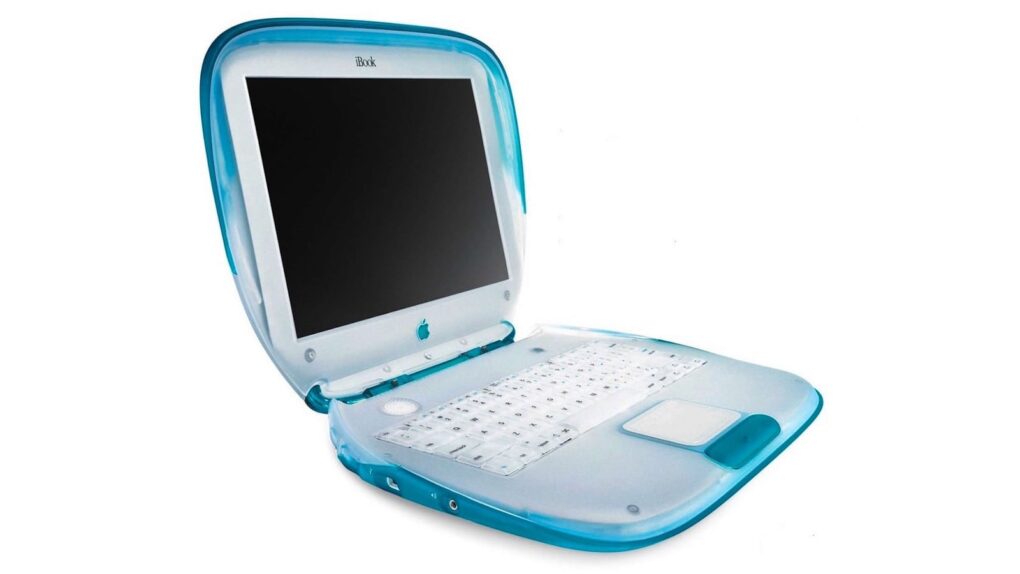
 July 21, 1999: The iBook, Apple’s colorful clamshell laptop that’s a hybrid of the iMac and the PowerBook, arrives and launches a Wi-Fi revolution.
Apple’s new AirPort networking card is the key component that delivers cable-free internet access to the masses for the first time.
Apple iBook brings Wi-Fi to the laptop party
The iBook’s candy-colored clamshell was more than a quirky late-’90s design. It helped turn Wi‑Fi from an office-network curiosity into a consumer expectation. By injecting its AirPort tech into a cute laptop built for ordinary people, Apple made cutting the cable feel natural and fun — a pivotal move in the long march toward the permanently connected devices that now fill our lives.
Visually, the iBook resembled a continuation of Apple design chief Jony Ive‘s “lickable” aesthetic of the colorful iMac, which launched a year earlier. The iMac G3 came in a range of bright, translucent colors, with a curvy design and a rubberized texture that made people want to reach out and touch it.
In the same way that the original iMac appeared slightly gelatinous and biological, the iBook drew inspiration from nature with a “clamshell” design that resembled an undersea creature.
Apple initially released the iBook in blueberry and tangerine colors. Later, it added indigo, graphite and key lime (a bright green color available exclusively from the Apple Online Store).
A clamshell design and a wide range of colors
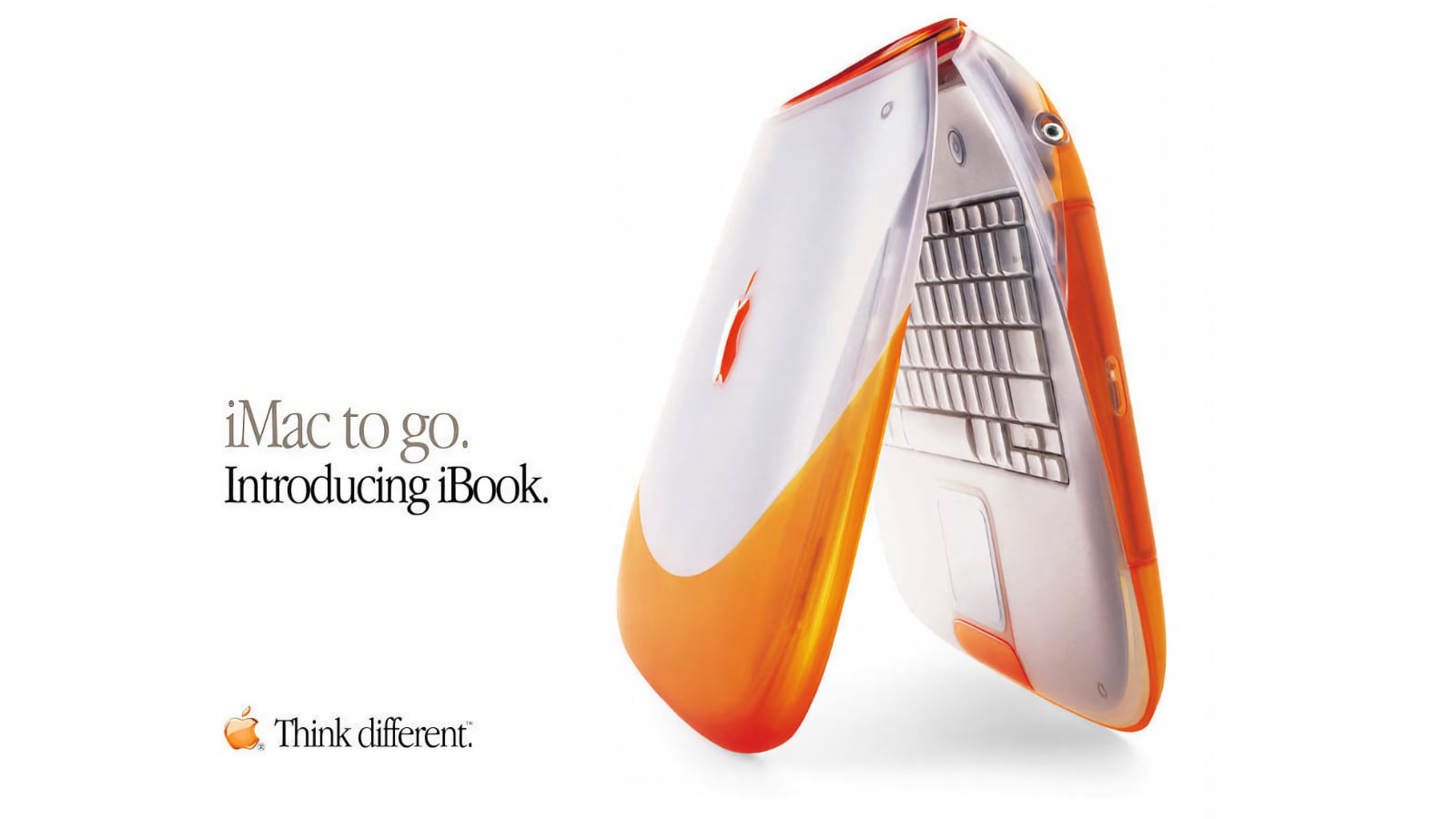
Image: Apple
Apple cemented the iMac comparison with advertisements that called the iBook an “iMac to go.” Like the iMac, the iBook boasted a PowerPC G3 CPU, an optical drive and standard USB, Ethernet and modem ports.
Also like the iMac, it ditched the floppy drive. To take advantage of the new AirPort card, the iBook included a custom internal slot and built-in antennas. In addition, it was Apple’s first Mac to use the company’s Unified Logic Board Architecture, which compressed the machine’s core features into two chips, alongside AGP and Ultra DMA support.
The iBook boasted the then-novel touch of a latchless lid that “woke up” the laptop when opened. Although this conceit is used by virtually every laptop maker today, it was new at the time. And, like the best Apple innovations, it offered a subtle reminder that the iBook was easy to use for novices.
iBook becomes a hit for Apple
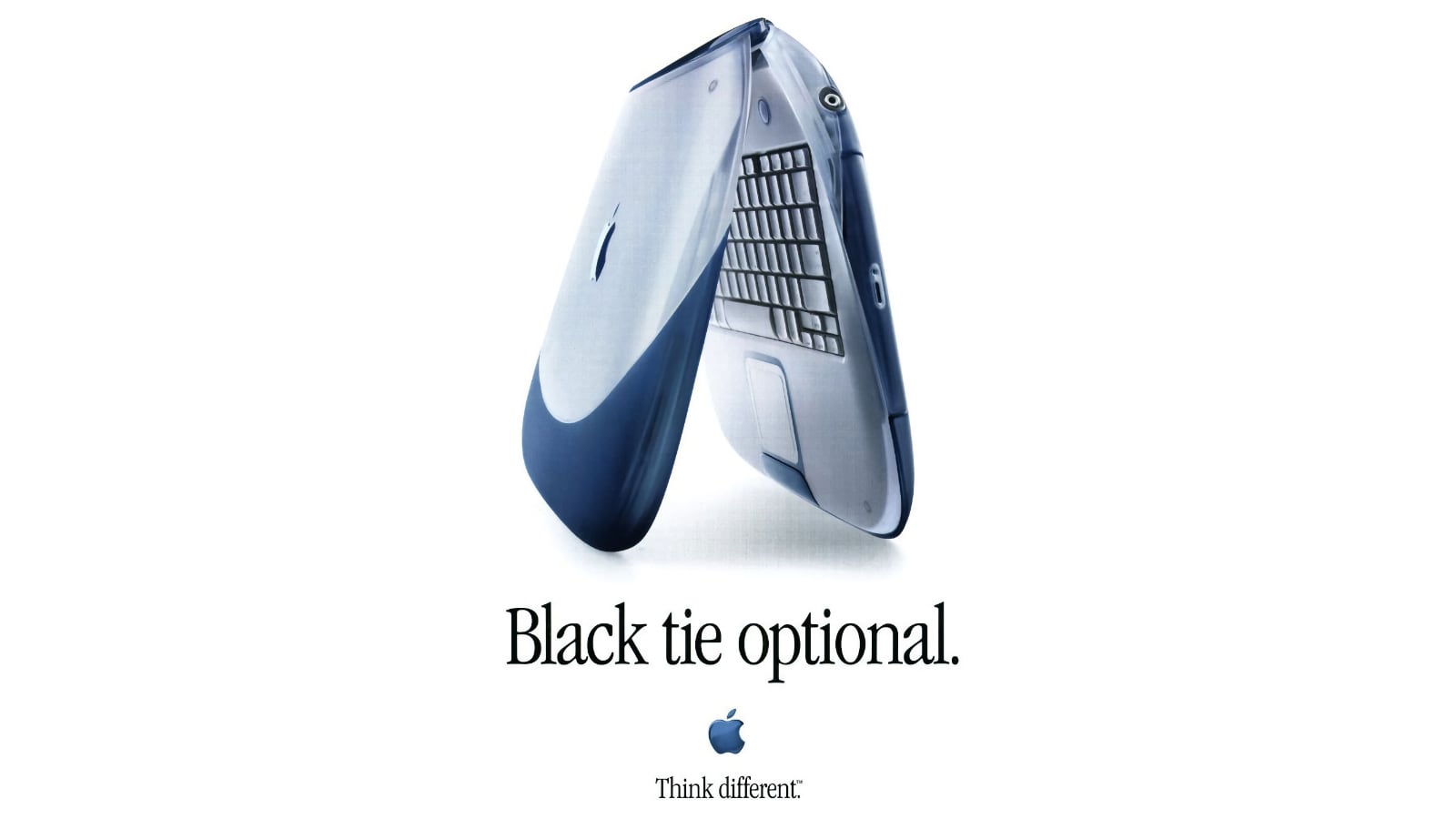
Image: Apple
The $1,599 iBook became an immediate hit with consumers. Apple’s laptop line had been a mess for much of the 1990s, with Performa, Quadra, LC, Power Macintosh and PowerBook models offering a bewildering number of options for new customers.
The iBook changed all that. Its fun aesthetic and affordable pricing made it instantly clear who Apple built the machine for. The laptop became a smash with consumers, and many retailers took preorders ahead of its launch.
The colorful clamshell design (dubbed “Barbie’s toilet seat” by some critics at the time) was superseded by the more serious-looking white polycarbonate iBook in 2001.
However, the colorful version that launched on this day in 1999 marked an important step in Apple’s development. The laptop’s fun design served as great marketing for Cupertino. And its whimsical look made Apple — still thought of as a niche computer company at the time — look welcoming and friendly.
iBook’s AirPort card fueled the Wi-Fi revolution
The iBook’s focus on Wi-Fi — thanks to Apple’s AirPort card — showcased the company’s ability to innovate technologically. But it also helped usher in the kind of connectivity that would make services like iTunes such a success in the decade that followed.
It didn’t hurt anything that Apple exec Phil Schiller took a death-defying 20-foot leap — live onstage during the iBook’s unveiling — to demonstrate the power of wireless networking.
- See also: 10 reasons why I’ll miss Phil Schiller
Did you own a 1999-era iBook? What was the first Apple laptop you owned? Leave your comments and reminiscences below.

Luke Dormehl is a U.K.-based journalist and author, with a background working in documentary film for Channel 4 and the BBC. He is the author of The Apple Revolution and The Formula: How Algorithms Solve All Our Problems … and Create More, both published by Penguin/Random House. His tech writing has also appeared in Wired, Fast Company, Techmeme and other publications.

5 responses to “Today in Apple history: iBook ushers in a Wi-Fi revolution”
Thank you, what a lovely article, now I want some sweets! :-P
I’d love to see Apple release a special edition laptop with a similar design aesthetic. I getting a bit bored with all this aluminium.
It may have been a smash in the US but I remember seeing it on the shelves in Tottenham Court Road in London, where there are wall-to-wall computer shops, and not finding it so attractive. Interesting design, but too much plastic, slow OS, running OS8 (or OS9, who knows or cares?) on IBM chips, hence very limited software compatibility and high cost to switch to from MS apps. With a wide variety of other laptop offerings from Toshiba, Asus, Acer, IBM, HP, Compaq, even Samsung started their line off around that time. All these at attractive price points with a selection of screen sizes and so forth showed the Apple offering was highly priced and unless one wanted to simply stand out from the crowd and had money to burn, better off being left on the shelf for the next gullible monkey.
I remember my girlfriend had one. It had a lovely feel with it on your lap: so much more comfortable than my machine at the time (I think it was a 5300?) Rugged as hell, too, unlike my Powerbook. Built for travel. Didn’t the power connector light up when you plugged it in?
I’ve only ever own the 2015 13′ MacBook Air I’m using now. I have seen a lot of old Macs in the Apple Museum in Prague. I was really surprised that the iBook Clamshell was bigger than I thought after seeing it on the internet. But you simply can’t deny that it’s gorgeous! I would love to own an iBook Clamshell with modern internals and screen. That would truly be a dream!