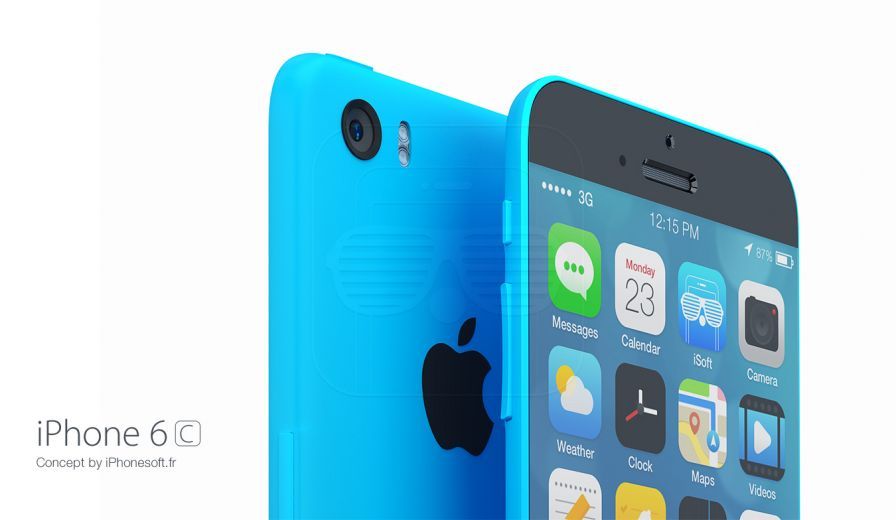
The much-rumored iPhone 6c won’t be enough to let Apple compete for marketshare with super-low-cost Android smartphone makers, claims analyst group IDC — a.k.a. commentators who appear to have totally misunderstood Apple’s entire business model.
“Even if Apple were to introduce another low-cost iPhone (e.g. ‘C’ version), IDC believes the price will struggle to compete with Android OEMs that are focused on portfolios aimed at price points of $200 and less,” the group said in a report.
While it is true that Apple will likely always struggle to compete with low-cost handset makers, it is misleading to characterize this as Apple’s strategy. The iPhone 5c demonstrated that Apple had no plans to make a low-cost iPhone, and I can’t see that changing with the iPhone 6c and its rumors of Touch ID, Apple Pay and a sleek metal form factor — none of which the 5c had.
Apple disastrously chased marketshare with its Macs during the late 1990s (which you may know as the period in which Apple wound up being days from bankruptcy), and has never seriously pursued this with its iPhones. The profit margins on low-end phones is negligible, their customers don’t buy apps, and they almost certainly won’t be sucked into the Apple ecosystem due to the higher cost of entry.
If Apple makes an iPhone 6c, it makes far more sense for it to be a premium device with a 4-inch display, rather than a handset which forces customers who want a 4-inch phone to settle for something less-than-premium.
If it can be an entry level phone for hooking younger customers, a la the iPod touch, then all the better — but anyone expecting a $150 iPhone will be sorely disappointed.
IDC’s other reported figures are interesting, however. According to the firm, iOS shipments are likely to grow from 192.7 million in 2014 to 269.6 million in 2019.
Provided those figures are any more accurate than IDC’s view of Apple’s business model, that is.
Source: The Inquirer

Luke Dormehl is a U.K.-based journalist and author, with a background working in documentary film for Channel 4 and the BBC. He is the author of The Apple Revolution and The Formula: How Algorithms Solve All Our Problems … and Create More, both published by Penguin/Random House. His tech writing has also appeared in Wired, Fast Company, Techmeme and other publications.

5 responses to “Pessimistic analysts miss the point of iPhone 6c”
But when the 5C was introduced the high end 5S had the same sized screen. If the 6C is not entry level but for people who want a 4″ screen, what was the 5C all about? I think it really is ment to be an entry level phone but fails pretty badly. The reason it failed as an entry level phone was because you could still pick up the more premium iPhone 5 for less money. It had the same internals as the 5C but a more premium metal body. Now that we have the larger phones the C designation phones make sense, but on launch the 5C was pointless.
It was just during the transition from 32 Bit to 64 Bit and the 5C was only 32 Bit and I think that’s what hurt the sales. I don’t think the color options were that great and that kind of hurt sales as well. I think a “C” version of the 6/6+ would be fine as long as they have decent color choices. They also make them a little thicker which they can add a slightly larger battery for longer battery life.
But the real point of the 5c was never to get a toe hold into the entry level, it was to to direct status conscious bargain hunters toward the 5s instead of the identical in appearance 5 by removing the previous year model from the entry level point (as had always been the tradition with s year models) and replacing it with a version that would more easily be identified to anyone that looked at it as the “budget” iPhone. To me that always made more sense than the trying to compete in the low-end sector for all the reasons stated in this article.
Now that there’s an actual differentiating point in screen size, there’s no real reason for them to stuff the “” entry level phone full of outdated tech or cheaper case material. Consumers can pick the model they want without shame and Apple can fill it’s three price tiers without having to worry so much about backward compatibility when upgrading the OS. Every iPhone Apple sells in a given year will be the “new” iPhone with case changes coming on the same two year cycle, with eBay available for those who want to save beyond that. This will also allow them to stay competitive now that the cell phone market is changing from the two-year contract subsidized model to one that allows greater flexibility about when to upgrade.
They’ll probably make less profit on the C, IF that’s what they actually plan to call it, than either of the larger models, since they’ll be using the the same premium materials and the difference in raw goods between a 4″ and 4.7″ screen can’t be anywhere close to $100, but longer battery life and larger screen is reason enough for most people to prefer the 4.7″
What a “C” version would do is allow Apple to make decent margin because it’s a less expensive case. Also, with the “C” version, it would also be a little thicker allowing for a slightly larger battery, which would yield longer battery times. I think it’s a good idea, plus, it separates the “flagship” model from the lower priced models. The reason why it didn’t work as well with the 5C was because the 5C was still a 32 Bit model, that’s why I don’t think the 5C sold as well since it was right during their transition from 32 Bit to 64 Bit. Since the 6C or the 6C+ would be 64 Bit, I don’t think they would have as big of a problem selling. Here’s what I think would increase sales.
Right, but this article and most of the rumors so far have indicated that it wouldn’t be a less expensive case. I’m pretty happy with my 6, but I will admit to missing the clean styling and easy pocketability of my 4. I have no intention of upgrading, but if they came out with a 4″ model that didn’t have the ugly antenna lines (that Steve never would have signed off on) and slab sides so I could go back to being caseless without dropping but was otherwise the same, I’d reconsider.
This is why I think it’s a smart strategy for , regardless of the slight dent in their margins. They’ve made big gains in share because they kept the emphasis on perceived quality and desirability instead of fighting for share at the bottom end.