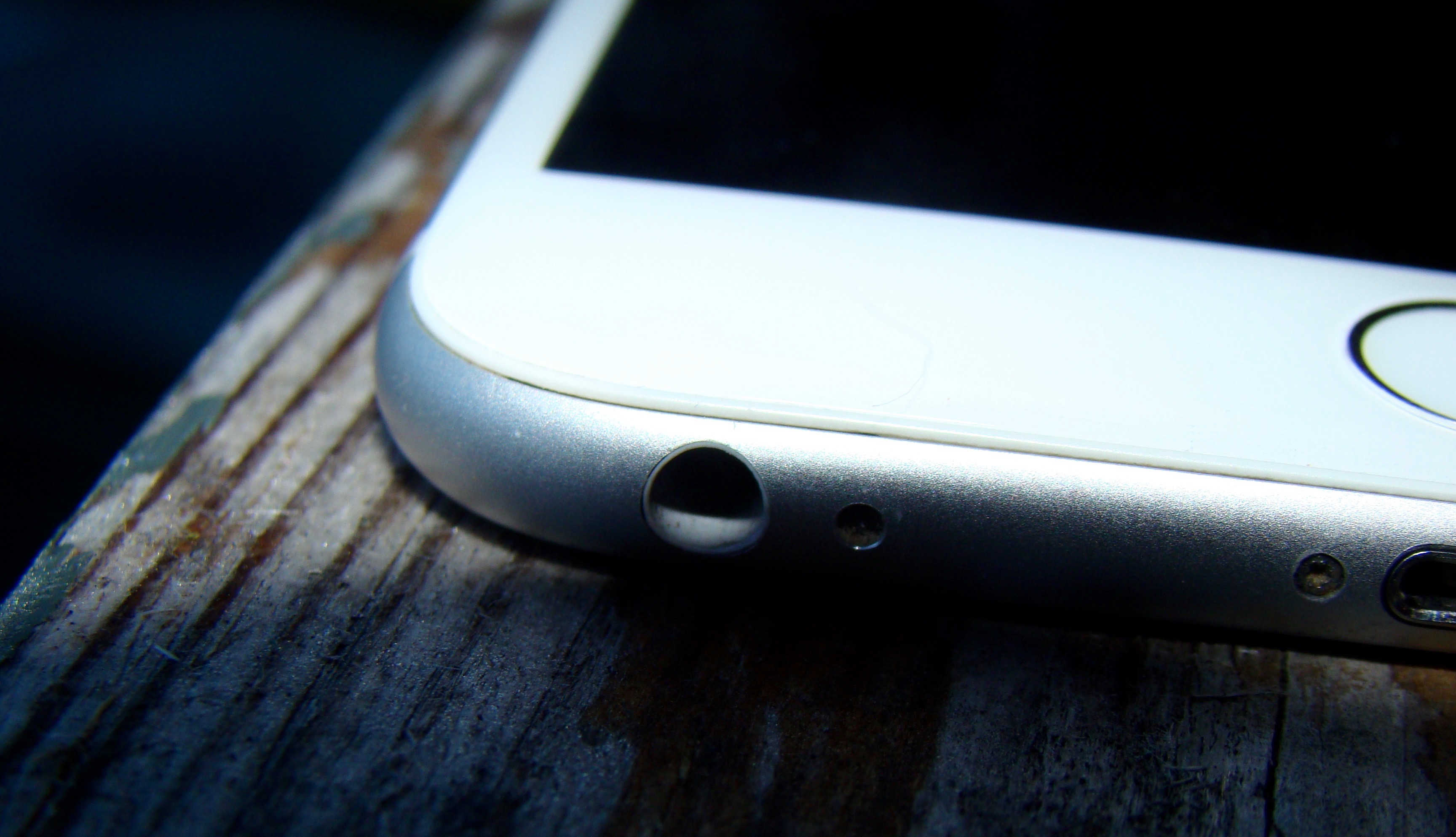
A few people were surprised to see a 3.5mm headphone jack appear on Apple’s new MacBook Pro laptop, just weeks after the company very publicly discarded the port for its new iPhone 7.
But according to Phil Schiller, speaking in a new interview, it’s not an example of inconsistency on Apple’s part. Instead, it speaks to a much deeper philosophical question on Apple’s part about the difference between mobile and non-mobile devices.
[contextly_auto_sidebar]
“Not at all,” Schiller said when asked about Apple is being inconsistent in using the headphone jack on some devices and not on others. “These are pro machines. If it was just about headphones then it doesn’t need to be there, we believe that wireless is a great solution for headphones. But many users have setups with studio monitors, amps, and other pro audio gear that do not have wireless solutions and need the 3.5mm jack.”
Elsewhere in the interview, Schiller talks about Apple’s reluctance (or, well, refusal) to combine iOS and macOS, along the lines that other companies are doing with their desktop and mobile operating systems. This certainly isn’t the first time that Schiller has said that, but he digs somewhat deeper into Apple’s thought process.
Take for example the following quote in which Schiller gives a real world use case of why Macs and iOS devices are “fundamentally two different products.”
“Here’s one example of how they should remain distinct: the Mac from the very first has had a menu bar fixed at the top. It’s core to the identity and the experience you get. But iOS doesn’t have a menu at the top. It never will. The thought of pointing at a menu at the top of an iPhone feels wrong. If you made the Mac a touchscreen you’d have to figure out how to make it a good experience with your finger on a touchscreen. Trust me, we’ve looked at that — it’s a bad experience. It’s not as good or as intuitive as with a mouse and trackpad.”
It’s just one quote in an interesting — and wide-ranging — interview that also describes the arrival of Siri on macOS and more. Check out the full interview for the UK’s Independent newspaper here.
Do you think the headphone jack will remain a part of the MacBook for the years to come? Do you want it to? Leave your comments below.

Luke Dormehl is a U.K.-based journalist and author, with a background working in documentary film for Channel 4 and the BBC. He is the author of The Apple Revolution and The Formula: How Algorithms Solve All Our Problems … and Create More, both published by Penguin/Random House. His tech writing has also appeared in Wired, Fast Company, Techmeme and other publications.


13 responses to “Why the MacBook Pro headphone jack didn’t disappear”
Wait! I thought that headphone jack was old, legacy, outdated, inferior, analog audio. What are _professionals_ using it for? To light cigarettes? Obviously, it can’t be for audio. Digital and lightning is the future! Oh, wait. Wireless is the future! Hmmm. I can’t remember. Which is the future?
Joe
you missed the point, numb nuts. the iPhone isn’t a “pro” device – he said the MacBook Pro is a Pro device, which people have hooked up to audio equipment. the iPhone isn’t meant to be a studio in your pocket, it’s a consumer device.
So, numb nuts, sr., you’re saying that pros don’t want the best audio quality one can get and aren’t interested in the digital future even as they make content for consumer devices. then why do I need that lightning port for superior audio if even the pros don’t use something comparable or care?
I got the point. Apple wants us to focus on spin and not facts. What was “courageous” is now amazingly something to avoid.
Joe
I think he is saying you should read the article. Your definition of a pro and Apple’s definition of a pro differs.
Like any product you first define a persona on who will use the product, then you build it with that persona in mind. If that persona is different to you, it means you aren’t the target market and the product won’t work for you.
We are talking about the exact same “pro”. I’ll help you out and pull a quote:
“But many users have setups with studio monitors, amps, and other pro audio gear that do not have wireless solutions and need the 3.5mm jack.”
In reality, someone with with studio monitors, amps, and pro audio gear is not using the mini-jack, except maybe for headphones to see how the audio sounds over headphones connected to a computer’s mini-jack. I work in that environment as a living.
Apple is trying to talk out of both sides of their mouth. This is pure spin.
Don’t get me wrong. I am glad the kept the mini-jack, especially if they kept the digital connection inside it.
And I am glad they surveyed Macbook Pro users ahead of time. No doubt they are gun shy with pro users after the FCX fiasco that did not need to be, even as that was actually addressing many of the complaint pros had.
Joe
Also, the headphone jack on the mac has, since 2005, been a Mini TOSLink jack as well, capable of optical input and output. that’s a feature pro’s might want to keep. I’m sure it’ll go away eventually, though. the iPhone’s headset jack was just another way to ruin a phone with a few drops of water, and better audio quality can be achieved with a lightning adapter.
And again, the iPhone is not a pro device.
it is courageous to remove a headset jack and replace it with bluetooth or a lightning adapter in the consumer space, because consumers are used to 99 cent headphones that sound like rubbish, and will naturally balk at a more expensive offering even if it’s better for them. dont worry though, all the other manufacturers will do the same thing soon, because it’s hip to hate on apple and then copy them a year or two down the road.
I’m well aware of the TOSLink. I love the TOSLink. I have a MacMini as my “tv” with two HDHomeruns connected to it and my stereo. Pros aren’t using the TOSLink. I’ve tried to find professional solutions that used the TOSLink. they don’t exist.
It’s courageous in the consumer space because they know they can get away with it. Not so much in the pro space.
Joe
Meh, sadly its not like the new MBP is even truly a pro device anymore. More like a deluxe pricey MB. Max 16GB ram in 2016 is a joke.
Does anyone know if this 3.5mm jack still has optical capabilities? Maybe thats what pros are using (please don’t hate, I’m not in the music industry and don’t know whether optical audio is indeed better, widespread or anything)
I believe so
Everyone is failing to mention that Apple’s headphone jack doubles as an optical digital out – it’s an important interface that isn’t replaced by thunderbolt (at least not yet).
The jack on the new MBP doesn’t have optical digital out.
So is this the only connector that the ultraversatile allmighty USB-C port can’t donglelize?