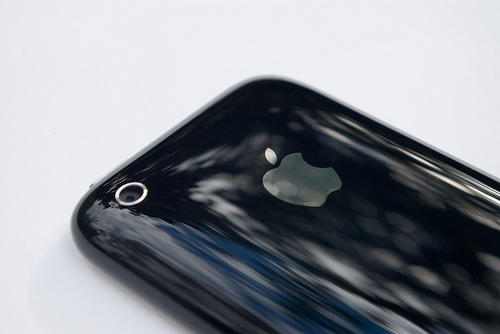
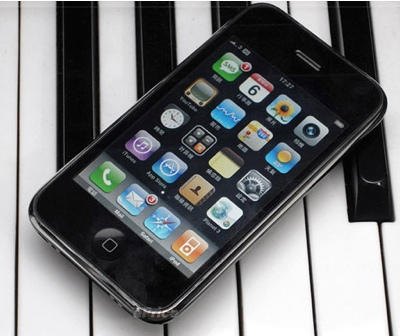
The iPhone 3GS. Creative Commons-licensed photo by Fr3d: http://www.flickr.com/photos/fr3d/2660915827/
Signs increasingly point to June as the timeframe Apple will announce its new iPhone. A Canadian mobile phone company announced Thursday it will receive Apple’s fourth-generation handset this summer. Wednesday, a report suggested the new iPhone would arrive around June 22, to coincide with the annual WWDC.
Along with news SaskTel’s one million users will have a 3G network up and running by July 1, President and CEO Robert Watson also said “The good news is that (Apple) is coming out with a new version of the iPhone in the June time-frame and they’re going to put us on that,” according to reports.
Steve Jobs’ busy fingers might be needing a rest right now. He has just responded to concerns that Mac OS X in on the backburner to the iPhone OS, which will get a major 4.0 upgrade later this year.
The iPhone 3GS. Creative Commons-licensed photo by Fr3d: http://www.flickr.com/photos/fr3d/2660915827/
Accompanying a report that Verizon may begin selling a new iPhone are rumors Apple is developing a new handset dubbed the iPhone HD. The new handset would be powered by the same A4 processor as the iPad and include a forward-facing camera suitable for teleconferencing.
Daring Fireball blogger John Gruber wrote Monday the handset would use the iPhone 4.0 software, permitting users to multitask applications. Gruber has dismissed a recent Wall Street Journal report suggesting the Cupertino, Calif. company is working on two new iPhones – one CDMA version for Verizon Wireless – as a “lame entry in the iPhone rumors game.”
Utter folly for a silicon company to rest on its laurels after the success of their last operating system, lest the competition pass you by. That goes doubly for Apple in the wake of Snow Leopard: although the latest version of OS X saw the highest upgrade rates yet for an Apple OS, 10.6 didn’t really add any new features into the mix, but was instead focused on tightening the engine bolts and preparing OS X for the future of multicore processors. That was an admirable, even revolutionary goal, but people are going to expect a lot more flash from 10.7.
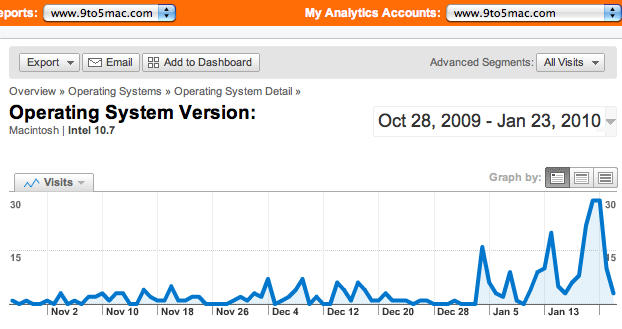
It’s not surprising, then, that new reports are circulating, indicating that OS X 10.7 has been under development at Cupertino for the last couple of months. The first comes by way of the change database of the open source launchd framework, which specifically references the text astring “11A47” and seems to be the build number for the next version of OS X.
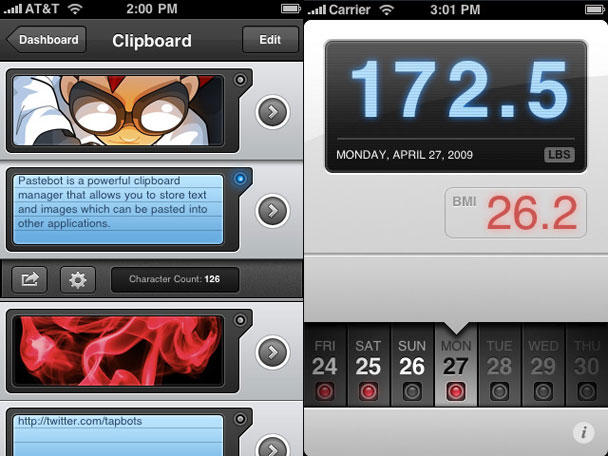
Left: Pastebot, the latest Tapbots app. Right: Weightbot.
Creating an iPhone app is one thing, but making something that stands out in an increasingly deep, expansive crowd is something else entirely. And yet Tapbots have managed just that. Describing their trio of apps as “robots for your iPhone and iPod touch,” Tapbots has managed to infuse the most utilitarian of concepts with genuine personality, and this is largely down to playful and innovative interfaces. We caught up with Paul Haddad (“the programmer”) and Mark Jardine (“the designer”) to find out more about how Tapbots was born, the thinking behind its apps, and what their newest creation, Pastebot, can do for your Apple device.
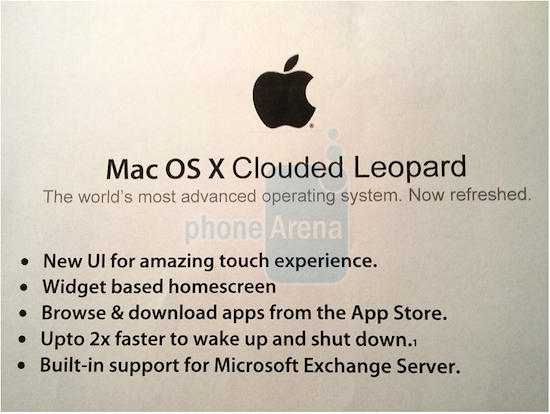
A laughably fake “iSlate development document” has been “leaked” to PhoneArena, possibly through a drainage shunt trephined through the cranium of some wishful thinking prankster.
The first clue that the document is phony is the fact that, two days later, Apple’s lawyers aren’t Q-tipping the gelatinous remains of PhoneArena’s site owners out from between their toes. But there’s other reasons to be skeptical.
First of all, the document claims that the Tablet will run OS X 10.7, codenamed “Clouded Leopard.” Ha, whatever. Not only is that name ridiculous, but we know that if the Apple Tablet is announced at the end of January that we can expect a launch by no later than June: Apple needs to give App Store developers time to tablet-ready their apps, but they can’t wait so long that the competition has time to catch up. More over, Snow Leopard was just released in August 2009, and the first developer build of its successor is rumored to be released at WWDC in June.
The bottom line: the tablet is going to come out well before the release of the next version of OS X. And it’s probably going to run something closer to the iPhone OS anyway, although I personally expect to see those operating systems as distinct entities begin to converge more drastically with the release of the Tablet.
Apple has a ridiculously good run over the past ten years. But in true Apple fashion, I’m not here to rest on the laurels of the past but to look into the future. So sit back, relax, and take a daring look all the way into the year 2010. Here are the five things that Apple must do to thrive in 2010.
This is likely just a traffic grab, but according to the Quick PWN blog reporting “inside sources”, Apple’s forthcoming tablet will indeed be called the iSlate, but it won’t be a tablet computer: it’ll be an eBook reader, and positioned to go head-to-head with the likes of the Kindle and Nook.
Apple may be preparing to sell up to 45 million iPhones in 2010, according to suppliers. The orders for an upgraded iPhone camera would double those expected for 2009. The news appears to coincide with other reports that Apple may introduce a new iPhone in mid-2010.
“OmniVision Technologies is expected to see CMOS image sensor orders for Apple’s iPhone devices grow to 40-45 million units in 2010,” according to industry sources cited by DigiTimes. The orders for a 5-megapixel sensor may be a response to Verizon’s Droid and Google’s Nexus One handsets which both have more sensitive cameras than the iPhone 3GS’ 3.2 megapixel camera. OmniVision supplied the iPhone 3GS 3.2 megapixel image sensor.