So, yeah, like clipping the white 30-pin docking cable to the bottom of my iPad and iPhone is SO difficult. You kids these days have it easy. Back when I got my first iPhone, the docking cable had little freakin’ buttons you had to press on the sides just to disconnect it. Man, those were the days.
Wait, where was I? Oh, yeah. Patents. One specific patent, in particular.
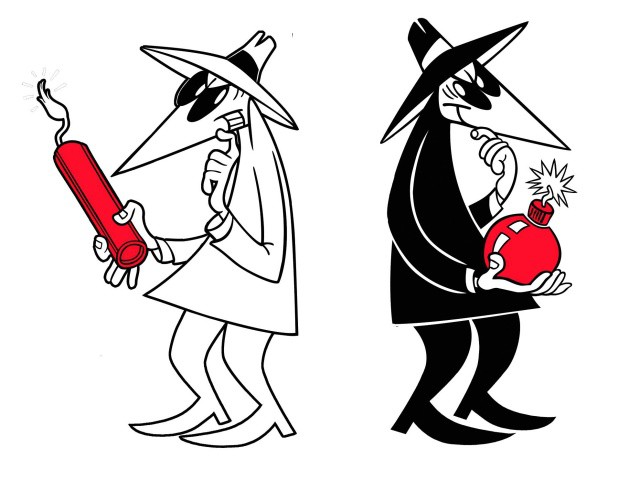
The CIA is gunning for Apple's security. Photo: Spy vs. Spy
You’ve heard the predictions. We’re quickly slouching toward a world in which your every move, every purchase, every act of “content consumption” will be meticulously and automatically monitored, tracked and captured. Algorithms will constantly profile you so advertisers can make their advertising specific to your location, preferences, personality, social group, income and education level and more.
Facebook’s future depends on this idea. This is one reason why Google launched Google+. This is why Microsoft launched Bing. This is why investors are bullish on location-based services like Foursquare. This is why Amazon.com created its own web browser.
Every major technology company, it seems, is scrambling to get into the user-data harvesting racket.
Everyone except Apple.
Why didn’t Apple buy Facebook or Twitter? Why didn’t Apple launch its own social network? What is Apple’s strategy for harvesting data about users?
I’ve been puzzled by these questions, and wondering out loud on this site exactly when and how Apple would reveal its strategy for competing on the personal-data collection battlefield.
But this week, something shocking happened that made me think: Maybe Apple isn’t going to get into the data-harvesting business at all. Maybe Apple is going to fight it!
Apple attorneys are surely enjoying the latest ruling in the patent case involving Google’s Motorola Mobility unit, which grants Apple the chance of making its case via an injunction. The judge’s order yesterday is one last chance for both parties to plead the case to continue to trial, a trial that was canceled by Judge Richard Posner last week, with the judge ruling that neither party could prove damages.
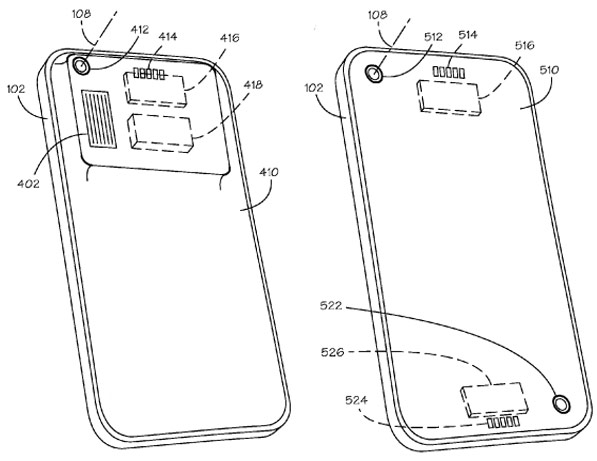
In yet another patent filing, it appears that Apple is, if nothing else, researching the idea of interchangeable camera lenses on the iPhone. While the chances of an idea like this actually making it to the iPhone are slim to none, it’s an interesting look into what goes on behind closed doors at Apple.
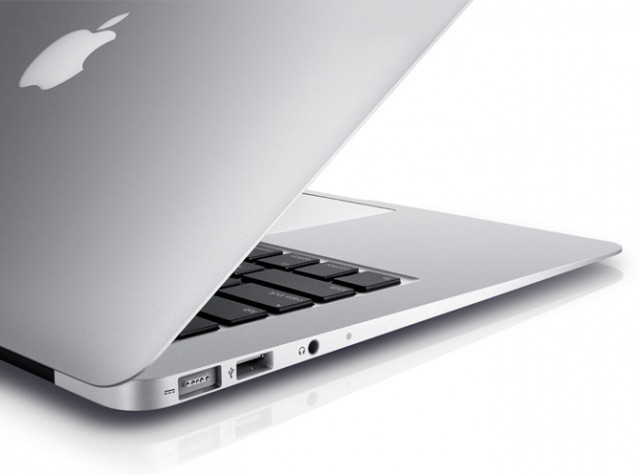
The MacBook Air quickly snatched away the title of world's thinnest notebook. Tapering down to an astonishing 0.16" in its first version, the MacBook Air remains one of the most beautiful devices Apple has ever created. Unlike most ultraportable laptops, it came with a full-sized keyboard, too.
Photo: Apple
The wedge design of the MacBook Air has been patented by Apple, meaning that the Cupertino company now owns the rights to “the distinctive wedge or teardrop profile” of the sexy notebook. Apple’s D296 patent means that the MacBook Air has solidified the tapered, wedge-like design for its class of computer.
Instead of focusing on concrete details, the new patent covers the general aesthetic of the MacBook Air’s design. Over the past year or so, dozens of laptops, dubbed “Ultrabooks,” have been copying the metallic look and feel of the Air. Could this new patent mean that Apple is setting its legal sights on Ultrabook competitors?
More people are recognizing Samsung because of its legal battles with Apple.
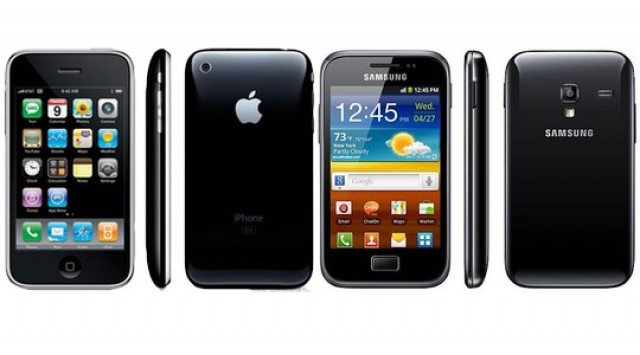
Apple and Samsung have long been battling over whether or not the latter copies the iPhone and iPad with its range of Galaxy devices, and there’s a chance it may not end well for Samsung. But right now, it’s only helping the Korean company’s business. According to one unnamed executive, the legal battle “is worth it” because it’s increasing its brand awareness.
At the D10 conference today Apple CEO Tim Cook talked about the many patent wars his company is involved in. Declaring that patents are a “pain in the ass,” Cook echoed Steve Jobs when he said, “We just want people to develop their own stuff and not rip us off.”
Cook compared patents to an artist drawing a painting. “We can’t take all of our energy, and all of our care, and finish the painting and have someone else put their name on it.” Apple doesn’t want to be the “developer for the world.”
Technicolor says there's not much difference between The Emerald City and Cupertino: both use their tech.
If you’ve ever seen an old color movie like The Wizard of Oz you’ve probably seen the “Filmed In Glorious Technicolor” crawl. In fact, for years, Technicolor was synonymous with seeing color on film and on your screens, and for good reasons: Technicolor was ingenious.
Despite the fact that no one had invented film stock that could actually capture color, the French company had figured out a way to make color movies by splitting the light being recorded with a prism into red, green and blue light, then recording those individual color spectrums onto separate strips of black-and-white film. Once these strips of film were colored and combined, the result was life-like color recorded on black-and-white film.
Pretty cool, huh? In the days of digital cinema, though, Technicolor has fallen on hard times. In fact, their entire company is unprofitable, with the exception of one department that keeps 220 staff on hand. It’s the patent licensing department, and their only job is to rip open new iPhones, iPads and Macs the second they come out and start looking for infringements.
Is the Rockstar Consortium Apple's secret weapon in the patent wars?
The Rockstar Consortium made headlines when the group won a bidding war for the patent portfolio of one-time communications giant Nortel. Aside from getting a green light for the purchase from the Department of Justice, Rockstar hasn’t really made headlines since it won the patents.
Rockstar may be keeping a low profile right now, but the company is well armed and will play a massive role in the mobile technology patent battles echoing around the world. In fact, the company may very well have been a secret weapon in Steve Jobs’ plan to “go thermonuclear” in Apple’s battle against Android.
These phones may not be sold in the U.S. if they don't make it past Customs.
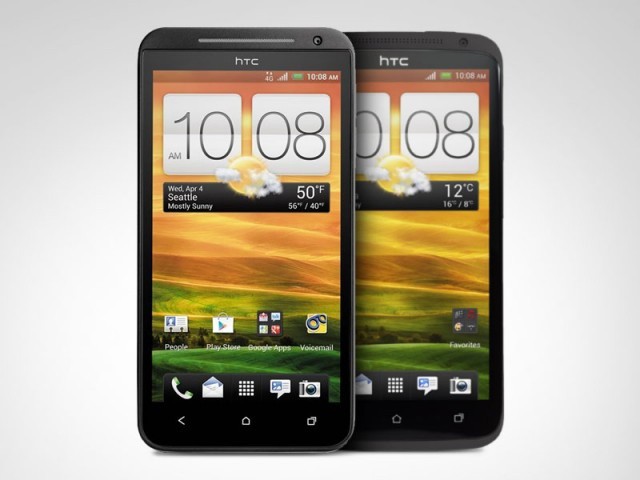
In December of 2011 the International Trade Commission (ITC) ruled in favor of Apple for placing a ban on the U.S. import of multiple HTC smartphones. It was the first major exclusion ban of its kind, and it all hinged on one Apple patent.
The HTC import ban went into effect on April 19, 2012, and the delay was meant to give HTC time to re-engineer around the infringing issues. HTC said it was going to have everything cleared and ready to go in time, but U.S. Customs has now halted the One X and Evo 4G LTE from crossing the border.