Mobile menu toggle

Search results for: patent

Snapture Wants to Give You Flash on Your iPhone

By

post-6373-image-912ef94965d73ab3743b6966cc5e4931-jpg

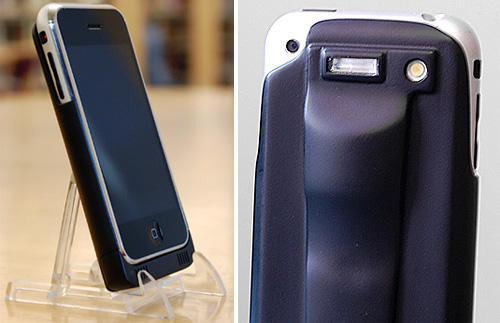
A promise to “unleash the true power of your iPhone” might not be the best marketing slogan for Snapture Flash, a xenon flash accessory with red-eye reduction for Apple’s mobile device. As snappy as it sounds, the slogan also calls attention to what is roundly regarded as the iPhone’s weakest attribute, its 2.1 megapixel, fixed focal length still camera.

The flash’s sleeve-like case is powered by the phone itself, which SnaptureLabs estimates will give you 1000 flashes on a single charge. As a bonus, the sleeve also provides amplification for the iPhone’s on-board speaker.

The downside here is that the flash is only a prototype and the accompanying Snapture camera software (which itself provides some interesting creative mods and controls for the iPhone’s camera), requires a jailbroken phone to avail yourself of its charms.

It will be interesting to see whether Snapture Labs can strike a deal to get it’s patent-pending flash technology to market before Apple comes out with a new version of the iPhone with some sort of flash built-in.

Via Engadget

Will You Bend Over for iBend?

By

post-5998-image-86e5a901d9ad090e2560c7b9f33f026a-jpg

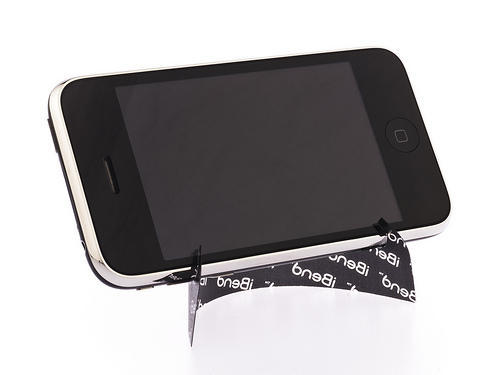
iBend marketing materials call it “the thinnest stand for the iPhone and iPod Touch.”

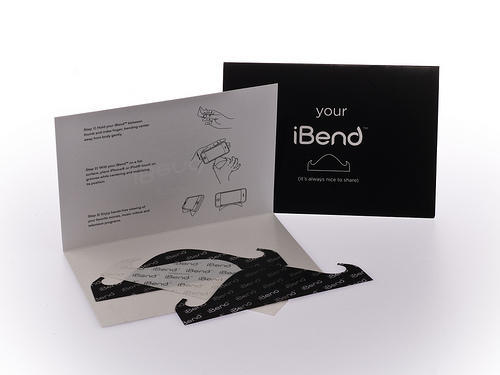
$5 gets you what appears to be two pieces of plastic or maybe laminated card stock (the website doesn’t say) cut in such a way they could be mistaken for “Snidely Whiplash”-style fake mustaches, but that, when “bent” just so, will hold your device in place on any flat surface so you can look at it (and the video or slideshow you’re watching on it) without having to hold it in your hand. The iBend is thin enough to fit in your wallet, pocket or purse.

iBend is patent-pending and manufactured in California.

What will they think of next?

Via Edible Apple

Holiday Gift Idea – GelaSkins

By

cult_logo_featured_image_missing_default1920x1080

For the discerning Apple fan on your list, or for yourself, GelaSkins may be just the thing to personalize and protect precious laptops, iPhones and iPods this holiday season. Made with a patented 3M adhesive, GelaSkins are easy to apply and leave no residue behind when you change or remove them. The adhesive allows you to reposition the skin easily for a perfect fit.

They feature richly colored, photo-quality graphics ranging from fine art prints to contemporary urban images designed by artists from around the world and certainly make any mobile device stand out in a crowd.

GelaSkins can be purchased online or at retail outlets world wide and range in price from $12.95 for iPod skins to $29.95 for laptop skins. The Gelaskin website has a convenient store locator with good contact information, and offers a web-only deal of a 4th skin free when you buy 3.

Check out the gallery of just a small sample of the arresting designs available below and head to the GelaSkin website for more. Definitely a “Think Different” gift idea.

skin1 skin2 skin3
skin4 skin5 skin6
skin7 skin10 skin11
skin12 skin8 skin9

Bright Prospects for iPhone Battery Life, Cost on the Horizon

By

post-5686-image-59cc978c68b55f6b5b5b0922c0d14269-jpg

A pair of electronics Phd candidates at Ottawa, Ontario’s Carleton University may have invented a process for wirelessly connecting the circuits of a mobile device to its antenna, allowing it to consume 12 times less power than traditional, wired-transmitter modules and lowering the overall cost of any hand-held device, according to a report at OttawaCitizen.com.

Atif Shamim and Muhammad Arsalan, together with their adviser Langis Roy of Carleton’s department of electronics, co-authored a paper describing a packaging technique to connect the antenna with the circuits via a wireless connection between a micro-antenna embedded within the circuits on the chip.

Their work was named the best paper at the European Wireless Technology Conference in November, whose judges praised the invention for “excellent integration of system design, material sciences and electromagnetic antenna design.” They also said the innovation is “highly relevant, with large potential for commercialization.”

Shamim has filed patent applications in the U.S. and in Canada, with the knowledge consumers continue to gripe about the short lifespan of the iPhone battery.

“It’s a common problem. There are so many applications in the iPhone, it’s like a power-sucking machine,” said Shamim.

Research on the invention is due to be published in the upcoming edition of Microwave Journal.

Via LowEndMac

iPhone App Helps Euro-Drivers Pass Test

By

post-5567-image-f85587bfa3c57e6c221a4304e39028b9-jpg

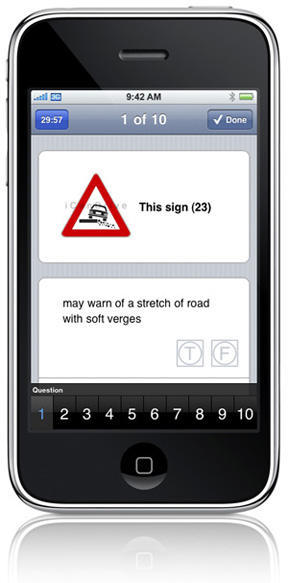
iCan Drive may help Europeans navigate driving tests.

Back in 2006, the EU approved plans for a single drivers license to replace the over 100 different driver’s license standards on the Old Continent.

Countries have until until 2033 to phase it in, but there’s a good chance if you have to renew, your pan-european driver’s license test is going to have a few new things on it.

This iPhone, iPod touch iCan drive app carries quizzes for all official 664 tests for the EU driver’s license. It covers both A class (small scooter) and B class (standard car) licenses.

Developed by Italian Daniele Perilli, the quiz gives results immediately, totals errors and gives all acceptable answer for every question.

There are some 6,891 road-ready questions available in Italian, English, German, French, Spanish, Russian, Chinese and Arabic.

Not bad for .99 eurocents. Available on iTunes.

Via Mac City

Sharper Image Brings a New Bag to Mobile Sound

By

post-5543-image-6c6036c0e585610c1785f5bde0660a52-jpg

The Sharper Image at one time employed 2500 people and had a thriving catalog business along with what were, at the time, innovative retail stores specializing in high-end electronics and gifts. Early in 2008 the 30 year-old company filed for Chapter 11 bankruptcy, closed all its stores and continued to operate as a remnant of its former self, distributing a limited number of items through retailers such as Macy’s and Dillards, and as a department under the Amazon brand.

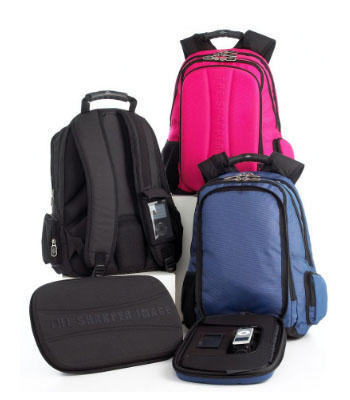
The company released a new product on Thursday that may – or may not – signal brighter days ahead for the former cutting edge gear purveyor. Their breakout product, slated to demo at Macworld 2009, is called the “SoundBag,” a top-of-the-line backpack designed to transform the listening experience for commuters, travelers and digital music lovers.

Featuring patented “flatpanel” sound technology designed by The EnE Group, “the SoundBag embodies The Sharper Image’s reputation for innovation, form and function that translates to a terrific user experience,” according to Federico de Bellegarde, vice president of Licensing at The Sharper Image.

With marketing material using terms such as “audiophile” and “surround sound,” the backpack can store and connect any portable digital device — including MP3 players, iPods and iPhone units — to a patented flat panel speaker, which is cleverly both part of the backpack or may be detached and used independently.

A 3.5mm mini-plug in the shoulder strap links the media player to the speaker and a protective clear covering allows access to the player’s controls without having to remove it. The detachable speaker also features a built-in stand and auxiliary input that enables users to play other audio sources, such as a portable DVD players and notebook computers. The speaker offers 8-10 hours of playback powered by three AA batteries.

Suggested retail for the SoundBag is $99. If it produces “audiophile” quality sound at that price, perhaps the Sharper Image will live again.

Via PRNewsWire

Job Compass – An App for These Times

By

post-4854-image-68b57081f535338942f5424f8703b89e-jpg

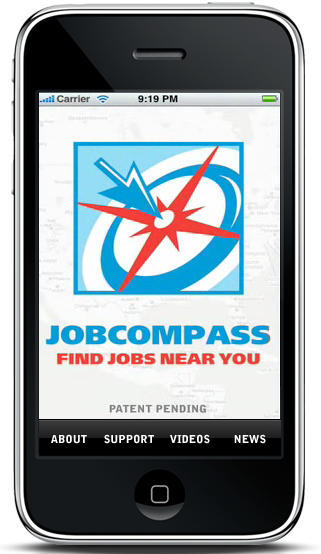
I wrote last week about the impending release of Job Compass, an iPhone app that utilizes the phone’s location-aware capability and Google Maps to deliver location-specific results to users’ job search queries. The app had its debut on the iTunes AppStore over the weekend and I’ve spent the past few days playing around with it.

I am happy to report Job Compass is a useful, intuitive and well-designed application that takes out of the equation some of the more tedious aspects of searching for new employment. In the current economic climate, where the unemployment rate in the US has risen in each of the past six months and now stands at a level higher than its most recent peak in 2003, Job Compass is a handy app indeed.

On launch the program asks permission to use your location as a base from which to perform a job search. After a few moments, a Google map pinned to your location appears and you’re invited to search for a job. Users can put in anything they want (now’s the time to think – what’s your dream job?) and choose to search for listings within a 5, 10, 25, 50 or 100 mile radius of their current location.

A recent search for writer/editor positions within 10 miles of my house returned five open positions, all of which I could then call up and read about, either in short digest or full description form. Users can choose to send themselves an email with a link to the job description, or open it in Safari and apply for the job right from the iPhone. Though, given the limitations of the iPhone’s virtual keyboard and the raft of text entries usually required in an online job application, sending an email link is almost always going to be your best option. (Note to Ed.: I’m not looking, that was just an example!)

Titus Blair, spokesman for Securicy Ventures, the app’s developer, told Cult of Mac, “we have partnered with most of the large jobs boards with the goal of being the #1 source for location based jobs searches,” and noted that Jobs Compass’s patent pending search protocol currently scans a database of over 2+ million listings, with more added daily.

Blair acknowledges “on Edge it can run pretty slow,” but says “we are working directly with Google on dramatically speeding this up for release 2.0.” Other enhancements in the works for coming updates include displaying maps and search results in landscape mode, the ability to input zip codes to search in other locations, as well as support for listings in the UK and Canada, and possibly other countries down the road.

Job Compass sells for $3.99 on the iTunes AppStore, which, if you’ve just lost your job or are interested in finding a new one, could prove to be a worthy investment.

Calif. Man Seeks $3M From Apple Over iPhone 3G Claims

By

post-5113-image-84298ea7e817f96c061e67b035579792-jpg
(Photo: bloomsberries/flickr)

Apple faces new lawsuits over its popular aledgedly, including one asking a court to award $5 million because of advertising claims.

San Diego, Calif. resident Peter Keller named both Apple and AT&T in a lawsuit alleging fraud and deceit. Keller’s lawsuit charges the maker of the iPhone 3G and its exclusive American carrier, created false and misleading advertising claims regarding the speed of the 3G network.

“Apple and AT&T have engaged in a collaborated scheme to deceive plantiff and other consumers, since the iPhone 3G and AT&T 3G Network is faulty and rarely provides 3G connectivity to its customers,” the lawsuit reads.

Court Rejects Psystar Countersuit Against Apple

By

post-4882-image-25ec200344b81fb86a6117f0c09b7c22-jpg

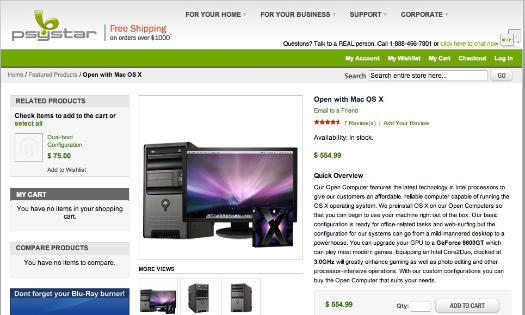
A California judge Tuesday preliminarily dismissed Psystar’s antitrust lawsuit against Apple. Judge William Alsup rejected the Mac clone-maker’s counterclaim, writing Apple’s computers and Mac OS X software “are not wholly lacking in competition.”

Alsup gave Psystar until Dec. 8 to amend its countersuit to bolster its argument that Apple was preventing third parties from selling computers based on its Mac OS X operating system.

In a 19-page opinion siding with Apple’s motion to dismiss Pystar’s August countersuit, the judge ruled that Pystar’s legal team failed to support the “counterintuitive claim that Apple’s operating system is so unique that it suffers no actual or potential competitors,” according to AppleInsider, which first reported the decision.

In August, Psystar filed the countersuit following Apple’s July lawsuit alleging the Florida company infringed its copyrights and patents by selling computers with a modified version of the Mac OS capable of running on PCs.