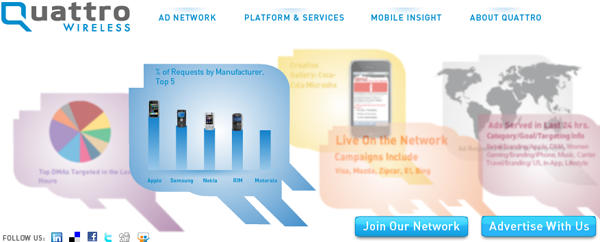
According to Kara Swisher of All Things D, Apple is on the cusp of buying mobile ad company Quattro for $275 million.
No surprise here: Apple was just outbid on mobile ad company Admob by Google for $750 million. Apple is obviously interested in entering the mobile advertising space.
Optimistically, that’s because they recognize that owning the ad network that power all of their App Store apps would make them a killing… although given how poorly the App Store is maintained, one wonders if Apple has the customer service chops to run their own advertising network.
Pessimistically? Apple’s been flirting with some alarming patents for mandatory advertising within OS X. It’s hard to believe they’d go that route, but just the existence of such patents is enough to cause you to arch your eyebrow when Cupertino drops $300 million for an advertising company.
Although our record is sullied by a few occasional missteps generally caused by a lone rumor- monger tickling our plush, erogenous wishful thinking zones, the Internet’s grown remarkably adept at seeing new Apple products coming. Most gadget bloggers and tech pundits would be willing to part with a digit if Apple doesn’t at least announce a tablet next year: there are just too many supply reports, patent and trademark filings and industry insiders telling us to expect one. The same was true with the iPhone: we all knew an Apple phone was coming. We were just laughably wrong about what the iPhone turned out to be.
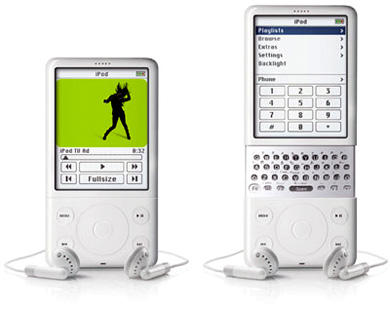
It’s worth keeping that in mind as we come up on January’s presumed announcement of Apple’s tablet: the chances of it being what we expect (a large iPhone) are probably as wrong as our belief that the iPhone would be just an iPod with a SIM card in it. To remind us all of exactly how wrong our predictions were, Technologizer’s Harry McCracken has posted up a fantastic speculative prehistory of the iPhone, correlating all of the earliest predictions about what the iPhone was going to be and then fact-checking them against reality.
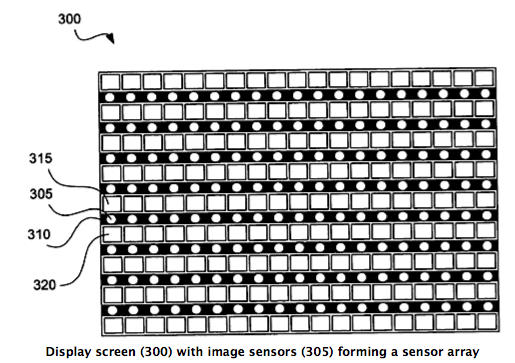
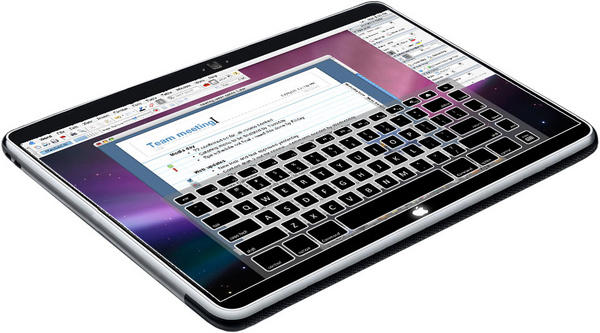
A series of patents may detail the user interface of Apple’s tablet, which could be unveiled in January. At the heart of ‘surprising‘ method for users to interact with the much-awaited device is what the Cupertino, Calif. company describes as an ‘articulated frame.’
“The articulating frame may provide key edge ridges that define the boundaries of the key regions or may provide tactile feedback mechanisms within the key regions,” according to an application entitled “Keystroke Tactility Arrangement on a Smooth Touch Surface” uncovered earlier this week.
Although it’s certainly an iconic advertising slogan, I’ve always felt Apple was wise to leave “Think Different” behind as a manta for their Macs.
Poor grammar aside, the slogan is more suited to a small, sprightly underdog weakly jabbing away at a juggernaut, which Apple certainly was back in 1997, but is much less so today. As a slogan, it also has too much of the tell-tale whiff of smugness about it, a problem Apple’s advertising has wrestled with for most of the last decade. “Get a Mac” is better: it’s strong, it’s simple and it is assertive, not self-satisfied.
Still, maybe the old slogan could work in a new context: Apple has applied for a new trademark for “Think Different”…. and it may imply that the vintage slogan will be used to advertise the forthcoming Apple Tablet.
We’ve written before in this space about Apple’s unique status as a Muse to creative people. In fact, the initial impulse for this post was a search for striking pieces of art created on the iPhone.
Those are out there, too, in droves — and we’ll be featuring them soon in another gallery post.
Today, however, we bring you something we didn’t quite expect to find: a series of art pieces that shed a bit of perspective on the dark side of Apple.
Apple is now the most profitable player in the cell phone business, overtaking giant Nokia for the crown, reports said Wednesday. Apple earned $1.6 billion in profits during the last financial quarter, besting Nokia’s $1.1 billion for the same period, according to estimates.
Apple also overtook Samsung, according to research firm Strategy Analytics.
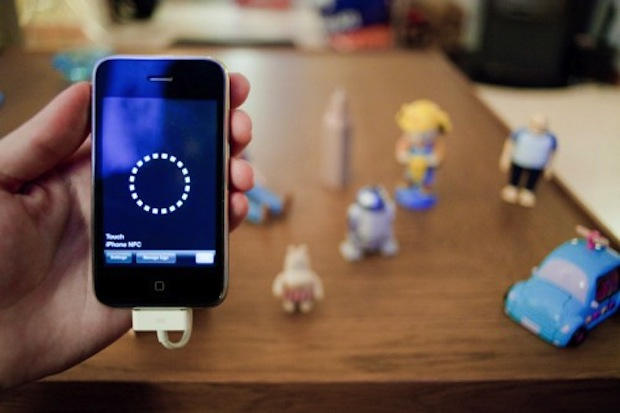
The Touch project built a prototype RFID-equipped iPhone that used proximity to physical objects to trigger media playback: http://www.nearfield.org/2009/04/iphone-rfid-nfc
If rumors that Apple is adding an RFID reader to the iPhone are true, it’s huge!
An RFID reader would turn the iPhone into an e-wallet — allowing you to pay for everything, from a cup of coffee to a subway ride. It could also turn the iPhone into an ID card, a security access system and an electronic ticketing device.
It’s could also function as an easy and secure online shopping system that doesn’t require you to enter your credit card number.
Your iPhone could unlock your car, pick up e-coupons at the local mall, and pay for all your supermarket groceries just by laying it on top of the checkout.
Imagine if such a system was enabled on your iPhone. It would supplant your wallet — if enough retailers adopted the system, of course.
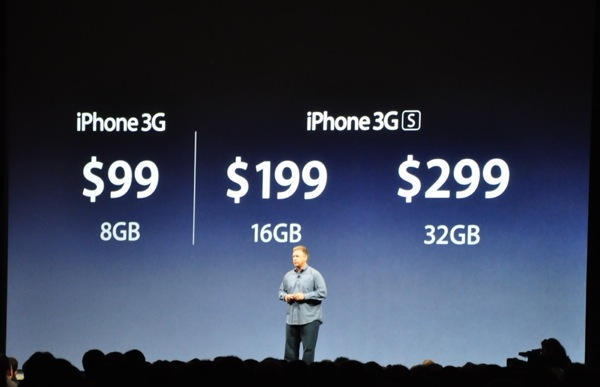
Apple's Phil Schiller outlining the great prices for brand new iPhone customers - not existing 3G owners. CC-licensed picture by
AT&T and Apple may be preparing a pre-Christmas launch of a $99 8GB iPhone 3G in response to the Droid, according to unconfirmed rumors. “One source said this was AT&T’s way of combating the DROID madness,” wrote BGR, citing two unnamed sources.
The report comes as Verizon launches its family of Droid Android-based cell phones meant to compete with the iPhone from AT&T. The recently-announced Droid Eris will cost $99 and use Android 1.5 rather than Android 2.0, the latest version of Google’s handset operating system.
Apple will “vigorously” defend itself against a Nokia patent infringement lawsuit, according to financial documents released Tuesday evening. The remarks are the first made by the Cupertino, Calif. company about a lawsuit by Nokia that could be worth up to an estimated $1 billion.
“The complaint alleges that these patents are essential to one or more of the GSM, UMTS and 802.11 wireless communication standards, and that the Company has the right to license these patents from plaintiff on fair, reasonable, and non-descriminatory (“FRAND”) terms and conditions,” Apple said in a 10-K filing with the Securities and Exchange Commission. “Plaintiff seeks unspecified FRAND compensation and other relief. The Company’s response to the complaint is not yet due. The Company intends to defend the case vigorously.”
In a complaint filed last week, Nokia accuses Apple of “attempting to get a free ride” off the Finnish company’s research efforts and not agreeing to licensing terms. Nokia alleges patent infringement covers iPhones since 2007 and includes GSM, 3G and Wi-Fi transmission techniques along with speech coding, encryption and security. Piper Jaffray analyst Gene Munster believes Apple is seeking a 1 percent to 2 percent royalty, or $6 to $12 for each iPhone sold.