If you’ve been following the back-and-forth over Apple’s court-mandated “apology” to Samsung in the UK, you know it’s been Cupertino at its cheekiest.
It’s also been Cupertino at its most dishonest, according to a London High Court, and they’re had enough, slamming Apple for false and misleading statements about the trial… and ordering Apple to pay all of Samsung’s legal bills on top of things.
With the absence of Steve Jobs looming in the background, Tim Cook and his team faced a mountain of questions as they marched into 2012. Who would be the visionary now? Would the iPhone continue to be successful? What’s going to happen to the Mac now that the iPad has become a beast of its own?
The most important question Apple faced going into 2012 was whether they could maintain their supremacy. With competitors closing the gap, Apple doesn’t have Steve Jobs’s vision, charisma, or negotiating prowess anymore, and 2012 has been the year to prove that Apple can endure. The challenges and adversaries Apple is facing in 2012 has made this single year the most important one ever for Apple, and yet they’ve been able to come through in the clutch and blow us away with an army of incredible products and strategic moves.
Judge Lucy Koh has agreed to re-examine the role of jury foreman Velvin Hogan, who found Samsung guilty of patent infringement and awarded Apple more than $1 billion in damages earlier this year. Samsung requested a retrial back in October after it became apparent that Hogan failed to disclose details of a lawsuit against Seagate that he was involved in 20 years ago.
We’ve seen a number of Apple fans come up with clever docks for the iPhone by using packaging materials Apple ships products with. Taking a cue from their customers’ resourcefulness, Apple has a new patent that shows iPhone packaging that can also double as a dock after it’s been opened.
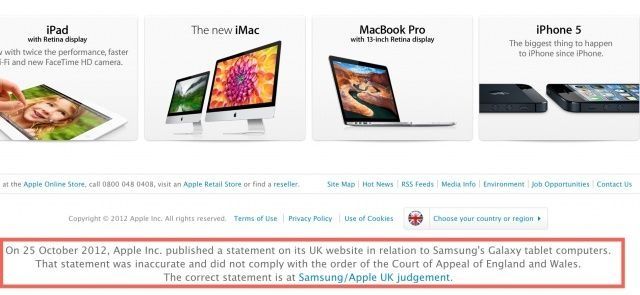
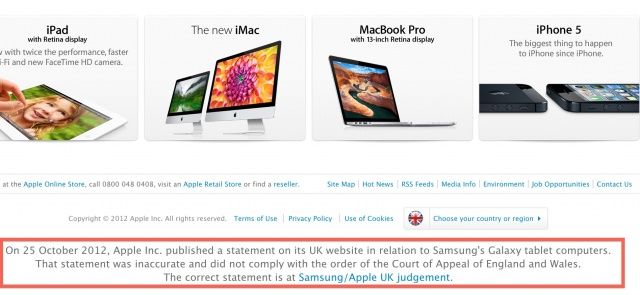
As part of a court ruling in the U.K. Apple has been forced to publish a public apology to Samsung on the U.K. Apple website. When Apple originally published the apology on the U.K. homepage, some clever coding pushed the apology statement below the browser window.
This morning an update to the Apple U.K. homepage has removed the coding that was hiding the apology unless a user’s browser window was extremely tall.
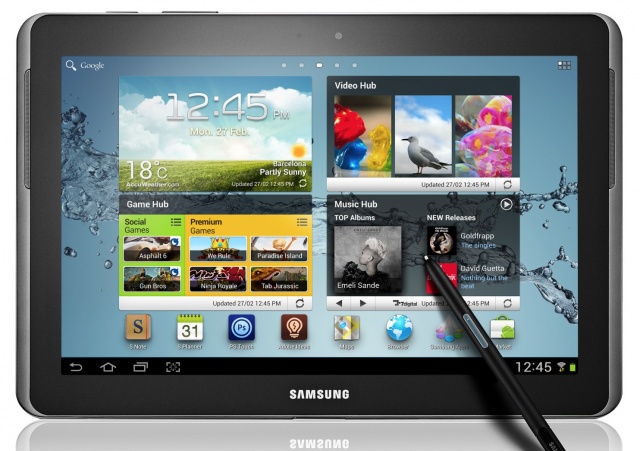
The Samsung Galaxy Note 10.1 is Apple's latest target.
Apple has added the Samsung Galaxy Note 10.1 and the software that powers it, Android 4.1 Jelly Bean, to an existing lawsuit against Samsung in California. The Cupertino company told U.S. Magistrate Judge Paul S. Grewel on Tuesday that both are guilty of infringing patents owned by Apple.
Thankfully, it’s been some time since I’ve written about an Apple patent lawsuit, however, that doesn’t mean they’ve magically disappeared. The latest in Apple’s crusade against Google (via Motorola Mobility), leads us to a U.S. District Court in Madison, Wisconsin. Apple was slated to go up against Motorola Mobility with allegations of unfair licensing practices, however, Judge Barbara Crabb has dismissed Apple’s lawsuit with prejudice — meaning the case is over at the trial court level.
Tony Fadell, one of the fathers of the iPod and founder of Nest, at GigaOm Roadmap in San Francisco.
GIGAOM ROADMAP, SAN FRANCISCO — Nest Lab’s smart and sexy thermostat is becoming the iPhone of home heating, says its designer, Tony “the Podfather” Fadell.
Speaking at the GigaOM Roadmap conference, Fadell described how a Texas utility called Reliant is using the Nest Learning Thermostat to attract customers.
“Nest is to Reliant what the iPhone was to AT&T,” said Fadell. It’s a killer piece of hardware that’s attracting customers to the utility in droves.
Steve Jobs was a Buddhist, a religion founded on the concept of the impermanence of all things.
And everything is impermanent. Especially Apple products.
A lot of users complain about Apple’s everything-is-temporary philosophy. But I think Apple will increasingly embrace it — and even launch a social network whose main feature is the deletion of your posts.
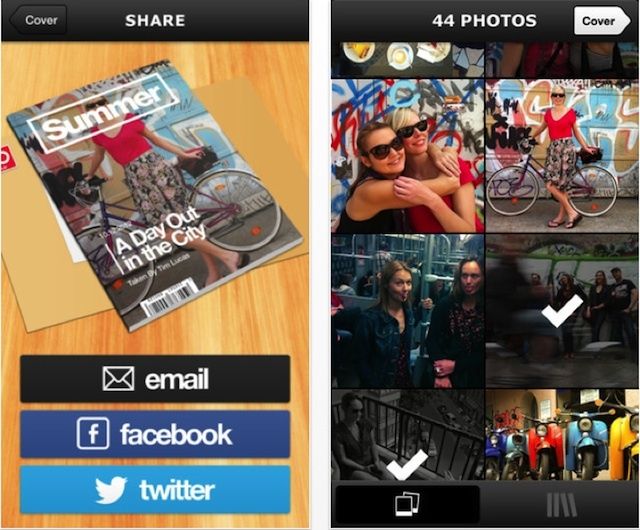
Beamr is one of those mouth-watering iPhone apps that wows not so much because of what it is, but because of what it could be.
The basic idea is very cool: Delve into your photo library, select a handful of photos and choose a cover shot. The app will then superimpose some text and graphics over the cover (you can change the cover text).
But the real magic happens when you share your little faux-magazine. Beamr uses “patent-pending JPEGmini optimization technology” to package and deliver the “magazine”; the result is very quick delivery, and the images can be saved by the recipient at full resolution (for example, 8MP if you shot the pictures with an iPhone 4S/5).
I yearn for more, though. The photos can’t be arranged in any way, and there’s only one style of cover. Also, the app is designed for the iPhone, not the iPad(s) on which it would really shine. Still, it’s a neat trick and worth checking out. And hopefully there’ll be updates that build it out in the near future.