Mobile menu toggle

Search results for: jailbreak app

Intego Upgrades Virus Protection for iPhone

By

post-2340-image-20845fab1cd01adade022ceda53496f9-jpg

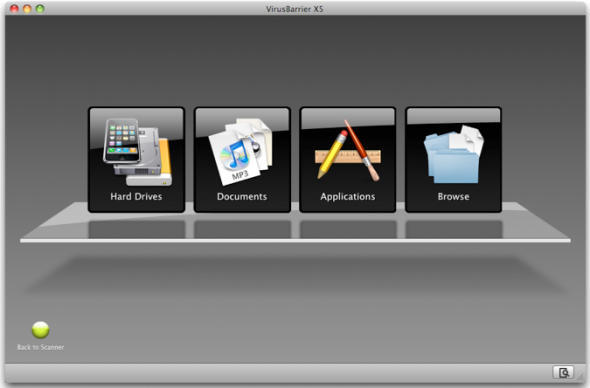
Intego has announced a free upgrade for users of its VirusBarrier X5 security software to eradicate malware from the iPhone and iPod touch. The company has been at the center of news regarding the rise of “trojan horse” malware targeting OS X since at least 2004, the subject of ongoing debate among computer security experts about the risks of malicious software and computer viruses infecting Apple systems.

Earlier this month reports of Apple’s having neglected its mobile platform in releasing security patches to fix exploits discovered in the OS X desktop caused some to wonder whether the opening of the AppStore might also open the door to software that could harm an iPhone or iPod touch. Apple has promised to use its gatekeeping role to screen malware from the AppStore, though, as Intego’s press release mentions, users “jailbreaking” (unlocking) an iPhone or iPod touch can install applications not pre-certified by Apple, increasing the risk of stumbling into harm’s way.

Thus far, the only harmful scripts or programs identified targeting OS X have required the inordinately reckless cooperation of users to open their systems and invite an attack, so the real risks are yet minimal. But as Macs begin to surpass double digits in desktop market share and Apple’s mobile OS continues to advance among handheld users, the prize for black-hat software developers grows ever larger. Perhaps Intego, makers of what MacWorld calls the “gold standard” of Macintosh anti-virus software, will one day rival Norton.

iPhone 2.0 Unlocked

By

installerappstore_270x404.PNG


Image via CNet

The new iPhone OS 2.0 software has been unlocked and jailbroken, according to Gizmodo blogger Jesus Diaz.

After taking months to crack the code on last summer’s inaugural release, the iPhone Dev Team has opened the gates to unsigned software on the iPhone 3G before its US debut. The Pwnage tool that will allow unofficial carriers access to the phone and give users full read/write access to the filesystem to enable installation of unofficial, “jailbreak” applications is “imminent,” according to CNet, though no firm release date has been announced.

Market for Original iPhones Looks Robust

By

post-2152-image-8ae1aa8c76269bf36e583d2dda77f631-jpg

Photo by Rinox via flickr

Apple has long been a poster child for the wisdom of Adam Smith’s Invisible Hand. With active trade in some of its discontinued products, such as the iSight camera (which regularly sells on auction sites such as eBay for more than the original purchase price), and high-resale values for “previously owned” and “refurbished” models of its computers, the reality has been that the cost of owning an Apple over the years has not been nearly so high as its reputation for premium pricing might indicate.

The iPhone is providing additional confirmation that, despite complaints about the company’s obsessive desire to control the user experience, they must be doing something right at 1 Infinite Loop.

iPhone Atlas reported recently on the high prices still being fetched at resale by the original model phones, indicating concern over the ability to unlock and/or jailbreak the upcoming model, combined with significant demand in countries where the iPhone 3G will not initially be on sale, including Russia and China.

While the current value of first-generation iPhones may be high, with reports of the bid on 16GB phones near $600, some believe the market for the phones will stay active with prices coming down as the availability of 3G models gets closer. Michael Johnston at iPhone Alley suggests the window for high prices may be closing soon and Dennis Sellers writes for Macsimum News that active trade in the post-3G launch market for first-gen iPhones could see prices come down under $100.

With Apple and AT&T seeming to have foiled the unlocking/jailbreaking movement that flourished in the wake of iPhone’s initial release, Stateside customers who must have the speed and features of the 3G model but still have, or want, service with a carrier other than AT&T, will either have to wait and see if the new models can be jailboken or look to Apple’s deals with a different carrier in almost every country overseas, where the phones will go on sale next month. Across both ponds Apple has had to agree to a wide range of prices and options for selling the iPhone 3G, making it likely that in quite a few countries outside of the U.S., you’ll be able to buy an iPhone without a contractual agreement.

Tutorial: How to Sell your iPhone Online

By

post-2041-image-c29705cae3199fa3376f835601528a6f-jpg

It’s iPhone upgrade season. With the deluge of iPhone 3G rumors convincing just about everyone that now might be a good time to dump the old phone, in anticipation of getting one of the new models, here’s a tutorial to help you sell your iPhone safely, and get the best price.

Uninformed Bearded Man Confuses Malware with iPhone Unlocking

By

Roger_L._Kay-189x244.jpg

Roger_L._KayThe Apple nay-sayers love to pretend that Mac OS X and all of Apple’s other products are destined to be destroyed by hackers. Although Apple has marketed its products as being far less hackable than Windows, someday, the Mac will just be riddled with viruses. It’s inevitable! Except that it’s never happened, and what do you know, Mac OS X is far less troubled by malware than Windows is.

Still, the notion persists, and Apple detractors such as the bearded man at right, Roger L. Kay of Endpoint Technologies Associates, will continue to draw irrelevant correlations between minor software hacks on Apple products and overall platform insecurity.

Hilariously, Mr. Kay is under the impression that iPhone jailbreaks and the major unlocking project “Project Pwned” are somehow indicators that virus writers will soon over-run all of Apple’s products. Riiiiiiight. Because individual users finding ways to maximize the value of their own machine is exactly the same as a random prankster taking control of someone else’s machine. His poorly reasoned opinion, courtesy of BusinessWeek, argues that unauthorized iPhone apps will stink, and people will blame Apple for no apparent reason:

Apple, welcome to Microsoft’s world! This is an environment in which you have to support thousands of developers of varying quality, and all sorts of apps, well made or not. Some of these developers make you look good, but others end up trashing your reputation. And despite your best efforts to monetize what they do, it’s not always possible. The elegant simplicity of your platform just makes hacking easier. There is no such thing as real security. All you can do is throw up roadblocks–which, by the way, make it harder for both crooks and law-abiding citizens to drive on your roads.

Wait, what? You think Apple will feel bad that some of the jail-broken apps will suck? That will provide additional evidence that Apple is right to lock down the iPhone. I think the iPhone should be a lot more open than it is, but the only possible conclusion to this situation is the opposite of what Kay argues. But who am I to disagree with a man who has this to say?

iPhone 1.1.4 Update is 165-MBytes of “Bug Fixes”

By

post-1787-image-03e7bbeb0e2303b522b6c96cfc2d8c66-jpg

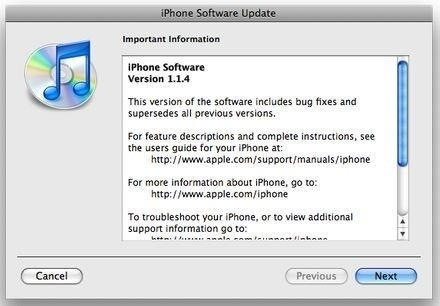
Apple on Tuesday released a 1.1.4 firmware update for the iPhone and iPod touch.

Available through iTunes, the update is a beefy 165-MByte download, but incredibly, adds no significant new features.

According to iLounge, which examined the update closely and quizzed Apple about it, it’s nothing but bug fixes.

The update is probably laying the groundwork for the iPhone SDK, which Apple promised to release this month.

The 1.1.4 update presents no problem to jailbroken iPhones, TUAW reports — which will be a moot point if sanctioned applications will be released shortly. Who wants to hack their iPhone to load applications if there’s a nice SDK a way to load them through iTunes?

Analyst: 400,000 iPhones in Use on China Mobile Network

By

post-1763-image-2e9eff811248e4512b24a490e0171738-jpg

Image via Paul Stamatiou
It’s an open secret that there are legions of iPhone owners who operate their phones outside of Apple’s officially sanctioned networks AT&T, O2, Orange, and T-Mobile Germany, either because they live outside of the countries where the iPhone is on sale or because they’re aware that AT&T has terrible coverage.

What is less well-known is just how big the problem has gotten. BusinessWeek reported last week that 800,000 to 1 million iPhones have gone AWOL after legitimate purchase. And now this weekend, analyst In-Stat claims that 400,000 of those iPhone are all in operation on China Mobile, the largest carrier in Mainland China.

This makes a few things clear:

  1. Apple should get a distribution deal in China as fast as they can. They’re just leaving money on the table right now.
  2. Apple would be making more money if they hadn’t gone with an exclusive network for each market. If the iPhone ran GSM and CDMA and was available far and wide, they would be making more money and they wouldn’t need to concern themselves with unlocking. By getting into bed with AT&T and making a part of its revenue dependent on “legitimate use,” Apple has taken an anti-consumer stance that will hurt it in the long run. Unlocked iPhones are only a problem because they depend on an outdated business model. Apple should be embarrassed for taking part in it.

Via iLounge

Old TIFF Exploit Could Re-Crack iPhone

By

cult_logo_featured_image_missing_default1920x1080

Members of the Hackin0sh development community report that an old exploit that was used to crack the PlayStation Portable’s firmware almost two years ago could hold the key to re-opening up iPhones loaded with the 1.1.1 firmware that closed them back up.

Notes Hackint0sh reader Locked:

It looks like the dev team is up to something. I have been following them over at IRC and it looks like Mobile Safari on both the touch and the iPhone are suffering from a one year old TIFF exploit.

Basically, opening a carefully crafted TIFF image will crash mobile safari, causing a buffer overflow and allow for arbitrary code execution. This same exploit was used more than 1.5 years ago to crack the PSP firmware.

So, nothing to report, yet, but there might yet be life for third-party applications on the iPhone. As Steve Jobs himself has said, this is a game of cat and mouse, and with application development, at least, I want the mice to win…

Via Winonmac via Digg

First Native iPhone Game “Lights Off” Released

By

post-1097-image-4fc90b2b9edec6fd45493abee4d02b9b-jpg

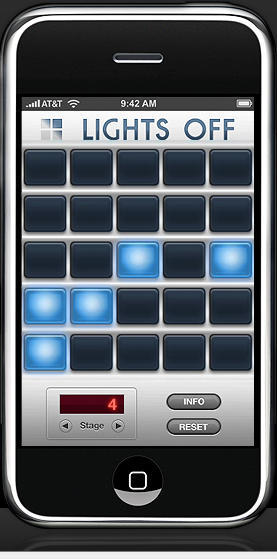
And we’re off to the races. Despite Apple’s interest in restricting iPhone development to themselves and trusted third-parties like Google, clever programmers have delivered native software for the device — including an addictive-looking game called “Lights Off,” released today by Delicious Monster.

It’s a standard puzzle-game — tap the buttons to turn out all the lights in the 5×5 grid — but the presentation is very slick, and the iPhone interface alone makes it more compelling than it would be on OS X for Mac.

As with all unsupported iPhone software, it takes some warranty-voiding mojo to make “Lights Off” install, but the app’s creators, Lucas Newman and Adam Betts, helpfully include full instructions:


Installing third-party applications on your iPhone is not for the faint of heart. For more in depth instructions on iPhone modifications, look at the iPhone Dev Wiki.

1. Download iActivator and use it to “perform jailbreak” on your iPhone to allow access to the entire filesystem, which is necessary to upload applications.

2. Use iPHUC to upload Lights Off.app to the Applications folder on your iPhone.

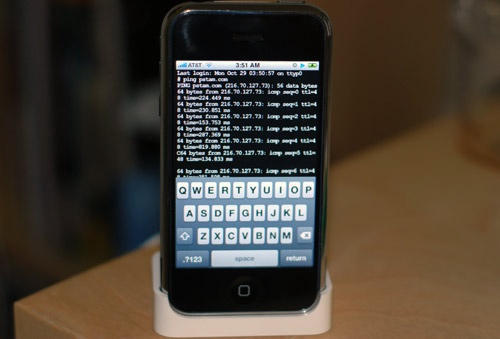
3. Install SSH (or the alternate version) on your iPhone, and run the command: chmod +x “/Applications/Lights Off.app/LightsOff”

Not for the faint of heart, as you can see. But still: Blinking lights! Blinking lights and the satisfaction of walking on forbidden ground!

Via Daring Fireball.

1 120 121 122