Mobile menu toggle

Search results for: apple tv

User Reactions to Apple Product Updates are Mixed

By

post-3972-image-9b57280f43a420cf66e33c7230d1afd4-jpg

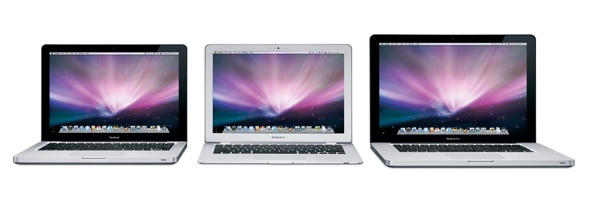
Apple introduced a trio of new notebook computers and a new 24″ LCD display monitor yesterday, and judging by reader reactions in the Apple blogosphere, the company kept alive its multiyear, unbroken streak of failing to be all things to all people.

Steve Jobs gave ample stage time to Apple design chief Jony Ive, who pulled back the curtain on the company’s design and manufacturing processes to try and impress the assembled media with Apple’s industry-leading, visionary thinking about laptop design and production.

Much of the discussion at the event centered around “under-the-hood” improvements to the new Macs’ graphic display processors (Nvidia GeForce 9400M and 9600M) and to the increasingly fine distinctions between Apple’s “Pro” line of MacBooks and those geared toward average consumers. In a nutshell, consumers are expected to make do with smaller display screens and no Firewire.

Toward the end of the event, Jobs showed an illustrative documentary about the new manufacturing and machining processes, which build the notebook cases out of solid blocks of “environmentally responsible” aluminum in a manner that VP of Product Design Dan Riccio described as “kinda like how you make pasta.”

In all, the presentation seemed designed to let people know, in Ive’s words, “how much we care.”

But do Apple’s customers care how much the company cares? Follow the jump for some choice user comments on the company’s latest offerings.

Incredible New MacBook Family Shows Apple Does Still Care About Macs

By

post-3958-image-88397c49bd7bc182056c9d4dba2b2b74-jpg

Apple promised that it would finally pull its attention off the cash cow iPhone and iPod product lines to spotlight notebooks at an event this morning, and they weren’t kidding. New MacBook, new Air, new Pro, and a new matching Cinema Display for good measure. The design team absolutely hit it out of the park on these machines, which are all glass, shiny black accents, and subtly tapered corners. Like the iMac whose design they refine and make significantly more appealing, these machines look like they were just made to sync with an iPhone or iPod touch (and, if anything, they make the continued use of white plastic docks for those devices look increasingly incongruous). This is Apple’s best design work, and it’s for a Mac — something we haven’t seen since the 12″ PowerBook G4 that I’m typing on was introduced. Read on for the Pros and the Cons…

Apple’s “Let’s Rock” Countdown Continues…

By

cult_logo_featured_image_missing_default1920x1080

All eyes and ears of the Apple universe are tuned to San Francisco’s Yerba Buena Center for the Arts, where, in a few hours, Steve Jobs’ “Let’s Rock” event gets underway. Will it be just a music announcement focused on a refresh of the iPod product line and a new version of iTunes with bigger, better bells and whistles? Will Steve Jobs himself – and his state of health – become the story?

Lonnie spoke yesterday about these questions and more with Talking HeadsTV’s Justin Young:

Is Apple’s ONLY Debuting iPods And iTunes At “Let’s Rock?”

Will Steve Jobs’ Appearance Trump Any News At iPod Event?

In Pictures: Preparations For Apple’s “Let’s Rock” Special Event

By

cult_logo_featured_image_missing_default1920x1080

IMG_0371.JPG

Crews working at the front of Yerba Center for the Arts.

SAN FRANCISCO — There’s a lot of busy bees preparing for Apple’s special “Let’s Rock” event on Tuesday.

Two days before Steve Jobs hosts a special press event, the Yerba Buena Center for the Arts is humming with Apple staffers, TV crews and scores of security guards. See the pictures below.

A crew of three or four hung a huge silhouette iPod poster over the Center’s facade, while half-a-dozen Apple staffers watched from the curb, fussing over the details.

The center is lousy with Apple security guards. There’s a guard posted at every one of the center’s half-dozen doors — back and sides. The guard pictured below stood inside a door at the back, which appeared to be securely locked. Apple seems to be taking no chances that nosy bloggers might break in for a sneak peek of what Jobs is going to announce.

Around back, several Apple staffers were busy setting up computers in an office at the rear of the center.

At the side, there’s already a large satellite TV truck parked on Third Street (again, carefully guarded).  A San Francisco police officer has parked his patrol car at the back of the TV truck. Presumably, SFPD will be stationed there for the next two days.

Though Apple has held special events at the Yerba Buena center before, the preparations for Tuesday’s event seem more elaborate than just a new iPod nano would warrant. I may, however, be imagining things. I’ve got a bad cold, and I’m as high as a kite on DayQuil.

IMG_0366.JPG

An Apple security guard at the back of Yerba Center for the Arts. 

IMG_0362.JPGIMG_0363.JPGIMG_0364.JPGIMG_0365.JPGIMG_0367.JPGIMG_0368.JPGIMG_0369.JPGIMG_0370.JPGIMG_0371.JPG

iTunes 8 to Feature “Genius,” HD TV, Plus New Visualizer?

By

cult_logo_featured_image_missing_default1920x1080

iTunes 8 will launch next Tuesday at Apple’s “big” media event in San Francisco, according to Digg founder Kevin Rose. Rose was the first to report rumors of a September 9 Apple event back on August 23rd, which the company confirmed with media invitations issued yesterday.

Among the new features in iTunes 8 is something called Genius, which makes playlists from songs in your library that go great together, according to the “tipster” Rose cites in his blog posting. Genius also includes Genius sidebar, which recommends from the iTunes Store music you don’t already have.

Other goodies supposedly will allow you to browse  your library’s artists and albums visually with a new Grid view; download your favorite TV shows in HD quality from the iTunes Store; sync your media with iPod nano (4th generation), iPod classic (2nd generation), and iPod touch (2nd generation); and enjoy a stunning new music visualizer.

BREAKING: Fire at Apple Campus in Cupertino

By

post-2519-image-e6724603fd3d0960d0c01fe8ed0aa25f-jpg

Image copyright ABC-7 KGO

SAN FRANCISCO — Multiple Bay Area news outlets report that an Apple research and development facility located at 20605 Valley Green Drive in Cupertino was set ablaze late Tuesday night, with NBC affiliate KTVU blaming a malfunctioning air conditioning unit.

Given that this was an Apple R&D facility, it’s naturally operated nearly 24 hours a day, and at least 100 Apple employees were forced to evacuate the building in the three-alarm fire. Also given that this is Apple we’re talking about, no one has any idea what these folks were working on. As of 12:30 a.m. Pacific Wednesday morning, Santa Clara County firefighters report that they expected another hour before they could put out the blaze completely.

See the Jump for a map of the fire relative to Apple’s headquarters in Cupertino (basically, it was across the street).

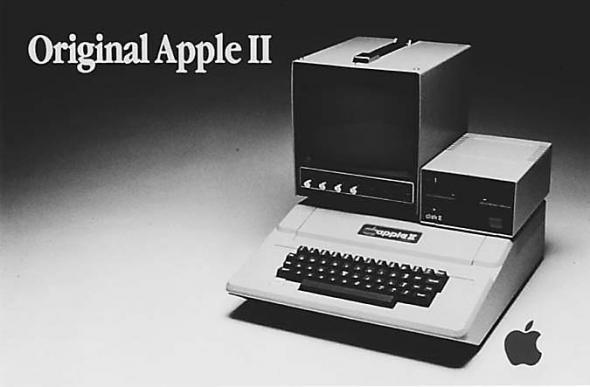
MIT Designers Resurrecting Apple II for India: UPDATED

By

post-2474-image-7753b2168156477bec5c10ad82fce275-jpg

UPDATE: The MIT design team referred to in this post is basing its design not on the Apple II, but on the Nintendo Entertainment System, which used the same processor chip. We regret our error, which was originally reported by The Boston Herald article to whcih our post was linked. Thanks to David Zeiler at The Baltimore Sun for the clarification.

Derek Lomas, an American graduate student, has recruited Apple II enthusiasts at this month’s MIT International Development Design Summit “to give Third World schools Apple II computer labs like the ones I grew up with.”

Lomas, Jesse Austin-Breneman and other designers want to create a computer that Third World residents can buy for much less than the ones currently being developed by MIT’s Nicholas Negroponte, who has been working since 2005 to provide $100 laptops to Third World kids. “We see this as a model that could increase economic opportunities for people in developing countries,” sas Lomas. “If you just know how to type, that can be the difference between earning $1 an hour instead of $1 a day.”

Lomas discovered kids using a cheap keyboard and Nintendo-like console hooked up to home TVs running simple games during an internship in India last summer and hit on the idea of upgrading the devices’ 1980s-era technology. He and others at the Massachusetts Institute of Technology symposium hope to get buy-in from programmers to help upgrade the systems – which are based on old Apple II computers – with rudimentary Web access and more.

The six member team at MIT is working on writing improved programs and connecting to the Web through cell phones. The group also wants to add memory chips – which the devices currently lack – to allow users to write and store their own programs. “We think we can develop a really good educational tool that could give kids exposure to keyboards, typing and mouse usage at an early age,” said Austin-Breneman, a 25-year-old MIT graduate and a mechanical engineer.

Via The Boston Herald

Can Apple and the Mac mini learn from Dell’s Studio Hybrid?

By

post-2425-image-007610c085afdfad4dbbc74185c3107d-jpg

Although once famously proud of annihilating its R&D budget, it appears Dell is now in some cases reading from the Book of Apple, in taking existing ideas and–at least in some ways–improving them. In recent weeks, we’ve seen the Dell Dock, taking the UI device from OS X that’s loved and loathed in equal measure and adding handy auto-categorization. (And, yes, I’m well aware Apple didn’t invent docks, but if you’ve been paying attention, that’s kind of my point.)

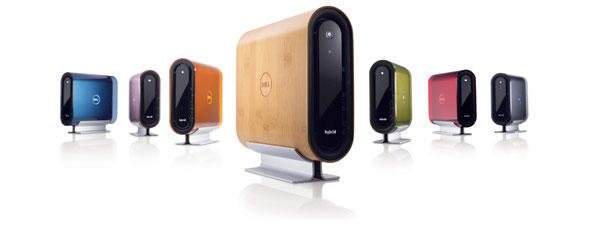
However, while the Dell Dock is an interesting curiosity, the Studio Hybrid (depicted) is a rather more ballsy production, not only taking on the Mac mini and AppleTV, but exposing some of the shortcomings in Apple’s range of highly consumer-oriented desktop machines.

In terms of hardware, the Studio Hybrid is nothing new: Dell has shoe-horned a laptop’s guts into a small and fairly contemporary form factor. But when it comes to options, Apple’s machine is trumped in some key areas. Dell offers Blu-ray as an option (albeit with a $250 price-tag), HDMI video out, a card reader, and also pushes adding a TV tuner. (Amusingly, you can also add a bamboo shell for $130, which almost makes Apple’s black MacBook price-tag look sensible.)

Sure, there are compromises, not least the Dell lacking Mac OS X, the bizarre omission of wireless in the stock model, and the fact that on Dell’s online store, you have to click ‘Go to Next Component’ about 56 billion times to configure your unit (versus the streamlined and efficient approach taken on the Apple Store). But, to some extent, it does highlight the manner in which Apple is almost dropping the ball when it comes to living-room computing.

AppleTV shows promise, and the future of media is undoubtedly going to be centered around downloads. However, we’re not there yet, and people have too much investment in optical media. Therefore, AppleTV becomes an additional unit to homes already suffering from clutter under their televisions. And the mini, despite offering loads of potential, seems to have been practically shunned by Apple, banished to the corner like an unloved and unwanted child.

Rumors always abound regarding future Apple kit, with pie-in-the-sky wishes dashed by the brutal hand of reality upon an Expo or WWDC keynote. My wishes are rather simpler, though: a Mac mini that genuniely makes a play for the living room. Take a leaf out of Dell’s book, Apple, and bundle in that card reader, so people can more easily bung photos on their TV screen. Add that Blu-ray option for people who want to own media rather than rent downloads. And add HDMI video out by default, so people can connect their mini to a new TV without faffing about with additional leads.

Don’t worry about the bamboo option, though.

Rumors Ripen on Apple’s Coming Attractions

By

post-2411-image-458dfcf134c8f8d6b3323c7a68c6fd83-jpg

Speculation regarding the “state of the art new products” to which Apple CTO Peter Oppenheimer alluded in last week’s earnings’ report began in earnest Monday as AppleInsider, Ars Technica and others weighed in on the nature and likelihood of the lineup we can expect to see officially announced sometime in the next six to eight weeks.

Will it be a Mac tablet, new notebooks sporting new chipsets, new iterations of iPod, a ripening of Apple TVanother iPhone release?

Whatever it is, we’re sure we can’t wait for it.

Microsoft Following Apple’s “Whole Widget” Approach

By

post-2400-image-2db0696084176d854bcfbb40daaa896b-jpg

Microsoft is taking a leaf from Apple’s playbook and re-organizing its major online services division to create a tighter link between hardware and software.

Microsoft has reorganized it’s Platforms and Services Division, responsible for products like online search and Internet Explorer, to more closely follow Apple’s “whole widget” approach of closely tying hardware to software and online services.

In a memo to employees, Microsoft CEO Steve Ballmer explains:

“In the competition between PCs and Macs, we outsell Apple 30-to-1. But there is no doubt that Apple is thriving. Why? Because they are good at providing an experience that is narrow but complete, while our commitment to choice often comes with some compromises to the end-to-end experience. Today, we’re changing the way we work with hardware vendors to ensure that we can provide complete experiences with absolutely no compromises. We’ll do the same with phones–providing choice as we work to create great end-to-end experiences.”

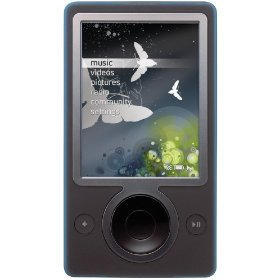
It sounds like Microsoft is going to try and replicate what it’s done with the XBox and the Zune — exert more control over hardware, software and cloud services.

For decades, Microsoft has thrived by selling its software to third-party vendors who build with commodity components and compete fiercly on price. This model works well when selling to businesses, whichare concerned with price and interopability, but increasingly, ordinary consumers are the grwoth market for the PC industry, and consumers care more about ease-of-use, reliability and good design. These of course, are Apple’s strengths.

Ballmer doesn’t seem to be suggesting that Microsoft bring hardware in-house, but rather initiate a tighter pairing between Microsoft’s software and the company’s third-party hardware partners. Examples of this kind of hardware/software alliance include Real Networks and Sandisk, which have teamed to make MP3 players; and Netflix and LG, which are collaborating on an online movie service integrated into LG’s TVs.

Ballmer specifically mentions phones, which are increasingly becoming mobile computing devices that could threaten Microsoft. Microsoft is rumored to be working on a Zune phone to rival the iPhone (and soon, Google’s Android).