Remember when Tim Cook said he wanted Apple to be a “force for good” in the world, in terms of sustainability?
In keeping with Apple’s plans to use 100% renewable energy to power all of its facilities, it has recently taken over a small hydroelectric project at a Central Oregon site, near to the company’s data center in Prineville.
Since these data centers consume massive amounts of electricity (read: the equivalent of a small city), Apple has been keen to explore alternative sources of energy to keep them in clean, renewable energy.
Apple is reportedly planning on creating an R&D team to develop baseband chips for future iPhone models, according to a new rumor from Digitimes.
Baseband chips, for those who don’t know, are used to control a device’s radio functions related to modulation, signal generation, and more.
If the rumor is to be believed, these chips could debut with the round of iPhone updates following the iPhone 6 — which would mean they could arrive with the iPhone that, by current naming standards, will be called the iPhone 6s.
Apple is heading toward a $1 trillion market cap. But could Amazon get there first? Photo: Pierre Marcel/Flickr CC
When Facebook snapped up virtual-reality company Oculus VR this week, it got us wondering what other interesting startups Apple might want to buy before Mark Zuckerberg can get his hands on them.
While Oculus is most well known for its Rift gaming headset, Zuckerberg sees a far more wide-ranging application for the company’s VR tech, envisioning it as a futuristic communications platform. “One day, we believe this kind of immersive, augmented reality will become a part of daily life for billions of people,” he said in his post about the acquisition.
That’s the kind of big thinking Steve Jobs brought to the table when he talked about the way the Mac, the iPod, the iPhone and the iPad would change the way people interact with technology. While Apple rarely dips into its $150 billion cash hoard to buy other hardware firms, here are seven awesome companies whose technology could help Cupertino enhance and improve its existing devices — as well as build entirely new ones.
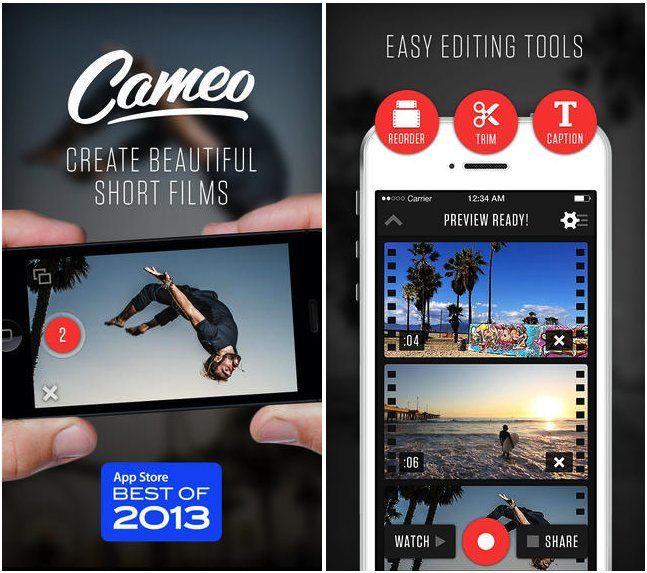
Video sharing website Vimeo has acquired Cameo, a video-making app which launched last October.
Giving users the ability to create sophisticated video effects, including the ability to combine footage from multiple cameras, Cameo received plaudits from Apple, who named it in their “Best of 2013” awards.
Cult of Macdescribed the app as “Vine, but all grown up with muscles, a flashy wardrobe and a hip music collection.”
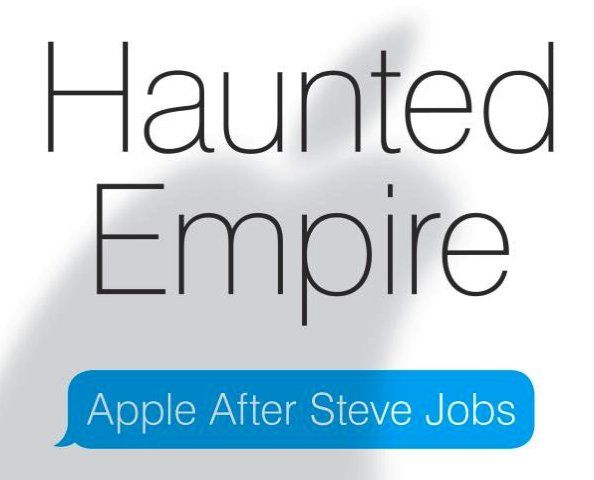
Haunted Empire: Apple After Steve Jobs by Yukari Iwatani Kane Category: Book Price: $27.99 hardcover
Writing a book about any technology company is hard. Books take a long time to write, and a longer time to make it into print and arrive in stores. Technology, on the other hand, moves quickly. As a tech author, you have two options. One is to write a book that tries its best to be timely by making it to market as soon as possible. The other is to wait until a book-length narrative has unfolded, and then to write about it. Tech writers, I suggest, would typically prefer the latter. Book publishers prefer the former.
Apple suppliers are enjoying huge revenue boosts thanks to the iPhone 6
Having recently purchased both Nest and AI startup DeepMind, Google is currently on a high tech spending spree. Even Steve Jobs biographer Walter Isaacson has claimed that the search giant’s recent acquisitions have helped it take the lead over Apple when it comes to innovation in 2014.
But Apple is also putting its $159 billion worth of cash and investments to good use by carrying out its fair share of acquisitions.
Apple may as well run Cupertino. Photo: Benjamin Feenstra
It was widely reported in January that Apple was in talks to buy Waze, an Israeli startup with a hugely popular maps app. Waze was rumored to be asking Apple for $750 million. The same outlet that broke the acquisition rumor quickly backpedaled and said no such deal was taking place. Google ended up buying Waze in June for $1 billion.
And so goes the buyout game in Silicon Valley, a power play where tech giants like Apple and Google court hot startups with the hopes of adding them to their war chests.
Apple had its biggest year ever for acquisitions in 2013, with a record 15 smaller companies joining the fold. A dozen of them have now been publicly disclosed.
For an entity as secretive as Apple, examining the companies it buys is one of the only ways to peek into its future plans. When AuthenTec, a company that specialized in fingerprint readers and identification software, was purchased in July 2012, speculation immediately followed. What did Apple want with fingerprint sensors? The answer ended up being obvious, and the technology debuted in Touch ID in September 2013.
Often the outcome of an Apple acquisition isn’t so immediately apparent.
Historically, Apple acquires far fewer companies than its competitors. But the line is starting to blur. Google publicly bought three times as many companies as Apple in 2012 and not even twice as many in 2013. Apple bought more companies than Microsoft in 2013.
So what does all of this say about Apple’s future?
Apple has bought a personal assistant iPhone app called Cue for between $40 and $60 million, according to a report from TechCrunch. Originally called Greplin in the App Store, Cue specialized in using data from multiple social networks and users accounts to create a daily agenda. Cue recently pulled its app saying “the Cue service is no longer available.”
Cue was doing Google Now-like contextual notifications before Now and Siri were introduced. The purchase of Cue probably has something to do with enhancing the contextual awareness of the iOS calendar and Siri itself.
Mobile start-up Bump just announced that it has been acquired by Google in a blog post on Monday.
The company was founded in 2008, making a name for itself on the hot technology of bumping phones together to share contact data. The app has been downloaded over 100 million times, and continues to get updates. The same team released a fairly popular photo-sharing app called Flock last year, as well.
The acquisition was reported on AllThingsD as netting the company somewhere between $30 and $60 million.