Mobile menu toggle

Search results for: Apple One

Here’s the Censored Pics of Torched MacBook Power Connector

By

post-249-image-b9d8437b4e1afbe6bf1e87c539d94234-jpg

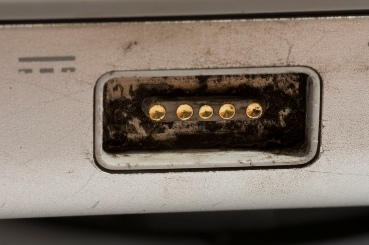
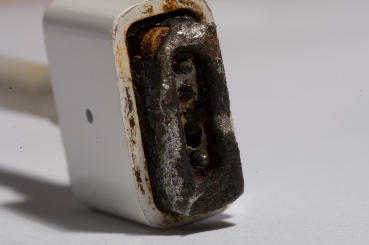
The Dutch MacNed website has copies of the controversial pictures of a magsafe power connector that were removed from Flickr on Thursday at the request of Apple.

The magnetic MagSafe power connector allegedly burned up. Its owner, Rogier Mulder, posted some pictures to Flickr, which immediately caught the attention of Apple. He was asked to remove the pictures while the company investigates. He writes on Flickr:

“Apple support responded very well (thanks Klaas) and fast. Before I called our local Apple support line, the dutch engineers were already contacted by their US collegues (who saw the pics) to inquire if I already called in. I’m getting a new Macbook asap and I will return my current one.”

magsafe002.jpg

magsafe.jpg

FreeiPods.com Sold Private Data — Despite Promising Not To

By

cult_logo_featured_image_missing_default1920x1080

FreeiPods.com, the wildly popular marketing scheme that offers free iPods for trying out various subscription offers, sold the data it gathered on 7.2 million Americans to an email advertising firm, according to a story at Wired News by my colleague Ryan Singel.

(New York Attorney General Eliot Spitzer) announced Monday that e-mail marketing giant Datran Media had agreed to a $1.1 million fine for knowingly buying marketing lists from companies with privacy policies that promised not to sell or transfer the lists to a third party.

… Datran’s biggest purchase, according to the text of the settlement (.pdf), was a list of 7.2 million Americans’ names, e-mail addresses, home phone numbers and street addresses from Gratis Internet, a company best known for promising free iPods, televisions and DVDs to users willing to sign up for promotions offered by partners such as Citibank, Blockbuster and BMG’s music club.

The sites inspired dozens of “Is there really such a thing as a free iPod?” stories in the press (including one by Wired News), and internet forums were packed with pleas for information on how to acquire a free version of Apple Computer’s signature fetish item. The freebie required a registrant to sign up five others into the program, and eventually the legalized pyramid scheme reached its inevitable saturation point.

While many did indeed get a free iPod, all ended up with inboxes full of marketing pitches, which began showing up within hours of registering.

Gratis lied to me for the story I wrote originally about the company (also linked above), which did wonders for their early credibility, and then lied again for a follow-up story I wrote about it’s privacy practices that was prompted by the avalanche of spam its customers mysteriously received.

In addition, Gratis Internet was a member of Truste, which provides a “privacy seal” to companies it says have a trusted privacy policy.

When asked by Wired News in 2004 how third-party spammers got hold of Gratis members’ e-mail addresses, Truste said it could not find a problem with Gratis’ practices.

“The results of our investigation indicate that Gratis Internet did not violate their privacy policy,” Truste investigator Alexander Yap wrote in an October 2004 e-mail. “Truste did, however, work with them to strengthen and clarify their privacy statement.”

Several months later, Truste revoked Gratis’ seal of approval, then quickly reinstated it, then pulled it again, but declined to state publicly its reasons.

In the wake of this week’s settlement, Truste’s spokeswoman did not return repeated phone calls, and executive director Fran Maier did not respond to e-mailed questions about why Truste never discovered the alleged sale or informed the public that Gratis was not adhering to its privacy policy.

The Steve Jobs Soundboard

By

Steve Jobs Soundboard

Now you can create your very own Steve Jobs keynote, thanks to a soundboard with 50 of the great man’s utterings.

Made by a Japanese website, the soundboard includes gems like:

“But there is one more thing.”

“We think video is the wrong place.”

“Do you have an iPod?”

“It scrolls like butter.”

“We have this rotating Apple sign on the top, which is popular in Tokyo.”

Unfortunately, the site is slow and may be having server problems. It doesn’t appear to be loading the entire soundboard. I get only 6 phrases, including a very tinny and disappointing, “Hi, I’m Steve.”

Get Real Audiophile Sound From an iPod

By

post-3-image-315b232f8ac77d51207a1f39a4fd1cc6-jpg

It is possible to get audiophile quality sound out of an iPod, but probably not from Apple’s iPod Hi-Fi boombox, says technologist Tim Bray.

“I gather that on stage today, Mr. Jobs freely flung about the word ‘audiophile’ while pitching the new iPod Hi-Fi. Well, I’m one of those: wrote for the mags, have gear from obscure British manufacturers, turn off a fridge thirty feet away to listen. I’ll look forward to giving the Hi-Fi a listen. It seems fantastically dubious that something 43 cm wide, with a listed bass floor of 53Hz (the bottom string on a bass is 42Hz), weighing 6.6kg, and costing $349, could actually produce ‘audiophile’ sound.”

Bray, Sun’s Director of Web Technologies, suggests instead plugging in a good pair of in-ear canalphones. Bray recommends Etymotics or Shure. I have a pair of Xtrememac FS1, which have heartier bass than the Shure or Etymotic. But Bray says most important of all…

… get your music off CDs and use lossless compression. The D/A in an iPod is really not bad at all; if you send all of the music through it and play it through first-class transducers, you’ll be happy.

Infoworld Agrees: OS X “Threats” Overblown

By

cult_logo_featured_image_missing_default1920x1080

It’s nice for once not to be utterly alone in my opinions.

Earlier this week I wrote the recent security “threats” to OS X are overblown in a column entitled Mac Attacks a Load of Crap.

Most people disagreed. John Dvorak, for example, says malware is “good news for Mac users because now security holes will be fixed early, and users will learn to become aware of these things. It’s a little bit like getting the mumps. You do not want to get this ailment as an adult.”

But veteran tech reporter Tom Yager at Infoworld, who’s as sober and levelheaded as they come, says the panic is much ado about nothing. He writes:

“… rather than marking the first viruses to infiltrate the Mac OS X fortress, as many press reports claimed, the vulnerabilities are among many potential security risks that Apple continuously and proactively tracks. Furthermore, the “critical” label affixed to the viruses by security vendors are alarmist, inciting a code-red threat level for potential security risks that Mac users can avoid through commonsense precautions.

A media feeding frenzy has erupted over the OS X Leap.A worm and the Safari browser filesystem metadata proof-of-concept exploit. It is a nonstory that has been given legs by virus software vendors that get their names in the papers by branding as extremely critical malware that’s been harmless to date — the very same vendors that then admit that one check box’s worth of tilting the balance between convenience and safety is all that’s required.”

Spy Shots of iPod Video — Good, But No Cigar — Photoshop!

By

post-3-image-315b232f8ac77d51207a1f39a4fd1cc6-jpg

Is this picture from MacShrine the new video iPod — the one that may be unveiled next Tuesday at Apple’s secret “fun products” event?

One analysis at Flickr pegs the pic as genuine — the reflections on the edges match up, and the light bleeding through the label is hard to fake.

But at MacShrine, most commentators think it’s phony. One says:

“Good way to check authenticity in Photoshop is to remove distracting color information, and make the image B&W. Then adjust the Levels in real-time, this usually highlights copy and paste: luminosity is often a problem for fakers. The horizontal black line at top and bottom of the screen and the two black areas are much darker than any other black in the picture, this points towards fake: i.e. the colour screen in the middle being pasted in.

The light blooms around the bright whites are well done if faked, as are the red and cyan colour illuminating the sticker.”

Another Engadget commentator adds:

“I am 95% sure this is a fake.

The artist mirrored an ipod video to get black around the edges, and cloned the middle. Then overlayed a colorbars photo and painted the diffusion. If you gamma-up, you will see the erasure of the dense blacks in the color bars, revealing the lifted blacks of the ipod video screen. If you gamma-down, the whites crush and reveal weird artifacts. FAKE.

The quality of the handwritting is amature – not the way someone who is fluent in chinese would write it.”

Perhaps this pic from TechEBlog is the real thing? The comment consensus over there though is that it’s a pocket mirror or some such trickery.

Or is this it?

Mac Media Cube?

By

post-3-image-315b232f8ac77d51207a1f39a4fd1cc6-jpg

UPDATE: I’m kinda late to clue into this, but as Trent Lapinsky of AppleXnet pointed out in the comments, this looks suspiciously like one of Apple’s Design Award trophies. Thanks Trent!

MacDailyNews has a totally fishy but intriguing picture of what purports to be an Apple-branded media cube.

Supposedly, the blurry picture was snapped with a camera-phone and sent to the site anonymously with the following note:

“I was only able to snap one quick shot of this as I was only in there for about 30 seconds. I sort of stumbled upon it – can’t say more about how or why. I only got about half a sec to look around back – there are a bunch of ports (and maybe a button or two) neatly arranged on the back (?) of the cube in a line along the bottom edge. It’s about 8-inches square and 8-inches tall – a perfect cube. It seems to be made out of a similar material as a Power Mac – aluminum perforated with a round hole pattern, but they’re smaller holes than found on a Power Mac. The top is the same material as the sides with the addition of the Apple logo, even though it doesn’t look like it in the photo – I had to snap it quick, sorry.

I don’t have any real detail on exactly what it’s designed to do, but I know from other things I can’t mention that it’s media-related. Apple “Media Cube,” maybe? Anyway, thought you guys would be interested.

iTab Tablet Pricey and Crippled, But Plays Motion-Sensing Games

By

post-3-image-315b232f8ac77d51207a1f39a4fd1cc6-jpg

With all the speculation about a tablet Mac from Apple, it may soon be possible to buy one from a small company that plans to convert a batch of iBooks into tablets.

Though it has not yet been built, the iTab is a 12-inch iBook with the screen removed and the keyboard replaced with a touch-sensitive screen. The company plans build 100 iTabs as it sells them on eBay, starting at $1,500.

According to the iTab website:

“The iTab is built one at a time from modified Apple iBooks. It has the same specs and hardware as the originating iBook (except for the touchscreen and the lack of keyboard, trackpad, and one less USB port). Its screen will be fastened to the body of the originating iBook, making it more durable. The width and depth of the iTab is the same as the iBook. Its height should also be the same, but might vary slightly.

As well as missing a bunch of hardware, the iTab will have no warranty (Apple’s not going to fix it) and the touch-screen doesn’t work with Apple’s highly-regarded InkWell handwriting recognition, which seems like a major drawback. Isn’t that one of the key features of a tablet? To enter text, users are recommended to buy the KeyStrokes virtual keyboard.

There is one cool feature though. Thanks to the iBook’s built-in sudden-motion sensors, which are designed to park the hard drive heads in the event of a fall, the iTab will play the Labyrin3D maze game simply by moving it up and down and backwards and forwards in space. (You can also play the same way on any of Apple’s new laptops, but you won’t have to deal with the screen flapping about).

Labyrin3D motion-sensing game

First Mac OS X Worm a Wake-Up Call

By

post-3-image-315b232f8ac77d51207a1f39a4fd1cc6-jpg

UPDATE: There’s a lot of debate about whether this is a real worm, or merely an elaborate, executable script that the user is tricked into running. It appears to be a worm — it’s self-containing code that replicates itself over the Net (def.). But it also requires the user to agree to accept it as an iChat file transfer, which is a Trojan trait. It does not require the user to enter a password to be installed, like an OS X application. Nor does it warn the user they may be dealing with an executable file, as Safari does when downloading software off the Net. So it’s more than a simple script-kiddie Applescript. Also, it may be mostly harmless now, but will likely lead to much nastier versions in the future, according to this analysis from the programmers at Rixstep: “Future versions of the same worm or spin-offs from it are bound to be destructive and much more intrusive. By exploiting several weaknesses in Apple’s file system, (Leap-A) and its successors will work.”

One more thing: there was talk a while back that Apple’s move to Intel chips would make the platform more susceptible to malware like this. But Leap-A is a PowerPC worm. Does that make Intel-Macs invulnerable? Will it run in Rosetta?

Oh yeah, the graphic comes from the Symantec website.

The first Mac OS X malware has been spotted in the wild, but it appears to be something of a damp squib.

Called Leap-A by anti-virus companies, the worm appears as a JPEG file that spreads via iChat to contacts on the infected user’s buddy list.

According to a Symantec press release:

The worm makes use of the Spotlight search program, included in OSX, and will run each time the machine boots. It identifies any applications being started, and if iChat begins to run, the worm uses iChat to send the infected file — latestpics.tgz — to all contacts on the infected user’s buddy list. Those on the buddy list will then be asked to accept the file. If they do, the file will subsequently be saved to their hard drive. Files infected by OSX.Leap.A may be corrupted and may not run correctly.

There is some disagreement about what the worm does. Anti-virus firm Sophos says it deletes files and leaves other “non-infected” files on the computer. An email press release from Computer Malware Enumeration says it “prevents Macintosh OS X from working properly and infected applications from launching correctly.”

Nonetheless, Leap-A appears to be the first OS X malware “in the wild.” A previous OS X nasty — a Trojan horse dubed MP3Concept — turned out to be a proof of concept only.

Leap-A first appeared earlier this week as a link on the forums of Mac Rumors that purported to be spy screenshots of Mac OS X 10.5 (Leopard).

Symantec classes the worm is a low threat because it doesn’t automatically infect other’s machines. The company says it has infected less than 50 machines.

“… this worm will not automatically infect, but will ask users to accept the file, giving potential victims a heads up and the opportunity to avoid infection,” the company said. “The important piece of advice for any iChat users running OSX 10.4 is not to accept file transfers, even if they come from someone on a buddy list.”

However, as CME notes in its statement, the worm is a wake-up call for OS X users with a false sense of OS X’s invulnerability: “Now that Leap.A has been discovered in the wild, copycat media-craving individuals will likely launch similar attacks in 2006.”
Woz, Hardware Philosophy and Philonumerical Triumphs

By

post-3-image-315b232f8ac77d51207a1f39a4fd1cc6-jpg

Picture courtesy of Geek Culture.

There’s a couple of data points about today’s Cult of Mac column on Wired News that didn’t make the cut because of length, so I’ll post them here.

The column concludes with an anecdote about the opposing design philosophies of Steve Wozniak and Steve Jobs. While Woz advocated open, commodity hardware, Jobs pursued closed, proprietary designs. And this of course, is the story of the PC industry. While Intel-compatible PC makers developed a standard, open hardware platform, Apple plowed a closed, proprietary route.

Apple has always been criticized for this, of course, but Woz eventually came to sympathize with Jobs’ approach. As he told Macworld in an interview:

“… I see two things that make Apple successful now where others aren’t. They are really a tight monopoly. They’re a hardware monopoly, and there’s no hardware monopoly on the other side. So that gives them some advantages in control and in pricing to have profits. A company isn’t going to be a good company and really develop better and better things if it can barely squeak by and doesn’t have good profits. Apple can have the profits that it needs to make these great, exciting products that are steps forward, instead of just kind of sitting in the competitive consumer throwaway product category everyone else is.”

The other thing I’d like to have included in the column is the delightful story Gary Wolf tells at the end of his insightful Wired magazine profile of Woz from 1998. The tale is the most appropriate I’ve read about the man:

“Among his other activities, Woz collects phone numbers, and his longtime goal has been to acquire a number with seven matching digits… after more months of scheming and waiting, he had it: 888-8888. This was his new cell-phone number, and his greatest philonumerical triumph.

The number proved unusable. It received more than a hundred wrong numbers a day. Given that the number is virtually impossible to misdial, this traffic was baffling. More strange still, there was never anybody talking on the other end of the line. Just silence. Or, not silence really, but dead air, sometimes with the sound of a television in the background, or somebody talking softly in English or Spanish, or bizarre gurgling noises. Woz listened intently.

Then, one day, with the phone pressed to his ear, Woz heard a woman say, at a distance, “Hey, what are you doing with that?” The receiver was snatched up and slammed down.

Suddenly, it all made sense: the hundreds of calls, the dead air, the gurgling sounds. Babies. They were picking up the receiver and pressing a button at the bottom of the handset. Again and again. It made a noise: “Beep beep beep beep beep beep beep.”

The children of America were making their first prank call.

And the person who answered the phone was Woz.”