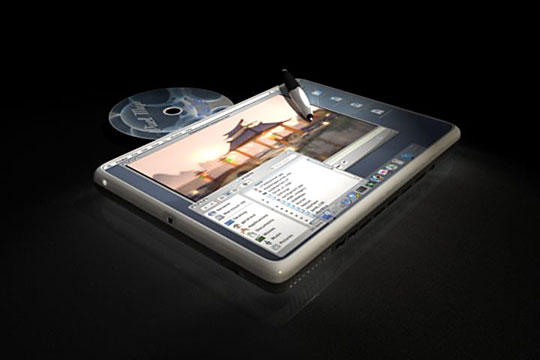
You can add one more Apple tablet rumor to your list. The device, which some believe could be unveiled later this month, bears a striking resemblance to an “iPhone on steroids.” The tablet and the handset are so close internally, the Cupertino, Calif. company has delayed updating the iPhone OS to prevent technical details from leaking, according to a new report.
“There hasn’t been an updated iPhone OS build because there’s too much tablet-code/references in the OS,” according to the Boy Genuis Report, citing “close Apple connects who haven’t steered us wrong.”
While most eyes are on CES and attention focused toward Apple’s expected tablet, analysts predict 2010 will also be a gangbuster year for the iPhone. Apple should sell 36 million iPhones, a 40 percent increase over 2009. In what was described as a conservative projection, Piper Jaffray announced 15.8 million iPhones will be sold this year – by AT&T, alone.
Apple sold 11.3 million iPhones during calendar year 2009, according to the financial analysis firm.
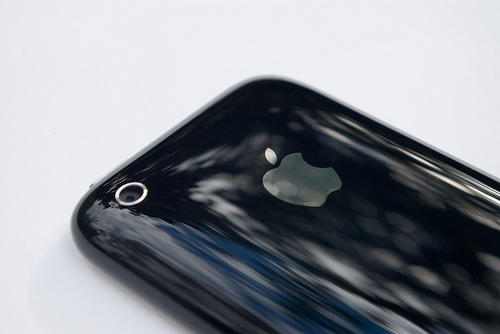
Has evidence of an iPhone 3GS successor been found?
A potential deal to bring the iPhone to Verizon’s CDMA network later this year may have hit a snag over pricing, one analyst said Tuesday. An iPhone that works on CDMA networks could appear by the middle of 2010, according to UBS.
“We believe a CDMA iPhone is also in the works,” analyst Maynard J. Um told investors. However, “Verizon Wireless and Apple may currently be apart on pricing,” he wrote. Apple receives an average of $700 per iPhone from AT&T, while Verizon pays $450 for the Droid, made by Motorola, estimates say.
Apple has acquired the “i-phone” trademark from a company in China, apparently clearing the way for the Cupertino, Calif. company to register its iPhone as a cell phone. Hanwang Technology said it had agreed to transfer the trademark to Apple, but refused to provide details, reports said Monday.
When Apple applied to trademark the iPhone in China in 2002, it did so only under “hardware and software” because Hanwang trademarked its own “i-phone” handset under the phone category. The company, also known as Hanvon, eventually discontinued the phone.
More tantalizing hints on Apple’s forthcoming tablet come their way to us today from China, where former Google China president Ka-ifu Lee has posted alleged hands-on impressions of the device on his sina.com.cn microblog.
Apple will have a ‘blowout’ December quarter, selling 9.5 million iPhones with strong Mac and iPod demand creating $12.4 billion in revenue for the Cupertino, Calif. company, an analyst told investors Wednesday.
“Despite strong macroeconomic headwinds and ever rising investor expectations, we anticipate Apple could post material upside to recently raised consensus estimates,” wrote Kaufman Brothers analyst Shaw Wu. The company appears to be firing on all cyclinders, its iPhone, iPod and Mac units viewed as fueling the optimism.
We’ve all learned to live with the iPhone’s woeful reception, but with more and more phones following Apple’s lead and circumcising any and all protuberant nubs from their streamlined smartphones, it’s easy to forget that the iPhone’s reception issues could be fixed with a protruding antenna.
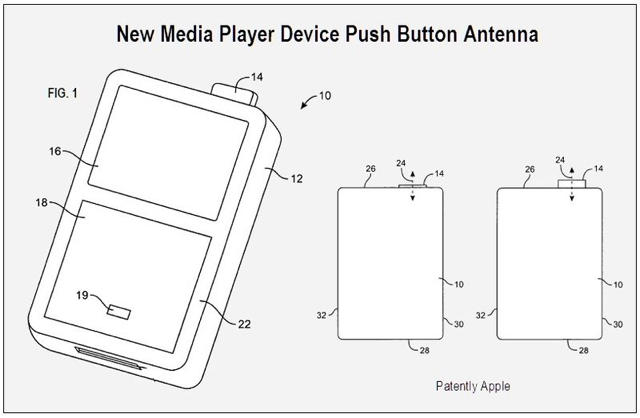
Apple’s own thinking seems to be leaning towards the re-integration of an external antenna into future versions of the iPhone or iPod Touch. According to a patent recently granted to Apple by the US Patent and Trademark Office, Apple may be considering adding a push button style antenna to future devices, in order to ensure “high-quality wireless transmission and reception.”
Don’t worry: we’re not looking at a slide-out set of bunny ears. The antenna design is elegant: the iPhone would retain its streamlined design until the antenna was called for, at which point it would pop out a tiny little antenna nub. If your reception is good enough, you just push it back in.
However, as Patently Apple notes, the most interesting patent detail is that it may utilize a coaxial cable. That implies the ability to pipe in cable television.
Personally, I doubt we’ll see this patent in action any time soon: elegant or not, a pop-out antenna strikes me as too much of a kludge for Apple to take seriously. Still, the prospect of a cable ready iPhone or Apple Tablet is too tantalizing not to report.
Although our record is sullied by a few occasional missteps generally caused by a lone rumor- monger tickling our plush, erogenous wishful thinking zones, the Internet’s grown remarkably adept at seeing new Apple products coming. Most gadget bloggers and tech pundits would be willing to part with a digit if Apple doesn’t at least announce a tablet next year: there are just too many supply reports, patent and trademark filings and industry insiders telling us to expect one. The same was true with the iPhone: we all knew an Apple phone was coming. We were just laughably wrong about what the iPhone turned out to be.
It’s worth keeping that in mind as we come up on January’s presumed announcement of Apple’s tablet: the chances of it being what we expect (a large iPhone) are probably as wrong as our belief that the iPhone would be just an iPod with a SIM card in it. To remind us all of exactly how wrong our predictions were, Technologizer’s Harry McCracken has posted up a fantastic speculative prehistory of the iPhone, correlating all of the earliest predictions about what the iPhone was going to be and then fact-checking them against reality.
After word leaked to the Internet that AT&T was preventing residents of one of the largest and most populous metropolises in the country from buying iPhones online thanks to wide scale fraud, every hour that passed without iPhones available on AT&T’s official website was further egg-on-the-face of a carrier that has, in recent months, become synonymous with incompetence and bad customer service. There was no way it could have lasted for long, and so it didn’t: AT&T is now selling iPhones through their official site again.
Remember when forecasts of 10 million iPhones in 2009 were considered optimistic? That figure could become the new floor with Apple projected to sell 11.3 million iPhones for the fourth quarter.
Broadpoint AmTech analyst Brian Marshall is telling investors he expects Apple will sell 11.3 million iPhones for the quarter, up from a previous prediction of 10 million of Cupertino’s iconic handsets. Apple “remains the best technology company on the planet,” Marshall announced.