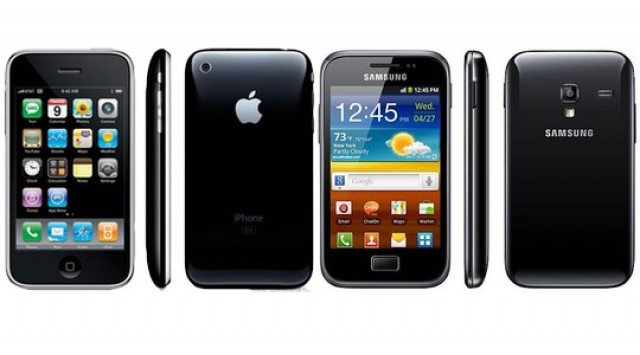
We were wondering, then, what it would look like if Samsung just went whole hog and decided to design themselves a new logo the same way they “designed” their smartphones and tablets: by stealing their ideas wholesale from Apple.
Ready? Without further ado, here’s Samsung’s new logo:
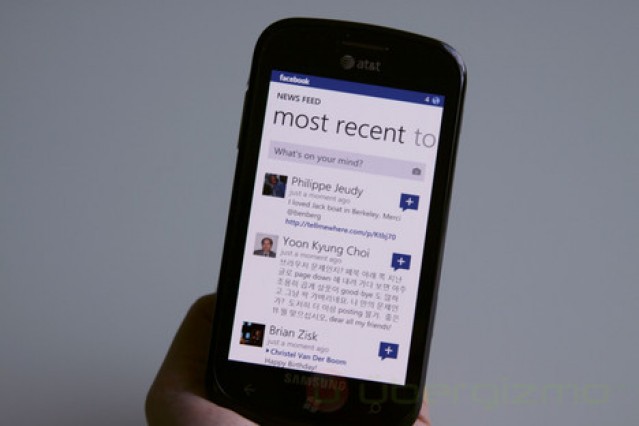
So it’s kind of nice to see Samsung ripping off someone else for a change. That all said, this is beyond parody: Samsung is now looking to create its own social network, and their top-super-secret codename for the endeavor? “SAMSUNG FACEBOOK.” You can’t make this stuff up.
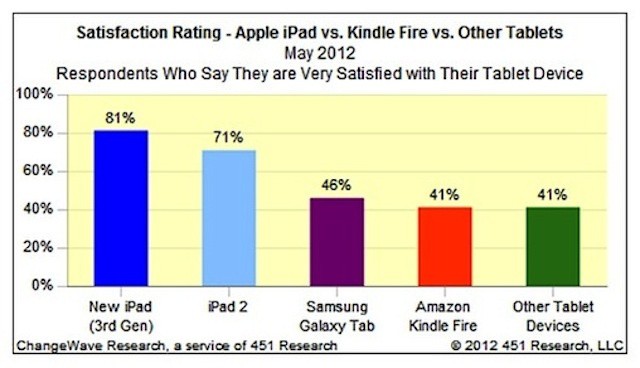
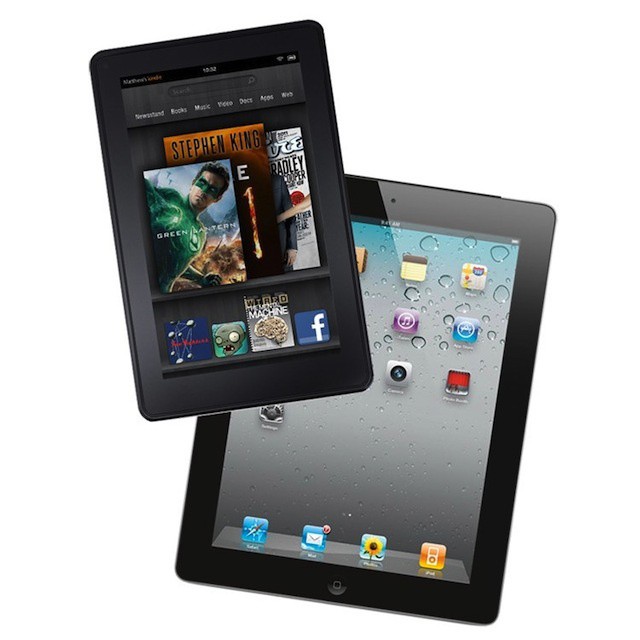
Survey shows more customers satisfied with iPads than with Galaxy Tabs or Kindle Fires
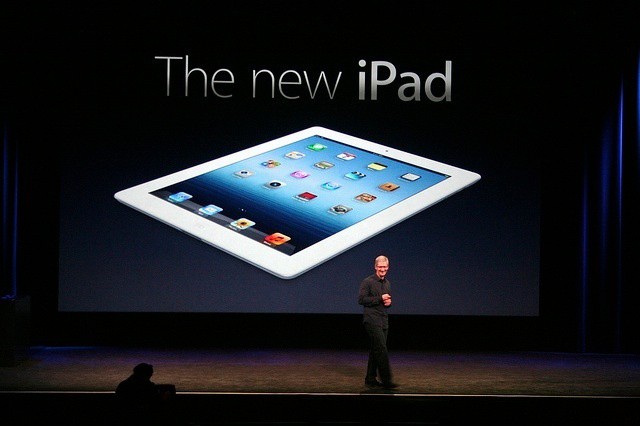
Apple typically score high in brand loyalty and product satisfaction. As a result, it doesn’t come as a huge surprise to hear that the new iPad and iPad 2 are leading tablet satisfaction surveys. Nor is it surprising that the iPads aren’t just scoring better than other tablets, they’re kicking some Android butt.
According to the latest numbers from Changewave, 81% of new iPad owners are very satisfied with their devices and while an additional 15% are somewhat satisfied. That means 96% of users can be called happy with the new iPad.
Apple still number one tablet maker with 10 times the shipments of closest competitor
The iPad continued to dominate the tablet space through the first quarter of 2012. That’s the news from ABI Research, which publishes a quarterly report known as the Media Tablet Market Share Tracker. Although most companies with products in the tablet space did see year-on-year growth, none was able to come close to wresting the number one spot away from Apple. Apple’s commanding lead translated to 10 times the number of shipments by Samsung, which returned to being the second biggest player in the tablet space.
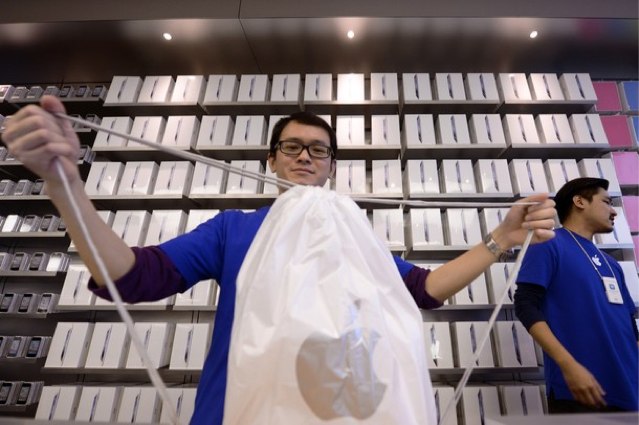
It's unlikely any of those iPads will sit on the shelf for a more than five days.
Apple’s ability to turn over its inventory incredibly quickly is seen as one of the Cupertino company’s greatest strengths. But just how quickly does it sell its products? According to Gartner’s Supply Chain Top 25 league table, Apple clears its entire inventory every 4.9 days. That’s faster than Amazon, Coca-Cola, Dell, and Samsung. In fact, the only company that turns over its inventory quicker is McDonald’s.
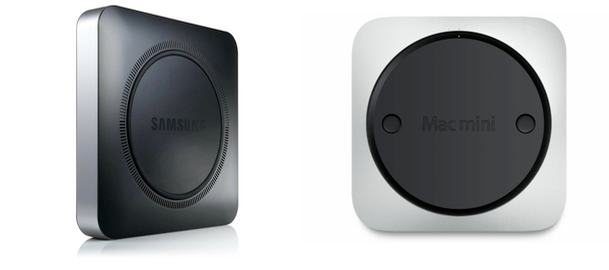
If Samsung’s ever going to quit ripping off Apple’s design team and make their own damn products, they show no sign of abating, as the latest product design to be ripped off by Samsung is their new Chromebox, which looks almost identical to the Mac mini: a tiny aluminum box with a black circular opening at the bottom. Unbelievable.
iPad growth offer advertisers new kinds of opportunities
Lead by the iPad, tablets, and other non-phone devices accounted for 20% of mobile ads during the first quarter of 2012. That number is up 5% from the first quarter of last year. The increase reflects a change in the mix of mobile devices that people use to consume content and may have implications for the entire ad industry – mobile and otherwise.
Tim Cook and Choi Gee-sung sat down for nine hours on Monday and seven hours yesterday in an attempt to come to some sort of solution to the litigation mess between Apple and Samsung. Many were hopeful after Tim Cook admitted he’s not a fan of litigation and prefers to “settle versus battle.” Things showed even more promise after Samsung mentioned the possibility of cross-licensing, but after two days and 16 hours, they still couldn’t come to any “clear agreement.”
AT&T is one of 48 carriers worldwide which have a network vulnerability that allows hackers to intercept cellular data and inject malicious content into the traffic that passes between smartphones and the websites they visit. The flaw can be used to transfer code to unencrypted pages which causes a user to perform unintended actions, like sending messages or friend requests from Facebook and Twitter. And your iPhone may be vulnerable.
Judge Birss thinks the Galaxy Tab just isn't as cool. We agree.
According to Foss Patents, Apple filed a motion for an immediate US ban of the Samsung Galaxy Tab 10.1 yesterday. This comes in the wake of Monday’s Court of Appeals for the Federal Circuit ruling that was partially in favor of Apple.
If Apple’s motion succeeds, there will then be a US ban in place against three major Android device makers. Last December, the US International Trade Commission (ITC) banned specific HTC products based on an Apple patent and this past Friday, the ITC banned some Motorola devices based on a Microsoft patent. Seems like litigation is the new weapon of choice in this war of supremacy.
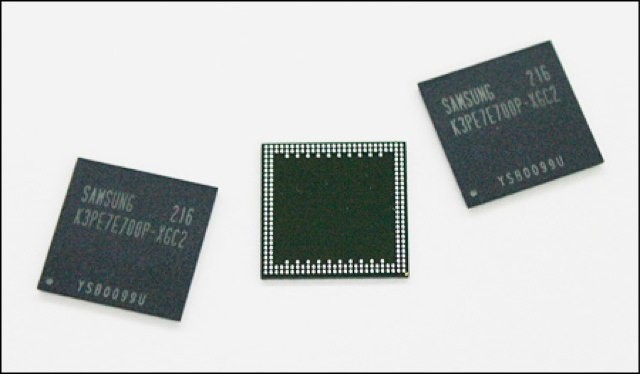
These chips will end up in Apple devices, despite what DigiTimes reports.
Samsung has reportedly launched its next generation of 20-nanometer mobile memory chips early in a bid to repair the damage caused by a throwaway rumor from DigiTimes that claimed Apple was gearing up to shun Samsung’s DRAM chips in favor of those from Elpida Memory.
Samsung’s share price plummeted by 6% shortly after the rumor began to circulate, costing the Korean company around $10 billion in market value.
We here at Cult of Mac love Apple rumors as much as the next guy, but sometimes it’s helpful to be reminded of the power rumors can wield. Samsung’s market value fell 6% on Wednesday to the tune of a $10 billion nosedive. Why? One silly Apple supply rumor.
Apple is the third largest mobile phone manufacturer
It’s one thing to listen to the number of iPhones sold during an Apple financials call and be impressed by the sheer volume and popularity of the iPhone. It’s also easy to miss the overall impact of those incredibly high numbers without some context.
Gartner’s latest mobile device data, however, offers an excellent point of context – just under 8% of all mobile phones sold worldwide last quarter were iPhones.
It may not look exactly like this, but you can expect Apple's next iPhone to ship with a larger display.
With so many contrasting rumors in recent weeks, it has been hard to predict whether or not Apple will increase the size of the display for its sixth-generation iPhone. But according to sources for The Wall Street Journal, the Cupertino company is preparing to break away from its existing 3.5-inch panels in favor of a display measuring “at least 4 inches diagonally.”
Whatever you want to call it, there’s a lot of talk out there about how Apple is going to revolutionize the living room experience by releasing their own proper television set.
There’s reason enough to be skeptical of these reports. From the industry’s notoriously low margins — Sony’s losing billions on their television business — to the fact that consumers simply don’t upgrade their TVs like they do their smartphones, does it even make sense that Apple would want to release their own television set?
Sure, Steve Jobs said he had “cracked” the TV problem before he died, but who’s to say that he wasn’t talking about Cupertino’s existing set-top box, the Apple TV, a $99 puck that anyone can afford and that slurps up streaming content from the web or the iPhones, iPads and (with Mountain Lion) Macs already in the home?
I’ll say it. The Apple TV is not enough, and Apple absolutely must release a revolutionary television set in the next two years.
Why? Because no matter how popular the Apple TV becomes, it will never be essential.
According to Velti, new iPad growth is slow compared to the iPad 2
Mobile marketing and advertising firm Velti recently released its April Data report, which includes several interesting and surprising details including AT&T’s lead as U.S. iPhone provider. The most surprising piece of information in the report, however, is that adoption rates for the new iPad appear to have peaked and slowed.
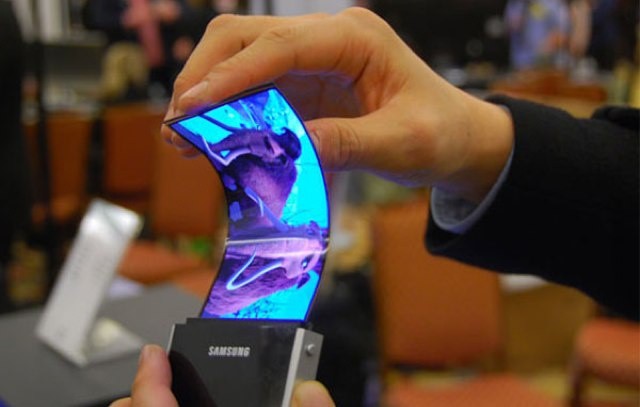
Your new iPhone probably won't be this bendy, but it will be incredibly durable. (Image courtesy of DVICE.com.)
Apple’s next-generation iPhone could finally put an end to fragile smartphones by adopting a flexible OLED display that can bend and twist without so much as a crack. The technology will reportedly come from Samsung — one of Apple’s biggest display partners — which claims to have already received “huge” orders from certain companies.
Apple and Samsung are neck and neck when it comes to U.S. smartphone market. In Japan, which represents roughly 5% of the global smartphone market, however, the iPhone is significantly beating Samsung’s range of Android handsets. Apple, in fact, has a more than 20% lead over Samsung in Japan – significantly higher than its current 5% lead over Samsung in America.
Apple feels Samsung's "copycat products" have "massive, continuing harm" on its business.
It’s likely this would be an entirely different story if Steve Jobs was still at Apple’s helm, but the Cupertino company has now agreed to drop a number of its infringement claims against Samsung, roughly cutting the case in half, in a bid to ensure that a trial goes ahead this summer.
Likewise, Samsung has agreed to do the same — dropping five of its 12 complaints — but both companies continue to bicker over the “copycat products” that have made Samsung the world’s number one smartphone vendor.
If you’re a mobile gamer, then Gameloft is the development studio to keep your eye on over the coming months. In addition to the much-anticipated N.O.V.A. 3, the company has confirmed it is also working on the official Men in Black 3 mobile game, and Asphalt 7: Heat, the next release in its popular racing series.
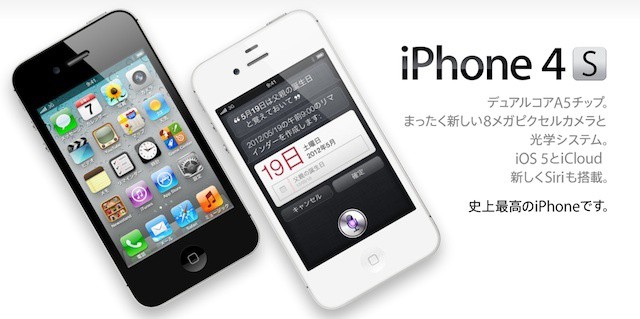
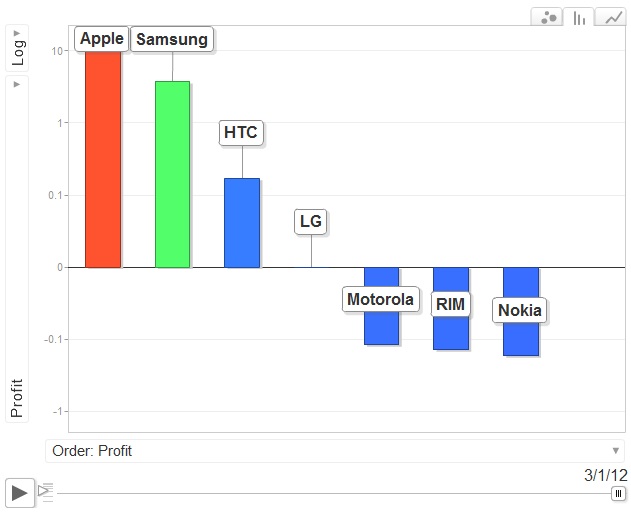
In a mobile industry that’s simply booming, there’s only two phone vendors reaping the majority of the benefits: Samsung and Apple. In Q1 of 2012, Apple and Samsung combined for 99% of mobile phone vendor profits — the remaining 1% belonged to HTC. Independently, Apple holds the lion’s share of profits with an incredible 73% of operating profits thanks to carrier premiums for the iPhone 4S. Samsung, while leading in mobile phone shipments, only grabbed 26% operating profits — which isn’t really that bad considering every other carrier (other than HTC) managed to face significant losses.
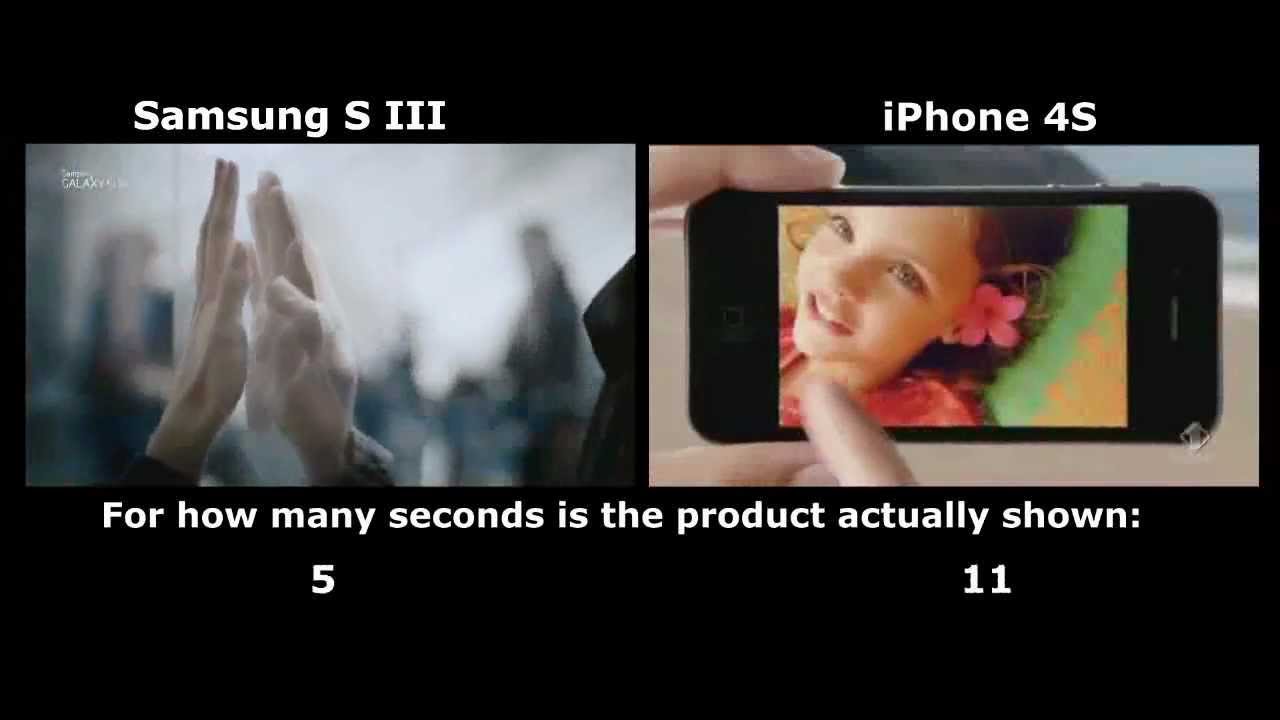
But let’s not pay attention to that. Instead, let’s ask ourselves what we can glean from the first Samsung Galaxy S III ad, especially when comparing it to a thirty-second iPhone 4S commercial.
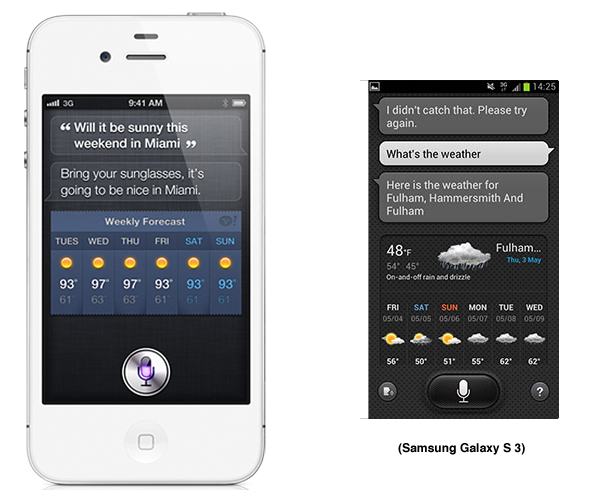
On the left is Siri, on the right is the S Voice Copycat
This morning Samsung announced their newest high-end Android phone, the Samsung Galaxy S III. With a release date of May 29th, the new phone comes with a lot of crazy new features, like Smart Stay, that uses facial recognition to determine if you’re looking at it, and if not, it’ll turn the screen off. But topping the list of awesome new features is the “innovative” voice recognition feature. It’s innovative because you can say things like, “Hi Mr. Galaxy phone, what’s the weather gonna be like today?” and S Voice will pop-up a screen that looks exactly like Apple’s Siri feature does on the iPhone 4S.
Despite holiday gains, Apple retakes tablet market share from Amazon and Android.
While Apple saw strong sales for all its iOS devices during its post-holiday quarter, Android tablet sales slumped, giving up any gains that Android had seen as a tablet platform during the holiday shopping season.
According to IDC, overall tablet shipments were down more than the analyst firm had expected. The decline to 17.4 million units represented a 38.4% drop off from the holiday quarter shipments of 28.2 million units – a notably steeper decline than IDC’s predicted 34% decline.
While overall tablet shipments were down, Android tablets slumped significantly more than Apple’s iPad, which gained an additional 13.3% of the tablet market.