Mobile menu toggle

‘Welcome to Mac’ edges to DVD

By

post-2787-image-9436d3710203db4f775ddf79c5c50674-jpg

A film that looks at the evolution and culture surrounding the Macintosh has been selected to the shortlist of the 2008 Naperville Independent Film Festival which takes place next week.

This is the first time the film, a documentary called, ‘Welcome to Machintosh’, has been screened in the US since new interview footage with original Apple co-founder Ron Wayne was added to the movie. Click here to watch the trailer on YouTube.

That exclusive interview was added just before the movie’s European premiere at the Globians Documentary Film Festival in August. The documentary mixes history, criticism and Apple idolatory into an exploration of the early years of Apple as seen through the eyes of Apple employees, engineers, resellers and supporters.

Google Chrome sets sights on Safar… Windows?!?

By

post-2780-image-c6a5127e784725191acd6842618aaf1e-jpg

While there has been much speculation about webkit powered Chrome and the possible implications for Apple’s Safari browser, we think the shot Google fired last week was across a different bow altogether.

Follow us after the jump where we discuss how Chrome has it’s sights set on Windows and why Apple couldn’t care less if there’s ever a Safari  v4.0.

Gartner: Apple Sixth-Largest PC Seller

By

post-2774-image-5c130c45207d6e40b53f02216f63076f-jpg

 
Apple was the sixth-largest desktop PC vendor worldwide in 2007, shipping just over 3 million computers, research firm Gartner said Friday. The numbers were unexpected, one analyst said.

“We were pretty surprised by the 2007 figures,” Alfonso Velso told Cult of Mac.  The 2007 sales figures were 26 percent higher than 2005 when Gartner had estimated Apple shipped 2.5 million desktop computers.Velso said the sales jump is due to Apple products, as well as some missteps by rivals.

“They are riding a crest of good products and design,” the analyst said.

Velso said Gartner had also received anecdotal evidence problems with Dell customer service also sent college students to Apple. 

However, Apple faces difficulty keeping up with other PC makers as companies increasingly turn to India, China and other emerging markets to balance lower sales elsewhere due to the economic slowdown. Gartner said just 1 percent of Apple sales come from emerging markets.

Both Dell and HP have experienced success selling low-cost computers to emerging markets as sales in North America, Europe and Japan either shrank or experienced slower growth.  Apple doesn’t play in the $400 market, the Gartner analyst said.

The research firm also hinted that Apple could be especially hit by the global economic slowdown. Because its sales are weighted toward the consumer rather than business,  sales for Apple could be volatile, according to the report.

Apple’s reliance on designing and manufacturing the hardware and software means the computer company spent $1.1 billion on designing and purchasing custom components.  Other PC makers spent far less — $32 million on design and $92 million on purchasing –œ because they dole out work to Asian companies.

Earlier this week,  research firm MetaFacts announced Apple was the fourth-largest seller of consumer notebook computers, with 8 percent of the U.S. market.

Flickr image courtesy: Capitan Giona 

Analyst Trims Apple Outlook – Beginning of a Trend?

By

cult_logo_featured_image_missing_default1920x1080

American Technology Research analyst Shaw Wu adjusted estimates downward for Apple sales and profitability in 4Q 2008 and FY 2009 Friday, based on reduced visibility in the computer maker’s supply chain.

“Our supply chain checks indicate a mix shift towards low-end and mid-range Macs as it appears that more affluent consumers may be feeling the effects of a tighter credit environment,” Wu wrote in a report to clients.

As a result, he estimates Apple will earn $5.29 per share on sales of $32.8 billion in 2008, down from a previous estimate of $5.34 on $32.9 billion. Estimates for fiscal 2009 now show the company earning $6.15 per share on revenue of $38.8 billion, down from $6.35 on $39.2 billion.

Wu trimmed is price projection for shares of Apple common stock (AAPL) to $205, down from $220. In late trading Friday AAPL shares were trading down $3.49 on the day at $149.16.

Was Spore Worth the Wait?

By

post-2775-image-1735c5face587e480056b21eb54b0adf-jpg

For a while Spore seemed to have gone the route of Duke Nukem’ A game often hyped, frequently shown, and never delivered, but Sunday September 7th I finally got my copy of the God of God Simulators. Follow me after the jump to see if it was worth the 3-year wait.

The art of failure

By

post-2761-image-358b1d718b02d35e544746da13a4a616-jpg

One common problem I’ve noticed is that recent switchers from Windows to OS X don’t expect to encounter problems. At all. In many cases, they’ve heard so much good stuff about OS X that they expect it to be good stuff all the way through.

I make a point, these days, of saying to potential switchers: “Macs can break, you know. They do break. They can drive you crazy.” And the potential switchers look at me like I’m mad and say: “So why switch then?” And I reply: “Because it will happen far less frequently than it does with Windows, and most of the time recovery will be quicker and easier.” Note that: most of the time.

Anyway, Asraf Sani has a disappointed tone in his voice when he writes about the artistically interesting graphics failure that hit his iMac running Leopard last Friday. The colourful light show made it unusable, but at least the screenshot controls were still working, enabling Asraf to grab a few snaps for his Flickr stream.

Should we celebrate graphic failures on our Macs? I think we should. Every cloud, silver lining, all that.

Picture used with Asraf’s permission

BBC Radio in iTunes

By

post-2762-image-4605bbf7eef02430e551b0a15854bf09-jpg

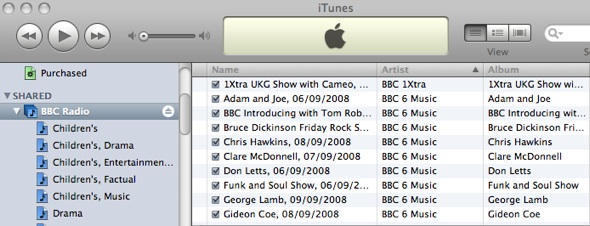
Here’s a neat hack from the team at BBC Radio Labs, a research and development team looking at new ways to broadcast and distribute radio content:

Team member Matthew Wood explains his thinking thusly:

“Here’s what I was thinking: all my music is in iTunes. iTunes, via an Airport Express, plays out through my Big Speakers. Wouldn’t it be nice to be able to use it to find out what this week’s Thinking Allowed is about, or to enjoy some rough dubplate pressure from 1Xtra? … Simply, the app grabs programme information from /programmes and re-presents it to iTunes in its native tongue: DAAP.”

In short, Matthew’s code grabs the BBC’s Flash-based online radio service and hooks it up with iTunes, ending the need for using horrible Real Player (and therefore browsers or Dashboard widgets that depend on it). What a neat idea.

It’s not very consumer friendly yet, but it’s pointing in a very attractive direction.

Bad behavior

By

post-2763-image-34f1712e10659598a4ce0bc2febc76cb-jpg

I don’t often read Windows sites, let alone link to them, and even then not when I think they’re rightly criticising Apple or Mac OS X. But in this case, I think it’s justified.

Ed Bott got a surprise when he upgraded to iTunes 8 on his PC running Windows Vista. Not only did he get iTunes 8, he also a QuickTime update – and that’s fine, because the installer told him that was going to happen, and he continued with the upgrade knowing what to expect.

Or so he thought.

But on further investigation (see the annotated gallery), it turned out that the upgrade process also installed a bunch of other things: Apple Mobile Device Support, Bonjour, and Mobile Me. And on top of those, a couple of drivers, one of which is a known cause of serious crashes.

Ed’s post isn’t a complaint about the software itself (although the crash-causing driver is a pretty annoying problem). What he’s most annoyed about is the manner in which it was installed. If Apple wanted to install all this extra stuff, it should at least have the courtesy to tell him so first.

This is precisely the sort of behavior that Microsoft, Real, and many other Windows software companies got into trouble over back in the 1990s and early 2000s. I can remember people getting hugely angry with Windows software that tried to sneak its way into your computer.

Perhaps Apple is doing it this way because it thinks Windows users are accustomed to it. But think how you’d feel if, next time you ran Software Update on your OS X Mac, it told you there was one upgrade available and then started to install six different things? Wouldn’t you be suspicious? Wouldn’t you be just a tad annoyed?

iPhone 2.1 Software Update Now Available

By

post-2771-image-d17ee4241e91e3391370cd31a833bb14-jpg

Apple has released iPhone 2.1 firmware as promised at Tuesday’s Keynote event in San Francisco. This highly anticipated software update is supposed to fix a host of bugs and provide performance enhancements that should dramatically improve the iPhone user experience, according to Apple.

Among noticeable upgrades, users should see improved cellular network connectivity, significantly improved battery life, dramatically shorter iTunes backups, improved fetching of e-mail and faster installation of third-party applications. The update also adds a repeat alert up to two additional times for incoming text messages, adds an option to wipe data after ten consecutive failed passcode attempts, and adds Genius playlist creation in iTunes.

Does your iPhone seem bigger, better, faster, more with 2.1 firmware? Let us know in comments below.

Why iPod touch will never be a major gaming platform

By

post-2767-image-a420f1edb41e4fc1fd40294d6a31f095-jpg

UPDATE: One year on, and my view of the platform for gaming has changed somewhat—read Why Apple is Right to Pitch iPod touch as a Games Console to Beat the DSi and PSP Go.


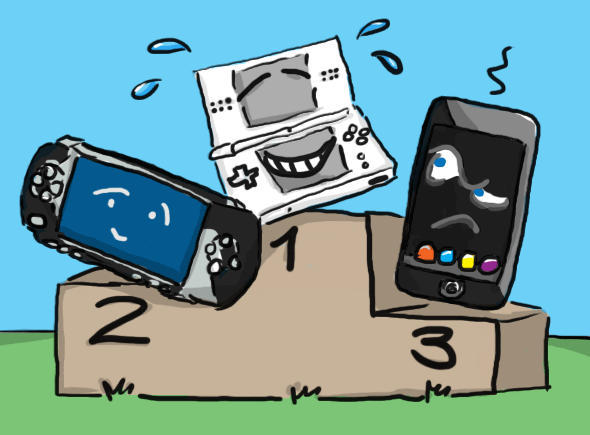
The iPod touch segment of Let’s Rock was particularly notable for Apple’s attempts to position the device as a major gaming platform. “It’s the best portable device for playing games,” claimed Jobs. Apple’s website now calls iPod touch the ‘funnest iPod ever’, and talks about its ‘hundreds of games’. This emphasis on gaming, along with the demonstrations we’ve seen from various developers, appears to be positioning iPod touch alongside Sony’s PSP and Nintendo’s DS, rather than talking about mobile gaming as though iPod touch has any relationship whatsoever to a certain smartphone and cell-phone gaming in general.

There are arguments in favor of this belief. Games have proved phenomenally popular on the App Store. They’re also cheap, relatively plentiful, and simple to get on to your iPhone or iPod touch. Also, crucially, Apple’s solution betters Sony’s and Nintendo’s by allowing updates to games—something owners of the abhorrent DS port of The Settlers no doubt wish were true of their platform.

The problem is, iPod touch is only ever going to be a niche concern in the gaming space. Find out why after the break…

Inside the iPhone thrill cult

By

post-2765-image-0ecf9d5c5c71e5dd1aed65401d608afe-jpg

Photography, magic and music-making. Like the iPod before it, iPhone is becoming a cultural icon with creative innovators exploring unusual diversions for the device.

Magic master

Multimedia magician Marco Tempest (he’s on TV with his ‘Virtual Magician’ series in 52 countries) was an early mover. He created a video which appeared to be software running on an iPhone and queued for ten hours to buy one the day it launched in the US. Within ten minutes he’d installed the clip, which he used to entertain the crowd with a series of illusions.

Among other visual tricks, this made it appear the device was being used as an X-ray machine and an electric razor. Watch the amazing video:

More about Marco, after the jump.

Cult of *old* Mac

By

cult_logo_featured_image_missing_default1920x1080

Simon Royal asks: Are G3 Macs still viable work machines?.

His answer is a resounding affirmative, but then you’d expect that of an article at Low End Mac. Simon’s a writer, too, so his requirements for a work machine are pretty minimal: just a word processor, most of the time.

My oldest Mac is a 600MHz Dual USB G3 iBook, which copes bravely with Tiger. It does nothing other than play music streamed from elsewhere, and does that job just fine. The only problem is that getting it started up and playing takes a while:

  • press on/off button
  • (make cup of tea while it boots, connects to network, launches iTunes)
  • tell iTunes to connect to shared music
  • (make another cup of tea)
  • select desired playlist
  • (look out of the window wistfully)
  • start playing music

Apart from that, it’s fine.

What’s the oldest Mac you’ve got that does a decent job of something or other?

Gates-Seinfeld Team Solidifies Strategy

By

A still from a Microsoft ad shows Bill Gates and Jerry Seinfeld eating dinner with a family.
Microsoft co-founder Bill Gates shares an awkward meal with Jerry Seinfeld in a second poorly received ad.
Photo: Microsoft

Ex-Microsoft CEO Bill Gates and Jerry Seinfeld break bread with a stereotypical American family in a second ad that attempts to rejuvenate the Windows maker’s image.

When Microsoft’s in a bind, this is the kind of advertising it comes up with. Something really risky and new.

That’s what I call a webapp

By

post-2734-image-564719a189e7fc6fba5c5dd3cfec49d3-jpg

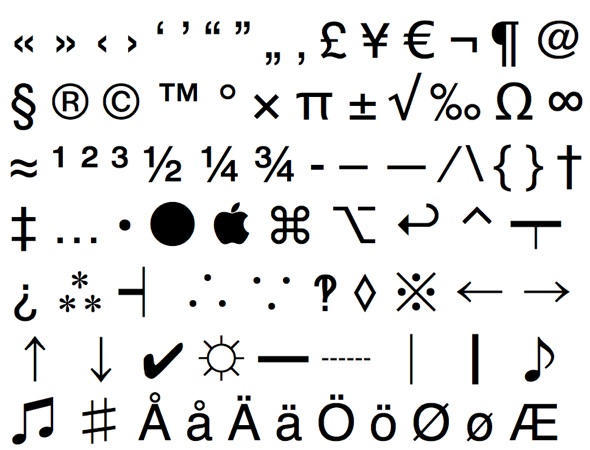
My inability to do a simple task, like call up the international character palette, or even remember its (mostly) system-wide shortcut, is well documented.

That’s why I love something like Copy Paste Char; I’m so much better at remembering URLs. This simple web page will save me whole seconds every year.

I shall now paste in some celebratory glyphs, because I can: (Squiggles omitted — Ed)

(Whether or not they’ll show up properly in your browser, having been mangled in turn by TextMate, WordPress and the browser itself, is a whole nother question entirely.)

First impressions: iTunes 8

By

post-2753-image-005f96591a52e48372c4fb5b59f19e98-jpg

Unless you’ve been living under a rock, you can’t have failed to notice that iTunes 8 arrived to some fanfare earlier this week. I’ve been putting it through its paces, figuring out whether the new features are any good, and scoring them using our patented* rockometer.

More after the break…

* Not patented.

Confirmed: iPod Touch Can Support VoIP Calls

By

post-2751-image-7e17dfaee89ddfc502e187cecd501179-jpg

Cult of Mac has confirmed the newest version of Apple’s iPod Touch contains the hardware necessary to enable free or low-cost phone calls over wi-fi.

With 5 wires connected to the Touch headphone jack (instead of 4 on the previous model), the device now supports the external microphone included with some headsets, according to Kyle Wiens of iFixit, who fully dismantled an iPod Touch on Wednesday.

Speculation about the possibility of VoIP (voice over internet protocol – a method for making and receiving voice communication over a connection to the internet, as opposed to the cellular telephone network) on the iPod Touch arose yesterday when the specifications of new Apple headsets with external mics appeared to include support for the iPod Touch in addition to the new iPod Nano and the 120GB iPod Classic.

“”I’m very excited about the possibility of VOIP on [the Touch],”said Wiens. “Now we just need the software.”

The software may already be here, in fact. TruPhone, a venerable innovator in the VoIP field, already has an iPhone application in the AppStore. Apple has said it would not permit applications that run VoIP using cellular networks, but a purely wi-fi-based calling method could pass muster, making the iPod Touch a little less distinguishable from its iPhone sibling.

External Mic Makes New Apple Headphones Interesting

By

post-2745-image-c1f7f7072dc6a3e813cf60ec7aa1247b-jpg

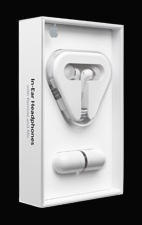
I was immediately intrigued by the new headphones announced at Tuesday’s “big event” in San Francisco. Initially, I was excited by the prospect of the new “in-ear” style that will retail for $79 when they begin shipping next month. I have always found the ear buds on Apple headphones quite uncomfortable, especially for wearing an extended amount of time. The new “in-ear” style seems promising, since they will feature separate woofer and tweeter drivers, which should make for a higher-fidelity listening experience than is available with the standard headphones.

The remote play/pause/skip and volume control available on these new optional accessories (a lower-fidelity version with standard ear buds, available now, sells for $29) is another handy feature, but possibly the most interesting development, which Steve Jobs and many analysts either glossed over or failed to mention entirely, lies in their built-in microphone. At yesterday’s keynote Jobs mentioned in passing that the headset mic will enable voice note recording with the new iPod Nano, which is certainly a value add to that device. But a check of the headphones’ specs on the Apple website indicates they are supported by the iPod Touch and the new 120GB iPod Classic as well.

When I got my first iPod 5 years ago, I longed for a mic/line in so I could record directly to the device and wondered why in the world Apple had passed up the opportunity to produce a cool digital recording device when it was sitting right in front of the design team from the very beginning. Has it finally come to pass?

As usual, the answer is unclear. Comments in a MacRumors forum thread suggest great interest among iPod Touch and iPhone users for the utility of an external microphone, both for the VoIP applications it could enable, as well as for the music recording possibilities (GarageBand Lite, anyone?) it creates. The company makes no claim these new headphones are supported by the iPhone, although it says that iPhone headsets (which also include an external mic) work with iPods.

Stay tuned: when the new high-end headsets become available I’ll be getting a pair to see if my dream of an Apple digital recorder has indeed come true.

Galllery of Images – iPod Touch 2G Disassembled

By

cult_logo_featured_image_missing_default1920x1080

Check out this gallery of images, courtesy of the Apple hardware experts at iFixit, who meticulously recorded their disassembly of the new device yesterday.

Of particular note in the new iPod Touch are the external speaker, support for Bluetooth, and support for an external microphone.

iPod Touch 2G iPod Touch 2G insides iPod Touch 2G battery
iPod Touch 2G logic board with speakeriPod Touch 2G with wi-fi antenna and Broadcom BCM4325 Bluetooth chip. iPod Touch 2G - all the parts

For more images and details on the disassembly see iFixit’s forensic report.

Gallery of Images – iPod Nano 4G Disassembled

By

cult_logo_featured_image_missing_default1920x1080

Check out this gallery of images, courtesy of the Apple hardware experts at iFixit, who meticulously recorded their disassembly of the new device yesterday.

Of particular note in this iPod model is the real glass covering the 240×320 resolution LCD screen and the impressive feature set packed in this “thinnest iPod ever.”

Apple's iPod Nano 4G iPod Nano 4G - The thinnest iPod ever, if you happen to have a micrometer handy. Nano 4G insides are difficult to remove from the casing.
Nano 4G's LCD screen has 240 x 320 resolution. Nano 4G's logic board. The main processor appears to be an Apple-branded ARM processor manufactured by Samsung with DRAM on-pack iPod Nano 4G - all the parts.

For more images and details on the disassembled parts, see iFixit’s forensic report.

Consumers: Apple’s secret plan for the enterprise

By

post-2749-image-a8152220283620feb094f76fcff3d212-jpg

The cult of Mac is growing as Apple emerges as the key computer for US consumers, amongst which it is now the fourth-ranked computer manufacturer, according to new research from MetaFacts.

Brand loyalty, the report claims, is at an all-time high with Apple’s chain of retail stores pulling customers through the doors – and selling Macs, MacBooks, MacBook Airs and MacBook Pros in particular, the researchers claim in their latest Apple Profile Report 2008.

It gets better, “Like the camel slipping its nose under the tent, Apple is reaching into American households as the second or third Home PC,” said Dan Ness, Principal Analyst at MetaFacts. “Where Apple shines is
as the third PC, ranking fifth with 8 per cent of third Home PCs, and ranking fourth in notebook PCs, also at 8 per cent of the installed base.”

And whether that Mac is a first, second or third home computer, what households do with their machine is very different. They’re used to make websites, create graphics and “personal activities”, the report explains – probably while the Windows box gets used for checking email, playing games, and cranking up peoples scores in MMORPG games online. Or something.

Mac users are public, too, this report explains. Seems 21 per cent of Macs are used in public – double the public usage of your WIndows machine – and potentially marking Apple’s ascendancy as a laptop maker.

“If you look around at a Starbucks or cybercafé, you might think the whole world’s gone to Apple,”  said Ness, “Mac users are very active and use their notebooks in more locations than Windows notebook users.”

Wait, there’s more – brand loyalty, “More than four in five (81%) of households with  Apple as their primary Home PC plan to buy the same brand – Apple – for their next Home PC,” said Ness.

All this action in the consumer market, is it any surprise that the long tail effect Apple executives hoped for four or five years ago when they began visualising it has now begun taking place?

The company gets put down a lot for not focusing sufficient attention on the enterprise markets. Perhaps it didn’t – once – but for the last few years of Apple market expansion, the company’s executives have known that consumer demand would eventually become an enterprise market driver.

Think about it – do you recall when you moved jobs and were once excited about the technology you got to use because it would be better than what you could afford at home? Nowadays when you start a new job its not uncommon to live in abject fear (OK, slight trepidation) of the dated system you’ll end up working with…it’s not at all uncommon for workplace technology to be less advanced than the tech company workers have at home.

And as Apple’s consumer market share grows, so too does the demand made on enterprises to offer workers the equipment they are already familiar with.

And that’s the long tail Apple execs set in motion with the iMac in 1998.

Snippets for 2008-09-10

By

cult_logo_featured_image_missing_default1920x1080
  • CG: Genius sidebar could not find matches for your specific selection, but here are the Top Songs and Albums in the iTunes Store. *sigh* #

A Better Alternative To iTunes’ Genius Suggestion Engine: Tangerine!

By

post-2739-image-9e76d523f2ffe9084259907cef14376c-jpg

Genius certainly is a nifty little sidebar to your iTunes collection. After it’s collected every scrap of information about your library and sent it through the Apple ultra-computer you can select any song in your library and create an instant playlist from it. Oh, except for all the songs that aren’t in Apple’s iTMS database.

Since Genius bases all of its playlist making decisions off of the iTunes Music Store users’ hive-mind, it can’t make decisions about songs that aren’t in its database, or songs that no one has bought. That means no Beatles, no live recordings, no transferred vinyl and no public domain digitized cylinders.

Enter Tangerine!

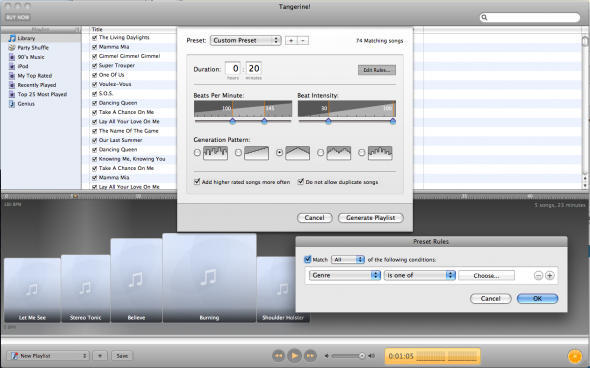
Tangerine! figures out what songs go well together by actually listening to the song itself. After analyzing your digital library (about as long as Genius’s initial setup time) Tangerine! finds the beats per minute and the “beat intensity” of all of your music, after which you can generate loads of interesting playlists. Most important, you don’t just click a button and hope the computer knows how to crescendo, climax and lend some sort of feeling to the music, you can select different patterns of intensities to suit your mood.

Tangerine! also allows you to select more precise or longer playlist times than Genius. You can limit the playlist in the same ways as you would limit a Smart Playlist in iTunes – by genre, artist, etc. – and you can select a range of BPMs and beat intensities that your playlist should stay within. You can export playlists Tangerine! makes to iTunes, and if you buy Tangerine! ($25) you can export those handy BPMs to iTunes to give other playlist makers a leg up.

Tangerine!’s biggest problem: it’s a standalone application. It also requires that you leave iTunes open while it’s analyzing your music.

But those are small costs to the benefits of creating a great playlist on the fly and really understanding where it came from. After reviewing the main features and strengths of Tangerine! it becomes obvious that Genius is underpowered. Genius leaves you wondering how it made this playlist instead of giving you any type of control or understanding of how it picked it. Genius imposes the Apple hive-mind on your music more than any other product they’ve made so far.

I think it’s sad that Apple is under the impression that people want a sidebar application that does all the creative work for you, requires no real input, and generates playlists based on nothing but “what everybody else wants”. Sure you can base creative works off of the statistics in your boring grey database, but I think knowing where something came from, and understanding how to affect and change it gives it part its value.

Apple Makes Good on Green Promises

By

post-2741-image-3a7e513c214b9eee7e6ef5f62f8d67ec-jpg

Among the little-noticed aspects of Steve Job’s “big event” in San Francisco yesterday, Apple’s “greening” of the iPod line may have the most far-reaching effect on its business and on the technology industry in general. Electronics companies have been long derided by environmentalists for using toxic chemicals and materials and Jobs made a public promise to phase out PVC and BFRs from all of its products by the end of 2008.

Today, Greenpeace, a leading environmental advocacy organization is congratulating Apple for leading the electronics industry toward a more earth-friendly future. “Greenpeace congratulates Apple for phasing out harmful chemicals in its new, much greener iPods,” said Greenpeace International campaigner Casey Harrell. “It shows – once again – that there is absolutely no reason why a high-performing electronics product needs to be toxic in order to be popular, effective and affordable – these are the cheapest iPods yet,” Harrell also explained.

The new line of iPods announced yesterday are all free of terribly toxic chemicals such as PVC, BFRs, mercury and use arsenic-free glass. Greenpeace acknowledged the upgrades indicate Apple is serious about meeting the commitments of its environmental policies, but also urged the company not to become complacent.

“We hope that this is only a teaser of what is to come with all future product announcements, from iPhones to Macs,” said Harrell, adding, “What we’d really like for Christmas is to see Apple remove toxic chemicals from all its products, and announce a free, global recycling scheme. Now, that would make a very tasty green Apple indeed!”

Via MacWorld

Lisa Works at a Design Shop in Denver

By

post-2744-image-80a392aa6d03106832fb3515ac68b311-jpg

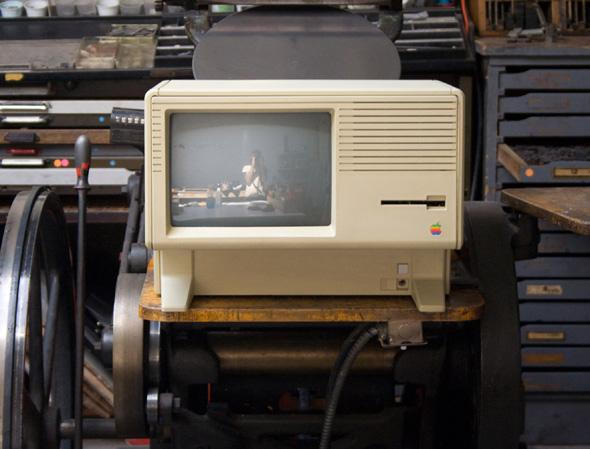
Owner and founder of the Denver graphic design studio Matter, Rick Griffith loves all things Apple. He and his crew use the latest Macs among other gear to do their innovative work. They also love vintage technology and on a recent trip to Denver, my visit to the Matter command center unearthed a pristine Lisa in the wild, which we share with you here.

Bonus points if you can identify what she’s sitting on.