Mobile menu toggle

iTunes Remains Top US Music Retailer

By

post-2477-image-82492b532ff697f2442d759511c346d0-jpg

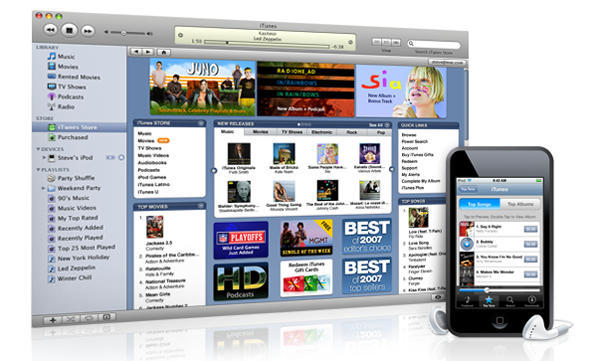
More people in the US turned to Apple’s iTunes Store for their music purchases in the first half of 2008 than to any other music retailer, according to a MusicWatch consumer survey released today by NPD Group, a leading market researcher.

Apple’s digital distribution sales outpaced the three leading physical cd distributors, WalMart, Best Buy, and Target. Amazon, which launched a digital distribution service last year, moved from fifth place into fourth based on consumers’ increasing preference for downloading files over owning physical cds.

“We expect Apple will consolidate its lead in the retail music market, as CD sales continue to slow,” said Russ Crupnick, entertainment industry analyst for NPD. NPD combines digital and physical sales for those outlets who market music in both formats and tracks digital music sold by the song or album, not music purchased under subscription from services like eMusic, or subscription revenues from Rhapsody and Napster.

MIT Designers Resurrecting Apple II for India: UPDATED

By

post-2474-image-7753b2168156477bec5c10ad82fce275-jpg

UPDATE: The MIT design team referred to in this post is basing its design not on the Apple II, but on the Nintendo Entertainment System, which used the same processor chip. We regret our error, which was originally reported by The Boston Herald article to whcih our post was linked. Thanks to David Zeiler at The Baltimore Sun for the clarification.

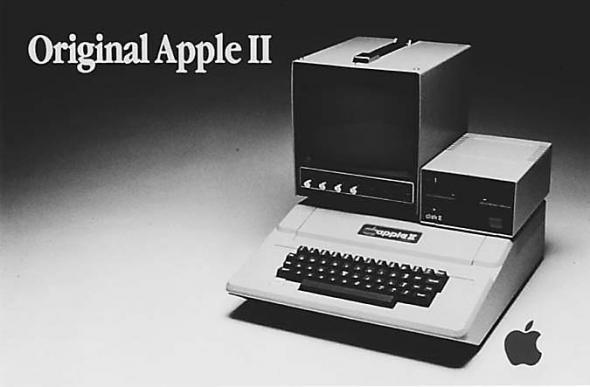
Derek Lomas, an American graduate student, has recruited Apple II enthusiasts at this month’s MIT International Development Design Summit “to give Third World schools Apple II computer labs like the ones I grew up with.”

Lomas, Jesse Austin-Breneman and other designers want to create a computer that Third World residents can buy for much less than the ones currently being developed by MIT’s Nicholas Negroponte, who has been working since 2005 to provide $100 laptops to Third World kids. “We see this as a model that could increase economic opportunities for people in developing countries,” sas Lomas. “If you just know how to type, that can be the difference between earning $1 an hour instead of $1 a day.”

Lomas discovered kids using a cheap keyboard and Nintendo-like console hooked up to home TVs running simple games during an internship in India last summer and hit on the idea of upgrading the devices’ 1980s-era technology. He and others at the Massachusetts Institute of Technology symposium hope to get buy-in from programmers to help upgrade the systems – which are based on old Apple II computers – with rudimentary Web access and more.

The six member team at MIT is working on writing improved programs and connecting to the Web through cell phones. The group also wants to add memory chips – which the devices currently lack – to allow users to write and store their own programs. “We think we can develop a really good educational tool that could give kids exposure to keyboards, typing and mouse usage at an early age,” said Austin-Breneman, a 25-year-old MIT graduate and a mechanical engineer.

Via The Boston Herald

Consumer Reports Piles on Apple Security Criticism

By

cult_logo_featured_image_missing_default1920x1080

Adding to recent criticism charging Apple with inadequate attention to security concerns, Consumer Reports takes the company to task for the lack of phishing protection in Safari. Among seven common online blunders that can “ruin your computer or invite identity theft,” thinking your Mac shields you from all risks comes in at #5, according to the report.

Citing a State of the Net survey that says Mac users fall prey to phishing scams at about the same rate as Windows users, CR recommends Mac users ditch Safari for Firefox or Opera until Apple builds phishing protection into its flagship browser.

Apple Reorgs Mobile Me, Jobs Says Web Services “Not Up to Apple’s Standards”

By

post-2469-image-e2d070a58532dcb0a2998a6e1258149d-jpg

Man, Apple is really trying to make things right today. First, the company released iPhone OS 2.0.1, which everyone seems to agree fixes virtually everything wrong with the prior release (except cut, copy, and paste, of course), and now, it comes to light via Ars Technica that Steve Jobs himself apparently sent out an e-mail announcing the reorganization of the Mobile Me team, saying the internet services suite is “not up to Apple’s Standards.”

The new leader of a combined internet services team will be Eddy Cue, the current iTunes honcho. Jobs noted that the company intends to make Mobile Me into “a service we are all proud of by the end of this year.” That might be possible, but I’m beginning to wonder if the computer side of the equation will ever offer the true Push syncing that was originally promised. Web and iPhone are there, but not the local client apps.

But it’s good to see that even this high-flying Apple crew can admit its mistakes. It was never a good idea to try to launch Mobile Me, the App Store, iPhone OS 2.0 and the iPhone 3G on basically the same day. Is it any wonder that all four of those major hardware, software and service launches experienced some growing pains? Had Mobile Me merely offered over-the-air iPhone syncing at launch, as Jobs suggests in his e-mail, the rest of the suite could have been saved for a 2009 launch with a Snow Leopard Mail and Calendar combo optimized for Push. Let’s hope Apple really takes this to heart — iPhone software development had a negative impact on the launch of Leopard, and the quadruple launch of July 11, 2008 messed up, well, everything. Let’s get some discipline and make the best technology products in the world even better!

Image via Fail Me is More Like It

Technorati Tags: , ,

Leave Steve Jobs Alone!!!

By

cult_logo_featured_image_missing_default1920x1080

picture-4.png

Kris Arnold’s pisstake of the Chris Cocker/Britney video starts off pretty funny — see the video below — but like the original, it goes on a bit too long.

Still, there’s some good lines:

“How f—ing dare anyone even think about selling their Apple stock!”

“All you people care about are Mac rumors, and stock shares! He’s human!… mostly… except his brain… we think.”

“You’re f—-ing lucky he even gave you the iPhone, you bastards!”

 Leave Steve Jobs Alone!!!

iPhone 2.0.1 Highlights: Faster Syncing, No Keyboard Lag, NetShare Not Deleted

By

post-2464-image-4b6880a741e750df424b26758f91004d-jpg

I just installed the whopping 250-Mbyte iPhone 2.0.1 update, and it seems to fix most of the problems everyone complained about. Among the highlights:

  • Everything runs much faster. Could be my imagination, but feels nice!
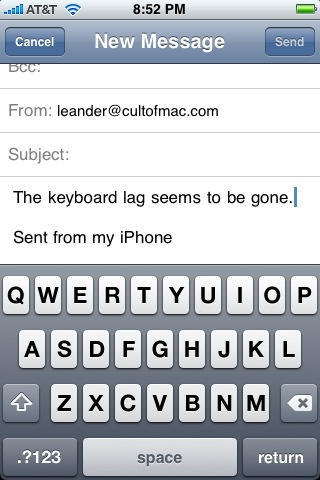
  • Typing is much faster. No more keyboard lag.
  • Infuriatingly sluggish Contacts app now loads fast and scrolls smoothly.
  • Syncing is much speedier. No longer backs up every app! TTF.
  • Google Maps app seems much faster. Loads quick, smoother scrolling and zippy zooming.
  • Overall, update procedure is pretty quick: It installs entirely new firmware, but songs, movies, contacts and other data is left untouched — so there’s no 45 minute restore to suffer through.
  • NetShare app is not deleted. My copy of NetShare works fine after the update. Be sure to sync everything, including apps, BEFORE updating. BoxOffice also seems to sync correctly, according to reports on other sites.

iPhone OS 2.0.1 Arrives… Three Weeks Late

By

post-2462-image-a6c3c1819f89686832d8a8ee3db7b0b0-jpg

As readers of this blog know, we’ve been a bit disappointed in Apple’s July 11 launches, from the mangled mess that is Mobile Me to the crashtacular iPhone OS 2.0 to the absurdly constrained supplies of iPhone 3Gs.

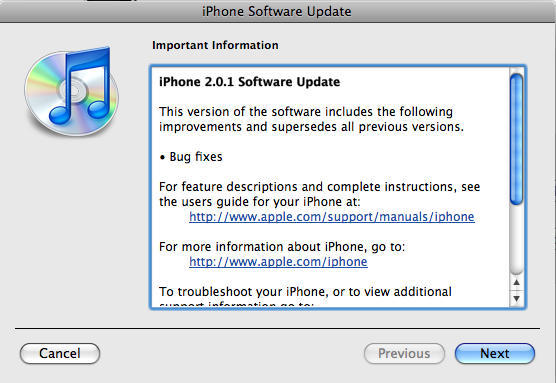
Fortunately, Apple might be turning the corner, at least on the iPhone OS, which shipped in a highly unstable form. Today, effective immediately, Apple has launched a software update for iPhone that promises to deliver, and here I quote, “bug fixes.” All that in a 249-megabyte download. That’s a lot of bugs, folks. I’d love to know how it affects your iPhone and iPod touch experience — particularly as it pertains to third-party app stability.

Launch iTunes and hit the update button to make it happen.

Via Gizmodo

New MacBook Pictures Leaked from Taiwan?

By

post-2458-image-83f8d02f768338aaf261082fef0c307a-jpg

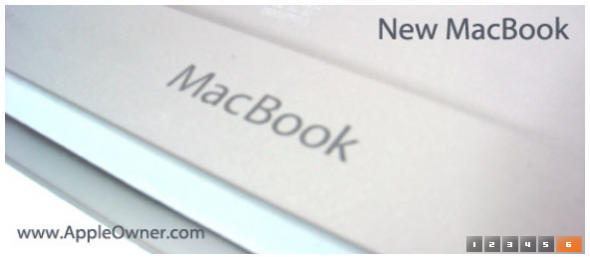
AppleOwner.com, a Taiwanese Apple-oriented website, has leaked what are purported to be pictures of the new MacBook, a highly anticipated revision to Apple’s line of increasingly popular notebook computers expected to be available within the next six weeks.

The photographs are long on suggestion, but short on detail, and may well be noting more than placeholders on the AppleOwner website. Make of them what you will.

Via Gizmodo.

newmac1 newmac2
newmac3 newmac4

Juice Pack 3G Extends iPhone Battery Life

By

post-2456-image-a2e736364cc92ea9043b04f0484245d6-jpg

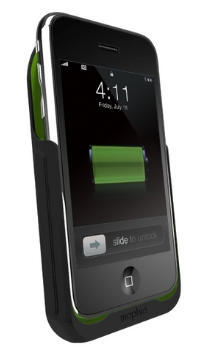
The mophie juice pack 3g, coming in September from mStation, promises to more than double the useful life of Apple’s iPhone 3G battery. Despite Steve Jobs’ insistence that iPhone 3G batteries would be an improvement over the those in the original model, many users have found surfing the web on AT&T’s 3G network, running Bluetooth and using the many applications they have downloaded from the AppStore actually leaves them wanting much more out of an iPhone battery charge.

The juice pack 3g is a rechargeable lithium polymer battery that will come ‘pre-charged’ and ready to go straight out of the package. The battery is housed in an ergonomic, comfort-grip case with a soft-touch, non-slip finish. The added “juice” will give users up to an additional 350 hours of standby time, 6 hours of talk time on 3G, 12 hours of talk time on 2G, 6 hours of Internet use on 3G, 8 hours of video playback, or 28 hours of audio playback, according to a company statement. The battery’s proprietary design provides short circuit, over-charge and temperature protection as well as smart power management. It features a 4 LED ‘charge status’ indicator letting you know how much juice is left, and connects to your computer via USB passthrough – making it easy to simultaneously charge and sync your iPhone 3G.

“iPhone 3G users have demanded a product that will boost battery life for extended on-the-go use” says Ross Howe, Sales and Product Development Director for mStation/mophie. “juice pack 3G delivers this exceptional battery enhancement while keeping the unique style and feel of the iPhone intact.”

Mophie is currently taking entries to raffle off 10 free juice pack 3Gs when they ship this fall.

Apple Pulls Box Office from AppStore

By

post-2440-image-4f90260fb7dbb2ffc01dbff9f09ee161-jpg

Fans of Box Office, an iPhone lifestyle app that lets users leverage the GPS functionality of the iPhone to list theaters and movies playing within a user-definable radius (e.g. 10 miles) will be disappointed to find the application no longer available on Apple’s AppStore.

Metasyntactic, the developer responsible for the application, claims to have gotten no notification from Apple that the application had been pulled and has been unsuccessful in reaching anyone who could explain why it was taken down. “I’m in regular contact with all my data providers, and none of them have had an issue with my app,” he explained in a post on the MacRumors forum. “I’ve tried to contact [Apple] about the issue, but it’s been a complete dead end.”

The Box Office takedown comes on the heels of NullRiver’s NetShare roller-coaster ride on Friday, in which the app was mysteriously gone from the AppStore, then available again, and finally gone again, all with apparently no communication between Apple and the developer.

Via The iPhone Blog

Questions Mount On Apple Security Issues

By

cult_logo_featured_image_missing_default1920x1080

Amid growing criticism of a lassiez-faire approach to security issues, Apple has canceled participation in a public discussion of its security practices at the Black Hat security conference scheduled this week in Las Vegas. Black Hat Director Jeff Moss told reporters in an interview Friday that unnamed members of Apple’s engineering team had agreed in early July to participate in a panel discussion on computer security issues, which would have been a first for the notoriously secretive company. “It was [going to be] them talking about security engineering and how they take security seriously,” Moss said, but “marketing got wind of it, and nobody at Apple is ever allowed to speak publicly about anything without marketing approval.”

In a separate security-related development, reports indicate the DNS security patch released by Apple on Friday may fail to fix the exploit flaw it was intended to repair.

Andrew Storms, director of security operations at nCircle Network Security Inc. and Swa Frantzen of the SANS Institute’s Internet Storm Center both detailed research indicating systems running the client version of Mac OS X were still incrementing ports, not randomizing them, as should have been the case if the fix had addressed the flaw. “Apple might have fixed some of the more important parts for servers, but is far from done yet, as all the clients linked against a DNS client library still need to get the work-around for the protocol weakness,” Frantzen said.

While Dan Kaminsky, the researcher who uncovered the DNS flaw in February and helped coordinate a multivendor patch effort indicated “if there was a huge population of people behind DNS servers running OS X, I’d be more worried,” Rich Mogull, an independent security consultant and former Gartner Inc. analyst said, “It may be a low priority in the scheme of the DNS vulnerability, but if all my servers are OS X, it matters. Within the Mac audience, it matters.”

Via Computerworld

Pigeon Plays Tap Tap Revolution On iPhone — But Sucks

By

cult_logo_featured_image_missing_default1920x1080

picture-1.png

Blogger Chris Ainsworth tried to get his pet pigeon, Brisby, to play the popular iPhone music game, Tap Tap Revolution, a version of Dance Dance Revolution for your fingers. Unfortunately, Brisby wasn’t very good, leading Chris to conclude that pigeons suck at video games. But with the proper operant conditioning, the bird could probably be a killer Tap Tap player.

After all, psychologist B.F. Skinner in 1944 built an experimental guided missile that pinpointed  targets by putting three pigeons in the missile’s nose cone.

The pigeons were trained to peck at an image of the target in the middle of a screen. If the missile wandered off course, the image of the target would wander out of the crosshairs. But when the pigeons pecked the screen to center the target, the missile would correct its flight.

Skinner’s Pigeon Project was judged impractical, but not the pigeons’ pecking skills. The birds performed well, pecking at the target up to 10,000 times in 45 minutes.

Ring Free Mobility Brings VoIP to iPhone

By

cult_logo_featured_image_missing_default1920x1080

rf_dialer.PNG rf_ready2call1.PNG

A select group of some 5000 beta customers in North America can now make and receive international VoIP calls through Skype, GoogleTalk, SIP, and many VoIP services for the cost of a local cell phone call with the RF Dialer from Ring Free Mobility, Inc.

Ask the developers behind RF.com, makers of the multi-platform calling service designed to enhance the phone capabilities of the iPhone, and they will tell you reports of the death of the web app are greatly exaggerated.

The SanFrancisco-based company’s application allows users to make Internet calls over their cell phone’s GSM network. RF Dialer is the first iPhone application that allows SIP URI calls, integrating with thousands of SIP-based VoIP telephone providers and IP-based PBXes (such as the popular open=source Asterisk PBX and Communigate Pro.), allowing business users to utilize their iPhone as a direct PBX extension.

Here’s how it works (after registering with RF, providing your email address, country of service, mobile carrier and Caller ID):

1. You dial a number, or enter a user name, SIP URI, etc., on the RF Dialer, and click “Call”;
2. Using any kind of data connection (Edge, 3G or WiFi — it doesn’t matter as it’s only a small bit of data being sent) and encrypted HTTP, the RF Media Server is sent a call request: your cell phone number, RF password, call destination, and calling service used (i.e.: Skype, GoogleTalk, your own VoIP provider, straight SIP calling, etc.);
3. Once it verifies your credentials, the RF Media Server now refreshes the web page on your iPhone and sends a JavaScript message that includes a link to directly call the RF Media Server (a cell phone call to your local RF number, now either in the US or Canada, depending on where you are);
4. The RF Media Server answers the call knowing it’s you through caller-ID; and immediately makes the connection to the desired call destination stored in its queue.

RF is currently in beta with customers in the US and Canada and plans to go live in Europe sometime in August.

“We use the right technology for the task at hand,” according to RF founder Marcelo Rodriguez. “The calls we facilitate are transmitted via the carriers’ voice network. Our users have mobile access to Skype, GoogleTalk, MSN, Yahoo, etc., and the carrier is reimbursed for that access. It’s a perfect partnership.”

Download Stats Point to AppStore’s Success

By

post-2443-image-863e7a3b48e4c9c5cedc4dc9e7ec4bfd-jpg

Apple began providing registered software developers daily download statistics this week that point to the “game changing” success of the AppStore distribution model.

Eliza Block, the part-time developer behind a popular iPhone crossword application shared a few days worth of her statistics with 9to5Mac that highlight the revenue opportunity for iPhone application developers.

Block’s 2Across app, which sells for $5.99 and has lately been listed as an Apple “Staff Favorite” on the iTunes AppStore, earned her nearly $2000 a day in the last week of July.

While there’s no way to predict whether hers or any other application can sustain that kind of momentum, the news should be enough to send many a coder scurrying to get up-to-speed with Objective C.

Apple Releases DNS Security Patch

By

cult_logo_featured_image_missing_default1920x1080

Apple released Security Update 2008-005 yesterday, fixing a DNS exploit others began work on nearly a month ago. With an increase in reported instances of malware and trojan horses targeting OS X systems, Apple has lately been widely criticized for being slow to move on security vulnerabilities, especially with respect to the iPhone.

The DNS fix is among 13 items updated in yesterday’s security release, which is available through Software Update and at Apple’s web site.

Via MacWorld.

Apple Pulls Tethering App from AppStore

By

post-2440-image-4f90260fb7dbb2ffc01dbff9f09ee161-jpg

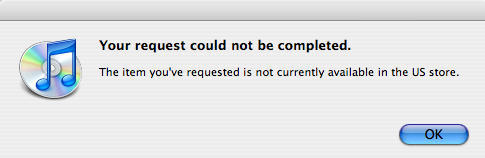
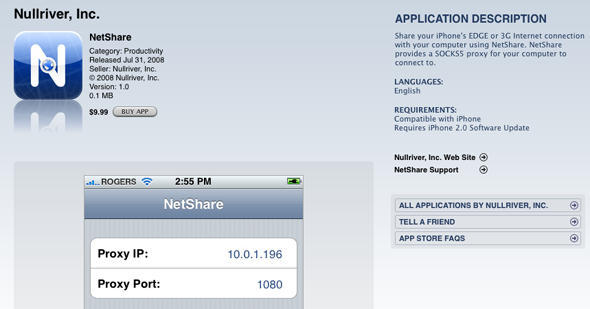
Apple abruptly disabled NullRiver‘s NetShare in iTunes yesterday without explanation to the developer or its customers. The application, developed by the team behind Installer.app, allowed iPhone users to share their phone’s EDGE or 3G connection with a computer, a process called “tethering,” for which AT&T typically charges other smartphone customers an extra $30 per month. NetShare was briefly available in Apple’s AppStore for $10 but a current search for it returns a “no longer available” message and the developer’s website posts a message saying “We’re updating our site…”

Via MacRumors

VMware Releases New Beta for Fusion 2.0

By

post-2438-image-4e580525bc9c1147eb03bca04447d563-jpg

Click the image to view VMware’s Fusion demo on YouTube.

The good folks at VMware have IT Pros all over excited about the new Beta 2 release for its Fusion 2.0 virtualization software. According to our very own Leigh McMullen, this release is important “because it is the dominant virtualization technology in IT Shops, allowing us to create VM’s on our Macs as a “Lab” machine, that we can later run in production, (or take a production image, and run it on our Macs for experimentation).”

Additional goodies in the new release (which is a free upgrade for users of Fusion 1.x) include Leopard Server Virtualization – Yes, Parallels could already do that, but they charge over a thousand bucks for the version that can – and support for Ubuntu Unity mode – which is a FIRST as far as we know.

Check out our gallery of screenshots below:

Big Iron -- Three Major Server OSesMac Friendly -- Animated Status BarMac Friendly -- Apple Help IntegrationMac Friendly -- Dock NotificationsMac Friendly -- PerformanceMac Friendly -- QuickLook IntegrationMac Friendly -- Welcome ScreenTech Users -- New VM Mac OS XTech Users -- Ubuntu Hardy SupportUnity 2.0 -- Application SharingUnity 2.0 -- Keyboard MappingUnity 2.0 -- Link Handling Additional ProtocolsUnity 2.0 -- Mirrored FoldersVideo Star -- 3D Games ShotVideo Star -- Hi Def 2D

iPhone 3G Hardware Reviewed

By

post-2437-image-b33448377356edbb19525bbd90c7221a-jpg

If you’ve not quite had your fill of news and information about the new iPhone 3G in the past three weeks, AppleInsider has launched a comprehensive review of the hardware and software for Apple’s latest advance in mobile computing, with a promise to assess its standing among other smartphones and mobile platforms in a weeklong series starting today. Complete with big pictures.

Paragon Releases Dual Boot Partition Utility

By

post-2434-image-02d2d3fa2a2e1dc1fc56e363eb8b6766-jpg

If you are a Mac Boot Camp user and ever wished you could easily re-allocate free partition space between Mac and Windows, Paragon software’s latest offering may be just what you’ve been looking for. A free, pre-release version of Camp Tune promises to let users redistribute free space between Macintosh and Windows partitions in minutes without data loss, adding free megabytes to partitions on either operating system quickly and easily.

While Leopard’s Disk Utility supports partition resizing, a Boot Camp partition cannot be re-sized without erasing it (although you could back it up first and restore it after re-sizing). Camp Tune’s disk image must be burned to a CD or DVD, creating a bootable Linux-based Disk which Tom Fedro, president of Paragon Software Group – Americas, says “helps remove the barriers between the Windows and Mac operating systems.”

Trademark Filings Reveal Apple’s Evolving Focus

By

post-2432-image-5093a9d29415d1de80d80f68e84a3a79-jpg

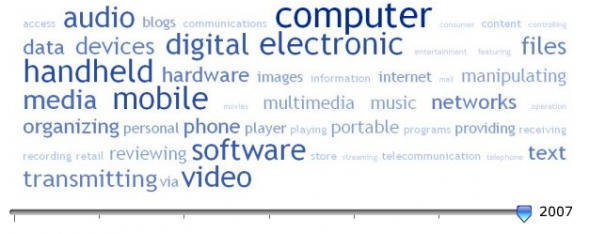
CiSense parsed ten years worth of Apple’s trademark applications to produce an interesting widget that shows via the magic of a dynamic “tag cloud” how the company’s interests in technology have changed over the past decade.

While “computers” remains the most prominent term in the cloud throughout, terms such as “cd-rom” and “multimedia” disappear early on; “video,” “handheld” and “mobile” have become more prominent in recent years.

None of this is surprising, of course, but it is interesting to see a graphic representation of Apple’s evolving business focus.

Via ZDNet.

MobileMe Services Fully Restored

By

post-2395-image-21c55778e0cf202427dd1551e6efc418-jpg

After a rocky three weeks since the official launch, Apple’s MobileMe service got an all-green status update Tuesday night. In a message to subscribers the company said it has established a dedicated chat line for anyone with ongoing problems related to MobileMe mail, the final piece in what the company calls “this new ambitious service” to become fully operational.

The status update also described a newly discovered bug which caused some MobileMe users to lose contact and calendar data on their iPhones, though the integrity of the data on their Macs and with the MobileMe “cloud” was unaffected.

Apple posted a resource for getting data restored to affected iPhones as well.

Are White iPhones Cracking Up?

By

post-2428-image-de22113fe354fd86ec0391fe9c38cf5d-jpg

Image via iPhoneSavior

A quick peek at the iPhone availability widget reveals the model least-likely to be sold out at any Apple retail outlet is the 16GB in White.

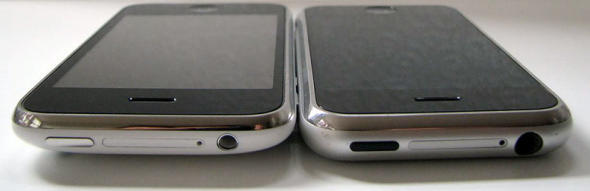
The relatively ready supply of this particular model may or may not be related to possible side-effects of the injection-molding process used to manufacture the phone casings, which are apparently proving susceptible to hairline cracks, as reported by ZDNet.

It will be interesting to see how the re-sale value of white iPhones compares to that of the black models when the next hardware rev comes along.