There is an apparent shortage of iPods in the wake of surprisingly strong demand for Apple’s portable music players on Black Friday.
At Amazon.com, the wait time for 8GB second-generation iPod touchs has stretched to three to five weeks, up from 11 days. The same for the 16GB version, according to Kaufman Bros. analyst Shaw Wu.
During the Black Friday weekend, Amazon was offering iPods at an 11 percent discount.
The shortages were also found at Best Buy, Target, Wal-Mart and others.
An early version of Windows 7, Microsoft’s follow-up to its ho-hum Vista operating software, may appear at a developers conference in mid-January.
Developers attending the 11-city one-day MSDN Developer Conferences will either be mailed or will receive the new software Microsoft CEO Steve Ballmer touts as “Windows Vista, a lot better.”
Microsoft has said it would unveil Windows 7 in 2009.
Another wrinkle in the spy-vs-spy Mac security game appeared Wednesday when a Mac Trojan Horse attempted to disguise itself by naming a file “intego,” a reference to company.
Intego said the OSX.RSPlug.E trojan horse carries a medium-level risk for Mac users, making it the fifth version of the malware first discovered in 2007. In November, the developers outlined RSPlug.D, a trojan horse which downloaded a malicious file.
Like the most recent version, OSX.RSPlug.E entices Mac users with pornographic sites that insist a “missing Video ActiveX Object” must be downloaded in order to view a video. The infected download then contacts a malicious remote server.
Unlike previous versions of the Trojan, two .dmg archives: FlashPlayer.v3.348.dmg or FlashPlayer.v.dmg, create an encoded file named “intego” with read and write permission.
Apple has given iPhone developers an early Christmas present, freeing them (somewhat) from the convoluted mess of ad hoc distribution.
Once an application has been accepted to the App Store by Apple, developers can now issue up to 50 promotional codes. The codes allow the recipient to download a full copy of the application for free. Presently, these codes can only be used in the U.S. iTunes Stores by using the “Redeem” link in the App Store. The 50 code limit is reset for each new version of an application, according to a report at MacRumors.
Presumably developers may continue to use the ad hoc model, wherein a special version of their app can be sent, along with a mobile provisioning file, to up to 100 users (beta testers and/or reviewers) who provide the unique device identification number of their iPhone or iPod Touch, for giving out copies of apps prior to their acceptance in the AppStore.
‘Tis the Season to make a list out of everything you can possibly think of – who’s been naughty, who’s been nice, the Best of This and The Worst of That.
Apple released its lists of the Top 10 Paid and Top 10 Free Apps on the iTunes AppStore Tuesday, and also broke down the top apps by category. If you visited the iTunes store since the AppStore launched in July, you’ve been able to get a running snapshot of the Top 10 overall lists, as they have been published on the AppStore’s front page since the launch.
After opening strong, Super Monkey Ball ended up 4th on the list of top paid app downloads, while Koi Pond quietly, like a zen warrior, took the top honors. Amazingly, enough people paid for iBeer to put it in the #10 spot.
Among the free downloads, two music apps, Pandora Radio and Shazam were in the top 5 (#1 and #4, respectively) and in only two months of availability, Google Earth managed to place #7.
One day after a number of media outlets (including this one) made hay out of the fact that an Apple Support knowledgebase stated “Apple encourages the widespread use of multiple antivirus utilities,” the company removed the page from its support website on Tuesday.
“We have removed the KnowledgeBase article because it was old and inaccurate,” said Apple spokesman Bill Evans, according to a report at Macworld. “The Mac is designed with built-in technologies that provide protection against malicious software and security threats right out of the box.”
Hedging his bet ever so slightly, Evans also said, “Since no system can be 100% immune from every threat, running anti-virus software may offer additional protection.”
Several Cult of Mac readers took issue with the proposition that Macs’ growing popularity has made them any more susceptible to viruses or malware than they have ever been. Thanks to reader James for the tip on the Macworld report.
On Monday night’s Colbert Report, the most feared television journalist in America let it be known he was none too happy that his Christmas Special Soundtrack was 15 spots down from Kanye West’s top selling album on iTunes. He called for the Colbert Nation to crash Apple’s iTunes servers at 5pm EST on Wednesday to vault his record to the top position and “force Kanye to admit I am the voice of this generation, of this decade.”
As of Tuesday night, Stephen Colbert’s disc had moved up two spots to #14, but his new rival, at this writing, is Britney Spears, whose album Circus is presently iTunes’ top seller.
There has been no word from the Colbert camp calling off the flashmob, nor comment regarding whether West’s arrogance remains in need of a takedown now that his record is no longer in first position. Knowing Colbert’s own reputation for having an outsized ego, however, it’s likely he’s still looking for a big bump in the polls on Wednesday.
Just yesterday the web was lousy with stories about the extended delay for the release of Apple’s premium in-ear headphones with remote and mic. Like magic, Tuesday the Apple Store began accepting orders for the hotly anticipated $79 premium iPod accessory, with delivery promised within 7 – 10 business days.
The headset features custom two-way balanced armature (a woofer and tweeter in each earpiece) that Apple claims will deliver “pro audio performance and impressive sound isolation” available more often at 2X to 3X the price.

One of the most anticipated features of these headphones is their ability to allow audio recording on the latest generation of iPods without fitting an external microphone to the dock connector. The headset also features convenient buttons that let you adjust the volume and control music and video playback, and while the specs indicate they are compatible only with 120GB iPod Classic, 4th generation iPod Nano and iPod Touch, many consumer audio analysts believe at least the speakers and microphone (if not the on-lanyard controls) will work with the iPhone as well.
This post has been corrected to accurately reflect its subject’s nationality. The post author was originally directed to the Italian version of the designer’s website, resulting in a misunderstanding as to his national origin.
Vlad Gerasimov is one busy guy. Proprietor of the outstanding design shop VladStudio, this Russian designer has created hundreds and hundreds of wallpapers, backgrounds and wallpaper clocks, a sampling of which is displayed in the gallery below.
Vlad has also created a few dozen PhotoShop tutorials that can have you designing like a pro in no time.

You can purchase a lifetime registration good for receiving higher quality, signature free downloads and Adobe source files until December 31st for $19.99, $10 off his regular registration fee.

This is great stuff and well worth checking out, a fine holiday gift idea for the artist or designer on your gifting list.
Apple has filed two patents bringing liquid-cooling to increasingly powerful (and hot) laptop computers. Once the domain of massive number-crunchers, liquid-cooled notebooks foresee a day when quad-core processors and better video overwhelms current fan-driven cooling.
In its U.S. Patent Office applications, the Cupertino, Calif.-based Apple outlined an active and passive liquid-cooling process.
The active liquid-cooling process involves bathing circuits, the heat relieved via fins. A more inexpensive passive liquid-cooling procedure would include a heat sink located behind the laptop’s display. Moving the heat away from the computer’s body could solve the dilemma of an overheated lap.
Apple now has 16.6 percent of the world smartphone marketshare, one analyst said Tuesday. The iPhone became the “only reason” why the global smartphone market didn’t enter a deeper slump, Needham analyst Charlie Wolf said Tuesday.
Meanwhile, handset giant Nokia fell from 63.3 percent of the smartphone marketshare to 43.6 percent for the September quarter.
The global numbers reflect the U.S. market standings which puts the iPhone’s 30 percent in second place to RIM’s 40 percent.
Today in Europe, Nokia introduced the N97, its first serious effort to combat the iPhone’s rapid rise in the smartphone market. And I have to say, I’m pretty impressed. It’s chock full of features the iPhone can’t match (twice the storage, higher-res screen, 5 megapixel camera with a real lens and a good flash), and it’s actually attractive, too. Even better, it doesn’t run Windows Mobile, and the S60 OS seems to have been much better adapted to touch form than the BlackBerry OS on the unfortunate Storm. Plus, it has a really nice QWERTY keyboard, for those who are into that kind of thing.
On the downside, it’s thicker than an iPhone, doesn’t sync with iTunes, doesn’t run OS X and can’t run AppStore apps. Precisely the actual competitive advantage that Apple has built in. It also doesn’t appear to use an on-screen keyboard in portrait mode (favoring T9 text entry), which is pretty obnoxious when browsing with one hand (at least until your bookmarks get set).
Still, this looks like a heck of a phone to be reckoned with for Apple in the European market. No North American release announced at this time, but it does support the 3G network already deployed by AT&T and it will be sold unlocked, so enthusiasts can grab it in the first half of next year.
IBM is asking to interview several unnamed Apple executives in its court case to block former executive Mark Papermaster joining the Cupertino, Calif. based company.
According to court records filed with U.S. District Court Judge Kenneth Karas, IBM seeks to speak with several “senior executives of nonparty Apple Inc,”
Apple CEO Steve Jobs and senior vice president Tony Fadell were among those who interviewed Papermaster.
Apple has added a new wrinkle to its copyright infringement lawsuit against Florida-based Psystar. The Cupertino-based media company now claims the Mac clone-maker violated the Digital Millennium Copyright Act.
In a revised claim filed Nov. 26, Apple charged Psystar “has illegally circumvented Apple’s technological copyright-protection measures,” according to Computerworld.
Apple also named 10 new unnamed defendants, listed only as John Doe 1 through 10.
The amended allegations to the original lawsuit filed in July, charges Psystar also sold a restore disk that Apple claims allows users to install the Mac OS X operating system against the license agreement.
The thing about Apple Stores – the thing that makes them such a perfect target for the writers of The Simpsons – is the vibe they have about them. They’re not like most stores; entering the Apple Store is supposed to be an experience beyond that of simply handing over money to Steve Jobs. There’s supposed to be a wow factor. And the architecture and interior design is essential to that.
Apple is pushing for wider third-party adoption of its new Mini DisplayPort display connector by offering free licensing of the specification, Monday reports said.
In an updated designed for “systems where space is at a minimum, such as portable computers or to support multiple connectors on reduced height add-in cards.”
The news follows last week’s uproar by MacBook users who complained of problems watching videos on monitors that didn’t support the DisplayPort protocol.
This is what Cultism is all about. Not merely that you make a stop motion movie using your Mac; not merely that you make one featuring dancing Mac buttons; but that you own five of the things in the first place.
Fluid Tunes is a pretty cool free app from Majic Jungle Software that uses your computer’s camera to interpret movements of your head, hands or feet, letting you browse, play or pause your music in iTunes without touching your keyboard or mouse. It works on OS X 4.11 and higher and is a tiny (788K) universal binary.
UPDATE: With thanks to reader James of RetroMacCast, credit is due to the original creator of this and many other wonderful mosaix-technique portraits, Athens, Greece-based artist, Charis Tsevis. You can download and listen to a podcast interview with Tsevis here.
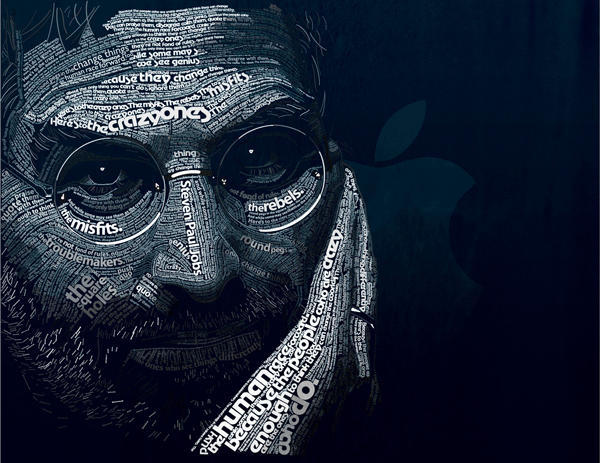
Flickr user mic.imac has a fascinating portrait up of Steve Jobs, comprised entirely of artfully arranged Apple products. The portrait echoes a theme that runs through the upcoming Welcome to Macintosh documentary my colleague Nicole Martinelli wrote about on Monday, which is that the people who work at Apple give themselves entirely to the work of designing and producing the products the company makes.
Of no one is that statement more true than Steve Jobs. As CoM founder Leander Kahney says in the documentary, “Apple is Steve Jobs.”
This prototype tactile iPhone case called Invisual allows sight-impaired users to get the most out of the smart phone. It would work in conjunction with special accessibility functions, such as text-to-speech features and moon type tactile alphabet keyboard.
Portugal-based designer Bruno Fosi crafted the silicon case with modified bas-relief buttons that correspond to the iPhone home screen. Fosi says that the iPhone thus covered keeps all its functions intact, including multi-touch and finger flick scrolling.
When Steve Jobs convened the “Let’s Rock” event to unveil the new iPod Nano in September, he made a point of whetting our appetites for premium in-ear headphones with remote and mic that were said, at the time, to be shipping in October. It’s now December and the Apple website still says “Coming Soon.”
Apple engineers were ordered to revise the design, which required Apple’s overseas contractors to retool their manufacturing process, resulting in the extended delay, according to sources cited by MacBloz on Monday.
The premium headphones, slated to retail for $79, are intended to compete with high-end audiophile headsets costing two and three times that amount from the likes of Bose and Sony, and according to the MacBlogz sources, that standard has not yet been achieved. On the other hand, it should be premature to rule out a splashy marketing deployment of the eagerly anticipated headphones just in time for last minute holiday shopping.
I got an email today from some friends who run a Bay Area IT consultancy. They deal almost exclusively in the PC trade but are Mac savvy themselves, so I was startled a bit by the subject line for their monthly Good News / Bad News newsletter: Two Very Bad Mac OSX Viruses.
Of course, I knew from chatter over the summer and from more recent conversation that the days of Macs being impervious to viruses and malware are probably numbered and sure enough, even Apple Support now officially recommends users install antivirus protection on Mac systems:
Apple encourages the widespread use of multiple antivirus utilities so that virus programmers have more than one application to circumvent, thus making the whole virus writing process more difficult.
The Apple knowledge base article goes on to recommend programs from Intego, Symantec/Norton and McAfee, all of which are commercially licensed products.
My consulting friends recommended iAntivirus, which is a free program, and said, “We have never used it but reviewers say it is good for being a free program. Download and use all free software with caution!”
Another free Mac virus checker (though the developer gratefully accepts all donations) is ClamXav, an updated version of which was released on Monday; the program gets 4.25 stars at Mac Update.
So, is that it? Are we all going to opt for the flu shot from now on? If you’ve installed antivirus software on your Mac, tell us how it’s going and what you like. If you haven’t, or don’t plan to, tell us why in comments.
A video blog entry by Black Eyed Peas frontman Will.i.am shows just how much fun you can have in a recording studio with an iPhone at hand.
At about 1:40 seconds, the club-ready tune on youtube (or under “video blog” on his site) is catchy enough to have some fans wondering whether it’ll be part of his next album. It might not win over new converts to his Blackberry social network or much love at Nokia where he was a featured guest for the Remix party…
Apple wrestled more computer users from the grasp of Microsoft, according to a November survey of Web users released Monday. Macs comprise nearly 9 percent of computers online, Net Applications announced.
The November marketshare of 8.82 percent is an increase over Cupertino’s 8.21 percent share NA reported in October.
Conversely, Microsoft’s share of Internet usage fell in November. Windows fell to 89.69 percent of online users, slipping below the nine-out-of-10 marketshare Redmond has enjoyed for years.
Disney animation movie “Bolt,” where John Travolta lends his voice to the dog-hero in the title, has a brief, fleeting moment of Apple product placement.
Pixar blogger and CoM reader Guido Rogall explains: in Bolt “there’s a chase scene on a train. For a few seconds you see a young woman with a laptop, either a MacBook or iBook, but what is funny about it is that the Apple logo is not lit.”
As another one of our sharp-eyed readers pointed out, this Apple turn-off scenario happens every so often in movies.
Wonder if it’s a mistake or makes it product placement more memorable to clued-in viewers…