SANTA FE, New Mexico — As Arch Sproul unpacked half a dozen Macintosh Classic IIs, all six of his employees hovered around in excitement.
It was fall of 1992, and most of the employees had never used a computer before.
Today, four of those original computers are still in use, working overtime seven days a week at the Virginia Trading Post arts and crafts store, nestled next to dozens of other shops downtown. They are used mainly as cash registers, scanning bar codes, and keeping tabs on inventory.
The machines are rare examples of aging Macs that are still in daily use. They are a testament to the utility and longevity of the Mac, which celebrates its 25th anniversary on Sunday.
Times they have changed: a quarter of a century ago, reporter Michael J. Miller was on the West Coast bureau of Popular Computing. (Now he blogs for PC mag.)
A few choice extracts about his trip down to Cupertino to see the first Mac:
“I met with Steve Jobs, who was then Apple Chairman and heading up the Mac project, along with key designers including Burrell Smith, the original hardware designer and software designers Andy Hertzfeld and Bill Atkinson.”
“Most of the time I was meeting with other members on the team, but I remember Jobs coming in — he was very charismatic: intense, proud of the work and a bit prickly about any criticism. He and his folks were quick to put down the IBM PC and its clones for not pushing the envelope and settling for “mediocrity.”
“Jobs and the team were rightly proud of the new machine, which was very different from the IBM PC that then dominated the industry. Maybe it was the famous “Steve Jobs Reality Distortion Field,” but even then I was entranced by the new machine and the possibilities it offered – particularly the graphical user interface.”
Miller’s trip down memory lane — complete with anecdotes about the Mac II, Apple’s first laser printer and the role of industrial design at Apple — is well worth a read.
Owners of 2005 nanos may receive a settlement from Apple.
Some iPod nano owners may being getting refunds after Apple agreed to pay $22 million to settle a class-action lawsuit, according to a report Friday.
Consumers who purchased the original nano introduced in 2005 could receive $25 as part of an agreement yet to be signed by the court, CNBC reports.
“Apple has agreed to provide a cash settlement of $22.5 million,” the Cupertino, Calif.-based company told nano owners this week. A $25 refund will be given to nano owners who purchased the digital music player without a “slip case,” designed to prevent the screens of early nanos from scratching.
Have you ever dreamed up a new feature for an application, like using network drives for Time Machine backups, or changing the sounds Mail makes when you send messages? Sometimes these features actually are in the application, they’re just difficult to find and change. Most of them require you to know how to use the Terminal or find files deep in your Library or System folder.
Secrets from the awesome people at Blacktree lets you change those settings through a preference pane in System Preferences. Suddenly all those features your Mac’s been hiding from you are just a checkbox away. Be careful though, changing the settings marked as “dangerous” might not be a great idea.
Tarus Balog got in touch to tell us this fantastic story of an original Mac that got dumped. Tarus rescued it from certain doom, gave it a little TLC – and found a little software surprise waiting for him.
Get the full story, and some more great pics, after the clicky jumpy thing.
Palm said Friday it won’t be threatened by Apple’s hint of lawsuit should rivals mimic too closely its best-selling iPhone. The maker of the new Pre smartphone did some trash talking of its own, bringing up “fundamental” handset patents it owns.
“If faced with legal action, we are confident that we have the tools necessary to defend ourselves,” Palm spokewoman Lynn Fox told the Wall Street Journal’s AllThingsD.
Fox said Palm controls a “robust patent portfolio” that includes possibly vital aspects of cell phone design. Palm’s Treo handset is seen as breaking ground for Apple and other smartphone makers.
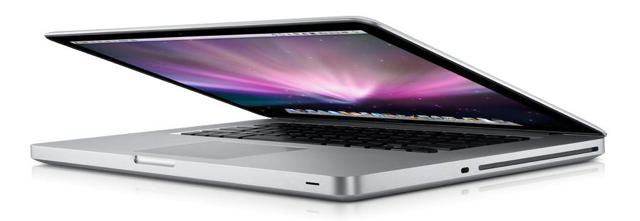
Apple has delayed shipment of some of its new unibody MacBooks by up to a more than a month after originally promised, according to a report Friday.
In one case, a 17-inch unibody MacBook Pro ordered earlier this week won’t ship from its Chinese plant until February 26th and may not reach the buyer until early March, a reader told Apple Insider.
In another instance, Apple has automatically upgraded shipping to overnight for MacBook buyers.
Here’s an informative video by Sascha Pallenberg, conducting a brief interview with a chap who’s got OS X Leopard running on his MSI Wind netbook.
I’ve heard a lot about OS X on the Wind, but this is the first chance I’ve had to actually see it in action. And I confess, I’m impressed. OK, it’s taken this guy a little bit of hacking around to get the machine working smoothly like this (with all the extras like wifi, webcam, and volume controls working properly) – but the end result looks worth the hassle.
If you’ve been online since forever, you’ll remember the Hot or Not meme that was briefly that year’s Lolcats, until something more interesting came along.
But Hot or Not has continued to be hot (or not) ever since. And now you can download the Hot or Not app to your iPhone.
As far as I can make out, these custom-made Japanese iPhone cases are silicone fashioned to look like frosting, turning your device into a frou-frou cake like confection.
Must learn Japanese, however – google translate isn’t cutting it, calling the cases “quite appalling.” Or maybe it’s not a bad translation
Update: kind reader Wonko tells us the word used to describe the cases was “sasumajii”.
Here is the EDICT translation: terrific, fierce, terrible, tremendous, dreadful, awful, amazing, absurd.
So it looks like there’s room for either interpretation…
I can’t decide if this is a delightful sign of the caring Mac community, or if it’s a sickening sign of people who can’t just leave a sick man alone.
Look, over here: it’s Prayers for Steve. Except most of them aren’t prayers, most are simply “Get well” messages. You can add yours. There are, of course, Google ads at the bottom. Could be worse: they could be plastered all over the top and sides too.
I don’t know, maybe I’m being too grumpy. Is this a good idea? You tell me.
A new Trojan Horse is currently hidden in pirated copies of Apple’s iWork ’09 available via various BitTorrent tracker sites, according to a marketing pitch, uh, report from security software manufacturer Intego.
While the pirated software is complete and functional, the installer contains a “bonus” called iWorkServices.pkg. This software is installed as a startup item where it has read-write-execute permissions for root: in other words, it has all the powers of a system administrator. This malicious software connects to a remote server over the internet, alerts its maker that it has been installed and gives this person the ability to connect to the affected Mac remotely.
Given this alert came from Intego, it is no surprise their software, VirusBarrier X4 and X5, protects you against this Trojan horse as long as your virus definitions are dated January 22, 2009 or later.
Boxee released a new version of its free, open source social media software for Mac Thusday that includes support for ABC. Included, of course, in ABC support is access to one of the most popular network TV shows, “Lost,” which serendipitously had its season premier,…wait for it, Wednesday.
The Boxee peeps are duly excited because ABC also produces two other ragingly popular TV shows, “Desperate Housewives,” and “Gray’s Anatomy.”
News from torrentfreak indicating “Lost” was the most downloaded TV Show on Bittorrent in 2008 dovetails with Boxee’s plan, according to a spokesperson, who told Cult of Mac, ” we strongly believe that given the option, most users will opt for streaming a TV Show (with a reasonable amount of ads) rather than using a file-sharing service.”
Online streaming offered by ABC, CBS, NBC, Fox, etc. has made progress over the past 12 months in terms of quality, breadth of selection and release windows (i.e. the time it takes for the show to be available online after it originally aired). In this respect, a service such as Boxee is a great alternative to the file-sharing networks.
Boxee hopes to release an Apple TV version within the next few days and is still working on making it available for Windows and Ubuntu.
Check out this 1,474 megapixel image of President Barack Obama delivering his Inauguaral Address.
David Bergman was fortunate enough to have a photographer’s press pass for the Presidential Inaguration in Washington Tuesday, and he used his access wisely. With a Gigapan Imager and his Canon G10, Bergman shot 220 images and took more than six and a half hours using Gigapan software to put them all together on his Macbook Pro. The completed TIF file is almost 2 gigabytes.
You can view the image in minute detail using flash controls at Bergman’s website, in full-screen mode here (I found this the best viewing on my machine), and at the Gigapan site.
Bergman has only just started exploring the photograph himself, but says he found YoYo Ma taking a picture with his iPhone. The first reader who solves “Where’s YoYo?” wins a great Cult of Mac prize!
iPhone application developer AppCubby has slashed prices on all its apps to 99¢ to combat what App Cubby founder David Barnard describes as, “the challenges of selling in the App Store.” Apps formerly priced up to $10 will now sell at a flat dollar fee, with satisfied users invited to make “donations” to the developer to fund future app development.
“The App Store [has] continued to frustrate me and foil my best efforts. So I’ve decided to try a little experiment,” Barnard says, echoing concerns he’s expressed before over the financial ecology of Apple’s iPhone and iPod Touch application marketplace.
Barnard’s frustration, that “artificial market forces are driving down the price of apps, which in turn drives down the perceived value of the products we have invested significant time and money to create,” has also been widely expressed by developer Craig Hockenberry, who published a wish list of changes he’d like to see made to the AppStore back in December.
AppCubby’s “experiment” will be interesting to follow insofar as it appears to push beyond Apple’s AppStore pricing guidelines, which prohibit “sales” of software outside the approved channel. If App Cubby can gain greater exposure for its products by pricing them at a buck and fund additional development operations through donations made outside the AppStore, it could look like a better deal for everyone – including Apple – than trying (and failing) to move the same apps for $5 – $10.
Documentary film maker Gary Hustwit recently got to interview top Apple designer Jonny Ive for Objectified, a movie he’s making about industrial design.
The interview took place inside Ive’s ultra-secretive design studio near Apple’s campus, which is harder to get into than Fort Knox. This is the first interview I’ve ever heard of taking place inside the studio. Quite a coup for the film. I can’t wait to see it.
In the meantime, I’m dying to know what machines are in the background of this still. I knew the studio was filled with CNC mills and 3D fabricators. Does anyone know what machines are shown in this shot?
The makers of the Boxee media center are reportedly investigating whether to emded its television streaming software in a variety of hardware, including game consoles.
“During CES we were approached by several device makers that wanted to speak with us about embedding boxee into existing or future products,” Avner Ronen wrote Thursday at the company’s blog.
Choosing a hardware solution would avoid requiring consumers either stream video from a computer or modify an Apple TV, a process that could interfere with using the Apple device to stream Netflix videos to your television.
Although embedding Boxee software is not in the near future, Ronen offered a poll, asking customers what hardware (set-top box, TV tuner, blu-Ray DVD, etc.) they would prefer and at what price.
In 2008, Boxee fixed their software after an update to Apple TV disabled the media streaming service. Boxee has received $4 million in venture funding from CBS, Netflix, Hulu and others.
No laptops. Old PCs with outdated software and broken keyboards. No Internet. No phones. Though his administration has been described as representing “an iPhone kind of future,” the first few hours for Barack Obama staffers were the worst kind of analog past.
According to a Washington Post article:
“One member of the White House new-media team came to work on Tuesday, right after the swearing-in ceremony, only to discover that it was impossible to know which programs could be updated, or even which computers could be used.
The team members, accustomed to working on Macintoshes, found computers outfitted with six-year-old versions of Microsoft software. Laptops were scarce, assigned to only a few people in the West Wing.
Several people tried to route their e-mails through personal accounts.
But there were no missing letters from the computer keyboards, as Bush officials had complained of during their transition in 2001.”
Looks like time they started shouting, “Yes, we Mac!”
Via Washington Post
Travelers in economy class flying Singapore Airlines can hook up their own iPods or iPhones to the inflight entertainment system.
Starting in March, A330-300 aircraft with these new hookups will replace older planes flying medium haul routes to Australian and Japanese cities.
The re-designed Economy seats sport adjustable leather headrests and larger monitors.
In addition to iPod and iPhone connectivity (plus a plug if you to power your device) the multi-port panel has a USB port, enabling passengers to listen to their own music, view photos or read PDFs.
United Airlines was the first US carrier to offer a similar service back in June 2008, but it is only available in business and first classes.
Love the idea of being able to catch up on 30 Rock instead of being reduced almost to tears because the only thing left to watch on a long-haul flight was “Legally Blonde 2.”
Apple interim CEO Tim Cook spoke plainly during Wednesday’s earnings call about the company’s being “ready to suit up and go against anyone” who might try to gain a competitive advantage in the mobile device arena by “ripping off” the iPhone’s IP.
General consensus holds the Palm Pre poses the best competition for iPhone thus far, with some analysts drawing close connections between Apple and Palm around the Pre’s touch interface.
Mike Abramsky, an analyst at RBC Capital Markets put the question directly to Cook on Wednesday’s call, asking, “the Palm device particularly seems to almost directly emulate the kind of touch interfaces that [Apple] innovated…Is that to what you’re referring with regarding to ripping off IP?”
Cook declined to talk about any specific company and reiterated his and Apple’s position that “competition is good [and] makes us all better.” However, he also drew analysts on the call a clear picture of Apple’s belief that the “magic” of the iPhone has little to do with hardware and everything to do with software.”
“We’ve said since the beginning software is the key ingredient and we believe that we’re still years ahead on software,” Cook said, adding “we approach [this business] fundamentally different than people that are approaching it only from a hardware point of view.
It’s obviously way early in the game, and in the event Palm’s Pre never manages to gain significant acceptance in the marketplace, Apple is likely to keep its attention and resources focused on other things.
Should the Pre come on like gangbusters and should there be a lot of “hey, this thing works just like an iPhone” talk, it’s not too difficult to imagine Apple calling on its competitive advantage in cash and legal muscle to put the squeeze on a company that, not long ago, was being written off by many as headed for the dustbin of history.
Despite Wall Street urgings to introduce an inexpensive product to spur new customers, Apple leaders suggested the Cupertino, Calif. firm is not about to go there.
“It’s a category we watch, we’ve got some ideas here, but for now we think the products there are inferior and will not provide an experience that customers are happy with,” Apple operations chief Tim Cook said in answer to a question Wednesday.
Earlier this week, Berstein Research analyst Toni Sacconaghi told clients an $800 MacBook could increase demand for Apple products during the weak economy.
Apple announced its retail locations brought in $1.74 billion during the December quarter, selling more than a half billion Macs for the fiscal first quarter.
At a time when retailers search for ways to attract customers and announce the shuttering of poorly-performing shops, Apple said it raked in $7 million for each of its 251 stores.
Large discounts and bundling iPods with other Mac items accounted for much of the upturn in retail income.