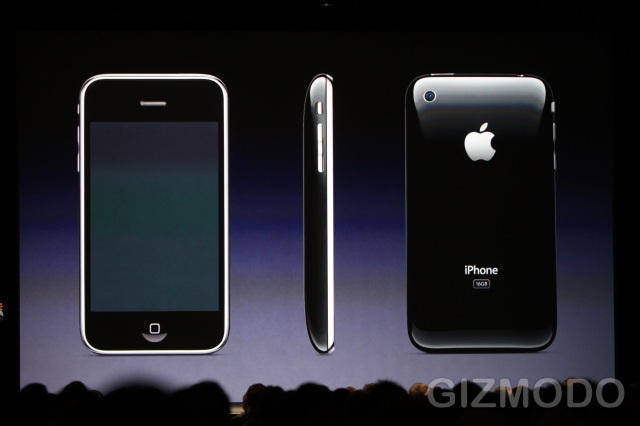
Adobe is working with Apple to develop a version of Flash specifically for the iPhone, according to a report Monday. Adobe’s CEO said tailoring Flash for the touch-screen handset required Apple’s involvement.
“It’s a hard technical challenge, and that’s part of the reason Apple and Adobe are collaborating,” Adobe CEO Shantanu Narayen told Bloomberg while at the World Economic Forum in Davos, Switzerland.
Although 80 percent of handsets use Flash, in 2008 Apple CEO Steve Jobs dismissed the standard and light versions of Flash and said Adobe needed another version for the iPhone.
A carrier announced Monday a deal to sell Apple’s iPhone in the United Arab Emirate and Saudi Arabia.
Emirates Telecommunications Corp. (ETC) said the iPhone 3G would be available in February, however other details were not disclosed. The deal would be Apple’s first iPhone 3G agreement in the UAE, according to Reuters.
Eithad Etisalet, a subsidiary of ETC, will offer the iPhone to cell phone users in Saudi Arabia.
Apple may translate Cold War tactics to the marketplace, using the threat to unload its “nuclear arsenal” in an attempt to derail Palm’s iPhone rival, a patent attorney told Bloomberg Monday.
If swords are unsheathed, the battle could leave both parties bloody and Apple’s image altered, according to the news report.
“The best deterrent of a nuclear arsenal is not to use it,” Morgan Chu, patent lawyer for Los Angeles, Calif.-based Irell & Manella told Bloomberg.
A nice variant on the theme: these from Spanish company iSobre have a spark of color on the inside. Hand-made leather, they’ll provide protection for the MacBook, MacBook Air and MacBook Pro. They come in basic manilla, plus black or white with pink, green, or blue insides.
So you can show your the world that, yes, your computer is thinner than the presentation your boss insisted on printing out for clients.
Can this Casio phone give the Palm Pre a run for its money?
It features dual screens. On one side is the traditional screen many cell phone users are accustomed to, with a full phone keyboard. But twist the screen around, fold it down, and the phone becomes a touchscreen multimedia device similar to the iPhone.
With a 5 megapixel camera, microSD card slot, Bluetooth connectivity, and video recording, it’s got features and specs Apple’s mobile computing device can’t touch. It’s scheduled for Japan release in February, though there’s no word yet on pricing.
They’ve sold a lot of watches over the years, haven’t they?
Great story over the weekend from a TUAW reader who related how being able to produce evidence of his auto insurance saved him from getting a $200 ticket and having his driver’s license pulled after being involved in an auto accident somewhere in the snowy Midwest.
Seems the poor guy couldn’t produce an insurance card for the county sheriff who showed up to investigate the fender-bender, but while Johnny Law was writing up the paperwork, the quick-thinking iPhone user logged into his GEICO account and was able to satisfy the officer’s yen for documentation by having GEICO email a PDF of his insurance card, which the lucky driver produced on his iPhone touchscreen. The cop accepted it as proof of insurance and did not issue the citation.
When the technology historians look back on the development of the iPhone, they will surely remember this as a golden age. Not only have the last few months seen the arrival of dozens of flatulence generators and “flashlights,” but today, we have an application devoted solely to the exploits of MC Hammer.
Just in time. HammerTime, if you will. The new app (iTunes link) has lots of incredibly useful features, including streaming versions of Hammer music videos, his Twitter feed, upcoming events and his official blog. It’s like becoming best friends with Hammer — except he doesn’t put all his friends on the payroll anymore (bankruptcy will teach you some hard lessons). All that, and it was developed by the creators of iFart. Visionary.
When you look on its gorgeous UI and well-thought-out logo, can you possibly deny that this was the very reason the iPhone was created? Of course not. Welcome home, Hammer.
Those who simply cannot wait for Google to release the official version of Chrome for Mac have the option now of checking out CodeWeavers’ free Chromium download, a proof of concept project to get Windows executables to be run as-if-natively on Intel-based Unix operating systems such as Linux and Mac OS X.
Sound like fun?
Those interested in previewing the Chromish experience on the Mac should understand, first, that it only works on Intel CPU architecture – no PowerPC – and has no auto-updater, so if you’re a security skeptic, forewarned is forearmed.
Chromium is built from the open source Chrome code base, however and CodeWeavers helpfully provide a tarball for the source code for those who like to get under a browser’s hood, but, there are still some fairly significant reasons to think hard about whether Google’s browser is for you, even if the official Mac version was on offer.
As presently built, Chrome’s “porn mode” – a feature that allows one to browse the Internet without passing identifying information to visited web pages – is not supported on sites such as Facebook, nor is Chrome capable of being used to collaborate via Google’s own Google Docs application, as an article Sunday at TechCrunch points out.
So, if you’re just insatiably curious about what they’re up to down in Mountain View and you want to give Windows developers a leg up on marketing their wares to the Mac community, go get you some Chromium.
The Contra Code is the most famous video game cheat code ever – Up, Up, Down, Down, Left, Right, Left Right, B, A. eBattalion, developers of the puzzle game FLIP, have built it in to their iPhone and iPod touch app, allowing savvy players to unlock all the levels in FLIP’s “Puzzle” and “Speed” modes.
Full disclosure: I got off the video game train shortly after it pulled out of the Pong station. I think I was trying to get someone with ID to buy me a beer in the PacMan station, and I turned around and all of a sudden, the train was gone and I just never got back on. I know. That makes me both old and non-conversant with something like 80% of the people on the planet.
But I came across this at Macenstein and I think it seems like something that could maybe be built into more than just one of the AppStore’s thousands of games.
So tell us, Cult of Mac gamers, is FLIP the only iPhone/iPod Touch game that can be unlocked using the legendary Contra Code?
Surely there are other hidden gems and “easter eggs” out there, for Apple-oriented developers are nothing if not whimsical and versed in the historical arcana of game and software lore.
Let us know what you’ve found in comments and we’ll feature the best bits in another post.
This post has been edited to correct the author’s error transcribing details of the Contra Code in the original. Thanks to commenters who pointed it out.
The latest competitor for MP3 player domination comes out of Japan (where else?), where an engineer friend of Engadget, living in the town of Ageo, has built a motion controlled device that plays tunes from an SD card.
Housed in a set of speakers (switching from stereo to mono when the satellite is unplugged), the very DIY device has an accelerometer-based interface: you can skip ahead, skip back, change albums, pause, loop, turn down or crank up the sound by tilting, tapping, or setting the thing down.
The iPhone and iPod Touch take another step toward recognition as legitimate atristic tools with the introduction of an app called Lignt, from Digital Film Tools. The app allows users to introduce realistic lighting and shadows to any photograph using digital versions of the gobo library created by Gamproducts.
Normally used in front of lights during photography, gobos, or patterns, are widely used by lighting designers in theatre, film, photography and television to create atmosphere, project scenery, and generally enhance the visual impact of their lighting.
With Light, these same exact patterns can be applied digitally to an entire image or inside a selected area. Gobos from the Gamproducts collection included with Light are arranged into categories designated Breakups, Foliage, Lights, Sky and Windows, and are controlled with sliders affecting light position, rotation, and size. They even built-in accelerometer functionality so that a shake can produce a random effect or reset effects to the photo’s original state.
One probably needs to have an advanced sense of lighting design or a least a little training to make truly effective use of Light’s capabilities, but for $2, anyone can take a whack at turning blah and boring into striking or alluring just by experimenting with different effects.
Light is a great example of the many applications being developed to drive the evolution of Apple’s mobile device platform. As iPhone’s drawing and photography options become more varied and its output is more accepted, look for a new wave of visual and multimedia creative talent to come from its millions of users.
T-Mobile USA, the carrier that released the first Android-based cell phone, said it plans this year to introduce more smartphones using Google’s open-source handset platform.
Promising “more G series phones” in 2009, T-Mobile USA senior engineering vice president Neville Ray breathed new life into rumors of the G2, according to industry publication FierceWireless. The G2, created by HTC, reportedly could be released in April.
Unlike the G1 which T-Mobile released in mid-2008, the G2 would ditch a slide-out QWERTY keyboard for a virtual one similar to the iPhone. The phone could also carry a smaller price, making the handset attractive in the current tight economy, according to reports.
The Consumer Electronics Show (CES) is increasingly appearing to be the place to be in 2010 for Apple vendors. The tradeshow announced the iLounge, an 18,000-square foot area for Apple gadget sellers.
A gauge of the swiftness of the shift from Macworld to CES could be seen in that the Apple-centric venue at CES initially was to be just 4,000-square feet.
“In fact, the original space allocated for the pavillion sold out in less that one week – a CES show record,” AFP quoted CEA vice president Karen Chupka.
Just days after Apple released updated iPhone firmware, some owners of the handset report problems connecting with iTunes.
The complaints, voiced on Apple’s online support message areas, revolve around reported trouble syncing their iPhone with Apple’s music store.
While many owners talked of problems with their iPhone syncing with iTunes, one writer reported having trouble adding a movie he purchased to his 160GB iPod.
Computer-maker Dell is considering entering the tight smartphone market, possibly offering a touchscreen alternative to the iPhone as soon as February, according to a Friday report.
Dell is mulling whether to use Windows Mobile or Google’s Android platform to power the handset, according to the Wall Street Journal. The device, which could compete with Apple’s iPhone or RIM’s BlackBerry would also featured a slide-out QWERTY keyboard.
The report follows analyst talk earlier this month that a smartphone from the No. 2 computer-maker was “closer to reality.” In late 2008, accidentally released photos appeared to show two smartphones on Dell’s website. In October, the website briefly featured the Traveler 117 and Traveler 127 from Inventec.
Our friend and colleague at Wired’s Gadget Lab, Brian Chen, has an interesting post up about the potential for the next iPhone to really make a credible challenge to the Nintendo DS and the Sony PSP. He cites a lot of potential factors, including that the iPhone already has 1,500 games, which is five times as many gaze as the DS, and more than double that of the PSP. All that, and it should have measurably better 3-D graphics once it implements hardware from newly acquired PA Semiconductor.
The post’s sources — and Apple — do not, however, address the elephant in the room with iPhone gaming: the controls just aren’t that good. For certain types of gameplay, such as those that don’t require pinpoint touch, or those that can work well with tilt to manage directionality, the iPhone is great. For anything that is best managed with directional controls, however, it’s kind of a disaster. The clearest example of this is the hugely disappointing Katamari for iPhone, which has dreadful tilt-based gameplay that just doesn’t work.
I’d love for iPhone to mature as a gaming platform — and today’s rumors of $20 premium games is actually a signal in the right direction — but some more basic things need to be fixed before we get too concerned about how sophisticated the texture capabilities of its graphics chips are. Otherwise, we wouldn’t be seeing people attempting to bolt a directional pad and action buttons onto existing iPhones.
The TekServe store in Manhattan has been celebrating 25 Years of Mac this week with what it calls “a petting zoo” of Macs at the largest independent Apple shop in the US. The store’s exhibit includes an original Macintosh 128k signed by Steve Wozniak himself, a Lisa, the original Mac Portable, a Newton, a NeXT cube, the G4 Cube, various Powerbooks, the eMate, the legendarily laughable 20th Anniversary Mac, and the first iPod.
If you happen to be in the New York area and want to get a first-hand look at the Mac’s evolution, be sure to stop by TekServe by Sunday, the exhibit’s final day.
The event is free and open to the public. Tekserve is located at 119 West 23rd Street, just west of 6th Avenue. Store hours are Monday through Friday 9 am till 8 pm, Saturday 10 am till 6 pm, and Sunday noon till 6 pm.
In the last of our stories from owners of original and classic era Macs, we talk to Nigel Curson. His Mac Plus has seen action as a desktop publishing workhorse, early internet client, and now toy for kids. And it’s still going strong.
When the new iLife 09 package was announced, I was pretty keen to get my hands on a copy. Some of the features in iPhoto – face recognition, photos on maps – looked too good to be true.
Turns out they *were* too good to be true.
Now that iPhoto 09 has “upgraded” my photo library, I’m cursing myself for installing it. Allow me to explain why.
I *do* like the new features. The face recognition is a little haphazard, but it works most of the time. Seeing photos mapped is also very cool and a great idea for browsing through a large collection.
But you pay a price for these new features. iPhoto 09 includes plenty of new eye candy and interface snazz which is having a detrimental effect on my photo browsing. Photos now animate into view when selected for editing or viewed full-screen. Each photo can be flipped upside down to add metadata, an idea copied from Dashboard widget behavior.
The net result of all this animated swishery is my MacBook’s fans going bananas, and the machine slowing down noticeably when I’m browsing or editing. Frustrating doesn’t cover it: this is maddening, when I stop to consider how smooth and easy and processor-friendly everything was with iPhoto 08.
Another frustration (a minor one, I’ll concede) is that the built-in Flickr upload offers very little in the way of options. Every upload creates a new Flickr set, even if you’re uploading just one image.
What seems to be missing, in my view, is some flexibility in the preferences. If I could simply switch off the eye candy, and tweak the Flickr upload defaults, I’d be a much happier bunny.
In the meantime though, I’m a bit of a grumpy one, and wishing I was still using iLife 08.
If smartphones were judged on component pricing, Apple’s iPhone would best RIM’s BlackBerry Storm. The iPhone 3G costs $174 to make, versus $203 for the Storm offered from Verizon Wireless, according to a new report.
The data from iSuppli suggests carrier Verizon Wireless is greatly subsidizing the $200 touch-screen BlackBerry. AT&T, the exclusive U.S. AT&T has indicated subsidizing the iPhone 3G cost it $450 million in the fourth quarter.
The manufacturing cost difference appears to hinge on component choices, including transmission technology.
This Shel Silverstein inspired iPhone sticker is bound to bring a smile to anyone who grew up on his quirky tales like “Where the Sidewalk Ends” and “Falling Up.”
CoM reader Flunkycarter made the sticker inspired by Silverstein’s 1964 “The Giving Tree,” a tale about a boy who enjoys the fruits (including apples) of a tree without giving back…
He even wrote an an Apple-update of the work:
But soon the boy grew older and one day he got on the iPhone and said,
“Can you make me some money, iPhone, to buy something I’ve found?”
“I have no money,” said the tree, “Also, no copy, no paste and no MMS”
“But you can take my SDK, boy, and make apps to sell them in the store”
And so he did and…
Oh Steve Jobs was happy.
Oh Steve Jobs was glad.
He’s now “obsessed with getting a green case, to match the real book cover more and also printing the branch that is tossing the apple to the boy.”
Don’t know, I like it as it is. Can think of a few people I’d like to give this to…
Here’s an early Mac movie product placement. In the opening minutes of 1989’s “Back to the Future II,” Marty McFly lands in 2015, where hover cars loom, “Jaws 19” in 3D plays in movie theaters and folks sport layered outfits that only a daltonic could love.
In an antiques store, Michael J. Fox does a double-take over a “vintage” Mac sitting next to other 80s relics like a Dust Buster and a bottle of Perrier.
As Apple’s App Store grows and more publishers seek recognition, the Cupertino, Calif.-based company is set to highlight ‘premium’ games priced at $19.99, reports said Thursday.
The action is viewed as yet more confirmation traditional game publishers see the Apps Store and the iPhone and iPod touch as new vehicles to reach customers.
Athough the move would allow big-name games to stand-out from the $0.99 apps, the move is being criticized for a form of red-lining. The new ‘premium’ games section would be limited to large publishers, such as Electronic Arts.