The Backs Of Some New Computers


 Apple may unveil a new slate of Macs as early as today, advancing a rumored late March announcement. These latest reports suggest the computer maker could introduce updated versions of its iMac and Mac mini desktop line.
The chatter comes from the French MacBidouille and Dutch OneMoreThing, which offered details of a potential Apple hardware refresh, including model numbers and alleged photos of a new Mac mini.

Some think that the iTunes model — small payments for content subscriptions — might help save floundering old media.
One case in point: London fashion glossy “Drama” pictured above which was shuttered as a monthly newsstand mag only to be reborn on iTunes. At $3.99, the digital version for the iPhone and iPod Touch costs about what you’d expect to pay for something you could read on a train.
The people who came up with the idea of letting the mag rise from its ashes in digital form are calling it “the beginning of the next revolution in publishing.”
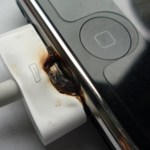
Tim Colburne plugged in his iPhone 3G to his computer’s USB port and left it to charge. Three hours later, it caught fire. The above is an aftermath pic.
Colburne writes on his blog: “The fire started in the space between the lead and the phone and resulted in a couple of pins fusing together.
Although the main functions of the phone are apparently unaffected, the device won’t connect to the computer which means I can neither charge it nor transfer data. Result: one dead iPhone.”
Colburne reckons very few iPhones go up in flames, he was able to find one other similar incident on a site from Sweden in 2008.
Anyone else?
And if your iPhone did go into meltdown, how did getting a replacement go?
Via A Roman Thought
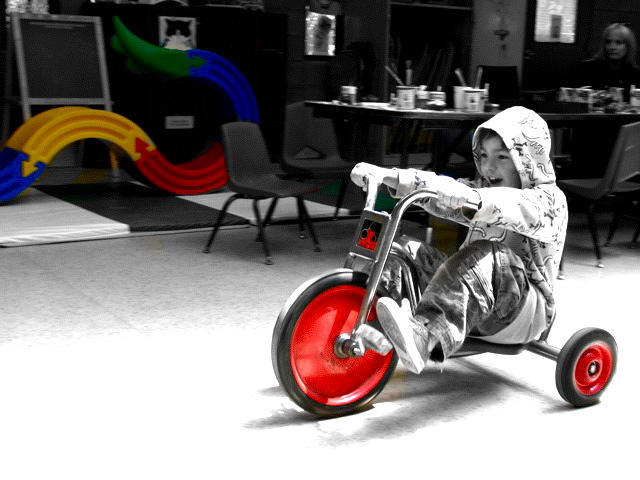
We’ve written previously about the odd dichotomy emerging from the general disdain with which the iPhone’s camera is regarded — fixed focal length, only 2 megapixels, blah, blah, blah — and the ever-increasing number of applications appearing to give iPhone photographers unprecedented control and creativity over their images.
Tonight we call your attention to a wonderfully whimsical app called ColorSplash, for two reasons.
First, it’s an amazingly powerful tool that, for $2, gives anyone the ability to transform their snapshots into arresting images in a way that Madison Avenue has long paid professional photographers and creative directors big bucks to do.
 Using your finger on the iPhone’s touch interface you can highlight just enough color on a black and white image to make it pop, turning something ordinary and mundane into something extraordinary and memorable.
It’s cool, it’s easy, intuitive and it works. And it’s $2.
Which calls for the second point, which is that, when this kind of thing can be done so well and so easily and so cheaply on Apple’s mobile UI, just imagine the creative possibilities to come when touch interface technology becomes the norm for high-end mega CPU computing platforms.
What I was able to accomplish here tonight, literally in a few minutes dragging my fingers across a little 3″ screen, would have been far more complicated — if not more time consuming — to accomplish using masks and layers and industry standard digital retouching tools in common use today.
The current economic situation may appear to be dire in many respects, but the future of creative expression, as evidenced by the explosion of tools and ideas inspired by the iPhone, seems bright indeed.
Pocketmac and the ASPCA announced Monday a one-of-a-kind fundraising promotion in which $1 of every sale of Pocketmac’s $3 iPhone game ShiveringKittens will go to the ASPCA through the end of April 2009.
ShiveringKittens is a quirky puzzle game in which users must successfully arrange falling blocks of ice in order to free – you guessed it – shivering kittens – from their cold-hearted captors.
Comes complete with a strangely hypnotic soundtrack, appropriately mewly sound effects and 10 levels of increasingly difficult play.

Leave it to Van Morrison to pull back the curtain on the state of the music industry today: “We don’t know where the record business is going, and the record companies say, ‘We don’t know what’s happening, and it’s a really bad time.’ So if it’s really bad, why would you want to do business with a record company?”
Morrison, perhaps Rock’s greatest living iconoclast since the death of Frank Zappa, gave a wide ranging interview to TIME, in which the much-beloved, notoriously cranky Irish troubador downplayed the importance – to him and fans of his music – of download sites such as iTunes, admitted he’s neither inspired nor impressed by anything or anyone in music today, and said if he had one thing to do over he would never have become famous.
Follow after the jump for more on Van the Man’s thoughts on the music business and why he doesn’t need iTunes
I want to ask when the hurting will stop, but the first episode hasn’t even aired yet… This will be the best TV trainwreck of the year, without question.
 An analyst has added his voice in support of two unconfirmed reports Monday that Apple will announce March 24 a Mac Pro, Mac mini and iMac update.
“This would be consistent with our view that new desktops (and generally new products in the future) are likely to be launched at Apple-held events rather than trade shows,” UBS analyst Maynard Um told clients.
Um went on to predict Apple by summer will introduce a 32GB iPhone 3G as well as a 4GB model.
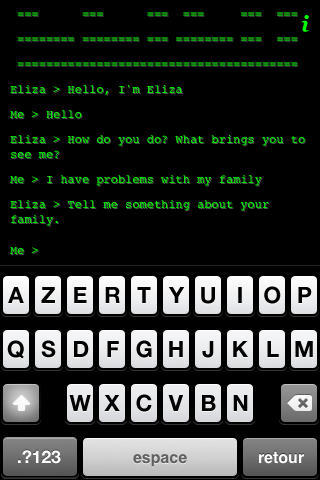
French software development company Visuamobile is planning to launch an iPhone app called ELIZA AI, based on the 1966 artificial intelligence computer program trained to respond to questions like a therapist, that is by asking other questions.
Though the program is dated, Leca says the Eliza iPhone app still had the same effect that surprised creator Joseph Weizenbaum back at MIT in the day — at a certain point people forget ELIZA is not a human therapist.
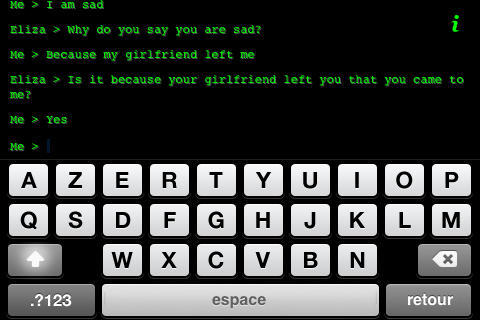
“What seemed really interesting, and I have tested it at the office, is that people are reluctant to show you what they have been discussing with Eliza,” Dominique Leca of Visuamobile told Cult of Mac. Leca, who handles business development at the Paris-based company, had the idea for the app. “And, to tell you the truth, Eliza has helped me several times. The fact that she constantly asks you to explain yourself is a great way to analyze what you think.”
Set to be released for free download on the visuamobile store on iTunes March 3, Leca said the Eliza app will likely remain gratis but the company has more sophisticated psyched-up apps in the works, like one based on AI chat robot ALICE, that will probably be fee-based.
Assisted navel-gazing anyone?
Images courtesy visuamobile

With Manchester United and Tottenham Hotspur scoreless after 120 minutes of regulation play in the English League Cup Final, Sunday, United’s goalkeeping coach Eric Steele turned to his iPod to show goalkeeper Ben Foster videos of Hotspur players taking penalty shots.
In the ensuing penalty kick shootout, United prevailed 4 – 1. Foster told BBC Sport afterward, “We went into the shoot-out as well prepared as possible. We have had things to look at over the last couple of days and before the shoot-out, you can see me looking at an iPod with Eric Steele. It had actual video on it and showed where players put things. Eric brought it when he came to the club. I have never seen anything like it. It is a fantastic tool for us.”
The PR lads and ladies ought to be pullin’ an extra pint for Eric Steele today in Cupertino, eh wot?
Via TUAW
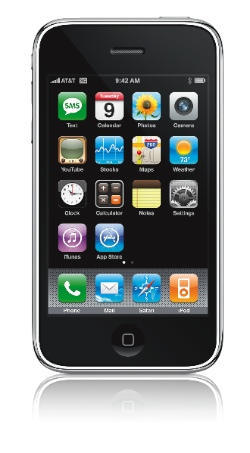
Amid talk of a record drop in PC sales, a new report suggests Apple’s iPhone 3G is undergoing a “recent uptick” in production due to increased consumer demand.
The report by the Wedge Partners research firm points to a trio of factors increasing production of the iPhone 3G: Apps Store advertising, wider promotions by carriers and a drive to offer multi-tiered pricing of data plans.
In the case of advertising, Apple has begun a new campaign pushing its App Store, generating increased demand for the iPhone 3G and the iPod touch.

PC makers will ship 257 million PCs in 2009 with “mature” North American and European markets taking the brunt of the slowdown, according to Gartner.
Desktop PCs will lead the economic-inspired sales drop, falling nearly 32 percent. However, the drop in demand will boost sales of notebook computers, expected to increase 9 percent.

Despite a year described by analysts as rocky, Apple moved up from the number two spot to top Fortune magazine’s list of the 50 “World’s Most Admired Companies.”
Apple was given a perfect score for innovation and people management, while it ranked lower in long-term investment, global competitiveness and social responsibility.
“As much of the computer industry struggled, Apple shipped 22.7 million iPods during its first quarter (up 3 percent from last year), 2.5 million Macs (up 9 percent), and 4.4 million iPhones,” noted Forbes writer Alyssa Abkowitz.
Apple was far above Microsoft, which ranked 10, IBM (17) and Sony (49).
Rounding out the top five: Berkshire Hathaway, Toyota, Google and Johnson & Johnson.
Full list here.
Image used with a CC license, thanks to SheriffMitchell.
Apple may later this month introduce updated iMacs along with other hardware news, according to rumors circulating in the Mac community Monday.
Although Apple has yet commented, two Mac sites point with various degrees of certainty that Mar. 24 Apple will introduce an updated iMac, Mac mini, Mac Pro and various chips.
Sources “did speculate that the Mac mini, iMac and Mac Pro would all be refreshed,” according to the World of Apple site. Those sources were “confirmed to be in reach of such information,” the site said.
 Despite the recent introduction of several rivals, Apple’s App Store is “miles ahead of the competition,” according to a study released Monday.
Apple’s store, created in 2008 for iPhone and iPod touch owners, was compared against similar offerings by Google, Microsoft, RIM and others phone developers.
The Apple App Store has succeeded in attracting developers and surpassing the “number, variety and appeal of applications available,” announced the Global Intelligence Group.

This doesn’t look like the simplest DIY project, but one creative Mac fan turned an old G3 into a house for an old Sega Dreamcast.
The project, dubbed the iCast, started out while doing a workshop cleanup: handy person logicdustbin realized that among the spare parts were a few G3s and an LCD monitor.
Once the Mac was gutted, the LCD fit inside nicely.
Then “it was an easy decision to slap a Dreamcast inside,” logicdustbin wrote on the www.cgcc.ca forum. “The hard part was figuring out where to place it. I didn’t want to cut a big hole in the side of the case… but I ended up doing a ‘PS1 upside down mod’ – its not great, but it works pretty good.”
In final analysis, logicdustbin concedes: “A lot of work went into this, like getting the original power button to work for the new monitor and adding a power switch for the DC, then adding a sound amp to power the iMac speakers…it was all pretty fun to do and it plays just great!”
Step by step, with pics here, check out the video of the working iCast here.
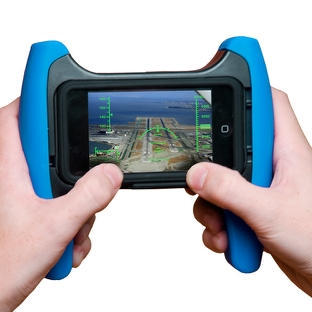
Spotted this Marware game grip for iPhone, with a silicon sweat-proof lining and cleverly-designed slits for cables if you want to play while charging or have headphones on so you don’t disturb fellow commuters or co-workers.
Available for the iPhone 3G and iPod Touch 2G, price ranges from $39.99-$44.99.
While given the thumbs up for games that require a lot of movement (like I Love Katamari) at least one review said the color combo (the only one available) and price didn’t justify the playing ease.
Via Tokyo Mango
Anyone like to start a pool on which big-city police force will be the first to gun down an innocent iPhone user as a result of the hapless victim flaunting his “Bang! Bang!” app in the wrong place, at the wrong time?
With authentic Hollywood sound effects and realistic depictions of firearms “carefully crafted,” all the way down to the “specific look, realistic options, and unique animations” of the real world gun they’re based on, according to the developer, this is not your father’s game of Cops and Robbers.
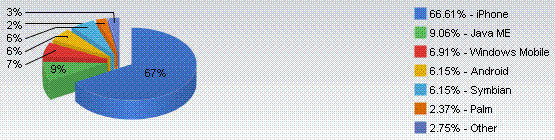
Two thirds of all mobile web access happens on Apple’s mobile OS, according to February results published by market researchers Net Applications.
iPhone’s closest competitor, Windows Mobile, had just 6.91 percent of the traffic, while Google’s Android and Symbian were both locked in a tie for third at 6.15 percent. Palm and Blackberry bring up the rear at 2.37 and 2.24 percent respectively.
It’s worth noting that Android, which didn’t exist before October, was able to gain the marketshare Symbian took two years to achieve, and that, in the grand scheme of things, Apple’s mobile OS commands just 0.48 percent of all web traffic world wide.
Via Apple Insider
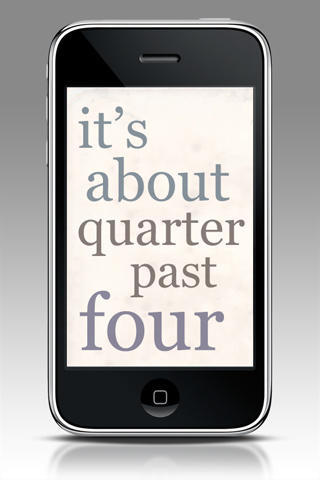
The first thing you see when waking your iPhone is the time, in big, bold, impossible-to-mistake numbers. And yet, a niche that seems to be growing almost as fast as fart apps is that of clocks. A search for clocks in the App Store turns up flip clocks, digital clocks, atomic clocks, analogue clocks even a goldfish clock. So it’s nice to see something a little bit different.
AboutTime (click opens App Store link) displays the approximate time in everyday language – it’s about quarter past four etc. As the developers say it their description ‘how often do you really need to know what the time is to the nearest second’?
At night, the colors change to a much darker palette making it suitable for a bedside clock. But the killer feature may be that when you swipe the screen, the page turns (with a nice animation) to reveal a quote about the nature of time itself from a selection of famous philosophers, authors and more, ranging from Albert Einstein to Britney Spears…
Hit me baby, one more time!
Thanks to DaveH for sending this in!
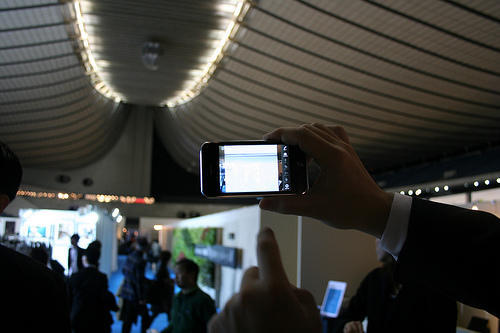
Image: Nobuyuki Hayashi
The perception of iPhone as a “failure” in Japan is largely the result of what people read in newspapers, according to Nobuyki Hayashi, the Japanese journalist who was cited as a source in the Wired article we posted on late last night, and who put up a lengthy post of his own Friday to clarify the situation.
“The majority of Japanese … haven’t even touched one,” Hayashi wrote, adding, “So as soon as I give lecture, show it to them and let them play with it, they change their mind and become a fan of iPhone.”
Much of the chatter about the issue in the iPhone blogosphere Friday stemmed from Wired writer Brian X. Chen’s headline, which stated unequivocally that Japanese “hate” the iPhone, but as Hayashi points out in his post, Chen relied on quotes from a conversation Hayashi had with writer Lisa Katayama back in late 2007 to make his case.
Obviously, much has changed in the iPhone ecosystem, a well as in the US and Japanese economies since then.
The reality is likely more that the iPhone has been a relative disappointment in Japan. Many believe the device could do much better in Japan if Apple gave SoftBank more control in how they market / advertise the device, and if Apple would enable feature sets dear to the Japanese consumer, such as a built-in TV tuner and the ability to use it as a mobile payment system.
For a detailed look at Hayashi’s position on the iPhone in Japan, see his blog post.
Apple tapped Ernst&Young Friday to be the company’s independent accounting firm, severing ties with KPMG, which had audited the company’s books since fiscal 1997.
In a filing with the U.S. Securities and Exchange Commission, Apple said there were no disagreements with KPMG “on any matter of accounting principles or practices, financial statement disclosure or auditing scope or procedure” during the past two fiscal years.
The move, according to an Apple spokesperson quoted for a Reuters article, was a result of a recently adopted board “policy to review the appointment of its independent auditor every five years.”
Apple said the decision to change auditors was made after a competitive process, in which several firms including KPMG were invited to participate.
The regulatory filing said KPMG’s audit reports on Apple’s fiscal 2007 and 2008 financial statements contained no adverse opinions.
Via CNN
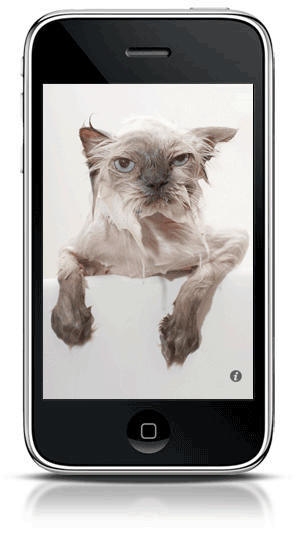
The AppStore is filled with useless programs for iPhone and iPod touch. Sometimes, a truly special useless program emerges above the rest. Today, that’s AngryCat. A program that displays a picture of a wet cat, then plays angry cat noises and occasionally has it attack you when you try to touch it.
Now, you might think that this is meant for laughs. You would be wrong. This is a simulator to prepare you for inevitable angry cat attacks!
“Nonscientific studies have shown that 94.3% of all people are completely unprepared for an angry cat incident. For that reason, we created AngryCat – the Angry Cat Simulator.”
More:
“The best thing you can do when confronted with an angry cat is walk away (or, in some cases, bow and crawl backwards away slowly, acknowledging its supremacy). This application is designed to simulate the effects of what happens when you do NOT do this. Touching and moving an angry cat is a bad idea! If you don’t believe us, try the app and see for yourself what can happen.”
Even funnier are the reviews it has garnered so far. Messiarnd gives it five stars and calls the program “hilarious,” while Famous_Original_Pmatt gives it one star and dubs it lame. He expected it to be more than a static picture of an angry cat. I think his expectations are too high.
The debate will rage on.
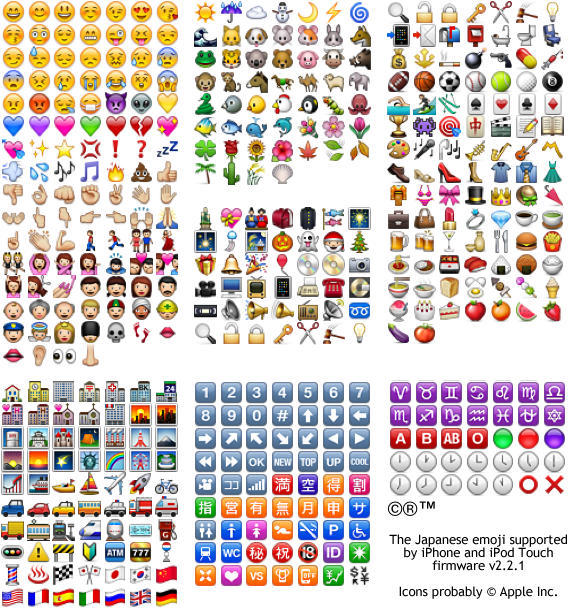
Apple issued a store-wide prohibition on all AppStore support for Emoji Friday, according to a report at ArsTechnica.
Emoji, the cute graphical images favored by many heavy SMS text users and a standard part of mobile communications in Japan, are “hidden” on iPhones sold outside Japan. However in recent months, third party apps and other hacks have appeared, allowing all iPhone users to access Emoji through the phone’s International keyboard options.
iPhone developer Gary Fung, whose Typing Genius has been a hit among Emoli lovers, told ArsTechnica Friday that existing applications that offer Emoji enabling beyond their base functionality have been ordered to remove Emoji support.
Fung said that Apple has required an immediate update to his Typing Genius program with the Emoji support removed and the same order appears to have gone out to all developers whose App Store marketing text mentions support for the Emoji feature.
For a more detailed description of how Emoji are enabled on the iPhone and some speculation about why — beyond the company being just plain mean — Apple came down on all the Emoji-san, see blogger/developer Erica Sadun’s report at ArsTechnica.