Assembly 2009 is a gathering for programmers who love to write low-level code. Basically, any cross platform language has a level of abstraction from the hardware that prevents you from running truly optimized code. These folks love to get the most out of any chip.
That’s in abundant evidence in this clip, “3 1/2 Inches is Enough” by Unreal Voodoo. It’s a drama starring two modern laptops and an earnest classic Mac that was rendered entirely in assembly language on a Mac Classic II — presumably running a 68030 16 Mhz processor. It’s beautiful, and it’s got a great beat. Nice.
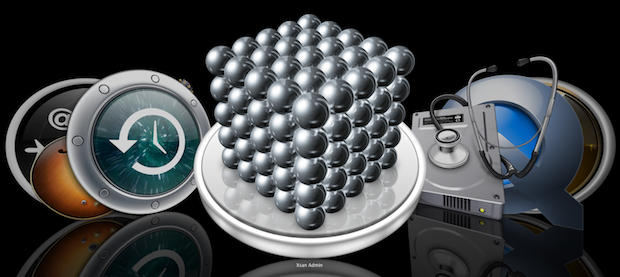
All the icons for folders and apps in Snow Leopard are now drawn in glorious 512 x 512 pixels. It’s a step toward making the operating system resolution independent, and perhaps also to make Snow Leopard a touchscreen friendly OS.
But it’s also obviously done just for the art of it. These icons are real beauties. They are full of great details and little surprises. One icon contains the words to a song, visible only if you blow it up to its full size.
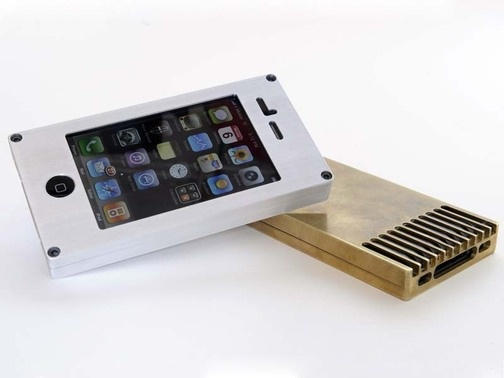
Never put your iPhone in a case, like this highly-protective metal Exovault. http://exovault.com/
When I first went to pick up my iPhone 3G, I was scared. I know what my hands are capable of: Horrible, unthinkable acts of clumsiness. I’ve hurt myself. I’ve hurt others. I’ve even hurt my kitties. So why would I want to put this salvific piece of tech gold into harm’s way? I need to protect this treasure, specifically because I don’t have another $600 to spend on a replacement. And I will be needing one soon.
But I don’t put my iPhone in a case. You shouldn’t either.
Twitter user livelovelight just posted this picture of Steve Jobs’ car in a handicapped spot at Apple’s campus. The snap was posted at 2.43 PST — about half an hour ago. Steve’s car is probably still there.
Forty minutes earlier, livelovelight tweated that he’d just missed Jobs: “At apple headquarters. Just missed steve jobs by 2 minutes,” he said.
Jobs is famous for parking in the handicapped spots (check out this hilarious gallery), but perhaps now he’s recovering from a liver transplant he has a genuine handicapped permit. I don’t see it hanging off the mirror though. He must have taken it with him.
And here he is talking to Jonny Ive. This picture was uploaded to Skitch about 33 minutes ago.
If Apple wanted to stand the world on its ear next Wednesday at the It’s Only Rock and Roll But We Like It event in San Francisco, the company would announce it is opening iPhone software development to all comers and is dropping the facade of exclusive distribution through the iTunes App Store.
Heresy, you say? Perhaps in the eyes of some, but read on to learn why those two moves would be best for the company, the platform, for developers and – most of all – consumers.
We’ve read of all sorts of ingenious ways to power our favorite electronics, including solar and our own body’s heat or movement. But in one of the more practical examples, a New York company harnesses the power of your bicycle to keep your iPod or iPhone charged.
The BioLogic FreeCharge, unveiled at the Eurobike show in Germany, can fully charge your iPod or iPhone in 3 hours. Although its unlikely most of us go on three-hour bike rides, the $100 gadget will keep your iPod from going flat when you’re nowhere near an electrical outlet.
The BioLogic FreeCharge works by taking the power from your bike’s generator hub, filtering the juice through some circuitry that prevents spikes, and sending the electricity off to you iPod, iPhone or any gizmo with a USB port.
The BioLogic FreeCharge will be available March 2010.
Apple clone maker Psystar’s got some new lawyers who believe the federal case against the Florida company is difficult, but not “crazy.”
Kiwi Camara and Tim Nyberg of Houston legal studio Camara & Sibley agreed to defend Psytar in June. They’re taking a winner-takes-all approach, charging the Mac cloner a flat fee — only if they prevail over Apple in court.
“We take hard cases, but not baseless ones,” Camara told the Houston Chronicle.
Marc Sky, better known as the “Dollar Artist,” crafts legal tender into everything from dog sculptures to bookmarks and chopstick holders.
Now he’s made these cool iPod sculptures, about which he remarks:
“Although it can’t be seen in the photos, the scroll wheel (eagle seal) is creased in around the border of the circle. This creates a 3-D effect of the scroll wheel rising up. When you run your finger around the circle, you feel the edge.”
He’s also coaxed dollar bills into cheap iPod stands, meant to angle your device so you can comfortably watch videos.
@Marc Sky. The iMone-y iPod Touch stand.@Marc Sky. The iMone-y stand in action.
Basic one-bill sculptures cost $7.95; the more complex ones using two cost $15.90., they can be ordered from his online showcase.
Adobe’s Flash is fixed in the Mac OS X 10.6.1 Snow Leopard update that’s in the hands of a limited number of developers.
The seed updates Adobe Flash to version 10.0.32.18. Snow Leopard shipped with version 10.0.23.1, which is known to be insecure and needs to be patched to close various security holes. (If you’re running Snow Leopard and haven’t updated Flash, follow this link to download the latest version).
Apple seeded the update less than a week after shipping Snow Leopard on August 28. The other fixes seem to be relatively minor. According to World of Apple, which has published the seed notes, the 71MB update includes:
– compatibility with some Sierra Wireless 3G modems
– an issue that might cause DVD playback to stop unexpectedly
– some printer compatibility drivers not appearing properly in the add printer browser
– an issue that might make it difficult to remove an item from the Dock
– instances where automatic account setup in Mail might not work
– an issue where pressing cmd-opt-t in Mail brings up the special characters menu instead of moving a message
– Motion 4 becoming unresponsive
It’s not unusual for Apple to continue working on the operating system after the launch of a major OS update. In the past, the first update has typically been released in a couple of weeks.
Here’s a selection of games to take you through the weekend from Mac Games and More. Games include a medieval RPG where you play a megalomaniac monarch, an addictive alien shooter, and a challenging puzzler set in Amsterdam. Click on the images to see a larger screenshot.
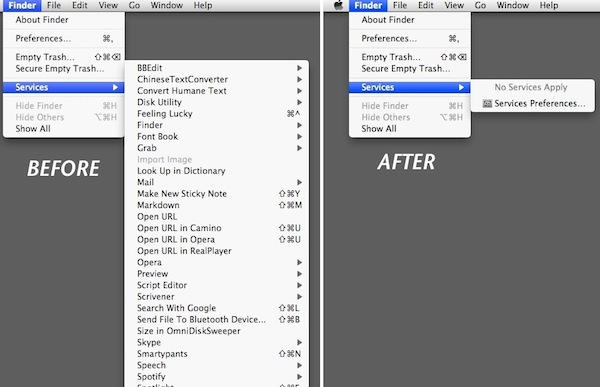
Snow Leopard’s revitalised Services menu is probably my favorite improvement among the many included in the upgrade.
At long last, the user has been given total control over Services. We can choose whether or not they are used, we can assign keyboard shortcuts that suit us, and we can create entirely new Services using Automator.
The crucial difference between Services in Leopard and Services in Snow Leopard is context.
OK, this one’s a bit niche, but some of you might find it useful. For the benefit who’d rather read than watch a video, here’s an explanation.
Many of you will already be familiar with OS X’s built-in zoom feature (which you can reach via the Mouse or Trackpad prefs in Snow Leopard). Hold down Control (by default; you can change it to Option or Command if you wish), then two-finger scroll up or down on your trackpad, or use a mouse wheel if you have one. Your display will zoom smoothly in and out.
And many of you will also have heard about the new QuickTime screencast recording feature in Snow Leopard, which offers does a fine job but lacks the bells and whistles found in full-scale screencasting apps like ScreenFlow.
Combine the two, and you have a neat way of calling out or highlighting details while using QuickTime to record a screencast.
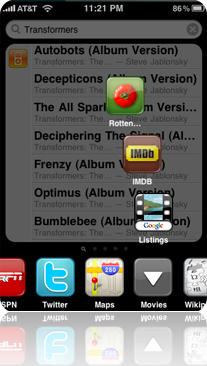
The iPhone Spotlight search feature has been improved yet again.
Universal Search, a jailbreak app from Efiko Software, takes searching with Spotlight to a whole new level. With this add-on installed, Spotlight can access mobile search sites and generate location-based results all from within the Spotlight search window.
Universal Search’s smart input monitoring allows the user to enter a phone number or url directly into Spotlight and options to call, text or visit the url pop up in the results. It also searches Google Maps and mobile sites directly rather than going through a search engine’s web results.
Search sites include Wikipedia, Google Maps, Twitter, CNN, ebay, IMDb, flickr, and ESPN.
Universal Search is available for $4.99 in the Cydia Store.
Multimedia Messaging Service is coming to the iPhone on September 25, AT&T just announced in a press release. The service will be available at no additional cost to iPhone customers with a text messaging plan (which start at about $20). But there’s still no word on tethering (which allows your computer to access the internet via the iPhone’s data connection).
The MMS announcement comes as AT&T draws fire for its slow, unreliable data network. MMS is likely to put more strain on the network, but AT&T claims it is ready.
“The unique capabilities and high usage of the iPhone’s multimedia capabilities required us to work on our network MMS architecture to carry the expected record volumes of MMS traffic and ensure an excellent experience from Day One. We appreciate your patience as we work toward that end.”
We’re riding the leading edge of smartphone growth that’s resulted in an explosion of traffic over the AT&T network. Wireless use on our network has grown an average of 350 percent year-over-year for the past two years, and is projected to continue at a rapid pace in 2009 and beyond. The volume of smartphone data traffic the AT&T network is handling is unmatched in the wireless industry. We want you to know that we’re working relentlessly to innovate and invest in our network to anticipate this growth in usage and to stay ahead of the anticipated growth in data demand, new devices and applications for years to come.
The MMS service will allow iPhone users to send and receive messages containing images, audio, video. MMS is widely available in other countries, and can be enabled on many iPhones with a simple hack.
Tethering is not likely to be announced for several months as AT&T builds out its network with 2,100 cell towers and 100,000 new backhaul links.
A picture from PeopleofWalmart.com. The caption reads: "Yes you see that correctly. It is an old man with big supple delicious looking breast implants."
The cruel but funny People of Walmart website is looking for a developer to create an iPhone app for the website.
If you’re interested in making an iPhone app to make fun of misfits — and possibly get sued for publishing their unauthorized photographs — contact People of Walmart at [email protected].
Surely you’ve seen the viral website, which publishes candid-camera style pictures of the various meth tweakers, rednecks, and other sundry weirdos that frequent the nation’s largest retailer, along with cruelly funny captions.
Just a few weeks old, the site is often down due to server overload. The developers are also looking for a new host that can cope with the traffic.
Now you can create tilt-shift photographs on your iPhone thanks to a new app called TiltShift Generator.
Available now for 99c (the price rises to $2.99 in two weeks), the app makes those fake miniature pictures so popular on the internet.
Created by developer Takayuki Fukatsu, the app works by selectively blurring parts of the picture to simulate a very narrow depth of field, making the subject look like a miniature.
The software can be used to create other effects, like vintage-looking photos.
If you want to try it out before plunking down your hard-earned 99c, the developer also offers a free online web app, and a free Adobe Air version. More sample pictures after the jump.
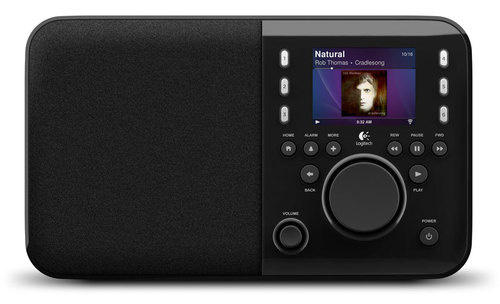
Logitech today introduced two new ways to stream your DRM-free iTunes Plus and other music collections. The Squeezebox Radio is a standalone device which streams iTunes, Napster or Sirius. Using a six-button navigation system, and the unit’s color screen, you can flip through album art, track and station listings, along with visualizers, the company announced.
The 5.12-inch by 8.66-inch by 5.04-inch radio also serves as an alarm clock with a display that automatically brightens depending on lighting situations.
The Squeezebox Radio offers “clear sound with minimal distortion” Logitech claims. The company said the unit has a 3/4-inch high-definition, soft-dome tweeter, plus a 3-inch high-power woofer. A 3.5mm headphone jack is also included.
Sales of Sony’s MP3 Walkman outsold iPods for the first time in Japan for the first time since 2005.
Research firm BCN Inc. found that Sony’s share of the portable music market share rose to 43 percent last week, creeping above Apple’s 42.1 percent.
The uptick in sales is attributed to the W Series pictured above, which sells for under 10,000 yen ($108). Sony’s answer to the iPod shuffle is a 2G wearable headset that has generally met with favorablereviews.
But Sony MP3 players might not be as big in Japan as they seem. As Bloomberg notes, the jump can be at least in part attributed to people ditching iPods for the iPhone, so Apple wins either way.
If you’re searching for a good deal on MacBook Pro laptops, today may be your day. We have two e-tailers vying for your attention. All are Core 2 Duos, with the screen size ranges from 15-inches to 17-inches. Philips also has a $50 iPod universal remote while TigerDirect.com offers this cool Photo ball/alarm clock and dock.
For details on these bargains and others (like a foldable USB keyboard), visit CoM’s Daily Deals page.
Update 2: Thanks to Cult of Mac reader Gus, who noted that certain websites were screwing up his Photoshop. I started playing around with Safari and noticed that sites with embedded Flash were causing the cursor issue. I then recalled Adobe UK PR bod Emma Wilkinson’s tweet from earlier today:
Info: Snow Leopard ships w/earlier version Flash Player, recommend all update to latest, more secure which supports SL https://bit.ly/yP2VA
Sure enough, after installing the Flash update, the problem seems to be gone.
I’ve been a quite vocal critic of Adobe of late, but I’m damn impressed with the company today—it looks like someone is listening, and that’s always a good thing.
Update: Kudos to Adobe. Shortly after this post went up, a ‘Senior Software Product Quality Specialist – Photoshop’ was in touch, and we’re now involved in a discussion to try and figure out what’s going on. Also, Nack is keeping people up to date regarding some of the reported CS3 and CS4 problems.
With any new operating system comes a certain amount of pain, but the transition to Snow Leopard has been relatively easy for me. I’ve had one incredibly nasty hard crash that locked up the Mac, painted vertical stripes down the screen and looped about a quarter-second of audio at maximum volume (it was like the iMac decided to do its own really small horror film), but nothing bad before or since.
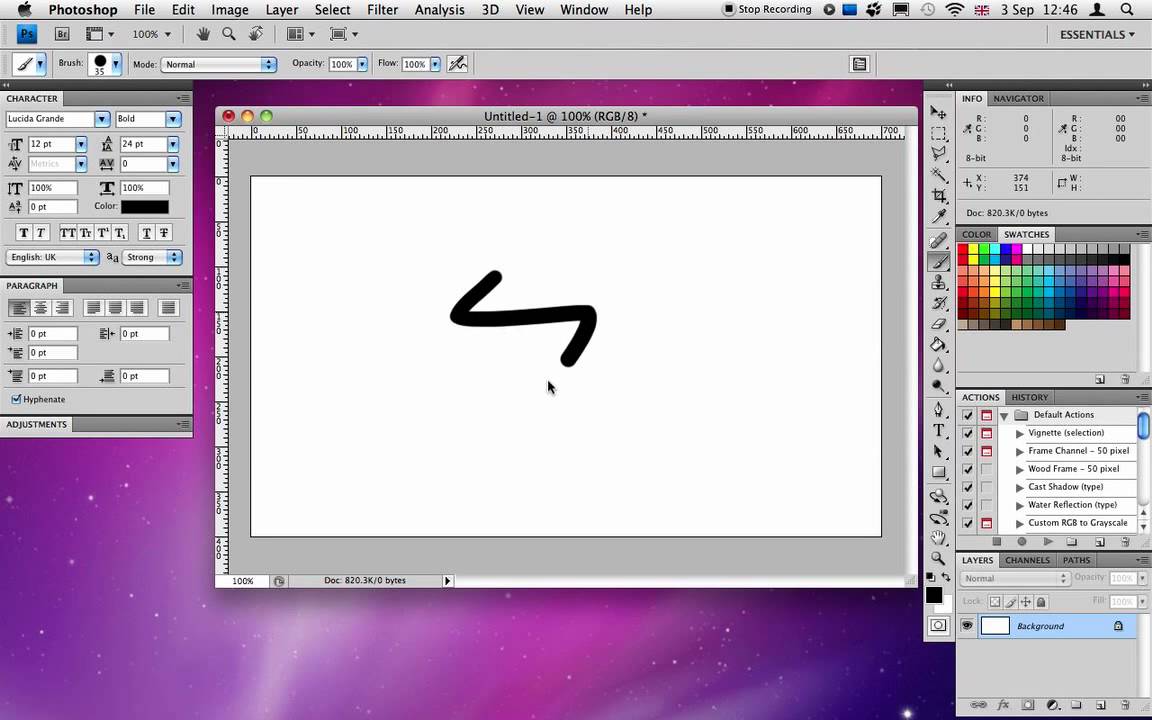
A minor exception is Photoshop CS4, which on the face of it works well, but is becoming increasingly quirky. Two bugs I’ve so far discovered that have hampered my workflow quite significantly are: 1) Photoshop deciding to ignore drags from Finder to its Dock icon—half the time, it opens just one of multiple documents; 2) insanely useful Photoshop custom cursors vanishing when the mouse button is held down.
For the latter of those things, I made a quick video (with an exasperated tone of voice). If anyone knows what the hell causes this and how to fix the bug, please post in the comments. (Note the hardware in this case is a 2.8 GHz Intel Core 2 Duo iMac.)
Now here’s something unexpected. Sophos security consultant Graham Cluley has a warning for everyone who’s just upgraded their computer to run Snow Leopard: go check your Flash plugin version as soon as possible, because you might find that your OS upgrade simultaneously downgraded your plugin. (Assuming your plugin was up-to-date to begin with; full explanation in the video above.)
You can check your plugin version at this page on Adobe’s site.
While the Vimeo Flash video player Graham’s using is not going to cause any harm to your computer, you can’t be certain that Flash content elsewhere on the web will be as safe.
How so? I called Graham this morning and asked him.
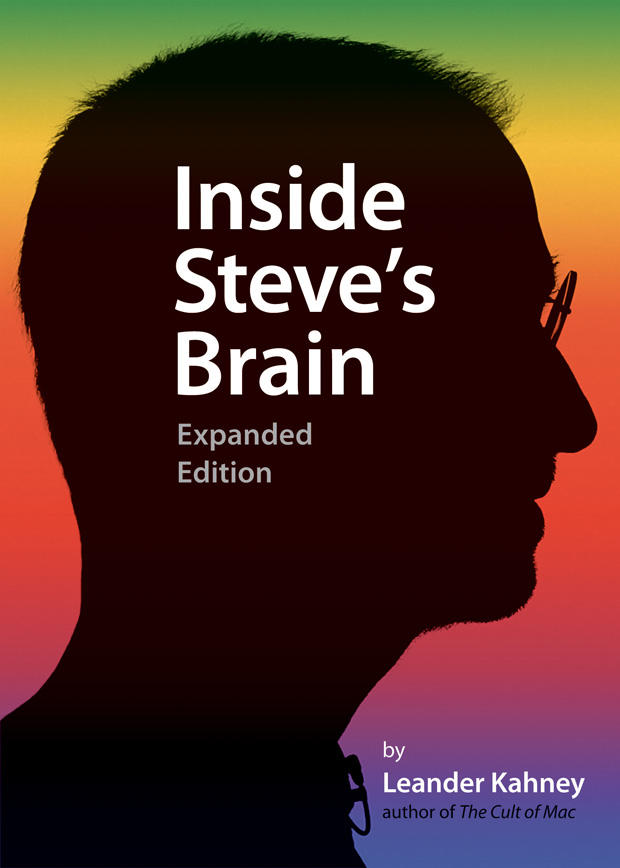
Coinciding with Steve Jobs return to the public eye next week, Penguin Portfolio is reissuing my book Inside Steve’s Brain with a new chapter about how Apple will cope without its dynamic CEO.
Published in April 2008, Inside Steve’s Brain was a New York Times best-seller and an international hit (translated into 15 languages and a best-seller in Brazil and Italy). But the book was written before Jobs’ recent liver transplant, so the publisher asked me to update it for a second edition.
Jobs will take the stage next week at Apple’s special press event to show off new holiday iPods to the press. He has to: If he doesn’t show up Sept. 9, there’ll be a media shitstorm and Apple’s stock will tank.
Jobs’ last public appearance happened exactly a year ago. Last Sept. 9, he presided over a similar iPod event at the same venue. Bloomberg had accidentally published Jobs’ obituary, and when he appeared onstage he flashed a slide with Mark Twain’s famous line: “The reports of my death are greatly exaggerated.”
Indeed. One liver transplant later, Jobs is still with us, thank God. But there will be a time when Apple will have to do without its supreme leader, and as I explain in the new chapter of Inside Steve’s Brain, the company will be both royally fucked and totally OK when the inevitable happens.
Apple is expected to announce the availability of pre-cut ringtones made from popular music tracks at next week’s media event on September 9, according to a report Wednesday at CNET News.
Despite being able to easily make their own ringtones out of any mp3 file for free, consumers have in the past shown a willingness to pay as much as $3 to hear a few seconds of a favorite song when receiving an incoming phone call.
An Apple spokesman declined to comment for the report and no details are available about what the company might charge for ringtones, but the formerly booming, high-margin source of music industry revenues saw a 24% decline from 2007 – 2008, according to a recent report from the research firm SNL Kagan.
With many expecting little more than some tweaks to iTunes and a possible refresh of the iPod line next week, Apple appears to have done a good job of setting the stage for a blockbuster announcement of some kind.
On the other hand, Apple can’t be expected to put a ding in the universe with every single press conference; maybe what we’ll get next week will only amount to “Hey, Look – Ringtones!”