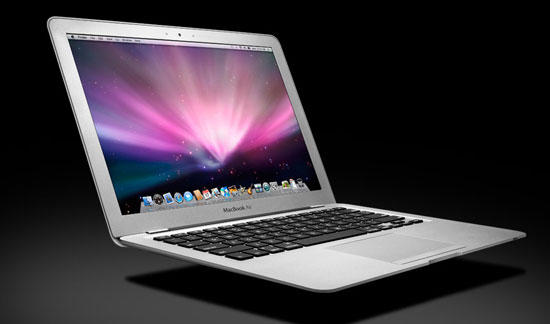
Thinner at its thinnest point than even the edge of an axe blade, Apple’s new MacBook Airs could conceivably be used to split a skull or two, but according to the always-paranoid Transportation Security Administration, it’s still less dangerous than a small bottle of water: if you have to go through an airport security checkpoint with your 11-inch Air, the TSA has determined that it never once has to be taken out of your bag for closer inspection.
First Apple surpassed rival Microsoft in market capitalization, now the Cupertino, Calif. company has beaten the business that Bill built in terms of flat-out revenue. The iPad maker recorded a record $20.34 billion this quarter, compared to Microsoft’s $16.20 billion.
Apple didn’t just beat the Redmond-based software giant, but stomped Microsoft’s best ever three-month period: $19 billion in revenue. The one area Microsoft still leads is profit margin. The company reported $5.41 billion compared to Apple’s $4.31 billion. Apple’s profit margin was below expectation this quarter as it dealt with keeping costs low for the iPad and the extra expense of a free bumper program in response to problems with the iPhone 4.
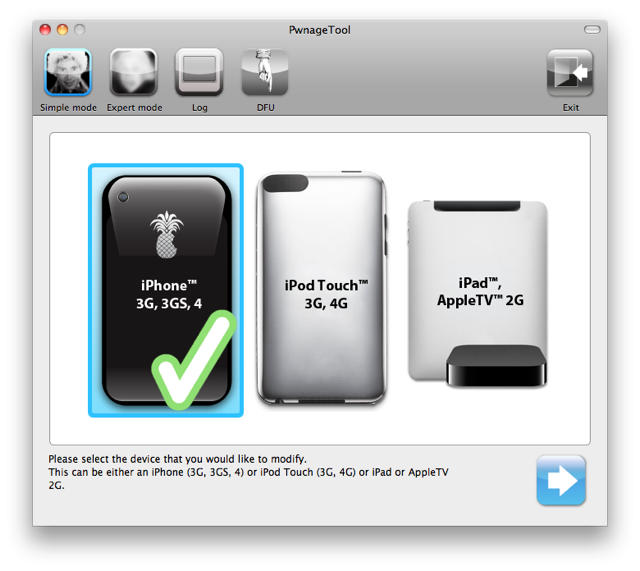
The Pwnage Tool by the DevTeam hacker group allows you to create custom iPhone firmwares for the purpose of jailbreaking, to get full control over your device (see why you should jailbreak here).
Currently, the Pwnage Tool version 4.1.2 allows you to jailbreak a device already on the latest firmware. However, it will NOT unlock the device, enabling it to be used with different GSM carriers worldwide.
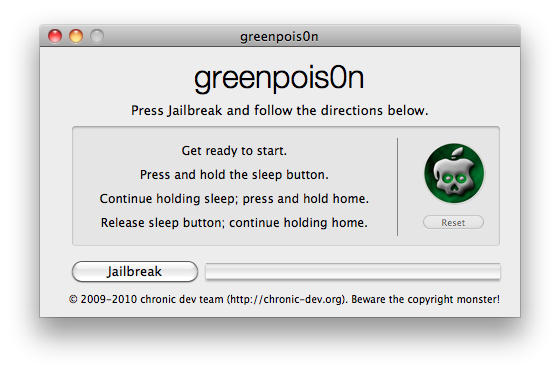
You can also use greenpois0n by Chronic Dev to achieve the same. There’s practically no difference between the different tools, except for the fact that they come from different dev teams.
Chronic Dev has released its Mac version of greenpois0n, his 1-click jailbreak solution (see why you should jailbreak here). However, it will NOT unlock the device, enabling it to be used with different GSM carriers worldwide.
It is pretty easy to use and worked perfectly with my iPhone 4. Besides the tool, there’s a ‘Loader’ application that gets automatically installed on the iPhone after jailbreak, which gives you option to install Cydia.
You can also use Pwnage Tool by DevTeam to achieve the same. There’s practically no difference between the different tools, except for the fact that they come from different dev teams.
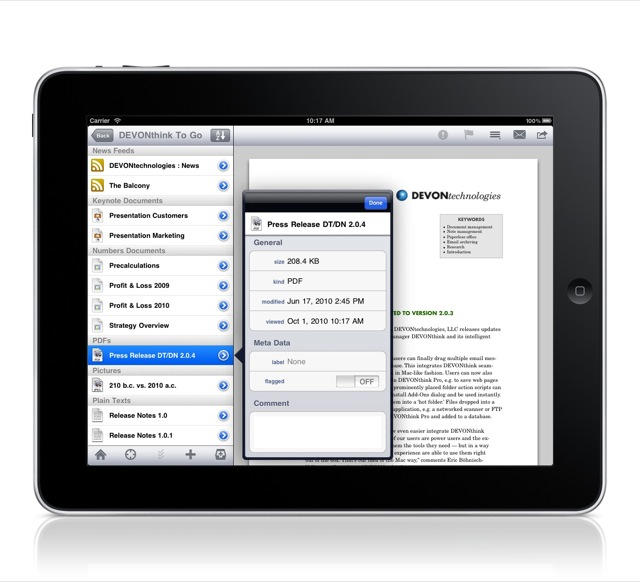
Here’s Devonthink To Go for iPad and iPhone, and it has a lot to offer.
For starters, there’s two-way sync between desktop and mobile databases. Documents that have been edited in other apps can be “opened back” in Devonthink, which will update its database accordingly. And plain text files can be edited inside Devonthink To Go itself.
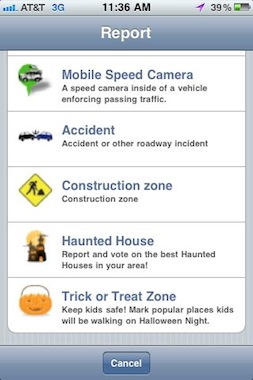
Halloween, with its legions of black-clad kids running around and darting out into the street, introduces its own variety of driving perils. So in addition to warning other users of speed traps and red-light cameras, Trapster users can now mark two new location types on its map this Halloween: haunted houses and trick-or-treat zones.
The free app works through crowdsourcing, which means any registered user can add markers which then become viewable to other Trapster users; and if users find a marker that’s inaccurate (say, if some user tagged their in-laws place as a haunted house), it can be removed with enough votes against it. Now if only the had a marker for houses with the best candy…
One tech-savvy 12-year-old girl spooked a would-be kidnapper by pretending to make a phone call on her iPod Touch.
Police in Delaware are still trying to track down the creep who tried to lure the girl into his van the other evening as she waited to be picked up outside Stanton Middle School.
She told police that a man in a white van pulled into the school driveway and told her to “get in the van.”
There are some people who simply don’t care what their computer is doing in the background; and there are others who can’t live without that kind of information.
For that second group of people, iStat Menus is a no-brainer.
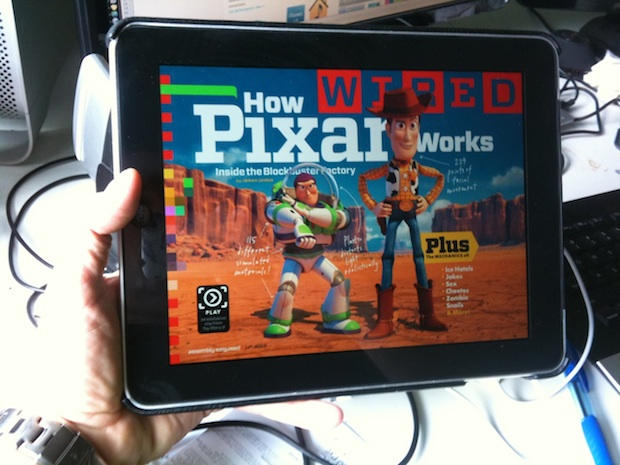
There’s been a lot of hoopla about magazine apps from the likes of Popular Science and Wired, which we reviewed favorably. But these standalone apps are doomed to failure, argues Web designer Khoi Vinh.
Stand-alone magazine apps appeal to publishers and their advertisers, but are totally at odds with the way users are interacting with their iPads, argues Vinh, who is famous for the celebrated redesign of the New York Times‘ site.
Take the recent release of the iPad app version of The New Yorker. Please. I downloaded an issue a few weeks ago and greatly enjoyed every single word of every article that I read (whatever the product experience, the journalism remains a notch above). But I hated everything else about it: it took way too long to download, cost me US$4.99 over and above the annual subscription fee that I already payfor the print edition and, as a content experience, was an impediment to my normal content consumption habits. I couldn’t email, blog, tweet or quote from the app, to say nothing of linking away to other sources — for magazine apps like these, the world outside is just a rumor to be denied. And when I plugged my iPad back into my Mac, the enormous digital heft of these magazines brought the synching process to a crawl.
Instead, Vinh said publishers should be looking to good, entertaining apps like EW’s Must List or Gourmet Live. “Neither of those are perfect,” writes Vinh. “But both actively understand that they must translate their print editions into a utilitarian complement to their users’ content consumption habits.”
What magazine apps have you guys seen that translate well to the iPad? Leave your suggestions in the comments.
When iOS 4.2 for iPad is released in November, jailbreakers won’t need to wait before they can have their way with their iPads.
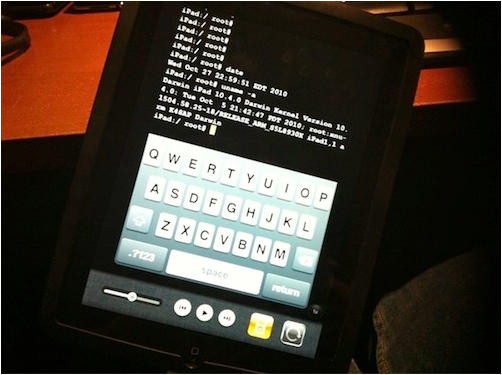
iOS jailbreak expert, iH8sn0w, released some images today of a jailbroken iPad running the iOS 4.2 firmware. The image above shows an iPad running the MobileTerminal jailbreak application, that gives users access to the command line.
This is great news for those that like to jailbreak their devices, but it comes as little surprise to many who have expected the jailbreak release for several weeks since its announcement.
If you’ll be jailbreaking your iPad as soon as you’ve updated to the iOS 4.2 firmware, let us know what your reasons for jailbreaking are in the comments.
This Sunday, October 31st is Halloween and if you aren’t thinking about Halloween yet you should be. Since it is almost here.
Do you know what your costume will be this year? Need to add a little zip to your scary get up? Here is a collection of iOS apps that are bound to add some fun to the scariest holiday of the year.
If you download them and get scared don’t blame me about things you hear that go bump in the night afterwards.
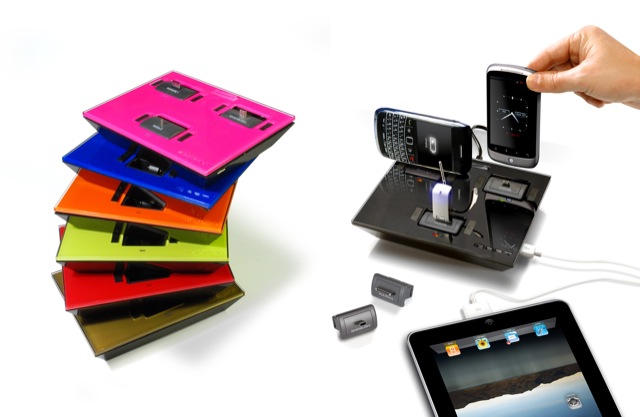
We’ve mentioned the IDAPT charging station before, but it has just been updated in a variety of colors in time for the Christmas season.
If, like a lot of us here at the Cult, you have more devices than you know what to do with and not enough time (or power outlets) to charge them all, a single charging station might come in useful.
And if it’s going to be so prominent in your home, you might as well get one that fits in with your decor.
The IDAPT i4 claims to charge over 4000 different gadgets, either via adaptors for the base unit or via USB connection to it. It will charge your iPods, iPhones and iPads quite happily – and all at once. It costs $59.99 including a pack of six mixed adaptors, or you can choose to pick your own selection of four adaptors that precisely match your devices.
We start off with two frightfully good deals for your iPhone. First is the latest crop of free iPhone applications, including “A Scary Prank.” Next is the Cyclops Case for your iPhone 4. A bit more on the ‘treat’ side is a stylish mini stand for your iPad that’s just $2.
Along the way, we’ll also check out some cases for your iPod touch, as well as some refurbished second-generation iPods, and a 27-inch LED Cinema Display bundled with Apple’s Magic Trackpad. As usual, details on these and many other bargains can be found at CoM’s “Daily Deals” page right after the jump.
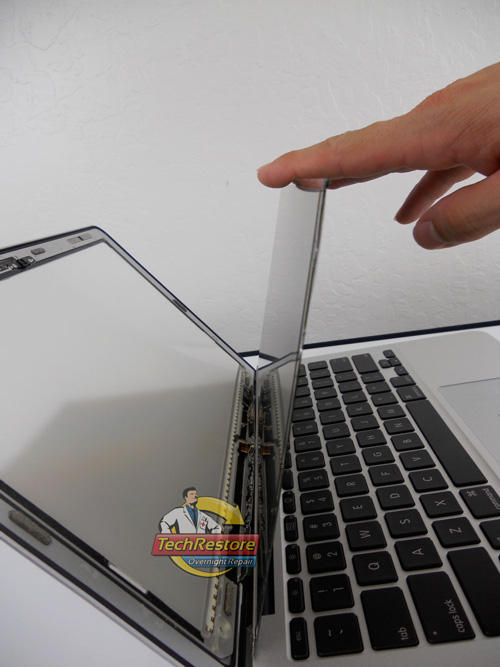
As we wrote a couple days ago, the guys over at TechRestore will be happy to take your new MacBook Air and give it a matte display for just $250… but doing the dry run on the operating, they uncovered some of the MacBook Air’s secrets, and according to their CEO, the panels Apple is using in the new Airs are paper thin and absolutely breathtaking.
If you’ve been keeping around that old, dusty Sega Dreamcast just to occasionally send your ChuChus into battle against the nefarious KapuKapus, great news: Sega has just released their classic Dreamcast multiplayer puzzle game Chu Chu Rocket for iOS in both a $4.99 iPhone/iPod Touch version and a $6.99 HD version suitable for iPad.
I’ve been playing it all morning, and it’s a fantastic port of one of Sega’s best games, with the only real blemish on an otherwise superb title being the omission of online multiplayer. If you have any fond memories of Chu Chu Rocket at all, picking this up for the weekend is a no-brainer.
Below the jump: Chu Chu Rocket’s absolutely unforgettable original television advertisement.
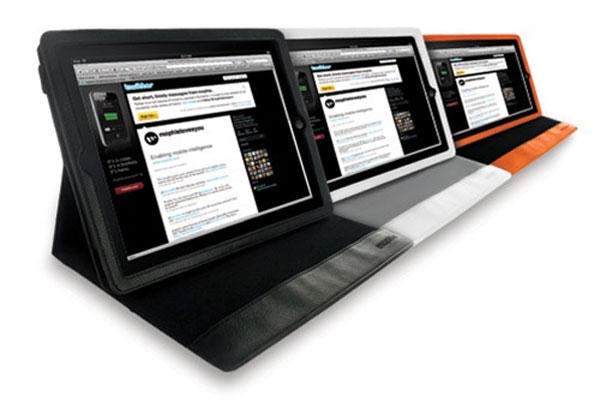
I love the almost Trapper Keeper like aesthetic of the Mophie Workbook Case, which not only protects your iPad but lets you prop it up horizontally at almost any angle, perfect for typing or watching video. Sure, unlike my old Trapper Keeper, it features a synthetic leather veneer, but for some reason, I less want to put my iPad in it than lock in a bunch of cool robot folders magic-markered in block capitals with their dedicated subject.
Also unlike a Trapper Keeper is the price: a Mophie Workbook will cost you $59.95 if you want one.
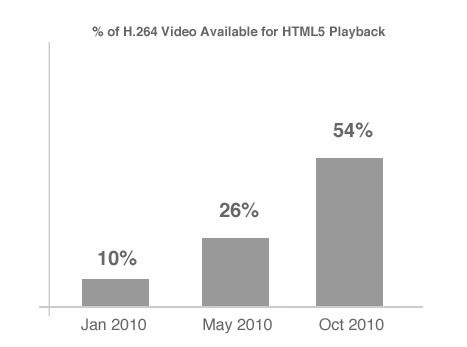
Six months ago, Steve Jobs wrote his Thoughts on Flash, which argued that Flash was a dying technology and that HTML5 was the future of video on the web.
See those graph numbers up there? They were put together by MeFeedia and show that HTML5 has gone from serving up only 10% of the videos on the web earlier this year to over half of them in October. HTML5 video has, in fact, doubled its share of the web video pie in just five months.
Looks like Steve was right. Not that any of us should be surprised: even if Flash wasn’t a dying technology, Steve flat out calling it one would be enough to almost magically make it so. When Apple’s CEO talks, the tech world sits up and listens.
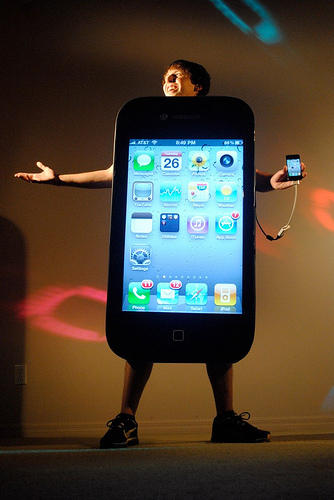
Cardboard boxes just don’t cut it for John Savio. His latest iPhone Halloween costume, 10 times the size of Apple’s iconic phone, contains a 75-pound 40″ LED LCD panel.
It took him 40 hours — crammed into a three-day maker marathon — to make this fully-functional iPhone. This latest version is an upgrade from his 2007 iPhone costume, which rocked a 37” LCD and projected a looped video of iPhone screens from an iPod.
The Magic Trackpad brings the feel of an Apple notebook trackpad to the desktop, but would you prefer your entire iMac desktop to feel more like typing on your MacBook Pro? Consider the BulletTrain Express, a large aluminum tray with hollows in which can be ensconced in a MacBook-like configuration both the Apple Aluminum Keyboard and Magic Trackpad.
t will cost you $99 and while to our mind the ergonomic problems seem pretty self evident when seated at a desk, we think this is probably an excellent accessory for people who want to type on their laps on their 27-inch iMacs from the more supine position of a pulled up armchair.
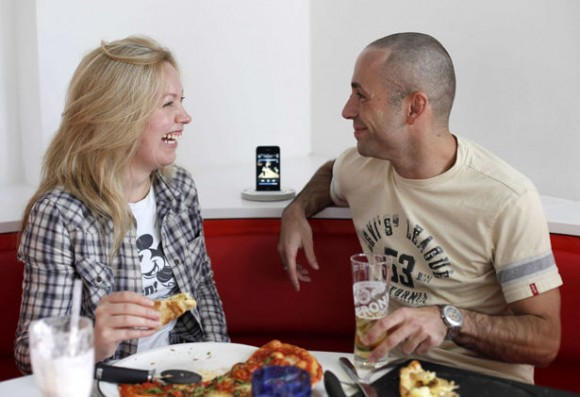
Generally speaking, the only type of pies worth bothering with in the United Kingdoms are delicious savory ones, but if you’re jonesing for a pepperoni pizza while on a trip to olde Albion, you now have extra incentive to stop into a Pizza Express location: iPod docks built right into the seats.
Thursday marks the first day Verizon Wireless and AT&T offer the iPad. The two carriers are just the latest outlets for Apple’s extensive push to sell the tablet during the all-important holiday period. Earlier this month, the Cupertino, Calif. company unexpectedly announced Verizon would sell the iPad, alongside its longtime partner AT&T. The move only fuels speculation Verizon will soon also offer customers a CDMA version of the iPhone.
AT&T customers can purchase all three iPad models at the usual price, while Verizon subscribers will get a Wi-Fi iPad bundled with the carrier’s MiFi mobile hotspot. As for data plans, AT&T offers a 250MB per month deal for $14.99 or a $25 per month option with 2GB. Subscribers also receive unlimited access to AT&T’s more than 23,000 U.S. Wi-Fi hotspots.
Earlier this month, Valve finally brought their fantastic team-based cooperative zombie shooter Left 4 Dead 2 to the Mac. It was a much-appreciated port, but it was a bit odd, in that Valve had opted to bring Left 4 Dead 2 to the Mac before the original game in the series, which was built on the same engine.
According to Valve, the delay in bringing Left 4 Dead to the Mac simply had to do with the first game in the series being a bit more complicated to port to OS X than they had anticipated. They promised a release by Halloween, though, and I’m delighted to say that they’ve been as good as their word: load up Steam for Mac and you can now download Left 4 Dead.
The best news is it’s dirt cheap: Left 4 Dead will only cost you $9.99 if you buy it this week. Why not spend an extra 5 bucks, though, and pick up both Left 4 Dead and Left 4 Dead 2 for $14.99? That’s just a steal.
Like Valve’s previous games, Left 4 Dead is Steam Play compatible, which means once you own it on the Mac, you also own it on the PC, and vice versa. If you intend on shooting zombies with some buddies this Halloween, though, make sure you have OS X 10.6.4 installed, as well as a 2GHz dual-core Intel CPU, an ATI Radeon x2400 or NVIDIA 8600M GPU or better.
If you’ve been waiting to buy the white iPhone 4, we hope you’ve caved by now and just gone black instead. It’s hard to think of a more troubled product: not only has the white iPhone 4 undergone a troubled manufacturing history thanks to light leaking into the camera sensor, but Apple’s said that we can’t expect to see one until spring 2011… just three months before they unveil the fifth-generation handset.
To be honest, it doesn’t take a genius to see that the white iPhone 4 is probably never going to arrive: at this point, it makes more sense for Apple to aim to have the white iPhone ready for June for simultaneous launch with the iPhone 5 than try to sell the white iPhone 4 at the tail end of the current generation.
In fact, that’s just what Boy Genius Report is now claiming, saying that the white iPhone 4 has been secretly canceled. Not that Apple will admit as much: BGR says that they will instead just claim there’s another delay in March, and assume everyone will forget about the debacle of the white iPhone 4 by June.
Apple’s probably right: the longer the white iPhone 4 is delayed, the more the returns diminish on actually releasing it. Time for an informal poll: how many of our readers are still holding out for the white iPhone 4? Let us know in the comments.
With T-Mobile losing its iPhone exclusivity in Germany to O2 and Vodafone, the last European iPhone exclusivity deal is dead. That’s good news for German consumers, who now are not only in a position to avail themselves of the spoils of the carrier wars as different mobile providers scramble to attract customers, but who also now have the option to buy an unlocked iPhone directly from Apple.