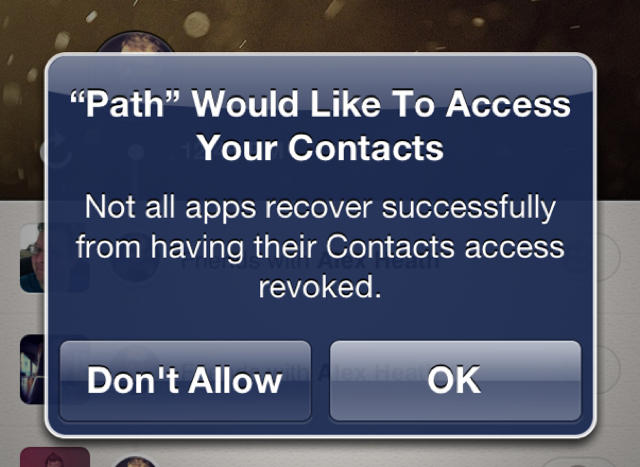
Social networking app Path hit the headlines yesterday after it turned out the company was taking users’ entire address books and uploading them to their servers.
It’s a big privacy violation, but Path’s hardly the only one doing this. In fact, computer engineering professor Mark Chang has just discovered that Hipster, the popular photo-filter postcards app, does the exact same thing as Path: sucks up your contacts and squirts them into their servers.
We often wonder about what the “woman behind the curtain” would look like when we use voice action apps such as Siri but for the Android alternative Iris, we now have a pretty good idea. Iris was an app created for Android by developers Dexetra and started as a tongue-in-cheek reply to iPhone’s Siri. It became immensely popular and currently has over 1 million installs. Things seemed to be going good for this Android Siri competitor until Gizmodo recently revealed the “woman behind the curtain.” It turns out ChaCha, the search engine behind the app, is a bigoted, religious zealot that may have some disturbing answers to some of your questions.
It seems as if everyone and their uncle are building iPhone apps these days. As a result, the competition is getting fiercer and fiercer by the day, and it’s becoming tougher to stand out amongst the crowd.
That said, there are a ton of apps that just don’t “cut the mustard” and the user experience suffers because of that lack of care and quality. David Sparks, the man behind the popular MacSparky blog, said the following about what he calls “speculative developers”:
If you want to develop apps, take your time and make something awesome. Make it fast. Make it beautiful. Make something you’re proud of. Don’t make 60 crappy apps: Make one really good one.
I couldn’t agree more, but when you’re faced with the haze of substandard apps that claim to be able to deliver the goods, how can a developer get their app noticed — and adopted — over the long-term?
The latest Cult of Mac Deal may have the solution to that problem.
We told you yesterday that Path was secretly uploading your iPhone’s entire address book to its servers. Users of the inclusive social network voiced concern, and many decided to remove the app entirely until Path addresses the issue in an upcoming update.
It’s common practice for third-party apps to access and even store your contacts elsewhere. The problem with Path is that there was no indication that this activity was taking place. Path’s CEO stated that the app would make the activity opt-in when the next update is pushed out.
Thanks to a brand new jailbreak tweak, you’ll never have to worry about an app silently stealing your personal contacts data again.
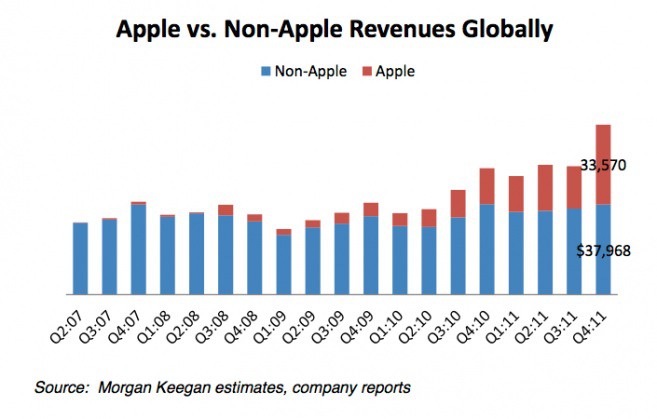
It’s pretty much impossible to argue that Apple didn’t revolutionize and reshape the mobile intdustry in the U.S. and around the world. The iPhone changed the concept of what a smartphone could be in 2007. The App Store reimagined smartphone apps and how they could be sold in 2008. And the iPad revolutionized the face of tablet computing in 2010. Those are pretty significant accomplishments technically and culturally.
Now, we also know how Apple reshaped and grew mobile industry financially… and how all of that growth is pocketed in the process.
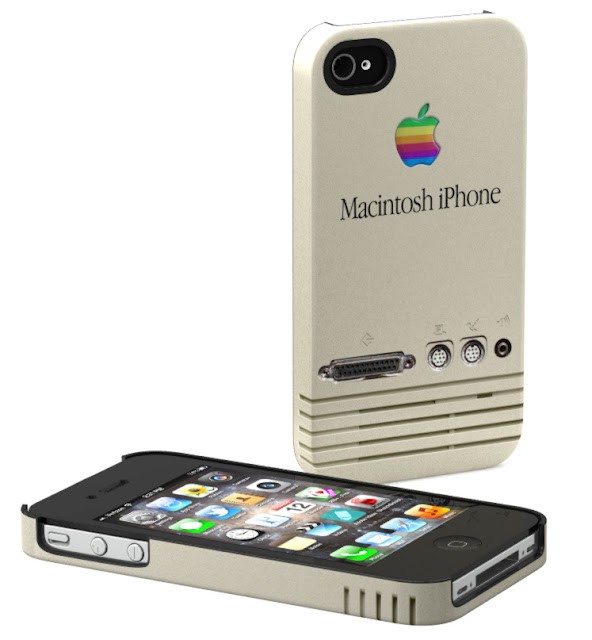
There’s something magical about the days of the original Macintosh and the first iPod. We were on the cusp of a new age in personal computing, and Apple was solidifying itself as a staple brand in the consumer technology market.
Some retro iPhone cases from a company called Schreer Delights replicate the original Macintosh, iMac and iPod with charming detail.
EA’s next major console title, Mass Effect 3, is set to grace game stores in the U.S. on March 6, and will be accompanied by an iOS app called Mass Effect Infiltrator that promises to “increase a player’s Galactic Readiness rating.”
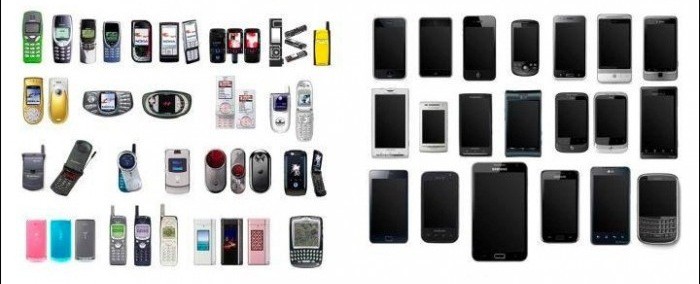
Ask a lot of people who don’t use iPhones like to dismiss Apple’s impact on the smartphone industry. Hey, we had PDA-like smartphones with touchscreens before the iPhone, so what’s the big deal?
Such logic is patently absurd, but as it often does, a picture says a thousand words about how a thousand shitty devices did things before the iPhone came around, and how the makers of these crappy phones do things now that the iPhone is the gold standard of smartphone design.
Think that’s pathetic? Check out how tablets changed after the iPad too. Unreal!
Often the first and biggest question that confronts any company developing a new mobile presence (or revamping an existing one) is whether to focus on developing a native app or a mobile web site. While each approach has its pros and cons, one way to decide may be to look at how users are accessing content on their mobile devices like the iPhone and iPad.
Unfortunately, the latest news from comScore is that users are evenly split between using a dedicated native app or using a mobile web browser to access content – making that criteria alone useless when it comes to developing a mobile strategy.
Olympus has revived its classic OM SLR film camera series this week, with the brand new Olympus OM-D EM-5, the first in a series of OM Digital Micro Four Thirds cameras, and the world’s first camera to offer 5-axis image stabilization.
Aimed at advanced photographers, the EM-5 boasts a built-in electronic viewfinder and a rugged dust- and splash-proof body. Olympus promises you’ll also get superior image quality and blazing fast speeds.
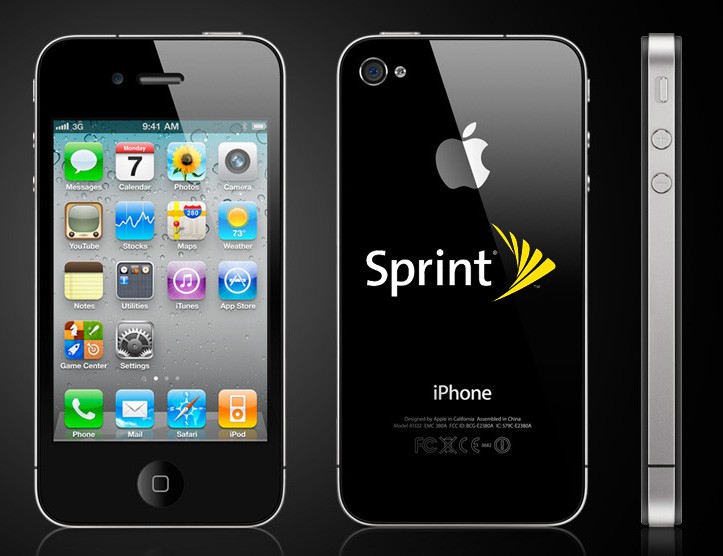
This fall, Sprint became the third U.S. carrier to offer the smartphone. Sprint is the third large largest carrier in the country and the only one to coninute to offer unlimited data plans to new customers – a point that Sprint makes in most of its advertising.
Sprint talked about the iPhone’s impact as part of its quarterly earnings Tuesday. Although Sprint reported large overall net loss of income, the company maintains that the launch of the iPhone was a success. It’s important to note that the iPhone, while helping Sprting add customers, was a factor than the larger than typical net loss, whichthe company expects to recoup in future quarters.
My parents never let me play with them as a kid because they were afraid I’d get shot by a trigger-happy cop, which is perhaps why, to this day, I get a little giddy when I hear or read the words “LAZER TAG,” and feel myself ethereally tugged away — John Carter like — to a distant world where I am a member of the Lazer Team, policing the galaxy for perps who can be non-violently terminated by aiming my ray gun at the conveniently placed sensors strapped to their back, head and torso.
So when I saw that Hasbro has just announced the next update of their Lazer Tag guns — and that these sets actually use an iPhone or iPod touch as an augmented reality display and HUD — I immediately got excited, then disappointed as I remembered my parents wouldn’t let me have one. But wait! I’m an adult now, and as an adult, I can wave around as many plastic toy guns as I want! Hooray!
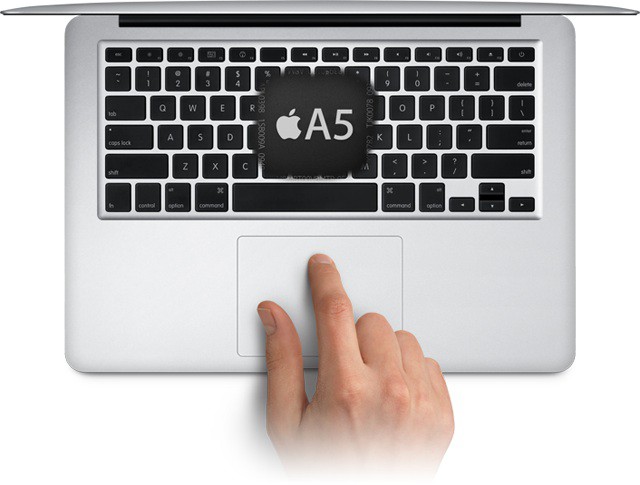
Ever since Apple launched the new MacBook Air, analysts and Mac fans alike have gone wild speculating that Cupertino might dump Intel and use custom-made, ARM-based chips in their laptop line instead. Yesterday, more fuel was thrown on the fire when it was revealed that an Apple intern worked on porting OS X to ARM devices back in 2010. Even Intel has said it would be “remiss” of them to dismiss the possibility that ARM might steal their Apple business. On the surface of things, it looks like ARM might make its way to our MacBooks soon.
Is ARM really a threat to Intel? Yes, absolutely, and especially as we transition into Apple’s Post-PC world. But there is next to no chance Apple will replace Intel chips for ARM-based ones any time in the next five years. In fact, there’s a good chance the exact opposite could be true, and Intel chips will be powering our iPhones and iPads by then. Here’s why.
Apple has issued a set of firmware updates for more of its Macs that were introduced during 2010. These updates bring Lion Internet recovery to the early 2010 MacBook Pro, the mid 2010 iMac, and the late 2010 MacBook Air.
EA has launched Battlefield 3: Aftershockin the U.S. App Store today, providing first-person shooter players with the opportunity to enjoy online multiplayer gaming for free on their iOS devices. However, it’s not quite the Battlefield 3 release we were expecting.
Apple has announced that it will support Paul McCartney’s new album, Kisses on the Bottom, by live streaming a special concert to fans on Thursday, February 9. You can tune in using iTunes on your Mac or PC, or on your television via your Apple TV set-top box.
Everyone was jamming in the little corner where House of Marley was stashed during the official press event at CES, and a big part of that was due to their Bag of Rhythm dock — the Marley PR people carried it around slung on their shoulders, and it just rocked, man.
Yeah, that spinning beach ball looks all happy and fun, but the diabolical critter’ll make your system slower than the line at the central Los Angeles DMV on a late Friday afternoon. Not to worry — FreeMemory is here to help.
No, the free app won’t kick the little swine out to sea — but at least it’ll let you deflate it somewhat by keeping close tabs on the status of your RAM.
Apple sent out an interesting message to third-party developers today. iOS devs are now required to submit Retina display screenshots for their iPhone and iPod touch apps to the App Store. All updates to existing apps must also meet the 960×640 resolution requirement.
Not only does this new policy signal the death of 480×320 resolution apps, but it also indicates that the iPhone 3GS may not be around much longer.
During the past few weeks, one quote from Walter Isaacson’s Steve Jobs biography has bounced around the tech and mainstream media. It’s the quote where President Obama asked Jobs about Apple manufacturing jobs that had been shipped oversees and Jobs responds “those jobs aren’t coming back” – words the President decided to ignore during his State of the Union speech last month. Instead, Obama called on tech companies to bring those jobs back.
With all due respect to the White House, it seems pretty likely that those jobs aren’t coming back. Anyone that doubts that needs to reread the first New York Times piece on Apple’s manufacturing partners. The U.S. simply cannot match the manufacturing capacity in China and elsewhere. Get over it. Those jobs are gone but that doesn’t mean Apple and other tech companies aren’t creating new jobs right here at home. In fact, Apple and other tech company have create an entire to category of jobs and filled half a million of them with American workers.
In what can only be considered the very definition of irony, it has been discovered that Path 2 for iPhone secretly uploads and stores your entire address book to its servers. In case you didn’t know, Path is a hot iOS app that offers an exclusive, confined social network experience with a limited number of people. Unlike Facebook, Path only lets you accept 150 friends, indicating the intimate, safe environment that the app creators want users to feel at home in.
Developer Arun Thampi has uncovered that Path’s current iPhone app sends all of your contacts to its servers without notifying you. Oops.
Forgetting a password to any service is frustrating, especially if you’re itching to download the latest Angry Birds update. But when it comes to your Apple ID, it’s actually very simple to change or reset your password on your iOS device.







![Lion-Internet-Recovery]](https://www.cultofmac.com/wp-content/uploads/2012/02/hero.jpg "Apple Issues Firmware Updates To Bring Lion Internet Recovery To More 2010 Macs")