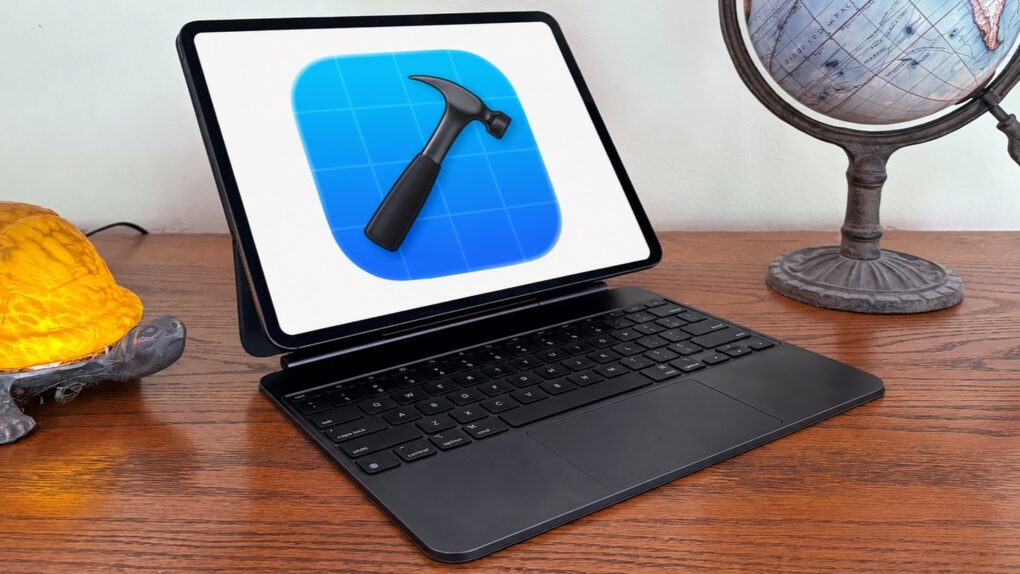
A recent poll of Cult of Mac readers found very broad support for iPadOS, but a small group remains deeply dissatisfied with the iPad’s software. And while Apple certainly can’t make everyone happy, it could significantly shrink the number of complaints by adding one app. One very long-overdue app.
It’s time for Apple to finally do what developers have wanted for so many years: Bring Xcode to iPad.
Cult of Mac poll shows most people love iPadOS
Recently, the Cult of Mac Today newsletter asked readers, “Has Apple indeed finally nailed iPad?” The responses show very strong support for iPadOS. A surprising number of respondents called the iPad’s operating system nearly perfect. And a majority said it’s mostly great but still suffers from a few shortcomings.
Rounded to whole numbers, the poll responses were:
- 55% — Mostly, but there’s still room for improvement.
- 36% — Yes: iPadOS is finally great.
- 9% — No: iPadOS is still a kludge.
Raise those approval numbers! Bring Xcode to iPad!
I use a 13-inch iPad Pro as my primary work computer, and have for many years, and I put my vote in the “excellent but not perfect” category. But I can completely understand any developer who complains about iPadOS.
As a writer, Apple’s tablet does everything I need. That’s because I primarily need to type text into an app and then paste it into my company’s online content management system. iPad could handle that 15 years ago.
And it’s not just me, of course. Plenty of people love their iPads because the tablets let them easily answer their email, check social media and access the web on the go. Or they use an iPad to attend online meetings or simply watch video and read ebooks on a larger screen than an iPhone.
But developers need more. They need Xcode. It’s the primary tool used to create apps for Apple’s platforms: iOS, macOS, watchOS … all of them.
While it’s true that developers can write Swift code in other editors like Visual Studio Code, Xcode is effectively required for most Apple app development. It’s the only way to access many Apple SDKs, sign apps with Apple certificates, submit apps to the App Store and more.
So while a writer, salesperson, manager, graphic artist, etc., can choose between an iPad and a MacBook, developers cannot. They must get a MacBook. And all because Apple won’t port Xcode to iPadOS.
iPad can handle Xcode
A decade or so ago, it was understandable that there was no version of Xcode for iPad. Apple’s tablet simply lacked too many of the tools devs are accustomed to when creating an application on a Mac. But over the years, iPadOS gained M-series processors, the Files app, a desktop-class version of Safari, windowed apps and a menu bar. Apple further improves these features in the upcoming iPadOS 27.
Take my iPad Pro as an example. It runs the same Apple M5 processor available in the MacBook Pro. It packs a 13-inch screen and easily handles the 4K external display I connect to it daily. With this kind of powerful hardware, it definitely isn’t a toy. It can handle Xcode … if Apple would just port the software to its tablet operating system.
Admittedly, developers wouldn’t need the exact same experience as with a Mac. If nothing else, iPadOS lacks Terminal.
There wouldn’t be a struggle making iPhone apps, considering how close iOS and iPadOS remain, but it’s unlikely that native macOS apps could be built on Apple’s tablet. But don’t make the mistake of thinking that means an iPad could never produce software for Macs. Xcode for iPad could take advantage of Catalyst, which already lets an iPad app become a Mac app simply by checking a box in Xcode. In Xcode on iPad, developers could choose “My Mac” as a build target and produce Catalyst apps without ever touching a Mac.
Developers have been asking and asking
For many years, there has been a campaign by developers to bring Xcode to iPad. It’s one of the most common requests in Apple’s developer communities. That said, it would undoubtedly be a niche feature. Far more people will use their iPad to watch YouTube than will ever open Xcode.
But developers are an influential group, and one with an outsize ability to make or break a product. One of the best ways for Apple to ensure that devs keep making great iPadOS apps is to let them code on an iPad.
And Apple already gave devs reason for optimism by bringing other professional-grade software to the iPad. That includes Final Cut Pro for video editing and Logic Pro for music production. Both apps were once considered Mac exclusives, yet Apple redesigned them for touch while preserving the advanced features professionals rely on.
Those precedents show the company isn’t opposed to putting demanding software on its tablets — and that iPad can handle them. Really, nothing is holding back Xcode for iPad besides Apple dragging its heels.
The introduction of iPadOS 27 this fall would be an ideal opportunity, but that seems optimistic. If not then, I suggest a launch alongside the next-generation iPad Pro with either an M6 or an M7 processor (reportedly coming in spring 2027).
Xcode for iPad would be a wonderful reward to third-party developers who helped make iPad the most popular tablet in the world, and keep it there year after year.

Ed Hardy has been writing full-time about tech for 26 years, and using it for much longer than that. His intro to Apple was a Macintosh SE/30 (which he still has), but now he uses a 13-inch iPad Pro as his primary computer.
That’s because he’s a “tablet first” type of guy. Rather than use a Macbook, he connects a keyboard case to the iPad. And instead of a desktop Mac, he connects his tablet to a 27-inch display and full-size keyboard. (So don’t try to tell him that everyone has to use a Mac to be productive.)
Before coming to Cult of Mac, Ed wrote for NotebookReview, TabletPCReview and Brighthand, as well as other sites.


6 responses to “One app is all Apple needs to make iPad damn near perfect”
Xcode requires massive system resources to be efficient. Having it hamstrung by all of the iPad OS’s restrictions would be like poking yourself in the eye continuously.
It would be great if Apple made Pages, Number and Keynote to have feature parity with Mac versions. The other glaring missing feature is that iPadOS should be able to install fonts like on macOS. It is so frustrating to start a document on the Mac and then bring it to iPad and find missing fonts.
This hasn’t been updated in a while, but I wrote a guide on how to add fonts to iPad:
https://www.cultofmac.com/how-to/how-to-add-fonts-to-an-ipad
Forget about Xcode. Give us a true multi-user OS like macOS.
I would love to see Xcode’s new Agentic Coding features on iPad. That said, Developers can already create iPad and iPhone apps on the iPad that could also run on Mac via Catalyst with Swift Playground. It actually now has a full Swift code IDE and the ability to publish apps to the App Store from the iPad directly without needing to touch Xcode at all. So we already have some of the things you’re describing. But yeah, I would like to see Agentic Coding tools either brought to the iPad via Swift Playground, or Xcode. Then I really would never use my Mac Mini for much of anything.
I’ll beat the dead horse one more time – iPad Pro needs the option to boot MacOS. Why? Because your Xcode example underscores the real problem – developers like Adobe and Microsoft will NOT deliver desktop class versions of their software for iPad OS. Word, Excel, Adobe Acrobat Pro, etc. are mere shells of their desktop class software, and the M5 (shoot – ANY M class processor) is hampered by this continuing “make it close but not all the way” approach Apple is taking to iPad OS. If Apple really does release a touch enabled MacBook Ultra this fall, which runs iPad OS applications, there will be absolutely NO NEED for iPad unless they leverage the Apple Pencil Pro on the iPad with these same desktop class applications.