


Today’s deals include Apple iPods starting at $39, MacBooks starting at $599, a MacBook Pro with AppleCare and many more.
Details of these and other Daily Deals can be found on the CoM Daily Deals page.

Today’s deals include Apple iPods starting at $39, MacBooks starting at $599, a MacBook Pro with AppleCare and many more.
Details of these and other Daily Deals can be found on the CoM Daily Deals page.

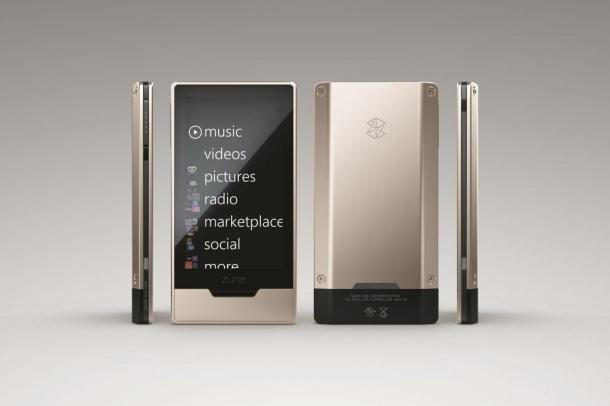
In sharp contrast to Apple’s largely upbeat recent quarterly earnings announcement, Microsoft reported “a number of grim statistics, including a steep decline related to its Zune portable media player,” highlighted in a report Thursday at MarketWatch.
The portable music player sector seems to have reached a general level of saturation, as even Apple’s iPod — a device that spawned the resurgence of an entire industry when it was introduced nearly a decade ago — suffered an 11% drop in sales during the most recent quarter. But that is nothing compared to Microsoft’s copycat gadget, the Zune, which saw a 42% drop in year-over-year sales.
“If Zune were going to make a strong move against the iPod, it already would have,” said IDC analyst Susan Kevorkian, and some analysts are now looking for Microsoft to admit defeat and announce termination of its ill-fated hardware venture.
When the company launched the Zune in 2006, Microsoft CEO Steve Ballmer believed its 802.11 wireless functionality would take out the iPod by creating a “community of entertainment aficionados” who’d enjoy being able to connect with one another and with other 802.11-enabled devices, but apparently there’s a reason devices such as the iPod and the Zune are often called personal media devices.
As late as March of this year, Ballmer still maintained the Zune is not going away, but unless the tepidly anticipated touch screen Zune HD is somehow a huge hit, declining numbers like the ones highlighted by MarketWatch foretell a grim future for the little PMP that couldn’t.

The long-standing tiff between Apple and the iPhone jailbreaking community reached new heights of absurdity in a recent filing Apple made with the US Copyright office, in which the company all but claimed granting iPhone jailbreakers an exemption from the Digital Millennium Copyright Act would invite terrorist attacks on the nation’s wireless network infrastructure.
In a written response (PDF) to questions from the Copyright Office, Apple claimed that jailbroken iPhones could be used by drug dealers to avoid authorities, by hackers to skirt carrier-enforced limitations or even by attackers to crash the software at cell phone towers. “Technological protection measures were designed into the iPhone precisely to prevent these kinds of pernicious activities,” said the Apple statement, which added, “if granted, the jailbreaking exemption would open the door to them — to potentially catastrophic effect.”
The Electronic Frontier Foundation (EFF), representing consumer interests and arguing in the case for the jailbreaking exemption, dismissed Apple’s claims. “This is all just a lot of fear, uncertainty and doubt,” said Fred von Lohmann, an EFF senior staff attorney and the organization’s expert in intellectual property law.
Von Lohmann called Apple’s claims that jailbroken iPhones could bring down a carrier’s network a hypothetical game. “None of this has ever happened [with jailbroken iPhones],” he said. “You don’t see the independent iPhone stores filled with malicious software tools. Instead, they’re filled with the software that Apple has refused to offer in its App Store.”
The Copyright Office is expected to make its final ruling in the case by October.
[via PCWorld]
The iPhone has been an utter disaster in Russia, according to an interesting report penned Thursday by Svetlana Gladkova at Profy.
The Russian experience suggests that, despite howls of complaint by some consumers in markets where Apple has exclusive distribution agreements with a single or perhaps a pair of wireless carriers, where the device is sold unlocked and unsubsidized by carriers, its price simply puts it beyond the means of all but a tiny number in the current global economy.
Three major carriers sell the iPhone in Russia, having collectively agreed with Apple to sell 3.5 million units over a two year period. But they have managed to move barely 250 thousand phones in the first six months of availability, according to Gladkova, and market players there a feeling distinctly glum about prospects for meeting their goal.
Unlocked phones in Russia — where service contracts are not nearly so common as in markets such as the US and UK — sold initially for the dollar equivalent of $1000, though the market price has dipped currently to $700 – $800, which is still hardly affordable to a populace with per capita GDP of around $15,000.
Corruption also hampers legitimate iPhone sales in Russia, where some 400,000 black market devices made it into circulation before the official release, according to Gladkova, soaking up early demand and deflating the impact of continued heavy advertising by the country’s three service providers.
Now, carriers and their retail partners — local distributors on the hook for millions of dollars in ancillary distribution agreements — are playing hot potato with millions of unsold phones while the carriers scramble to rewrite their contracts with Apple.
The chaos in the Russian market makes things here in the West seem downright orderly, where, ironically, an 8GB iPhone 3G can be had for under $100.
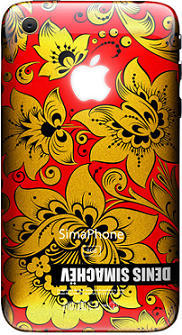
Image – Russian exclusive SimaPhone by Denis Simachev
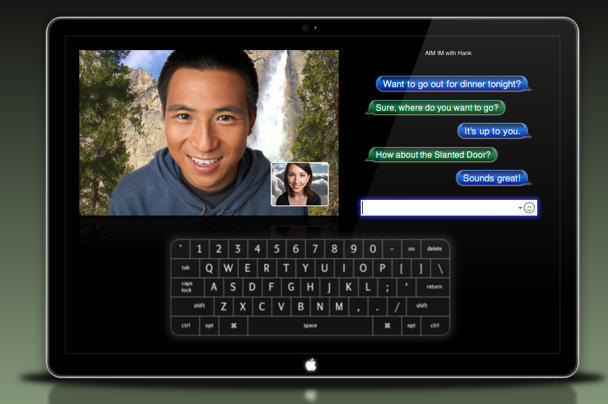
With Apple’s tablet computer rumored to be just weeks away, CoM reader Sean sent us another take on what he thinks it’ll look like.
Instead of more or less an overgrown iPod Touch, his latest mock-up version has more of a tablet feel sporting a 7 – 10″ multi-touch glass display, all the better to video AIM your pals about dinner plans.
Other specs follow what he imagined for the much-awaited Apple netbook in his previous prototype: 1.6GHz Intel Atom Processor, 512MB – 1GB of RAM, 64GB flash memory, bluetooth, WiFi and a reduced version of OS X Snow Leopard to fit the device.
What do you think?
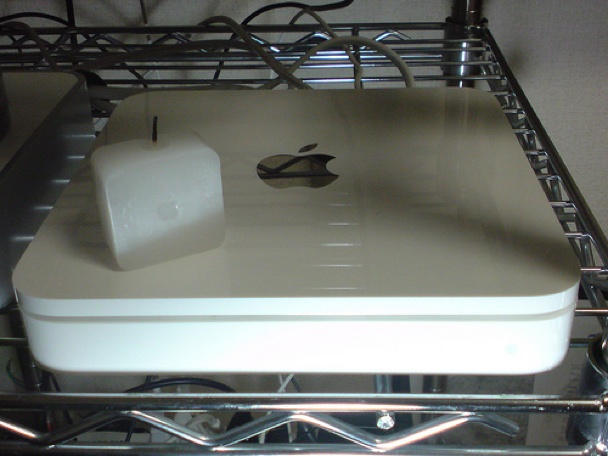
Apple on Thursday unveiled a beefier 2TB Time Capsule backup box and WiFi router.
The new arrival is $499, while the older 1TB version drops to $299.
The Time Capsule box combines a 2TB hard drive with a wireless AirPort Extreme router to provide backup storage, plus a printer and file server.
The new Time Capsule is accessible to MobileMe subscribers and provides a Guest Network which allows users to set up separate network without having to expose the main WiFi password.
[Via AppleInsider]
Today’s deals include refurbished iMacs starting at $999, a PowerBook G4 for $699, $99 8GB iPod nanos and many more.
Details on these and other Daily Deals can be found at CoM’s Daily Deals page.
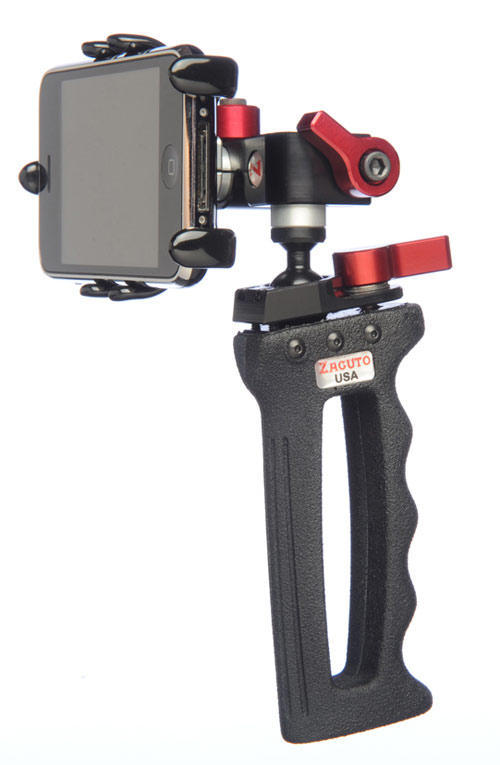
Zacuto, maker of camera gear for professionals, has introduced a gadget designed for pro (or wannabe pro) Apple iPhone 3GS shooters. The $69 Zgrip iPhone Jr. includes a cradle to which the iPhone attaches, along with multiple “fingers” to grasp the phone. The device also attaches to a tripod. The Zgrip iPhone Jr. is the consumer version of the $295 Zgrip iPhone Pro from Zacuto.
The iPhone 3GS has become popular with porn movie producers. Director Matt Morningwood employed the iPhone to shoot some scenes included in the first adult movie to use the 3GS. Meanwhile, porn movie maker Pink Visual pronouced itself “the most ‘iPhone-centric’ porn company around.â€
[Via Zacuto]
UPDATE: The WSJ has corrected its story to say it is “not clear” Apple will attend CES in 2010. However, we were told in January that Apple will attend. “It’s a done deal,” our source said.
Apple has definitely ditched Macworld in favor of the giant Consumer Electronics Show, the Wall Street Journal reports — confirming news first reported by Cultofmac back in January (and later by Apple Insider).
“Apple plans to attend the show’s 2010 version, marking the first time in memory the Cupertino, Calif., consumer-electronics giant will be there,” said the Wall Street Journal on Wednesday.
The WSJ says that Steve Jobs has been invited to be a CES keynote speaker but hasn’t returned calls. Microsoft CEO Steve Ballmer and Intel CEO Paul Otellini are on tap to deliver the speeches at the show.
Neither Apple nor CES has made any official announcements. Apple last year said it would no longer attend trade shows, saying it could better reach its customers through its retail stores.
CES is held in January in Las Vegas, often conflicting with Macworld. It’s a giant zoo, but nonetheless attracts most of the world’s consumer electronics makers, who show off their wares for the upcoming year.
Apple is now more of a consumer electronics company now than a computer company, making CES a much better fit than MacWorld, the source told CoM back in January.

The celebrity website TMZ has bagged the first photograph of Steve Jobs back at work on Apple’s campus. Appropriately, the picture was taken with an iPhone.
“It’s the first time we’ve seen Jobs back in action since January, when he took a leave of absence for a liver transplant,” says TMZ. “Jobs has reportedly been back at work for about a month.”
The picture was taken at 3PM on Wednesday at Apple’s campus in Cupertino. Jobs looks very thin — but, hey, he’s back at work!
Jobs is crossing the road that loops around the campus — Infinite Loop. He’s walking towards one of the car parks that surround the buildings. The photo was taken from inside a vehicle as Jobs crossed in front of it.
The person walking in front of Jobs is likely a bodyguard, but one that looks remarkably like Jonathan Ive, Apple’s head designer. Jobs is reportedly guarded these days, and is driven around in a big black SUV.
The bodyguard is pretty burly, so he’s not the best person to be photographed with if you’ve lost a lot of weight.
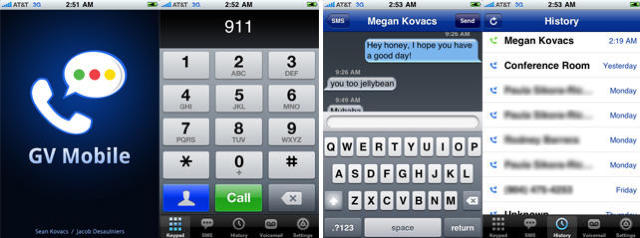
The iPhone jailbreak community, famous for stepping into the breach when Apple’s incomprehensible App Store approval process fails to give users what they want, now offers GV Mobile on Cydia, just one day after Apple thumbed its nose at Google Voice apps for the iPhone.
While some outlets remain comfortable blaming AT&T for Apple’s rejection of Google Voice apps, despite the fact that it’s demonstrably wrong to do so, the jailbreak community was pleased to offer up developer Sean Kovacs’ GV Mobile app, which had been available on the App Store before being yanked in the larger decision to separate Apple from Google with respect to voice services.
Google itself has a Voice app, presently in beta and available by invitation only, but Kovacs’ GV Mobile brings the power of Google’s revolutionary voice product to the iPhone, allowing users to:
* dial numbers via the iPhone address book or typing on the keypad
* Full SMS support (view historic, reply, send new)
* retrieve and delete recent call history
* playback and delete voicemails
* take calls from different phones other than your iPhone
* enable or disable the phones that Google Voice forwards calls to
* add or delete phones that Google Voice forwards call to.
Users must already have a Google Voice account and a working wireless phone plan in order to take advantage of the app’s features, but it seems clear – with millions of numbers in reserve and broad interest in the convenience and configurability of Google’s Voice product – some may find access to GV Mobile something worth jailbreaking their phone for.
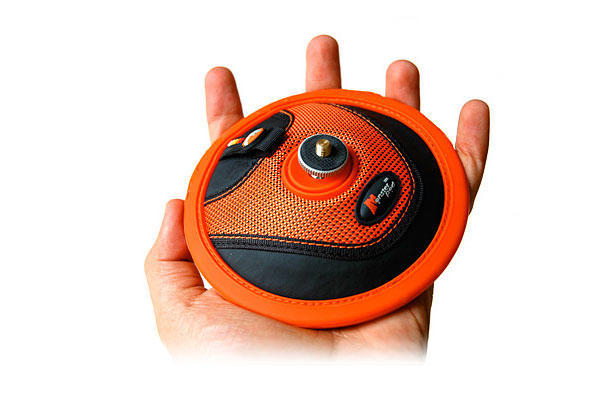
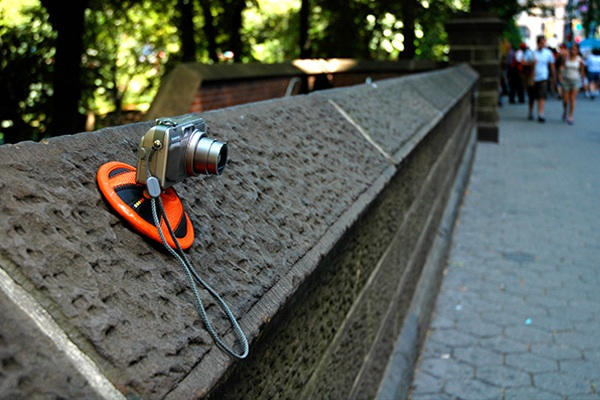
When’s the last time you’ve heard the gadget world go ga-ga over a camera mount? Well, the folks behind the outrageously orange Monsterpod seem to have hit the mark. “We’re hooked,” raved Wired’s Gadget Lab Wednesday.
The makers are a bit less dramatic. The Monsterpod is “only the coolest freaking, gravity-defying, mind-boggling tripod ever created!”
The excitement stems from the nearly unpronounceable Viscoelastic Polymer, allowing the mount to stick to anything – walls, roofs, whatever – just attach your 20-ounces or less camera and you’re good.
The gadget costs $30 plus $10 for a zip-up bag.
[Via Photojojo]

Microsoft will open its first two retail stores in ritzy malls in Scottsdale, Arizona, and at The Shops at Mission Viejo, California — two locations where Apple already has stores, CNet reports.
A few days ago, it was revealed that Microsoft is considering many of the same features that make Apple’s stores so successful, including a rival to the Genius Bar called the “Guru Bar.”
One of the key factors in Apple’s success is the location of its stores. Apple chooses upscale malls, or shopping streets in tony neighborhoods, with lots of foot traffic and easy freeway access.
Microsoft has obviously learned the same lesson. Its first two shops will be at the Scottsdale Fashion Square in the heart of Scottsdale, one of the richest satellite towns of Phoenix area. Apple opened an architecturally stunning store at the nearby Scottsdale Quarter mall in June.
Microsoft’s other store will be at The Shops at Mission Viejo, another rich town south of Los Angeles in the heart of Orange County. Apple already has a store in The Shops mall.
“Over a billion people use our products every day yet we don’t always have a way to directly connect with them,” Microsoft spokeswoman Kim Stocks told CNet. “We see the physical stores, as well as a consistent online experience, helping that.”
Like Apple, Microsoft also intends to take its shops global, the company told CNet, though declined to give details.
Microsoft has reportedly hired former Apple real estate chief George Blankenship as a consultant to help securing locations for its stores. The company has confirmed that it hired Wal-Mart veteran David Porter to head up its stores initiative.
The stores will open in the fall, just before Microsoft launches Windows 7 on October 22.
Apple has started re-issuing promo codes for +17 apps on iTunes. It’s unclear whether the lack of promo codes for these apps — which range from adult-oriented pics to eReaders which allow unfiltered content — was a glitch in the system or a ban.
One thing’s for sure, no promo codes hurt these +17-rated apps since journalists couldn’t try them out and therefore often avoided writing about them. One sex game app developer CoM spoke to said the lack of promo codes effectively hog-tied sales of saucy apps and discouraged them from making more.
The + 17 rating is supposed to act as a filter for adult content, according to the iTunes rating system. You must be over age 17 to purchase them because they “may contain frequent and intense offensive language; frequent and intense cartoon, fantasy or realistic violence; and frequent and intense mature, horror and suggestive themes; plus sexual content, nudity, alcohol, tobacco and drugs which may not be suitable for children until the age of 17.”
Many ratings are subjective: the Cannabis app, which helps users find medicinal pot, is OK for anyone over the age of 12, and some sex dice apps are approved for players over age nine.
Via PC World

An adult video company has found a way to get porn onto the iPhone despite Apple’s restrictions on XXX apps.
Pink Visual has shot what it claims to be the first porn scene using an iPhone 3GS.
“We figured this was the next logical step in our ongoing fascination with the iPhone,” said Pink Visual spokeswoman Kim Kysar in a statement. “I think it’s safe to say we are the most ‘iPhone-centric’ porn company around.”
Based in the San Fernando Valley (or Porn Valley), the company’s slogan is: “We innovate, you masturbate.”
The new scene features “popular cougars” Lexi LaMour and Diamond Foxxx, Pink Visual said, and is being published as a webisode on MilfSeeker.com (Definitely NSFW).
The scene was shot by director Matt Morningwood, who said it was easy to shoot with the iPhone. The 3GS gave the scene a certain ‘cinema verite’ and was easier to get into tight spots than a big HD camera.
“If anything, it was too easy to shoot with the iPhone,” Morningwood said. “I’m used to HD cameras, boom mics, and all sorts of other peripherals being part of the deal. The only thing that was difficult was holding the phone steady with two knockout blonde cougars getting naked and going at in front of the camera.”
Pink Visual is considering making iPhone footage a regular feature of its productions.
“The nature of the footage definitely augments the immediacy and realness of the scene,” Kysar said. “Shooting content on the iPhone is a viable option, and something special we can add to the mix now and again.”
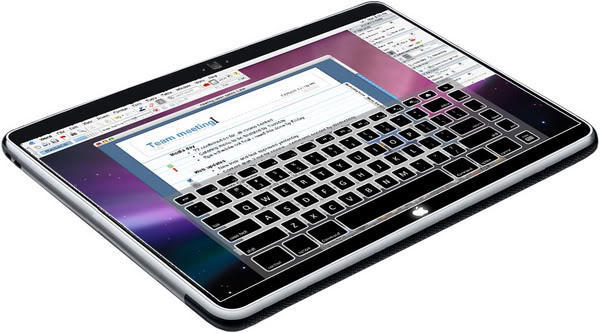
Apple will release its fabled touchscreen tablet as early as September, the Taiwanese paper Apple Daily claims. If true, the announcement is likely just weeks away. Apple will have to put the device on store shelves by the fall in time for the crucial holiday shopping season.
In a direct rebuttal of AppleInsider, whose sources say the tablet will be launched early next year, Apple Daily pegs a September release date for the device.
The paper details Apple’s suppliers: Wintek is providing the tablet’s touch-sensitive screen. Dynapack International Technology Corp. is supplying the batteries; and the whole device is being assembled by Hon Hai Precision Industry Co. (Hon Hai’s Foxconn unit made headlines after a worker allegedly committed suicide after losing an iPhone prototype.)
The Apple Daily report jibes with Monday’s report from the Financial Times that Apple is working on a new, revolutionary kind of “digital album” codenamed “Cocktail” to accompany the tablet, which the FT also says will be launched this fall.
Today’s deals include a MacBook starting at $749, MacBook Pros, Mac Pro desktops and many more.
Details of these and other bargains can be found on the CoM Daily Deals page.
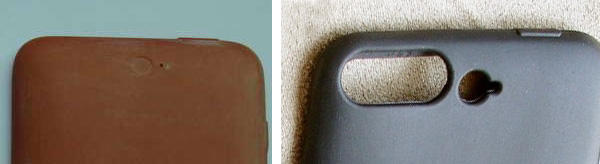
New pictures from a Chinese case manufacturer suggest that the next-gen iPod Touch and iPod Nano will get video recording.
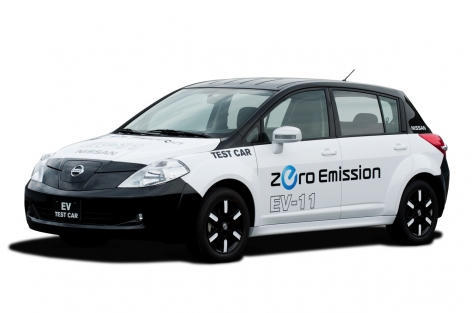
Nissan unveiled the details Monday on its plan to produce the first electric, fully-networked consumer automobile, which will function with an exclusive remote-control iPhone application to make efficient use of the car’s battery.
Dubbed Car 2.0, Nissan’s idea suggests the next generation of cars will connect to public and private power grids and communication networks, and will function similarly to electronic gadgets familiar to consumers today.
Nissan calls the system controlling the auto EV-IT, a central brain encompassing an onboard transmitting unit that stays connected by mobile networks to a global data center.
Drivers will be able to view the driving radius within range of their battery charge level on a navigation map, and also find detailed information about available charging stations within range, according to a report describing the car at Earth2Tech.
The iPhone app will let drivers access information about the time required for a full charge and the current temperature inside the vehicle. The app will also let drivers control air conditioning and heating from outside the vehicle, allowing them to cool down or heat up their vehicle while it’s still plugged in rather than using the battery once they are on the road.
The final prototype for Nissan’s 2010 electric car is set to debut on August 2nd.
 Apple’s iTunes – the only online music distributor that matters, according to one well-placed music lawyer – may get additional competition before year-end, if an exclusive Wired report published Monday proves accurate.
Spotify, a music service boasting over 6 million songs that can be accessed on-demand and customized into personalized, editable, downloadable playlists, is currently available only in Europe but the company is feverishly working to sign distribution agreements with copyright holders and music labels to bring both a desktop and an iPhone application to American consumers as soon as possible, according to the report.
Spotify’s potential to compete with iTunes in the US remains speculative at this point, and the company understands that despite having created a slick iPhone app to which Wired writer Eliot Van Buskirk gives rave pre-release reviews, Apple could put the kibosh on the whole thing if it determines Spotify “replicates functionality” provided by Apple’s native iTunes application. “It’s going to be very interesting to see if Apple lets this through or sees us as competition — fingers crossed,” explained Spotify communications manager Jim Butcher.
Whether or not the iPhone app is approved, when the company gets its US distribution agreements in order it seems likely that many will check out some of the interesting features the desktop service will have to offer, such as the ability to stream playlists created by other Spotify members and to access an ad-free version of the service with a premium account.
It will be interesting, too, to see how Spotify differs from and compares with Lala, another iTunes competitor with great potential already available in the US.
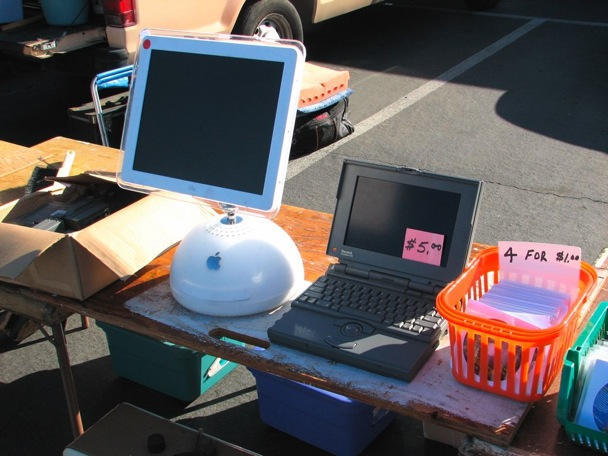
Apple has officially declared the iconic “Luxo lamp” iMac as an “obsolete” computer.
Several models of the iconic machine, which won as many enemies as fans for its unusual lamp-like design, will be declared obsolete on September 15, according to HardMac.com.
The obsolete designation means that Apple service centers will no longer stock parts for the machines –and will no longer repair them — though third-party repair shops likely will.
The Luxo-lamp iMac caused a huge stir when it was introduced in 2002. It made the cover of Time magazine and is now exhibited in the Museum of Modern Art in Manhattan.
The machine was the first iMac to feature a flat-panel display, which floated above its CPU, housed in a white plastic dome. The screen was attached by a double-jointed chrome arm, which realigned the screen with the slightest touch of a fingertip, but then kept it in place — no mean feat of design.
The machine was a bear to design, according to Apple’s head designer, Jonathan Ive. At first Ive tried to glom the guts of the computer onto the back of a flat panel display, but the early prototypes were inelegant. Then, during a walk in Steve Jobs’s back garden, Jobs told Ive that each element had to be “true to itself,” which led the designer to look at sunflowers as inspiration, and seperate the screen from the body.
A few years later, Ive was able to marry the guts to the screen, and newer iMacs are much closer to Ive’s original conception, but the freaky-looking Luxo-lamp iMac remains a firm favorite of many.

The family of the Foxconn employee who reportedly committed suicide over a lost iPhone prototype has been compensated for his death, even though the company suspects him of industrial espionage, the New York Times reports.
The family of Sun Danyong, 25, received 300,000 renminbi, or more than $44,000, and his girlfriend got a new Apple laptop.
However, Foxconn, which makes iPods and iPhones under contract to Apple, says the employee had a history of suspiciously “losing” products, suggesting he might be involved in industrial espionage.
“The case also underscores the challenges that global companies face in trying to safeguard their designs and intellectual property in the hotly contested smartphone market, particularly here in the southern Chinese city of Shenzhen, an electronics manufacturing center known for piracy and counterfeiting,” the Times says.
Today’s deals include refurbished MacBook Air, starting at $999, refurbished 80GB iPod Video, new App Store freebies and many more.
Details and these and other bargains can be found on the CoM Daily Deals page.
Apple is designing an entirely new entertainment experience designed specifically for its upcoming tablet, the Financial Times claims today in an interesting but rather vague story.
Apple’s fabled touchscreen tablet will have a 10-inch screen and will be more like an oversized iPod Touch than a full-fledged tablet computer (a key question is what OS it will run).
Contrary to previous rumors, the tablet hit stores in time for the holidays, the FT says, citing record label sources out of New York, Los Angeles and San Francisco.
To accompany it, Apple is working on a new entertainment package to rival the album experience in days of yore, when the release of a new album was a cultural and social event.
“It’s all about re-creating the heyday of the album when you would sit around with your friends looking at the artwork, while you listened to the music,” one executive told the FT.
Codenamed “Cocktail,” the entertainment bundle would resemble an “interactive book,” but be more than a bunch of hotlinked PDFs, the FT says.
Apple is reportedly working on Cocktail with the big four record labels, who describe the project as “revolutionary” and are hoping it will offset declining album sales. When consumers buy music online, they biuy low-margin singles, not profitable albums.
Unfortunately the FT doesn’t have many details of this intriguing idea. Reminds me of the hype surrounding “multi-media CDs” in the late ’90s when CDs with music and video were supposed to provide a similar revolution in entertainment and education. There was talk about amazing immersive encyclopedias, but instead we got unreadable digital books with tiny embedded QuickTime movies.
Its also hard to imagine friends sitting around an Apple tablet reading band biographies while listening to music.
Much easier to imagine a couple of kids on the couch sharing the device to watch episodes of Spongebob.
Indeed, one record exec told the FT: “It’s going to be fabulous for watching movies.”
The FT says Apple is also in talks with book publishers who are “optimistic about their services being offered with the new computer.”

Cordell Ratzlaff is the man who designed OS X’s interface for Steve Jobs.
Back in 1997, just after Jobs had returned to the ailing company, he saw some mockups for a new operating system interface Ratzlaff and his designers had cooked up.
Jobs was so impressed, he said it was the “first sign of double-digit intelligence†he’d seen since returning to Apple – Jobs’s idea of a complement.
At the time, computer interfaces were dark and gloomy. They were boxy, with hard corners, square windows and gloomy, grey colors. Apple was working on the first iMac, the world’s first fruity-colored computer that had a unique teardrop shape and lots of rounded corners.
Taking the iMac as their cue, Ratzlaff and his designers cooked up an interface to complement it. The result was “Aqua,†an interface inspired by water, as its name suggests, which was bright and blue, with plenty of droplets, translucent menus and reflection effects.
“We made the buttons on the screen look so good you’ll want to lick them,†said Jobs when introducing it at Macworld.
Now Ratzlaff has designed the interface for a new web-based investing tool called Kapitall.


